
Colombia Superheads Bird Tracking Expeditions Along Migratory Flyways to Protect Endangered Species Worldwide

Published
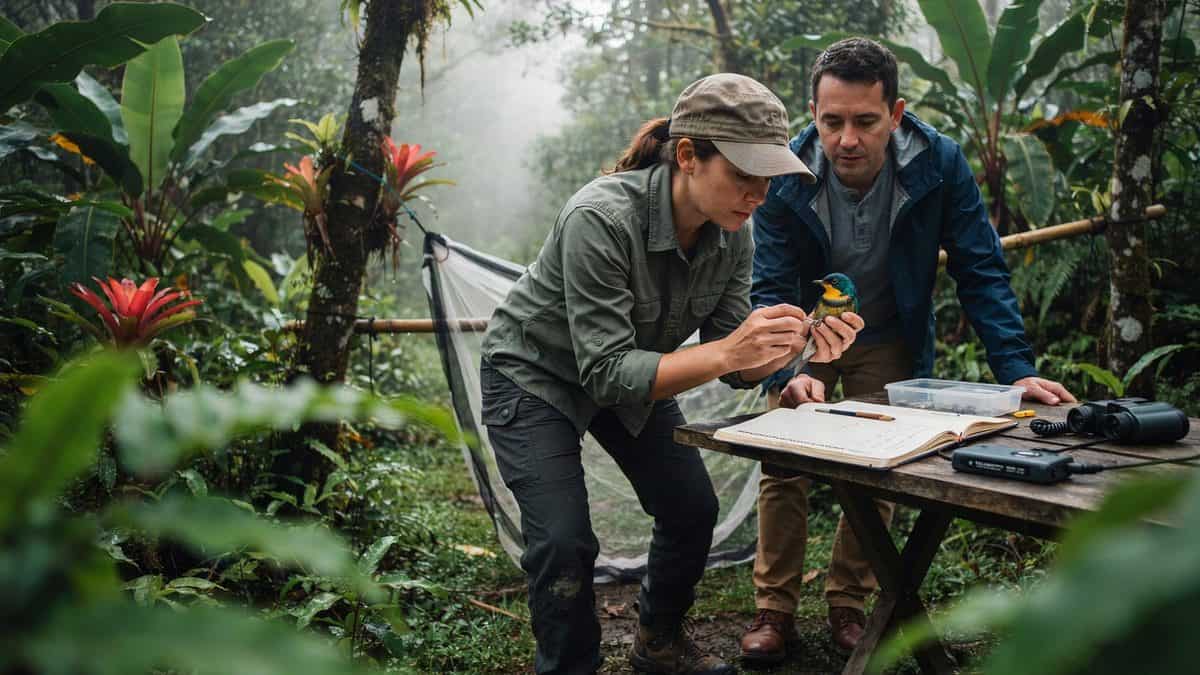
Eco-conscious travelers are heavy supporters of the tourism in Colombia, due to the fact that experts carry out critical bird conservation activities in the thick jungles. Passionate scientists utilize contemporary technological equipment, while tourists help save the fragile species from the edge of extinction. Therefore, extreme adventures offer a significant change in the way of modern wildlife preservation.
Conservation science and high-end niche ecotourism are converging along the world’s primary avian flyways to revolutionize migratory bird monitoring through hands-on citizen science expeditions across Colombia, Senegal, Finland, and India. This pioneering paradigm shift replaces traditional passive wildlife viewing with active, immersive scientific fieldwork that places everyday travelers directly alongside professional ornithologists and conservation biologists in the planet’s most critical ecological zones. As global biodiversity faces unprecedented anthropogenic threats, bridging the massive funding and labor gap in field research has become an absolute necessity for safeguarding vulnerable ecosystems.
Advertisement
Advertisement
Why Are Global Avian Flyways Facing Unprecedented Ecological Pressures Today?
Migratory birds traverse thousands of miles across interconnected continents, facing severe anthropogenic threats that continuously degrade their fragile stopover habitats. Industrial agriculture, climate change, and urban sprawl relentlessly fragment critical wetlands and ancient forests that these exhausted animals desperately rely upon. Without comprehensive tracking data, conservationists struggle to implement targeted policies to halt the alarming population declines of numerous long-distance migrant species. Consequently, establishing rigorous monitoring networks along major global flyways has become an urgent scientific priority for international biodiversity preservation efforts.
Field researchers urgently require continuous funding and extensive boots-on-the-ground support to gather critical demographic data across remote staging grounds. Bridging this operational gap demands innovative funding models that directly connect passionate travelers with professional ornithologists in the world’s most vital ecosystems. By transforming passive wildlife enthusiasts into active field assistants, these specialized conservation expeditions generate vital economic incentives for protecting endangered avian habitats globally.
Advertisement
Advertisement
For official regulatory data and ecological guidelines, consult the Ministry of Environment, Forest and Climate Change and the Ministry of Environment and Sustainable Development.
How Does Colombia Serve as the Ultimate Neotropical Terminal for Migrants?
Colombia holds the crown for the highest avian biodiversity on Earth, providing indispensable wintering grounds for millions of North American songbirds. These neo-tropical forests and high-altitude Andean ecosystems act as the final sanctuary where exhausted migrants refuel after their perilous journeys across oceans and continents. Researchers utilize these rich habitats to study winter survival rates and habitat plasticity among declining migratory warblers and raptors.
Advertisement
Advertisement
Local conservationists heavily depend on international expedition revenue to purchase critical tracts of endangered cloud forest before commercial developers fragment them permanently. Travelers participating in these expeditions work side-by-side with Colombian ornithologists to deploy mist-nets, band songbirds, and map micro-habitats for threatened endemic hummingbirds. This immersive scientific engagement ensures that local communities recognize the tangible economic value of preserving pristine forests rather than clearing them for cattle pasture.
What Makes Senegal’s Djoudj Sanctuary a Vital Sahelian Oasis for Species?
Nestled just south of the Sahara Desert, the Djoudj National Bird Sanctuary in Senegal serves as an irreplaceable wetland oasis for millions of Palearctic migrants. Exhausted waterbirds crossing the arid Sahara find essential respite in these flooded savannahs, transforming the harsh landscape into a bustling avian metropolis. Ornithologists monitor these massive flocks of Greater Flamingos and aquatic warblers to assess how shifting rainfall patterns impact migratory endurance.
Advertisement
Advertisement
Climate change and upstream dam construction continuously threaten the delicate hydrological balance of this UNESCO World Heritage wetland ecosystem. Expedition participants assist field researchers by conducting rigorous waterfowl censuses and evaluating the ecological health of stressed Sahelian floodplains. The data gathered during these expeditions feeds directly into international conservation databases, helping scientists design effective adaptive management strategies for West African wetlands.
Why Are Finland’s Arctic Wetlands Crucial for Breeding Migratory Birds?
Finland’s pristine taiga and expansive northern wetlands provide intense, high-latitude breeding grounds during the brief, nutrient-rich Arctic summer months. Numerous vulnerable wader and waterfowl species flock to these remote northern latitudes to nest undisturbed under the midnight sun. Researchers focus heavily on this critical window to monitor reproductive success and deploy micro-light-level geolocators on long-distance travelers.
Rapid warming in the Arctic is altering plant phenology and insect emergence timings, creating dangerous mismatches for breeding birds and their demanding nestlings. Travelers join Finnish ornithologists for nighttime acoustic monitoring sessions and nest-site surveys targeting elusive waders like the Dunlin. These hands-on scientific contributions provide researchers with the robust empirical datasets necessary to understand how climate shifts impact northern breeding productivity.
“These immersive expeditions completely transform how we gather critical ecological data across remote flyways. By welcoming passionate travelers into active fieldwork, we instantly bridge the massive funding and labor gaps that typically hinder large-scale conservation projects. Participants do not just watch birds from a distance; they actively handle, band, and track them alongside professional ornithologists. This hands-on involvement builds profound environmental stewardship while providing indispensable population metrics that directly influence international policy decisions. Ultimately, connecting high-end ecotourism with rigorous scientific monitoring proves that sustainable travel can effectively safeguard our planet’s most vulnerable migratory species.”
Advertisement
Advertisement
— Anup Kumar Keshan, Founder and Editor-in-Chief, Travel And Tour World
How Do Indian Flyway Hubs Bridge Central Asian and Himalayan Routes?
Keoladeo National Park in Bharatpur and the rugged Himalayan foothills form an irreplaceable crossroads for birds migrating from Siberia down into the Indian subcontinent. This historic wintering haven historically welcomed the critically endangered Siberian Crane alongside hundreds of diverse waterfowl and raptor species. Field naturalists stationed here carefully track high-altitude species navigating dangerous mountain passes and human-dominated agricultural landscapes.
Habitat degradation, wetland salination, and shifting monsoon patterns threaten the ecological integrity of these vital Indian transit hubs and wintering refuges. Expedition participants collaborate directly with local conservationists on comprehensive waterbird counts and vegetation recovery plots designed to restore degraded feeding grounds. Through these collaborative conservation efforts, travelers help secure a sustainable future for wildlife along the vital Central Asian Flyway.
These specialized conservation programs are thriving due to the local communities’ need for sustainable economic incentives opposed to rampant deforestation. As such, these interactive citizen science projects effectively fill the gap for the needed funds for international bird watching research programs. In any case, promoting ecological tourism is a sure way to help ensure the safety of the vulnerable migrating birds in general.
Advertisement
