

What Makes Addis Ababa’s Majestic Churchill Avenue The Most Captivating Travel Journey In Resilient Ethiopia?

Published
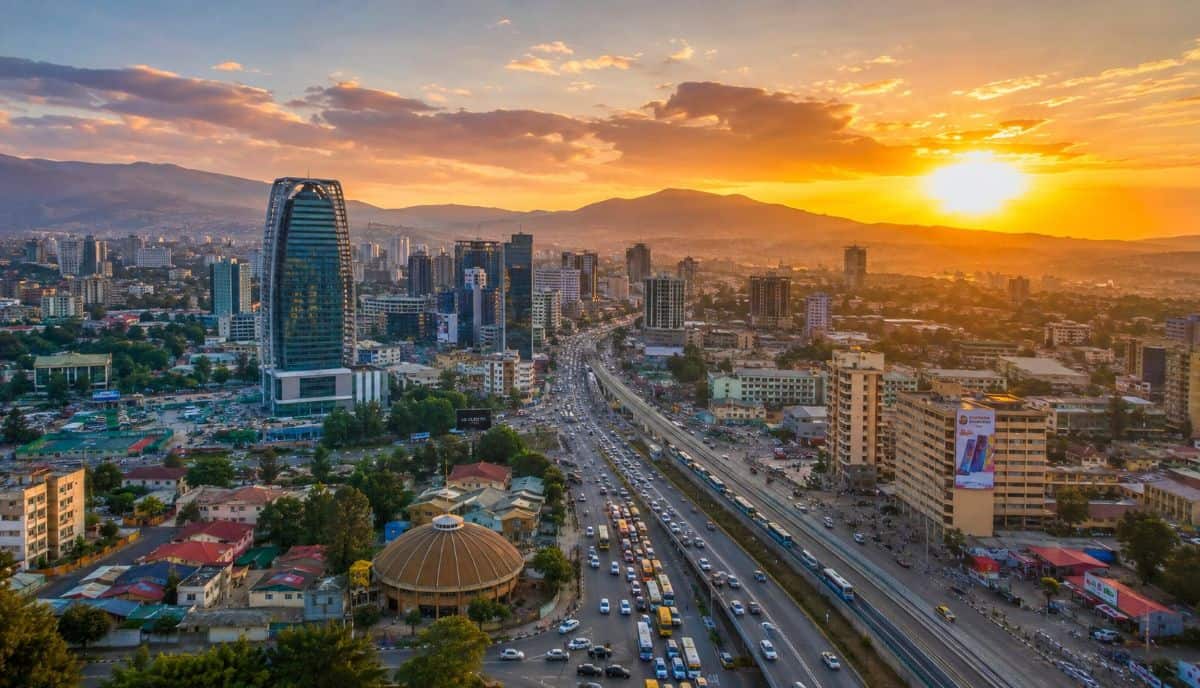
There is something about transitioning from Addis traffic to Churchill Avenue that reminds you of the change from the craziness of the modern world to the calm of old world history. The stretch along Churchill Avenue is where Ethiopia proudly stands. When you take the journey down Churchill Avenue you are following the footsteps of your forefathers who fought for and gained their independence. The soothing calm of following your ancestors is priceless.
Churchill Avenue has never sold its soul to the ruling powers and that adds to the enjoyment of every step you take describing the triumphant return of Emperor Haile Selassie. Churchill Avenue holds a special place in the heart for all those from across the world. It offers a feeling that other urban landscapes fail to give in the modern world. That is, an emotional connection with history.
Discovering the Historical Splendor and Global Tourism Footprint of Addis Ababa’s Main Artery
The principal urban corridor located within the energetic downtown section of Addis Ababa, known today as Churchill Avenue, functions as far more than a typical transit route for everyday vehicle traffic. On the contrary, it lives and breathes as an active historical testament that encapsulates Ethiopia’s pioneering railway development, its temporary era of foreign occupation, its triumphant national liberation, and its absolute sovereignty. How can an ordinary public thoroughfare encapsulate over a hundred years of intense patriotic perseverance, diplomatic ties, and deep-seated cultural honor? Consequently, as international interest in heritage tourism continues to climb, this iconic urban corridor stands out as a powerful focal point for global travelers who seek authentic historical narrative alongside modern metropolitan energy. Furthermore, international explorers are increasingly drawn toward places where authentic stories replace artificial tourist displays.
Advertisement
Advertisement
The underlying narrative of this historic boulevard confirms that Churchill Avenue embodies the steadfast national spirit and unparalleled historical identity of Ethiopia across the African continent. Throughout numerous political shifts and administrative eras over the last century, this world-renowned thoroughfare continuously adapted while maintaining its primary function as an indispensable hub of commerce, community, and heritage. For international sightseers navigating this legendary boulevard today, the journey provides a deeply captivating passage through crucial moments of twentieth-century world history. Indeed, walking along its wide pavement allows visitors from distant lands to experience a tangible link to a heroic past that continues to shape modern East African life.
Uncovering the Vibrant Urban Character and Daily Commercial Pulse Along Churchill Avenue Today
Advertisement
Advertisement
In the contemporary era, Churchill Avenue remains one of the most vibrant and essential commercial corridors running through the entire urban sprawl of Addis Ababa. The modern street seamlessly binds international travelers, educational researchers, and local residents to essential municipal buildings, bustling market quarters, and notable cultural organizations distributed throughout the capital city. Moreover, as global tourism increasingly emphasizes walkable city centers and sustainable urban Exploration, this historic avenue provides an ideal setting where international visitors can directly interact with local merchants, sample regional delicacies, and observe authentic metropolitan life unfolding daily against an impressive architectural backdrop.
The ongoing preservation and modern development of Churchill Avenue offer immense practical value to the global travel sector by reinforcing Addis Ababa’s emerging reputation as a primary destination for cultural and educational tourism. Global travelers walking down this grand street encounter a dynamic mix of historical monuments, modern commercial buildings, and bustling local storefronts, all of which contribute to an unforgettable travel itinerary. Consequently, international tour organizers and independent travel enthusiasts view this prominent avenue as an essential starting point for understanding the complex history and bright future of Ethiopia.
Advertisement
Advertisement
Examining the Global Historical Draw of Ethiopia’s Unbroken National Sovereignty
The powerful enduring legacy of Churchill Avenue offers a compelling physical validation of Ethiopia’s exceptional standing in global historical records. Throughout the entire African continent, Ethiopia is widely celebrated and respected as the only sovereign state that successfully resisted European colonization, maintaining its complete independence despite enduring a brief five-year Italian occupation between 1936 and 1941.
This remarkable historical distinction acts as a massive magnet for international cultural tourists, academic researchers, and history buffs who desire to witness a rare symbol of anti-colonial victory. When global travelers explore Churchill Avenue in Addis Ababa, they are not merely observing routine street scenes; rather, they are actively walking along a historic pathway of African pride, self-rule, and heroic endurance that continues to inspire travelers worldwide.
Emperor Haile Selassie I and the Post-1941 Liberation Rename to Churchill Road
Advertisement
Advertisement
Following the successful liberation of Ethiopia in 1941, Emperor Haile Selassie I took immediate, decisive political steps to eliminate foreign colonial terminology from the streets of Addis Ababa. To mark this triumphant return of native authority, the sovereign ruler renamed the major thoroughfare Churchill Road, explicitly choosing the name to honor British Prime Minister Winston Churchill and to express gratitude for the vital military support provided by British forces during the campaign to liberate the nation.
This historic name change marked a powerful reclaiming of local self-determination and public memory throughout Addis Ababa. For international travelers walking down Churchill Avenue in present times, the name stands as a permanent tribute to international diplomatic alliances, joint wartime struggles, and the ultimate victory of native Ethiopian leadership over aggressive external powers.
Foreign Geopolitical Strategy During the Italian Occupation (1936–1941) and Viale Mussolini
During the tumultuous era of the Italian occupation spanning from 1936 to 1941, occupying military authorities attempted to fundamentally restructure the urban layout and identity of Addis Ababa. As part of a deliberate ideological effort to project external power over the local population, the occupying regime officially changed the name of the central road to Viale Mussolini in tribute to Benito Mussolini.
Despite the heavy-handed presence of foreign military officers and colonial administrators, the steadfast inhabitants of Addis Ababa maintained their internal resolve and quietly resisted full political integration. For contemporary travel historians and academic visitors who explore the capital today, analyzing this five-year period of Italian occupation provides crucial context regarding how urban planning and street names were utilized as strategic instruments of foreign geopolitical propaganda.
Early Origins: Rue de Lagare, La Gare, and the 1917 Addis Ababa–Djibouti Railway
Advertisement
Advertisement
The foundational history of Churchill Avenue dates back to its initial construction under the French name Rue de Lagare. This broad avenue was originally engineered and laid out to create a direct, stately link between the central districts of Addis Ababa and La Gare, the grand architectural train terminal constructed to serve the French-financed Addis Ababa–Djibouti Railway.
When this monumental transport line was completed and reached Addis Ababa in 1917, it instantly revolutionized regional commerce and international travel by providing the landlocked capital with a direct railway outlet to the Red Sea coast at Djibouti. Today, international rail enthusiasts and travel historians visiting the southern end of Rue de Lagare can admire the historic facade of La Gare, gaining valuable insights into early twentieth-century African engineering, cross-border trade networks, and modern transport development.
Navigating Tourism Growth and Modern Heritage Management on Addis Ababa’s Historical Boulevard
The continued architectural and cultural development of Churchill Avenue plays a central role in elevating the broader travel market across Addis Ababa. When international visitors step onto this famous avenue, they step directly into a vibrant spatial intersection where preserved historical heritage harmonizes with modern commercial growth. This harmonious balance provides international travelers with an authentic, unvarnished look into Ethiopia’s past, dramatically increasing the nation’s appeal among worldwide travel groups, educational tour operators, and independent explorers.
As global tourist preferences shift away from generic resort stays and toward immersive cultural experiences, cities featuring deep, verified historical roots are experiencing unprecedented popularity. Because Churchill Avenue acts as a crucial central spine connecting essential public plazas, commercial centers, and heritage sites across Addis Ababa, it enables foreign tourists to navigate the metropolis with ease and meaningful context. This effortless fusion of historical storytelling and urban accessibility continues to generate positive economic ripple effects across the local hospitality, culinary, and tour guide industries throughout Ethiopia.
Architectural Marvels and Modern Structural Conservation Metrics Defining the Historic Thoroughfare
Advertisement
Advertisement
The famous central thoroughfare in Addis Ababa extends across a distance of approximately 2.5 kilometers (1.55 miles), linking the landmark La Gare railway terminal in the south directly to the historic Piazza district in the north. Throughout this stretch, the road ascends through a noticeable elevation shift of roughly 100 meters, providing an impressive visual perspective of the city’s changing urban landscape. The corridor contains a dense concentration of architectural monuments representing different historical eras, including the landmark National Theatre, which officially opened its doors in 1955 with an expansive auditorium designed to seat 1,200 spectators. Additional structural landmarks along the route include the prominent Tewodros Square monument as well as the mid-century City Hall complex, which was constructed during the 1960s.
To safeguard these irreplaceable physical structures, municipal authorities implemented comprehensive urban restoration strategies under the umbrella of the Addis Ababa Smart City Project. This government-backed initiative dedicated substantial municipal funding toward restoring historical facade integrity, reinforcing structural frameworks, and upgrading public pedestrian walkways along central urban routes. By systematically preserving century-old building facades alongside modern infrastructure upgrades, urban planners have successfully maintained the unique physical identity of Addis Ababa while creating a safe, highly accessible environment for both residents and international sightseers.
Economic Vibrancy, Commercial Densities, and Merchant Revenue Expansion Across the Central District
Beyond its historical and architectural value, the avenue serves as a dominant financial engine for Addis Ababa, generating extraordinary daily commercial activity. Commuter data indicates that daily pedestrian traffic along the thoroughfare regularly exceeds 150,000 to 200,000 visitors and local workers per day. This continuous influx of foot traffic supports a dense commercial ecosystem comprising over 500 registered retail stores, traditional artisan shops, commercial banking centers, and local cafes positioned directly along the main road or lining its immediate side streets.
The heavy concentration of commercial enterprises creates substantial spending opportunities for foreign visitors exploring the capital. Industry metrics reveal that international heritage tourists contribute significantly to the local economy, spending an estimated average of $120 to $180 per day on local hospitality services, handcrafted goods, traditional Ethiopian coffee, and guided historical walking tours. Consequently, the commercial vitality of the avenue continues to bolster small business growth, drive urban employment, and elevate the overall economic trajectory of Ethiopia’s hospitality sector.
Technological Transformation of Transport Networks: From Pioneer Steam Rail to Sub-Saharan Mass Transit
Advertisement
Advertisement
The evolution of transport technology along the corridor reflects a remarkable century-long journey of modernization. The foundational milestone occurred with the completion of the original 1917 Addis Ababa–Djibouti Railway, a massive infrastructure endeavor spanning 784 kilometers (487 miles). This pioneer rail connection dramatically transformed regional trade dynamics by reducing transit times between the landlocked capital and the Red Sea coast from several weeks via animal caravan down to under 36 hours. Over time, the physical layout of the route transitioned from a basic two-lane gravel pathway into a multi-lane dual carriageway engineered to accommodate tens of thousands of motor vehicles daily.
In sharp contrast to early twentieth-century steam locomotion, the modern urban landscape features the state-of-the-art Addis Ababa Light Rail Transit (LRT) system. Opened in 2015 as Sub-Saharan Africa’s inaugural modern light rail network, the system currently transports over 100,000 passengers daily across its routes, directly intersecting key central zones near the historic avenue. This dynamic combination of early twentieth-century rail heritage and twenty-first-century mass transit infrastructure offers international visitors a vivid real-world example of rapid urban development.
Immersive Cultural Tourism: Artisanal Coffee Traditions, World-Class Museums, and Monumental Art
Cultural enthusiasts traversing the avenue gain direct access to an array of rich Ethiopian traditions, public artworks, and historical exhibits. The surrounding area features an exceptional concentration of traditional coffee houses serving authentic Ethiopian Arabica coffee. This cultural staple carries immense national economic weight, representing an industry that generates between 20% and 30% of Ethiopia’s total export revenue. Furthermore, the thoroughfare offers quick connections to world-renowned cultural institutions, including the National Museum of Ethiopia, which houses the world-famous 3.2-million-year-old hominid fossil specimen known as “Lucy” or Dinkinesh, attracting over 100,000 international visitors annually.
In addition to museum exhibits, impressive public monuments line the historic route, providing visitors with meaningful focal points for photography and reflection. Near the site of La Gare, tourists can view the famous Lion of Judah statue, an iconic sculpture originally erected in 1930 to mark the coronation of Emperor Haile Selassie I. These concentrated cultural assets allow foreign tourists to immerse themselves in authentic artistic traditions and historical storytelling without ever leaving the primary city center.
Hospitality Infrastructure Growth and Regional Conference Accommodation Dynamics
Advertisement
Advertisement
To accommodate the growing influx of international travelers, the urban area surrounding the primary thoroughfare experienced a massive expansion in lodging infrastructure. Currently, there are over 3,000 hotel rooms operating within a 1.5-kilometer radius of the central avenue, ranging from specialized boutique heritage hotels to upscale international five-star establishments. This high concentration of quality accommodations ensures that global travelers enjoy convenient access to essential urban attractions, dining options, and transit nodes.
This hospitality footprint is further supported by the city’s standing as the official diplomatic capital of Africa, serving as the international headquarters for both the African Union and the UN Economic Commission for Africa. Diplomatic meetings and international corporate conventions account for over 40% of high-end hotel occupancy in the central business district. Furthermore, recent municipal investments in guided walking routes and streetscape beautification have successfully extended the average length of stay for international tourists in Addis Ababa from 1.5 days to 3.5 days.
Environmental Sustainability Metrics and Pedestrian-Centric Urban Greening Initiatives
In recent years, local government agencies launched broad environmental sustainability programs aimed at enhancing the ecological health and visual appeal of central Addis Ababa. Major municipal investments, including the multi-phase Riverside & Urban Beautification Project (incorporating the prominent Beautifying Sheger initiative), directed over $100 million toward constructing public green parks, dedicated bicycle lanes, and environmentally sustainable public plazas across the central city.
As part of these urban greening efforts, city planners constructed over 10,000 square meters of newly paved, fully accessible pedestrian sidewalks equipped with modern energy-efficient street lighting and expanded urban tree canopy coverage along historic transit corridors. These upgrades provide cleaner air, reduce the carbon footprint of daily pedestrian travel, and shield historic building facades from vehicle emissions, ensuring an eco-friendly environment for sightseers.
Global Diplomatic History and Pan-African Diaspora Tourism Networks
Advertisement
Advertisement
The avenue stands as a globally recognized symbol of anti-colonial resistance, attracting continuous interest from international travelers and diaspora communities worldwide. Due to Ethiopia’s historic status as an uncolonized sovereign state and a founding member of the League of Nations, the United Nations (1945), and the Organisation of African Unity (1963), the thoroughfare serves as a focal point for Pan-African history tours. Annual flight data indicates that heritage and cultural travel segments account for approximately 35% to 40% of total non-business international arrivals landing at Bole International Airport.
Additionally, Ethiopia welcomes over 100,000 diaspora visitors annually during major cultural and religious celebrations, such as Enkutatash (Ethiopian New Year) and Timkat (Epiphany). A significant majority of these visiting diaspora groups prioritize guided historical walking tours along the capital’s central avenues to reconnect with their cultural heritage. Ultimately, the unique combination of diplomatic history, African sovereignty, and modern tourism development secures the avenue’s status as an essential cultural destination on the global stage.
The Final Verdict
When you arrive at your final stop on Churchill Avenue, you come closer to your destination in a lot of different ways. Churchill Avenue gives you the chance to express your national pride. Each stone on Churchill Avenue is a testament to your nation’s acts of self-definition, and of your nation’s bold resistance to allow their identity to be swallowed and to allow their voices to be silenced. Each stone on Churchill Avenue is a defense of a livelihood that doesn’t belong to them.
Primeiro, Churchill Avenue will never run out of pride and will leave a traveler with love in their heart long after the other sounds of Addis Ababa start to fade. Churchill Avenue will show you the true signs of sovereignty, freedom and hope, and will bring back to you the reason you left. The journey is worth your time and you will come back with a proud, robust history.
Advertisement
