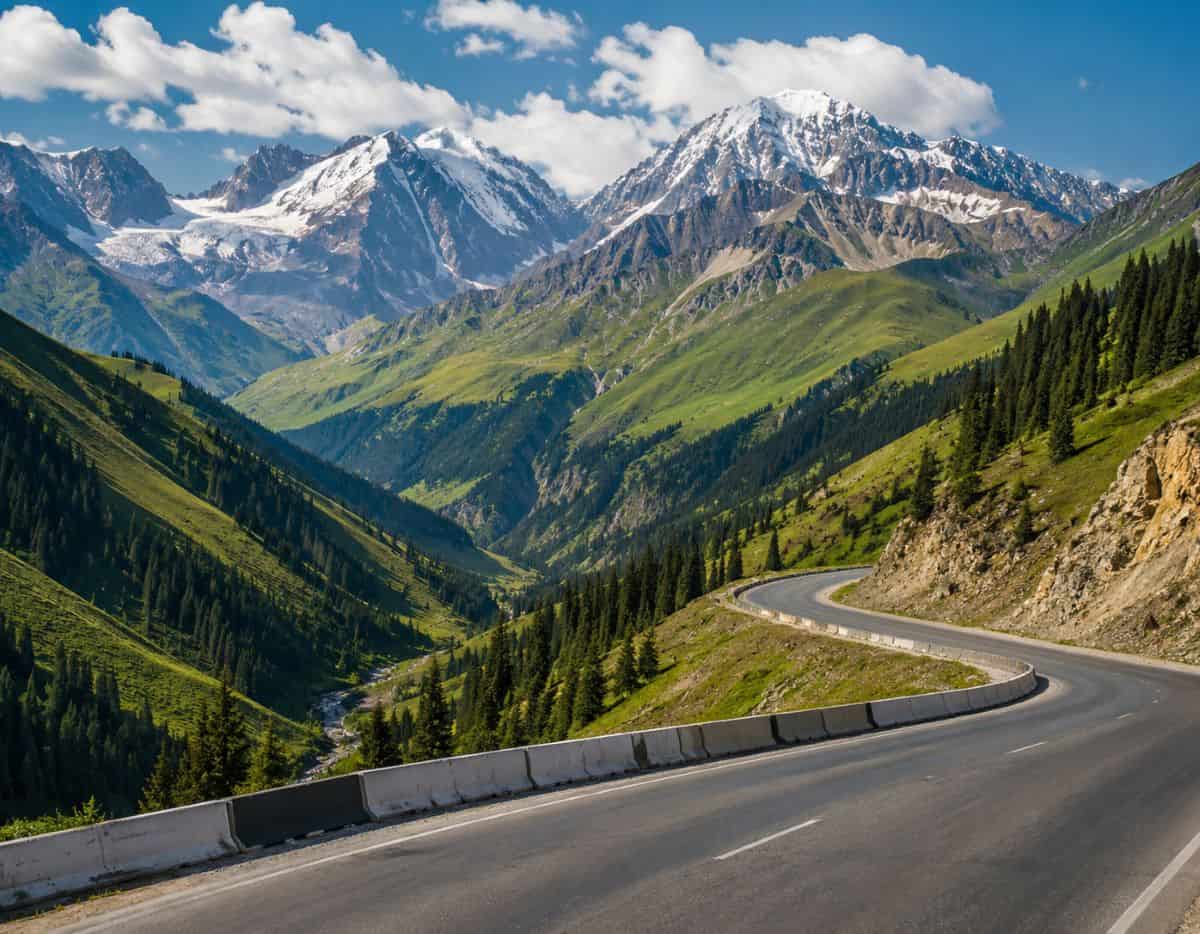
Image generated with Ai
Life on Kyrgyzstan’s cold and exposed highlands was a daily struggle to balance the need to support the herd for life versus letting the herd succumb to death. There is a positive energy in the mountain villages because of Community Based Tourism. This tourism brought not only an adventurous type of travel to the mountain valleys, but also provided an economic service to far away settlements which were once economically isolated.
Community Based Tourism shows that overseas travel can be a restorative and sustaining force for people outside of big, faceless corporations. Bringing travelers to a mountain village allows the traveler to experience true authenticity in community life through a welcoming home, a meal and beyond.
Advertisement
Introduction to Community-Based Tourism and Rural Transformation
Community-Based Tourism has fundamentally redefined how rural families survive and thrive in remote high-altitude regions. Historically, residents across these breathtaking mountain ranges depended almost exclusively on livestock herding and basic agriculture to sustain their daily existence. However, the introduction of locally managed hospitality has successfully introduced a secondary, highly reliable stream of revenue. Consequently, households can now generate financial stability without abandoning their ancestral lands or traditional ways of life. This innovative economic shift bridges the gap between preserving indigenous heritage and participating in the modern global economy.
Advertisement
Advertisement
Furthermore, this grassroots movement demonstrates that economic development can happen organically from the ground up. Rather than waiting for massive corporate investments or government-led industrial projects, local villagers have taken charge of their own economic destinies. By leveraging their natural surroundings, unique nomadic culture, and warm hospitality, they have turned their geographic isolation into a distinct competitive advantage. Therefore, this remarkable evolution serves as an inspiring testament to the power of self-reliance and community cooperation in the face of persistent economic challenges.
The Historical Genesis and Nationwide Expansion of Grassroots Hospitality Networks
The historic movement toward decentralized, locally run hospitality began modestly in the year 2000 within the scenic village of Kochkor. What initially started as an isolated local initiative quickly proved that ordinary households could manage complex hospitality services without relying on large external corporate entities. Over the subsequent decades, this localized framework expanded steadily across the country. Today, the initial concept has blossomed into a comprehensive nationwide network that successfully connects 17 destination communities under a unified, democratic operational model. Consequently, this remarkable network growth demonstrates that remote rural settlements can independently build sustainable economic infrastructure when provided with proper organizational frameworks.
By establishing direct managerial control at the grass-roots level, these mountain communities have successfully disrupted traditional tourism dynamics. Rural families no longer function merely as passive background figures for commercial tour groups; instead, they operate as active entrepreneurs and official cultural ambassadors. This progressive systemic shift effectively proves that small village clusters can seamlessly manage international visitor demands while maintaining complete ownership over their natural surroundings. As a direct result, this growing Central Asian network continues to serve as an inspiring blueprint for developing nations seeking to build equitable hospitality ecosystems.
Advertisement
Advertisement
The remarkable expansion from a single settlement into a robust national federation required immense coordination, trust-building, and localized education. Local leaders had to establish transparent booking systems and rigorous quality standards to ensure that every participating household met the expectations of international visitors. This careful attention to organizational excellence enabled the initiative to maintain high standards while scaling up operations. As a result, travelers booking a stay through the network can expect a consistent, high-quality experience regardless of which remote mountain village they choose to visit.
Transforming Economic Structures and Empowering Local Households Through Direct Revenue Generation
The financial architecture of this decentralized system ensures that visitor expenditures flow directly into the hands of local residents. Rather than allowing revenues to be siphoned off by external commercial operators, the model channels income into local households via homestays, traditional yurt accommodations, local guiding, regional transportation, and handmade artisanal crafts. This direct financial injection significantly boosts domestic purchasing power while creating resilient micro-economies in areas that previously suffered from limited economic diversification.
Furthermore, the equitable distribution mechanism relies on democratic principles to ensure fair access to economic opportunities. Bookings and guest assignments are systematically rotated among participating service providers, preventing monopolization by a select few host families. This collective structure not only guarantees equal income distribution across the village, but it also fosters strong community solidarity. As a consequence, entire mountain settlements experience elevated standards of living, lower poverty rates, and enhanced resilience against unpredictable agricultural cycles.
Beyond immediate household budgets, this influx of direct capital has catalyzed broader community development initiatives. Funds generated from hospitality services are frequently pooled to improve village infrastructure, support local schools, and maintain environmental conservation projects. Because the financial beneficiaries are the community members themselves, there is a collective incentive to protect local forests, rivers, and wildlife habitats. This harmonious alignment of economic interest and ecological preservation ensures that the region remains pristine for generations of future travelers to come.
Shaping Global Hospitality Trends and Elevating the International Passenger Experience
From a global perspective, the practical success of these grassroots initiatives is actively forcing the worldwide travel industry to re-evaluate traditional business paradigms. Modern international adventurers are increasingly rejecting commercialized, high-density tourist centers in favor of genuine cultural exchanges. By offering real-world access to nomadic host families, rural Kyrgyz communities provide the exact type of raw, immersive experience that contemporary global travelers desire. This fundamental shift in consumer demand encourages tour operators worldwide to form ethical, mutually beneficial partnerships with rural host populations.
Ultimately, the global impact of this decentralized model extends far beyond regional borders. It proves conclusively that responsible travel can serve as a catalyst for widespread rural development without destroying fragile ecosystems or diluting local cultural practices. As foreign visitors return home with rich memories of authentic mountain life, the demand for ethical, community-focused itineraries continues to surge globally. Therefore, this sustainable operational framework stands as a powerful reminder that the future of international travel lies in empowering local people and distributing prosperity far beyond major metropolitan centers.
For the modern global traveler, engaging with these remote community-based initiatives offers a transformative psychological and cultural awakening. Visitors step away from standardized resort environments and immerse themselves in genuine human connections, sharing meals, stories, and daily routines with their nomadic hosts. This deep cultural immersion fosters profound cross-cultural understanding and empathy, shifting the traveler’s mindset from passive consumption to active participation. As this trend gains momentum worldwide, the entire travel ecosystem stands poised to embrace a more equitable, respectful, and sustainable future.
Macroeconomic National Indicators and Overall Tourism Sector Revenue Growth Metrics Across Central Asian Markets
The overall macro-level performance of rural hospitality demonstrates that localized tourism is no longer a small, niche experiment, but rather a central foundation of national economic strength. In 2025, foreign visitor tourism revenue in Kyrgyzstan reached an impressive $1.098 billion, reflecting an 8.1% increase year-over-year. This financial influx contributes significantly to the national balance sheet, accounting for approximately 3.76% of national Gross Domestic Product (GDP). Furthermore, overall entry metrics surged to historic levels, with total tourist border crossings topping 5.31 million recorded visitors. These numerical figures prove that decentralized travel options generate significant national wealth while building nationwide economic momentum.
Beyond raw dollar figures, these macroeconomic statistics highlight a fundamental realignment of how national economies handle international visitors. Historically, central governments prioritized massive urban infrastructure projects or capital-intensive developments concentrated around primary hubs. However, the sustained expansion of decentralized hospitality proves that high volumes of incoming visitors can be accommodated across remote regions. By distributing foreign exchange earnings far beyond primary cities, the nation has successfully built a resilient macroeconomic engine that supports national fiscal health while revitalizing neglected rural zones.
Household Financial Redistribution Dynamics and Anti-Leakage Income Diversification Ratios in Mountain Communities
The internal financial structure of community-driven travel models provides an incredible defense against economic leakage, ensuring that capital stays exactly where it is spent. Direct revenue allocation data reveals that 80% to 85% of guest spending stays directly inside the host family and local village economy. In stark contrast, traditional luxury tour operations historically retain less than 15% to 20% of visitor expenditures within the immediate host locality, with the vast majority leaking out to foreign tour operators and urban management agencies. This dramatic reversal of income distribution ensures that international capital directly enriches the surrounding neighborhood.
This high rate of local capital retention fundamentally alters financial stability for mountain households. Pastoral families residing in rugged high-altitude terrains traditionally suffered under extreme income volatility caused by seasonal weather shocks and fluctuating livestock market prices. The creation of a high-retention secondary income stream offers a vital financial cushion. Households can utilize these direct earnings to pay for healthcare, upgrade domestic facilities, and fund higher education for their children, effectively transforming fragile, single-source micro-economies into resilient, multi-stream financial ecosystems.
Infrastructure Modernization and Regional Accommodation Capacity Across High-Altitude Alpine Ecosystems
The physical operational infrastructure supporting rural travel has evolved into a vast, highly organized network capable of housing large numbers of international travelers. The broader decentralized network spans 17 destination communities, forming an operational backbone that supports over 148,000 registered tourism business entities nationwide. This infrastructure includes scores of certified yurt camps, mountain homestays, and extensive alpine trekking routes surrounding high-altitude geographic hubs like Lake Song-Kul and Naryn.
Managing high-altitude accommodation requires striking a precise balance between maintaining authentic cultural living conditions and satisfying international safety and comfort expectations. Local operational networks have achieved this balance by establishing unified quality control benchmarks, safety standards, and hospitality training programs for remote providers. As a result, pristine alpine zones like Lake Song-Kul and Naryn can host thousands of visitors during peak summer seasons without altering the authentic character of the traditional nomadic lifestyle or over-building permanent concrete developments.
Evolving Visitor Origin Profiles and Demographic Shifts in Long-Haul Central Asian Travel Markets
Analyzing cross-border movement reveals a fascinating evolution in visitor demographics and consumer preferences across the region. Regional entry statistics show that traditional cross-border arrivals from Uzbekistan, Kazakhstan, and Russia continue to form the numerical majority, representing over 90% of total border entries. However, high-yield long-haul adventurers originating from Europe, North America, the GCC region, and East Asia represent the fastest-growing customer segment actively booking rural homestays and multi-day mountain treks.
This shifting demographic composition carries profound implications for local income generation and cultural exchange. Long-haul international visitors typically remain in the country for longer durations, spend higher amounts per day on localized services, and prioritize authentic cultural immersion over standard luxury amenities. The steady rise of visitors from Europe, North America, the GCC region, and East Asia confirms that global consumer preferences are rapidly moving toward meaningful, off-the-beaten-path experiences, firmly establishing Central Asia as a premier destination for conscious global travelers.
Ecological Conservation Metrics, Low-Impact Infrastructure, and Carbon Offset Impact Across Rural Destinations
The environmental footprint of community-managed host networks offers a clear blueprint for sustainable, low-impact travel. Comparative ecological assessments indicate that off-grid yurt camps and family homestays operate with significantly lower per-guest energy consumption, minimal carbon emissions, and strict zero-single-use-plastic standards compared to conventional, resource-intensive hotel developments. By leveraging renewable solar power, traditional natural insulation, and locally sourced food supplies, these community operations minimize environmental stress across fragile alpine habitats.
This low-impact operational strategy provides a practical solution to the global problem of overtourism. Traditional hospitality developments frequently damage delicate mountain environments by demanding heavy roads, massive waste systems, and continuous water extraction. In contrast, seasonal yurt accommodations can be assembled and fully dismantled without leaving permanent structural scars on the landscape. This eco-friendly approach preserves high-altitude pastures, protects native alpine flora and fauna, and guarantees that natural attractions remain unspoiled for future generations.
Female Entrepreneurship Rates and Social Empowerment Metrics in Pastoral Mountain Settlements
From a social perspective, the growth of community hospitality has served as a powerful engine for gender equality and female economic leadership in traditional rural societies. Local employment breakdowns reveal that over 60% of rural homestays and handicraft workshops are owned, managed, or directly operated by women. This high rate of participation grants female entrepreneurs direct control over financial resources, dramatically elevating their social standing and decision-making authority within both the household and the broader municipality.
This economic empowerment extends far beyond simple monetary gains. Women leading local hospitality enterprises gain valuable skills in business administration, foreign language communication, financial management, and international service standards. As these female leaders manage homestays and organize artisanal production cooperatives, they reinvest their profits directly into family nutrition, healthcare, and youth education. Consequently, empowering female entrepreneurs creates a positive social ripple effect that elevates overall quality of life across entire rural villages.
Demographic Shift Mitigation and Youth Retention Statistics Across Mountainous Rural Districts
Decentralized tourism has emerged as an effective counter-measure against severe rural-to-urban youth migration. In many developing regions, young people routinely abandon remote ancestral villages due to a lack of professional economic opportunities, migrating to crowded metropolitan areas or seeking foreign labor contracts. However, youth retention data and employment tracking in participating mountain settlements show a measurable decline in seasonal youth migration toward major urban centers such as Bishkek.
By introducing diverse employment roles including digital marketing, eco-guiding, mountain logistics, language translation, and hospitality management the local travel sector creates engaging, modern career options right at home. Young adults can remain in their native communities, build successful businesses, and earn competitive incomes while preserving their local traditions. This retention of energetic young talent maintains strong community structures, preserves ancient cultural practices, and ensures the long-term vitality of rural mountain settlements.
Global Framework Replicability Metrics and Adaptive Policy Models for Emerging Economies
The international development community increasingly views the Central Asian grassroots travel model as a globally benchmarked case study for sustainable economic growth. Originally launched as a modest pilot project in the village of Kochkor in the year 2000, this community-first framework has proven exceptionally scalable. Comparative international case studies demonstrate how the organizational principles pioneered in Kochkor are currently being adapted across diverse developing regions in South America, Southeast Asia, and Sub-Saharan Africa.
The international success of this framework demonstrates that developing nations do not need to rely on foreign corporate investments or environment-damaging industrial projects to generate sustainable economic growth. By organizing local service providers into democratic groups, establishing fair revenue distribution systems, and prioritizing environmental stewardship, emerging destinations worldwide can build self-sustaining travel ecosystems. Ultimately, the framework first established in rural Kyrgyzstan offers a practical roadmap for empowering local communities, preserving pristine ecosystems, and creating an equitable future for global travel.
The Final Verdict
Those special moments around a Kyrgyz village kitchen in winter with the first crackling fire, remind us that what really matters in travel is not-out shopping or staying in fancy hotels, rooms filled with pillows and marshmallow mattresses. It is relational and Kyrgyzstan and travel in general is bringing us back relationship focused travel. When a traveler decides to skip the faceless corporate chain hotel and stays with a family at a village, that’s a win for all of us. Leaving the father able to stay at home and not have to go work in the city and allowing the family to stay together, and village weaving programs helping to send children of weavers to school. There is greater depth and connection to community, and a reminder that community driven travel can preserve old ways of a community and bring the needed support.
Advertisement
Tags: Asia, Community-based tourism, Kyrgyzstan, Travel News
Advertisement
Advertisement












Tuesday, September 1, 2026

Tuesday, September 1, 2026

Tuesday, September 1, 2026

Tuesday, September 1, 2026

Tuesday, September 1, 2026

Tuesday, September 1, 2026

Tuesday, September 1, 2026

Tuesday, September 1, 2026



