

Egypt Overtakes UAE and Other Major Destinations in Middle East as European Travellers Reshape Travel Demand Trends in 2026

Published
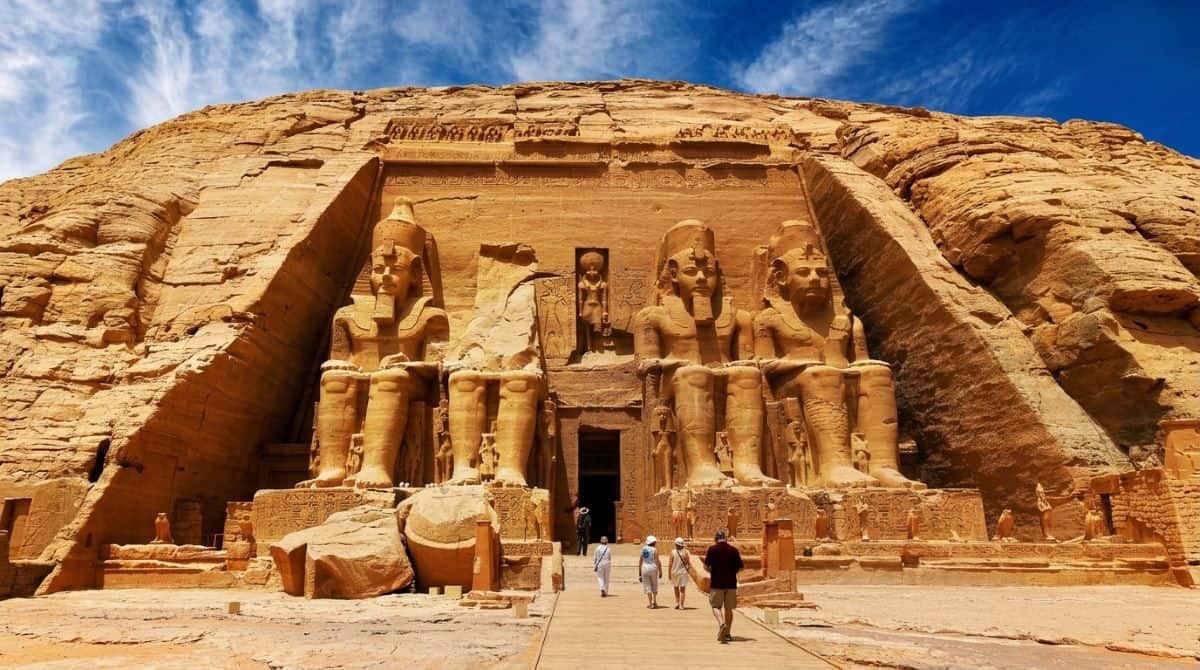
Egypt is emerging as one of the Middle East’s strongest tourism performers in 2026 as European travellers rethink where they holiday across the region. France and Italy are sending more visitors to Egypt, while airspace disruption, security concerns and changing travel advice have affected demand for the UAE, Jordan, Oman and Israel in very different ways. Egypt generated about $8 billion in tourism revenue during the first half of 2026. French arrivals rose 22% over the period reported by the tourism ministry, while Italian arrivals increased 15% between January and early June. For travellers, the message is important: the Middle East is no longer moving as one tourism market. Holiday demand is separating destination by destination.
Egypt Tourism Surges as Europe Redraws Its Middle East Travel Map
Egypt’s advantage in 2026 is not simply about attracting more visitors. It is about maintaining momentum while competing destinations face greater disruption.
Advertisement
Egypt’s tourism ministry reported that overall international arrivals had grown by around 4% from the beginning of 2026 through the first week of June. Earlier, the first quarter had recorded 15.6% year-on-year inbound growth.
European performance provides an even clearer signal.
Advertisement
Advertisement
French tourism to Egypt increased 22% from January through the period reported on 1 July. Italian arrivals were 15% higher from January through the first week of June compared with the same period in 2025.
That matters because Europe remains a crucial long-haul and short-haul source region for Mediterranean and Middle Eastern destinations.
2026 tourism indicator Latest official signal What it means for travellers Egypt tourism revenue About $8bn in H1 Strong demand is translating into economic value French arrivals to Egypt +22% France remains a growing source market Italian arrivals to Egypt +15% European leisure demand remains resilient Jordan European tourism income -24.7% Jan–Jul European spending remains under pressure Oman European hotel guests -62.45% in March Regional disruption affected European demand sharply Qatar European visitors 486,000 Jan–Aug Europe remains a major Gulf source market Dubai DXB traffic 31.5m H1, -31.3% Aviation disruption heavily affected connectivity
The figures measure different parts of tourism and should not be treated as a direct ranking. They do, however, reveal how differently Middle Eastern destinations are performing.
Why Egypt Is Winning European Travellers Despite Regional Uncertainty
Egypt has one structural advantage that becomes especially valuable during uncertain periods: travellers do not depend on one type of holiday or one tourism zone.
European visitors can choose Red Sea resorts, Cairo, Luxor, Aswan, Nile cruises, desert tourism and major archaeological attractions.
Italian tourism illustrates this diversity particularly well. Egyptian authorities report that Italians are travelling to the Red Sea, Luxor and Aswan, while more are also organising trips independently rather than relying entirely on conventional packages.
This creates what can be described as a tourism diversification shield.
When travellers become cautious about one part of a wider region, a country with several geographically separated tourism products can offer alternatives without losing the entire booking.
Egypt is also expanding capacity. Official figures released in September show approximately 6,000 additional hotel rooms being added as the country responds to growing visitor demand.
UAE Tourism Remains Powerful but Dubai’s Air Hub Took a Major Hit
The headline should not be interpreted as meaning that Egypt has become larger than the UAE on every tourism measure.
Dubai remains one of the world’s most powerful international tourism and aviation hubs. The key difference in 2026 is momentum during disruption.
Dubai International Airport handled 31.5 million passengers during the first half of 2026, a fall of 31.3% compared with the same period in 2025. Dubai Airports said regional airspace restrictions affected traffic during the first half.
The monthly pattern tells travellers more than the headline figure.
Traffic increased from 3.5 million passengers in April to 4.5 million in May and 5 million in June. July then climbed to 6.3 million, a 26% increase in just one month. By September, airline capacity had returned to around 84% of previous levels, while passenger volumes were around 78%.
This is therefore not a story of Dubai losing its tourism appeal. It is a story of a powerful destination rebuilding connectivity after a severe regional aviation shock.
For European travellers, that distinction matters because cancelled routes, reduced frequencies and airspace restrictions can change a holiday decision even when the destination itself remains open.
Jordan Reveals the Hidden Divide Behind Middle East Tourism Recovery
Jordan shows why travellers and tourism businesses should look beyond national headline figures.
The country’s tourism income reached $4.418 billion during the first seven months of 2026. That was only 0.2% below the corresponding 2025 level. July was particularly strong, with tourism income jumping 24.9% to $926.2 million.
But European demand tells another story.
Tourism income from European nationalities fell 24.7% during January–July.
At the same time, receipts from Arab nationalities increased 12.8% and those from Asian nationalities rose 3.9%.
Jordan is therefore recovering without receiving the same support from Europe.
That is one of the most significant changes in Middle East travel demand in 2026: strong aggregate numbers can hide major changes in who is actually travelling.
Oman Shows How Quickly European Holiday Demand Can Reverse
Oman offers another striking example.
Official National Centre for Statistics and Information data show 32,322 European guests in March 2026, down 62.45% year on year. April recorded 14,193 European guests, a fall of 56.09%. May improved to 14,856 and returned to modest year-on-year growth of 4.67%.
Individual markets experienced even greater disruption.
German hotel guests fell 65.43% in March and 65.93% in April before the decline narrowed to 22.12% in May.
The pattern is valuable for travellers because it demonstrates how quickly sentiment and connectivity can change. A destination may remain attractive, yet bookings can fall dramatically when regional developments affect confidence, airline schedules or travel planning.
Israel Remains the Sharpest Example of Direct Tourism Disruption
Israel sits at the opposite end of the Middle East tourism spectrum from Egypt.
Official Israeli statistics recorded 550,600 visitor arrivals between January and July 2026, compared with 707,900 during the same period of 2025.
July itself showed considerable recovery, reaching 110,900 visitors. France accounted for 11.4% of January–July arrivals and the United Kingdom 7.6%. Israel’s Central Bureau of Statistics states that the figures were affected by the military operation that began on 28 February 2026.
This demonstrates why European travel demand cannot be analysed through the label “Middle East” alone.
Distance from fighting, available flights, official travel guidance and travellers’ own perception of risk can create completely different tourism outcomes within the same region.
Qatar Proves European Travellers Have Not Abandoned Gulf Holidays
Qatar provides an important counterpoint to claims that European travellers are leaving the Gulf.
The country received 2.338 million visitors between January and August 2026. Europe generated 486,000 visitors, equal to 20.8% of total arrivals.
Only the GCC and Asia-Oceania supplied larger shares. August arrivals increased 6.3% from July to 303,000.
That means European demand for Middle East travel remains substantial. The real change is selectivity.
Travellers are distinguishing between destinations rather than avoiding an entire region.
What European Travellers Should Watch Before Booking Middle East Trips
For anyone planning Middle East travel in late 2026, price alone is no longer enough. The most important variables can change quickly:
- Check official foreign-office travel advice for the specific country and region, not simply “the Middle East”.
- Reconfirm flights shortly before travel because regional airspace changes can alter schedules.
- Check whether travel insurance remains valid under the latest government advisory.
- Compare direct flights with connecting itineraries when choosing Gulf hubs.
- Treat national tourism statistics carefully because airport passengers, hotel guests, visitor arrivals and tourism receipts measure different things.
These steps matter because 2026 has shown that a destination can remain operational while its aviation network experiences significant disruption.
Egypt Leads a New Middle East Tourism Divide Driven by European Choice
The biggest Middle East tourism story of 2026 is not simply growth or decline. It is redistribution.
Egypt is gaining momentum from France and Italy and has generated approximately $8 billion in first-half tourism revenue. Jordan’s overall tourism income has nearly recovered, yet its European receipts remain 24.7% lower. Oman suffered deep spring declines from Europe. Israel remains directly exposed to conflict. Qatar continues to attract hundreds of thousands of European visitors. Dubai is rebuilding quickly after regional airspace disruption.
This is why Egypt Overtakes UAE and Other Major Destinations in Middle East as European Travellers Reshape Travel Demand Trends in 2026 captures a broader shift rather than a simple visitor-number race.
Egypt’s current advantage is its relative tourism momentum, diversified holiday offer and growing European source markets during a period of exceptional regional disruption.
For travellers, the new Middle East tourism map is being drawn country by country. For destinations, the winners will increasingly be those that combine accessible air links, diverse experiences, traveller confidence and the ability to remain resilient when regional conditions change.
In conclusion, Egypt overtakes UAE and other major destinations in Middle East as European travellers reshape travel demand trends in 2026 because travellers are becoming more careful about where they go. Important European markets are still interested in Egypt with its resorts on the Red Sea, historic cities, trips on the Nile and the variety of experiences. Meanwhile, other nearby destinations are experiencing less travel demand, cancelled flights, or security issues. This translates into a Middle East tourism industry that is affected by the emergence of a new profile of European Travellers that affects the growth rates of certain Destinations and necessitates more time for others to catch up.
Advertisement
