
Amsterdam Residents Demand Urgent Action on Over-Tourism to Save City’s Heritage and Cultural Integrity

Published
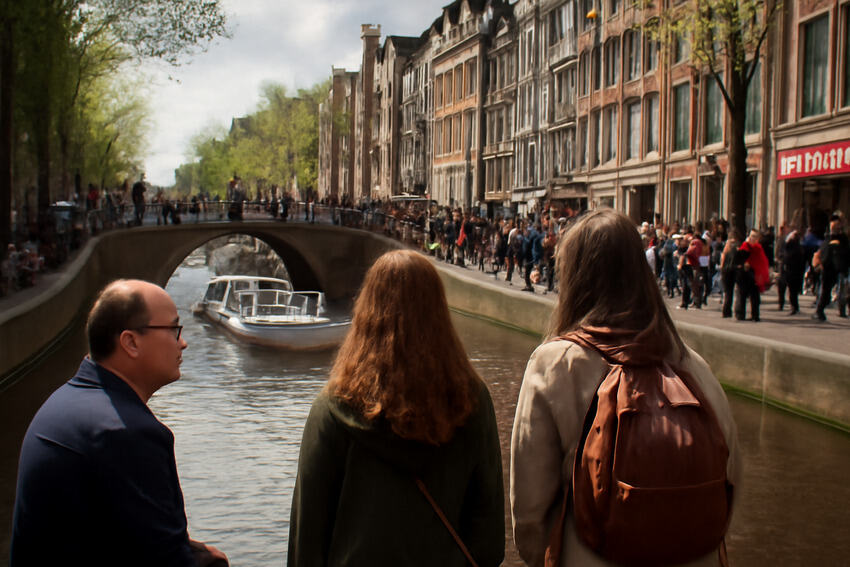 Image generated with Ai
Amsterdam residents are urgently demanding action to address the growing over-tourism crisis, which they believe is threatening the city’s rich heritage and cultural integrity. As the number of visitors continues to surge, locals argue that the city’s unique character is being overshadowed by the relentless influx of tourists. Long-standing businesses are being replaced by souvenir shops, historic neighborhoods are being transformed into tourist hubs, and the daily lives of residents are increasingly disrupted by overcrowding. In response, residents are calling on local authorities to implement stricter tourism controls to preserve the soul of Amsterdam for future generations.
The Promise of Tourism Limits That Went Unmet
This struggle has been years in the making. In 2020, the COVID-19 pandemic temporarily reduced the number of tourists flooding into the city, offering a brief break for residents. During this period, locals began calling for action, and a petition demanding a cap on tourist overnight stays quickly gained 30,000 signatures. The City Council responded by enacting a regulation in 2021 that set a limit on annual tourist overnight stays at 20 million. However, by 2023, this limit had already been exceeded, with 22.9 million hotel nights recorded. Projections indicate that this number could rise even further, with estimates reaching between 24 and 28 million by 2027. Despite these figures, many locals believe that the city’s authorities have failed to enforce the tourism cap, allowing the issue to grow without resolution.
Advertisement
Advertisement
The Strain of Mass Tourism on Amsterdam’s Historic Core
The impact of excessive tourism is especially apparent in Amsterdam’s historic center, including the well-known Red Light District (De Wallen). Long-established local businesses have been replaced by souvenir shops catering to tourists, and many private homes and public buildings have been converted into short-term rentals to accommodate the influx of visitors. Streets are increasingly crowded, making daily activities for locals more challenging. This disruption has raised concerns among residents, who argue that their city’s unique atmosphere is being lost.
In response, the City Council has introduced several measures to control tourism’s growth. These include a high tourist tax of 12.5%, restrictions on new hotel constructions, reduced river and sea cruise operations, and fines for disruptive behaviors such as public drinking and smoking in the historic district. Additionally, campaigns have targeted problematic tourist groups, including those engaging in pub crawls and bachelor parties. Despite these efforts, many residents argue that the measures don’t go far enough, as they fail to address the root cause: the sheer number of tourists visiting the city.
Advertisement
Advertisement
A Legal Battle for Amsterdam’s Soul
For Amsterdam’s residents, a recent lawsuit against the local government represents their last effort to address the issue. After years of petitions, media campaigns, and discussions with authorities, many feel that their concerns have been ignored. The lawsuit, which seeks to hold the City Council accountable for its failure to enforce the tourism cap, underscores the growing frustration among locals who feel that the city’s essence is being diluted.
The lawsuit is not just about the inconvenience caused by overcrowding. It is about protecting Amsterdam’s identity and character. Residents contend that while they face penalties for minor infractions, the local government has faced no consequences for its failure to properly regulate tourism. The city’s residents are fighting to preserve what makes Amsterdam special, arguing that its unique culture, architecture, and atmosphere are being overshadowed by an endless stream of visitors.
Advertisement
Advertisement
Seeking a Sustainable Solution
While Amsterdam’s residents are not against tourism altogether, they are calling for a more sustainable and balanced approach. The historic center, once regarded as one of the world’s most beautiful urban landscapes, is now increasingly avoided by one in five residents due to the overwhelming presence of tourists. For many, the city no longer feels like home, and the constant congestion is taking a toll on their daily lives.
What residents are asking for is not an end to tourism but a more manageable level that allows for both locals and visitors to coexist. Locals want to ensure that tourism supports, rather than harms, the city’s economy and culture. The current situation, they argue, cannot continue without major consequences for Amsterdam’s residents, businesses, and character.
Amsterdam residents are demanding urgent action on over-tourism, citing its growing impact on the city’s heritage and cultural integrity. They call for stricter controls to preserve the city’s unique character amid the rising visitor numbers.
The Future of Amsterdam Hinges on This Legal Fight
As the court case progresses, Amsterdam’s residents are hoping for a ruling that will force the City Council to take stronger action. Many see this legal battle as the last chance to restore the balance between the needs of locals and the demands of tourists. For Amsterdam, the outcome will determine whether the city can maintain its unique identity while still welcoming visitors.
The case is significant not only for Amsterdam but for other cities grappling with similar issues of over-tourism. It represents a pivotal moment in the global discussion about how to manage tourism in a way that protects both local communities and the places they love. For Amsterdam, it is a critical juncture in the fight to preserve the soul of the city for future generations.
Advertisement
