
American Airlines AAL2097, an Airbus A321-231 from Dallas to Orlando and Diverted to Tampa International Airport: Aftermath of the United States Flight Diversion

Published
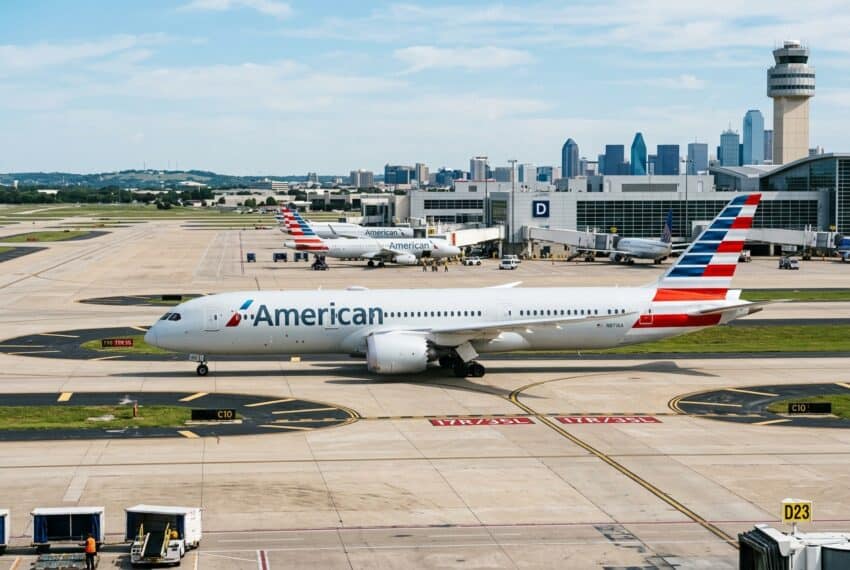
Airlines American Airlines AAL2097, an Airbus A321-231 from Dallas to Orlando and Diverted to Tampa International Airport: Aftermath of the United States Flight Diversion has captured global media attention after a sudden emergency completely upended a routine domestic route. The massive mainline passenger jet encountered volatile and incredibly dangerous convective weather patterns directly over the central Florida peninsula. Because safety remains the ultimate priority, the highly trained flight crew immediately initiated emergency rerouting protocols to escape severe turbulence. Consequently, air traffic controllers quickly cleared local airspace corridors to allow a swift, unhindered arrival. This sudden change deeply disrupted regional flight schedules and left hundreds of travelers stranded on the tarmac.
Why was American Airlines Flight AAL2097 forced to divert?
The decision to divert American Airlines Flight AAL2097 came down to a critical assessment of safety over the skies of Florida. As the Airbus A321-231 descended toward its planned destination in Orlando, rapidly deteriorating weather conditions and a line of severe summer thunderstorms blocked the arrival corridors. This environmental volatility forced air traffic controllers and the flight crew to coordinate an immediate alternative route to ensure passenger safety.
The captain of American Airlines Flight AAL2097 elected to redirect the aircraft to nearby Tampa International Airport, which sat just outside the active storm cell. This tactical maneuver allowed the flight deck to avoid severe turbulence and fuel depletion while waiting for the weather system to clear the region. While the diversion of American Airlines Flight AAL2097 disrupted travel timelines, the choice prioritized structural integrity and safety.
What operational challenges did American Airlines Flight AAL2097 face in Tampa?
Once American Airlines Flight AAL2097 touched down safely at Tampa International Airport, a massive logistical recovery operation was instantly triggered on the ground. The abrupt arrival of an unexpected Airbus A321-231 meant that ground handling crews had to quickly reallocate gate space, baggage handlers, and passenger service agents to manage the arriving travelers.
Advertisement
Advertisement
A primary concern for the network operations team managing American Airlines Flight AAL2097 was evaluating strict legal crew duty limits, as commercial pilots are restricted on their continuous working hours. Because the storm delay pushed the aircrew close to their maximum legal flight times, managers scrambled to determine if the same crew could legally fly the remaining short leg to Orlando. This complex calculation required real-time coordination with crew scheduling dispatchers to prevent the aircraft from becoming stranded.
How does an event like American Airlines Flight AAL2097 impact regional air traffic?
The sudden rerouting of American Airlines Flight AAL2097 created a temporary domino effect across the highly congested airspace of the southeastern United States. When a large mainliner like the Airbus A321-231 changes its trajectory unexpectedly, air traffic control centers must quickly clear new altitude blocks and flight paths to accommodate the shifting traffic flow.
Advertisement
Advertisement
This immediate rerouting of American Airlines Flight AAL2097 meant that other incoming flights to Tampa had to adjust their arrival spacing, which caused minor holding delays for neighboring aircraft. Furthermore, because the airspace surrounding Orlando and Tampa is incredibly interconnected, the holding patterns used by American Airlines Flight AAL2097 temporarily reduced the overall landing capacity of the entire regional aviation network.
What happens to passengers after American Airlines Flight AAL2097 lands?
For the passengers aboard American Airlines Flight AAL2097, the unexpected arrival in Tampa marked the beginning of a complex, multi-layered travel recovery process. Customer service teams at the airport immediately began working to arrange alternative transportation, as the physical distance between the two Florida cities is relatively short.
Depending on how quickly the severe weather cleared, options for the stranded travelers of American Airlines Flight AAL2097 included waiting on the tarmac for a short flight or boarding chartered buses. Because the airline prioritized rapid customer care, many passengers were rebooked on secondary commuter lines, while others received meal vouchers and continuous updates regarding their checked luggage.
What are the long-term financial costs of the American Airlines Flight AAL2097 diversion?
The unexpected operational fallout from the severe weather redirection of American Airlines AAL2097, an Airbus A321-231 from Dallas to Orlando and Diverted to Tampa International Airport: Aftermath of the United States Flight Diversion highlights how quickly a summer storm can paralyze commercial aviation networks. Dangerous atmospheric conditions directly caused this rapid, mid-air diversion sequence.
To ensure passenger safety, aviation dispatchers answered the pressing threat by designating nearby Tampa as the primary recovery base. The facility provided excellent structural handling capabilities and extensive airline ground resources to accommodate the mainline jetliner effectively.
Ultimately, the core reason for the chaotic operational aftermath stems from compounding crew duty time limitations and downstream fleet displacement. While the aircraft landed safely, the disruption forced the carrier to absorb significant financial losses from missed connection windows across multiple domestic transport hubs.
Advertisement
