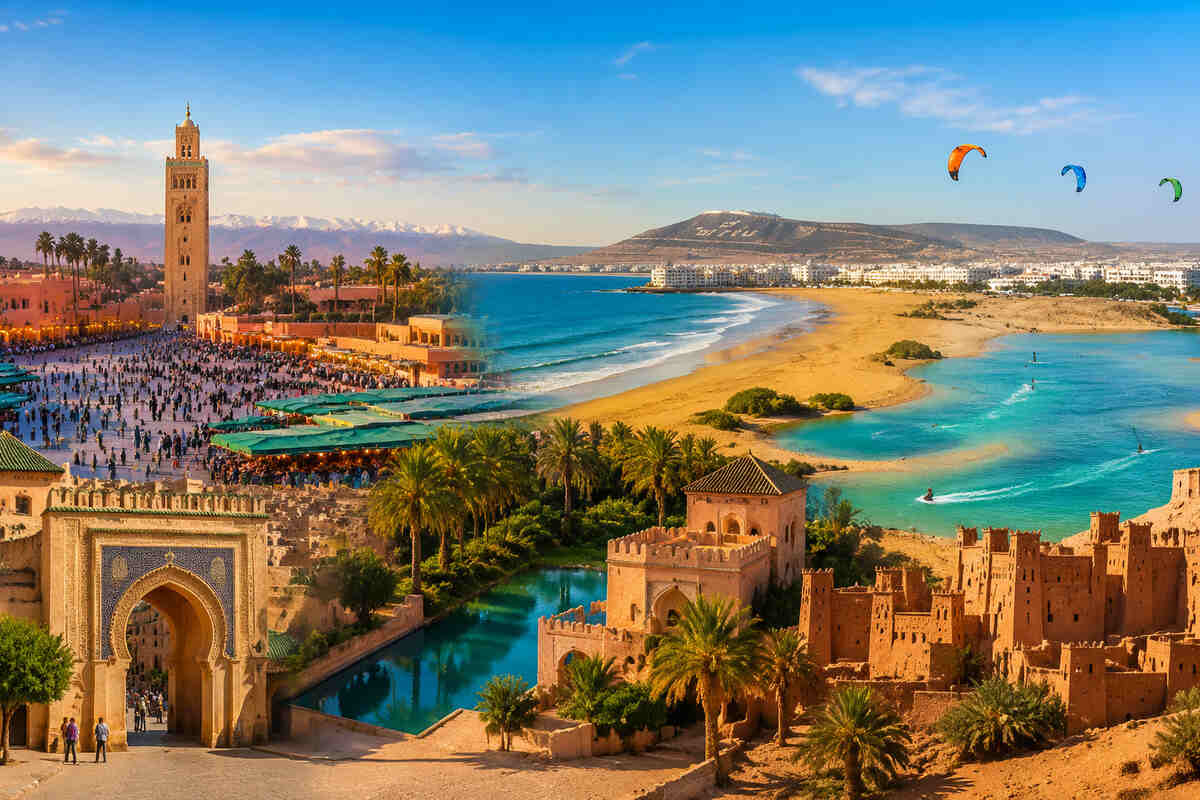
Image generated with Ai
Morocco tourism broke records in 2026. Cities such as Marrakech, Agadir and Dakhla helped bring 9.4 million visitors in the first half of the year. This growth comes from people travelling from abroad better flight connections, more cultural, beach and nature trips and more demand for places to stay. The rise in visitors also lifted tourism earnings making Morocco a top travel spot, in Africa.
Morocco’s tourism sector has entered 2026 on a strong growth trajectory, with visitor numbers, accommodation demand and travel revenues all recording significant increases during the first half of the year. The North African destination welcomed nearly 9.4 million visitors between January and June 2026, representing a 6% rise compared with the same period in 2025, according to figures released by the Directorate of Financial Studies and Forecasts (DEPF).
The latest performance highlights Morocco’s growing appeal among international travellers as well as Moroccans living abroad, with both segments contributing significantly to overall visitor activity. The steady increase reflects continued confidence in the country’s tourism offering, supported by improved accessibility, destination diversification and expanding travel opportunities.
The rise in arrivals has been driven by balanced growth across multiple tourism segments. International visitors have continued to show strong interest in Morocco’s historic cities, coastal destinations and natural landscapes, while overseas Moroccans remain an important contributor to the country’s travel economy.
Advertisement
Advertisement
The sustained increase in border crossings demonstrates the resilience of Morocco’s tourism industry and its ability to attract travellers beyond traditional holiday periods. The country’s combination of cultural heritage, adventure experiences, coastal attractions and year-round climate advantages has helped maintain demand from diverse source markets.
While destinations such as Marrakech and Agadir remain among the country’s most recognised tourism centres, Morocco’s broader strategy is increasingly focused on distributing visitor flows across different regions. This approach aims to create new tourism opportunities while reducing dependence on established hotspots.
Northern destinations, including Tangier and surrounding coastal areas, have gained greater visibility, while regions such as Dakhla, Fez and Meknes are becoming increasingly attractive for travellers seeking cultural experiences, outdoor adventures and alternative destinations.
The growth in visitor arrivals has been matched by strong performance in classified tourist accommodation establishments across the country. Overnight stays recorded substantial increases during both the first and second quarters of 2026, highlighting stronger demand for hotels and registered accommodation facilities.
Advertisement
Advertisement
During the first quarter, overnight stays increased by 23.5%, followed by a further 21.2% rise in the second quarter. These figures indicate that travellers are not only arriving in greater numbers but are also spending more time exploring Morocco’s destinations.
The increase in accommodation demand reflects the expanding appeal of different tourism segments. Traditional leisure travel continues to play a major role, but Morocco has also been developing new opportunities in cultural tourism, sports tourism, nature-based travel and desert experiences.
The diversification of tourism products has allowed more regions to participate in the country’s visitor economy. Areas once considered secondary destinations are now gaining attention through improved infrastructure, promotional campaigns and enhanced travel connections.
The positive tourism performance has translated into significant financial gains for Morocco. By the end of May 2026, travel revenues reached approximately 53.8 billion dirhams, marking a 14.6% increase compared with the previous year.
The faster growth in tourism income compared with visitor arrivals indicates increased economic value generated from each traveller. Higher spending levels have strengthened the sector’s contribution to foreign currency reserves and supported Morocco’s broader economic balance.
Tourism remains one of the country’s most important economic pillars, supporting employment, regional development and international trade. The latest revenue figures underline the sector’s growing role in strengthening national economic stability.
The increase in tourism receipts also reflects Morocco’s efforts to attract higher-value travellers through expanded experiences, premium accommodation options and improved destination management.
A key factor behind Morocco’s tourism expansion has been the continued improvement of international air connectivity. Strategic cooperation between tourism authorities, airlines and industry partners has resulted in increased flight availability and new links between Moroccan cities and major global markets.
Additional routes and increased seat capacity have improved access for travellers from Europe and other international regions. Direct connections have made destinations beyond Marrakech and Agadir easier to reach, supporting the growth of emerging tourism centres.
The expansion of aviation links forms part of a wider national tourism roadmap aimed at strengthening Morocco’s position as a diverse global destination. The strategy focuses on attracting visitors interested in desert adventures, heritage experiences, business travel, coastal holidays and eco-tourism.
Improved connectivity is expected to remain a major driver of tourism growth, allowing Morocco to reach new markets while encouraging longer stays across multiple regions.
The first-half results of 2026 demonstrate the continued strength and adaptability of Morocco’s tourism industry. Rising arrivals, stronger accommodation performance, increased revenues and improved connectivity have created a positive foundation for further expansion.
Although established destinations continue to attract the largest share of visitors, the growing popularity of lesser-known regions signals a shift towards a more balanced tourism model. By promoting cultural, coastal, environmental and adventure experiences, Morocco is positioning itself as a destination capable of offering something for every type of traveller.
Morocco tourism has achieved a record-breaking 2026 as Marrakech, Agadir and Dakhla help drive nearly 9.4 million visitor arrivals, supported by stronger connectivity, diverse experiences and a major revenue surge.
Morocco tourism sector is ending 2026 with momentum as more visitors come revenue grows and new destinations become more attractive. Established hubs like Marrakech and Agadir still draw travelers from around the world while new places such, as Dakhla are catching eye. Morocco is creating a varied and strong tourism model. More money going into air links, cultural activities, beach trips and nature adventures should help keep Morocco a global destination.
Advertisement
Advertisement
Advertisement











Tuesday, September 1, 2026

Tuesday, September 1, 2026

Tuesday, September 1, 2026

Tuesday, September 1, 2026
Tuesday, September 1, 2026
Tuesday, September 1, 2026

Tuesday, September 1, 2026

Tuesday, September 1, 2026



