
Rome Aligns With Milan and More Cities in Italy Under Travel Pressure as Protests Affect Colosseum Area, Historic Streets and Visitor Routes

Published
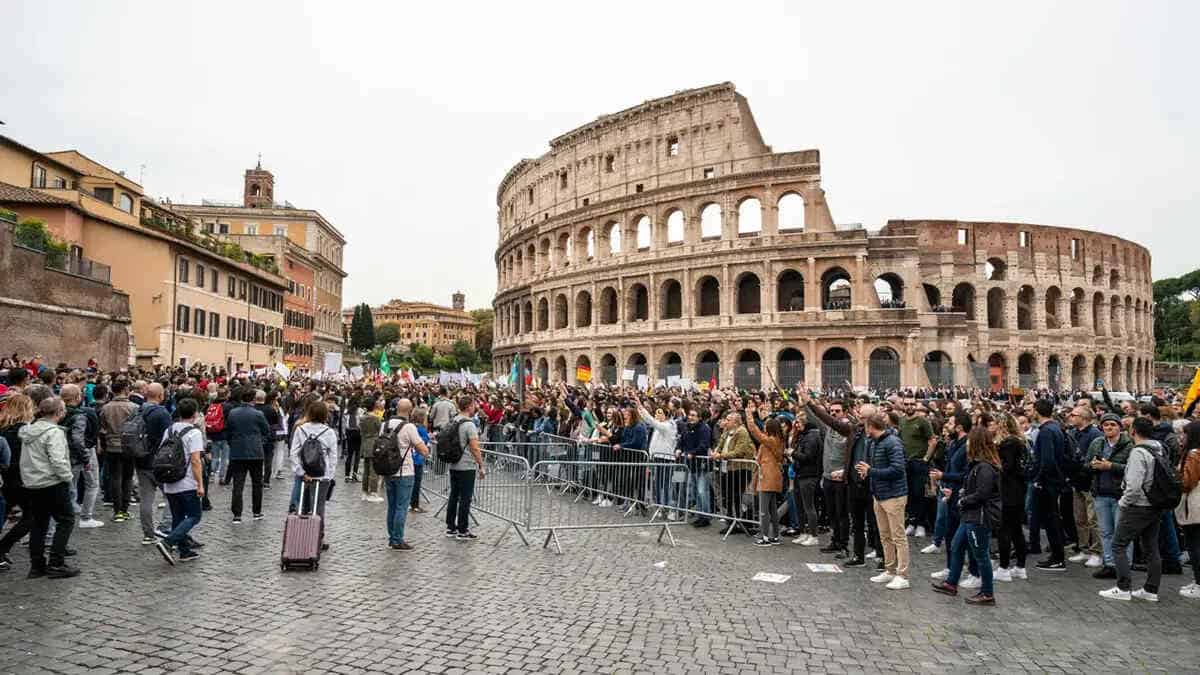
Rome joins Milan and more cities as protests cause disruption in Colosseum area and popular tourist spots. Italy’s main tourist cities suffered disruption to local transport on 24 October 2026 due to widespread protests. Large crowds of demonstrators flooded into centres such as Rome, Milan, Turin, Florence, Bologna, Naples, as well as Padua, Bergamo and Genoa. Some tourists were left confused by the access issues and clashes, but there was no nationwide closure to airports or tourist attractions.
Italy’s Widespread Protests Place Historic City Centres Under Travel Pressure
Thousands of demonstrators were reported across Italy on Saturday, 24 October, amid concerns over living costs, wages, government policies, military spending and international conflicts. Many processions remained peaceful, although clashes developed in several cities.
For travellers, the disruption was concentrated around specific streets, squares and demonstration routes. Tourist itineraries involving central landmarks, shopping districts or local transport connections could therefore have been affected by temporary restrictions.
The events did not amount to a countrywide suspension of tourism, and conditions varied considerably between destinations. Nevertheless, increased attention was required when travelling through historic centres and popular visitor districts.
Advertisement
Advertisement
Rome’s Colosseum Area and Central Sightseeing Routes Are Affected
In Rome, a group separated from a procession on Via Cavour and entered the Colosseum, where placards were displayed and slogans were shouted before the demonstrators were escorted out.
Confrontations were subsequently reported near Largo di Santa Susanna, where objects were thrown and water cannons were used.
Advertisement
Advertisement
The incidents made pedestrian access through central Rome a particular consideration for visitors planning historic sightseeing.
Ninety-six people were taken to police offices for checks, while 11 were referred to judicial authorities.
However, a citywide shutdown of visitor attractions or sightseeing services was not confirmed. Tourists were primarily exposed to potential delays around individual demonstration routes.
Milan’s Large Demonstrations Raise Concerns Over Central Travel Routes
In Milan, approximately 10,000 participants were reported in a procession involving students and activist groups.
The march passed through central districts towards Piazza Leonardo da Vinci, near the Polytechnic University of Milan. Attempts to enter restricted areas were blocked, but the main procession was described as comparatively calmer than some events elsewhere.
Three arrests, 41 judicial referrals and 167 people taken to police offices for checks were reported.
Advertisement
Advertisement
For tourists, the relevant concern was access through streets used for city-centre journeys, rather than evidence of a general closure of Milan’s attractions or transport network.
Turin’s Historic Squares Face Temporary Movement Restrictions
In Turin, tensions were reported as demonstrators attempted to approach the historic centre.
Routes near Mosca Bridge and Piazza Castello were blocked, while stones, bottles and smoke bombs were thrown during confrontations. Tear gas and water cannons were deployed.
Authorities recorded one arrest, 22 people referred to judicial authorities and 27 taken to police offices for checks.
For travellers visiting central squares or moving between districts, local transport notices were particularly important, while active demonstration routes were best avoided.
The available information did not establish a citywide interruption of tourism services, although central visitor movements could have been temporarily affected.
Advertisement
Advertisement
Florence’s Famous Bridges and Shopping Streets Come Into Focus
In Florence, a procession sought to move from Piazza Santo Spirito towards the luxury shopping area around Via Tornabuoni.
Access was blocked near Ponte Santa Trinita, a bridge close to Ponte Vecchio and an important pedestrian link across the historic centre.
Objects were thrown and batons were used when tensions escalated.
One person was referred to judicial authorities, and 14 were taken for checks.
The location mattered to tourists because walking itineraries between the city’s bridges, shopping streets and heritage areas may have required adjustments.
No blanket closure of Florence’s historic centre was established.
Advertisement
Advertisement
Bologna’s Central Streets and Naples’s Visitor Areas See Demonstrations
In Bologna, confrontations occurred near Via Marconi and Via Reno after a procession attempted to continue along central streets.
Objects were thrown, while water cannons and tear gas were deployed. One person was reportedly taken to hospital; one judicial referral and nine checks were recorded.
No general closure of Bologna’s airport or railway station was established.
In Naples, a largely peaceful march of approximately 500 people was reported, ending around Piazza Municipio.
Provincial figures included one arrest, four judicial referrals and 12 checks. Visitors needed to distinguish disruption on specific central routes from broader transport conditions.
Padua Railway Access and Bergamo Travel Links Draw Attention
At Padua, an attempt to enter the railway station area was met with intervention involving water cannons.
Advertisement
Advertisement
Four arrests, four judicial referrals and nine checks were reported.
The location was relevant because Padua is an important stop on rail journeys linking Venice with other northern Italian destinations. Nevertheless, the incident did not prove that all passing trains were cancelled.
In Bergamo, 37 people were taken for checks and three were referred to judicial authorities; 485 people were identified during security operations in the province.
There was no verified protest-related shutdown at Milan Bergamo Airport.
Genoa and Other Cities Feature in Italy’s Demonstration Picture
In Genoa, gatherings were reported around Piazza De Ferrari, followed by a procession.
Protest plans had also been publicised for Bari, Palermo, Brescia, Cagliari, Foggia, Piacenza, Verona and Lucca, among other locations.
Advertisement
Advertisement
However, an announced gathering should not be presented as a confirmed event without supporting information.
Demonstrations were linked to different groups and grievances, and should not automatically be treated as one centrally organised national campaign.
For tourists, decisions about routes and attractions remained dependent on the specific city, neighbourhood and time of travel.
Official Protest Figures Reveal the Scale of Recorded Operations
Italy’s Department of Public Security reported nine arrests nationwide, 87 people referred to judicial authorities and 371 taken to police offices for checks, including 110 minors.
These categories describe different actions: 371 checks did not mean 371 arrests.
Italy’s Famous Tourist Attractions and Sightseeing Experiences Face Temporary Access Challenges
Italy’s historic attractions and popular sightseeing districts became important areas of concern as demonstrations affected central streets and pedestrian routes on 24 October 2026. Visitors exploring Rome, Milan, Florence, Turin and Bologna faced the possibility of temporary diversions, longer walking routes and changes to planned sightseeing schedules.
Advertisement
Advertisement
In Rome, the incident at the Colosseum highlighted the potential for demonstrations to affect access around major heritage landmarks. In Florence, restrictions near Ponte Santa Trinita created additional concerns for visitors travelling between historic bridges, shopping streets and cultural attractions.
Travellers with pre-booked museum tickets, guided walking tours and scheduled sightseeing activities were advised to check official attraction announcements and allow additional time when travelling through affected neighbourhoods.
Although some visitor routes experienced disruption, no nationwide closure of Italy’s museums, heritage attractions or major sightseeing destinations was confirmed. The effects remained localised, making city-specific travel updates particularly important for tourists planning their itineraries.
What Italy Tourists Should Know About Access and Attractions
The most practical concern was temporary access disruption, not a confirmed nationwide travel shutdown.
Visitors were best served by checking city transport updates and local notices before crossing demonstration areas, particularly when fixed sightseeing reservations or rail connections were involved.
The following locations were notable because they intersected with established visitor routes. Their inclusion does not indicate that the corresponding attraction or service closed.
Advertisement
Advertisement
| Destination | Area of concern | Travel relevance |
|---|---|---|
| Rome | Via Cavour, Colosseum vicinity | Historic sightseeing approaches |
| Milan | Central route towards Piazza Leonardo da Vinci | Cross-city movement |
| Turin | Mosca Bridge, Piazza Castello | Central squares and connecting streets |
| Florence | Ponte Santa Trinita, Via Tornabuoni | Pedestrian access and shopping routes |
| Bologna | Via Marconi, Via Reno | Central road access |
| Naples | Piazza Municipio | Movement around the central gathering area |
| Padua | Railway station vicinity | Station approaches and rail connections |
October 30 Transport Strike Adds a Separate Travel Consideration
A nationwide transport strike was scheduled for Friday, 30 October 2026, creating an additional reason for passengers to review journeys in advance.
Depending on participation and operating arrangements, flights, trains and local public transport could be affected.
This planned industrial action was separate from the demonstrations on 24 October and should not be described as a direct consequence of them.
Travellers were encouraged to confirm service status with their airline, rail operator or local transport provider rather than assume that every service would stop. Additional journey flexibility could be particularly useful for passengers travelling between major Italian cities.
Italy’s Tourism Network Remains Distinct From Local Protest Disruption
The October demonstrations illustrated how quickly access around popular landmarks, historic streets and transport interchanges can change when major gatherings occur.
At the same time, the available information did not establish nationwide airport closures, blanket rail cancellations or the suspension of tourism across Italy.
Advertisement
Advertisement
For visitors travelling through Rome, Milan, Turin, Florence, Bologna, Naples and northern rail corridors, city-specific checks and flexible routing remained the most appropriate response.
Rome Aligns With Milan and More Italian Cities Under Travel Pressure as Widespread Protests Affect Historic Streets, Colosseum Area and Popular Tourist Routes, Causing Temporary Sightseeing Disruptions and Visitor Access Concerns.
Italy’s major tourism destinations continued to be accessible in principle, while visitors were encouraged to monitor local conditions and prepare for possible changes around demonstration areas and the separately scheduled transport strike.
Advertisement
