

Flights Cancelled Throughout USA As 329 Cancellations And 3,936 Delays Impacted Travel Across Florida And Others

Published
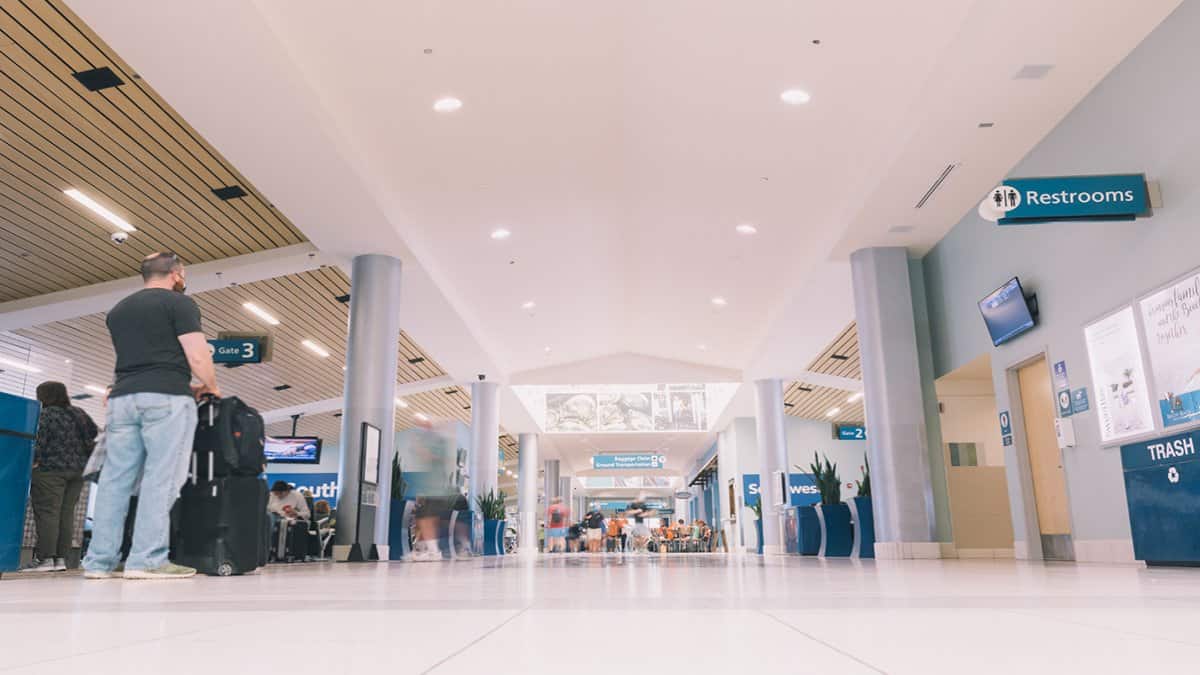
Flight cancellations skyrocketed throughout the USA, resulting in 3,936 flight delays and 329 cancellations across domestic and international routes. Flight schedules faced severe pressure from a mix of Federal Aviation Administration (FAA) traffic management initiatives, extreme weather, and localized airport constraints.
Traffic management programs were triggered from coast to coast, including wind-related ground delays at Boston Logan, airspace holds for an air show at San Francisco, volume constraints at San Diego and Austin, and an emergency response at Chicago O’Hare. Concurrently, severe weather from Hurricane Isaias—forecast to make landfall on the Florida Panhandle as a Category 3 storm—prompted precautionary shutdowns at regional coastal gateways.
USA Airports Facing the Heaviest Disruptions
| Airport | Delays | Cancellations | FAA Advisory / Operational Cause |
| Boston Logan (BOS) | 373 | 13 | Ground delay advisory (wind): average 88-minute delay |
| San Francisco (SFO) | 303 | 5 | Ground delay advisory (air show): average 59-minute delay |
| San Diego (SAN) | 288 | 3 | Ground delays (airport volume): average 55-minute delay |
| Chicago O’Hare (ORD) | 278 | 7 | Departure delay advisory (aircraft emergency): 15+ minutes, increasing |
| Charlotte Douglas (CLT) | 183 | 33 | – |
| Hartsfield–Jackson Atlanta (ATL) | 171 | 53 | – |
| Austin-Bergstrom (AUS) | 127 | 4 | FAA ground stop (airport volume) |
| Houston Bush Intercontinental (IAH) | 90 | 25 | – |
| Destin–Fort Walton Beach (VPS) | – | 78 | Airport closed due to Hurricane Isaias |
| Pensacola (PNS) | – | 74 | Airport closed due to Hurricane Isaias |
| Northwest Florida Beaches (ECP) | 2 | 47 | Regional storm disruptions |
(Departure delay percentages were high at Chicago O’Hare (10%), Dallas–Fort Worth (14%), Charlotte Douglas (12%) and Houston Bush Intercontinental (7%). Arrival delay percentages were high at Chicago O’Hare (9%), Dallas–Fort Worth (8%), Charlotte Douglas (9%) and Hartsfield–Jackson Atlanta (8%).)
Airlines in the Crosshairs: Point-to-Point vs. Hub-and-Spoke Networks
The operational burden split noticeably between high-frequency point-to-point operations, legacy carriers, and regional feeder networks:
- Southwest Airlines (1,322 delays / 29% delay rate): The carrier absorbed the highest delay volume nationwide. Because Southwest operates an intensive point-to-point network with fast aircraft turnaround targets, slot delays in congested hubs quickly compound across downline flights throughout the day.
- American Airlines & Regional Affiliates (726 combined delays, 78 cancellations): Legacy carrier American recorded 642 delays (17%) and 20 cancellations. Its regional feeder affiliates operating under the American Airlines group bore heavy operational strain: PSA Airlines logged 36 delays (4%) alongside 40 cancellations (5%), while Envoy Air recorded 48 delays (4%) and 18 cancellations (1%).
- Delta Air Lines (261 delays / 7% delay rate, 49 cancellations / 1% cancellation rate): Delta recorded the highest individual cancellation tally among listed mainline operators, heavily driven by downstream impacts across East Coast and southeastern routes.
- United Airlines (286 delays / 8% delay rate, 19 cancellations): United managed to maintain low cancellation numbers while absorbing cascading delays across primary hubs like Chicago O’Hare.
- Allegiant Air (19 delays / 3% delay rate, 35 cancellations / 6% cancellation rate): The leisure-focused carrier recorded the highest cancellation rate (6%) among tracked carriers, largely reflecting exposure to Florida airport closures.
Passenger Action Plan: Managing Itinerary Disruptions
If your flight is caught in active FAA ground delays or weather-related closures, take these steps to protect your travel plans:
Advertisement
Advertisement
- Rely on Official Airline Channels: Monitor flight status directly through your carrier’s mobile app or official website. Avoid depending solely on third-party tracking tools when an airline or airport has posted real-time operational alerts.
- Enable Push Notifications: Activate real-time alerts for gate reassignments, rolling departure-time revisions, and cancellations to react before lines form.
- Verify Connecting Segments: If your initial departure leg experiences an FAA-related ground hold, immediately review downstream connecting legs to confirm your itinerary remains viable.
- Confirm Airport Operating Status: If travelling through the Florida Panhandle or storm-affected regions, confirm that local airport authorities have not suspended operations before heading to the terminal.
- Contact Customer Care for Rerouting: Inquire about schedule revisions, alternative routes, or refund eligibility if your flight is grounded or significantly delayed.
- Retain Documentation and Receipts: Save booking confirmations, physical or digital boarding passes, and receipts for eligible out-of-pocket expenses resulting from schedule interruptions.
The information presented in this report was compiled by our editorial team using live aviation tracking records captured on 9 October 2026 at 2:46 pm ET US.
Primary Data Source: FlightAware.
Advertisement
Advertisement
Editorial Review: The reported figures were independently reviewed and cross-checked by our human editorial team. Timestamped records, tracking information, and relevant feed snapshots have been retained internally to support historical verification and maintain editorial transparency.
Live flight-tracking information represents conditions in active airspace and airline operations at the time of collection. As a result, figures may differ slightly from information displayed at individual airports or communicated by airline staff at specific gates.
Travelers are advised to confirm their flight status, departure or arrival changes, and any operational updates directly with their airline and the relevant airport before beginning their journey.
Advertisement
Verified by Somudranil Sarkar
