
China And Russia Build Stronger Travel Bridge As Visa-Free Extension Brings Tourists Businesses And Students Closer

Published
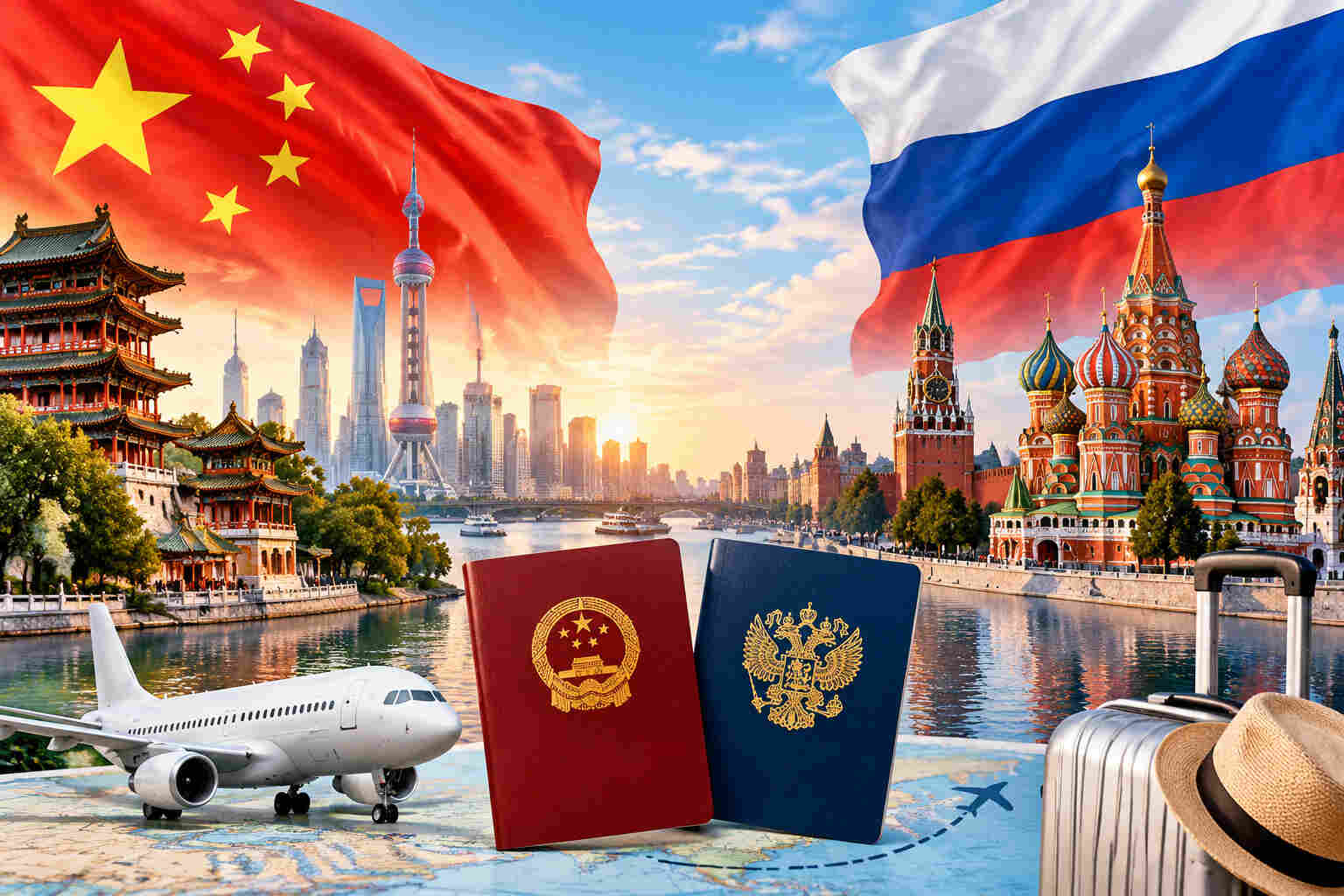
Image generated with Ai
Visa-free travel between Russia and China is reshaping tourism, business, education, and culture. For at least the next five years, citizens of the two countries can travel between the nations without a visa. Easier travel will likely lead people to travel and work abroad more. In the past, people from the two countries primarily engaged in diplomacy and business activities with one another. Now, citizens can engage in other activities with one another as well.
For decades, China-Russia relations have largely been associated with government agreements, strategic partnerships, energy cooperation and expanding trade ties. However, a quieter transformation is now taking place in airports, railway stations, universities, commercial centres and tourist destinations, where ordinary travellers, entrepreneurs, students and professionals are building direct connections.
Advertisement
Advertisement
The expanded visa-free access represents more than a simple travel convenience. It reflects a broader effort to strengthen the social foundation of bilateral relations by allowing more frequent interactions between the two populations.
Easier Travel Opens New Doors For Millions Of Visitors
The introduction of visa-free travel removed one of the biggest obstacles that previously limited movement between China and Russia. Before the policy changes, travellers often faced lengthy visa procedures involving paperwork, appointments, financial documentation and long processing periods.
Advertisement
Advertisement
For many tourists, business visitors and researchers, these requirements created uncertainty and reduced the ability to make quick travel decisions.
Under the new arrangement, eligible Russian citizens can enter China without applying for a traditional visa before departure for approved short-term purposes, including tourism, business activities, family visits, cultural exchanges and transit. Similar conditions were later introduced for eligible Chinese travellers visiting Russia.
Advertisement
Advertisement
The new system provides greater flexibility for people who want to make short visits, attend professional events or explore cultural destinations without months of preparation.
A business owner looking for new suppliers in China can now consider attending exhibitions and meetings with fewer administrative barriers. A Russian traveller interested in discovering Chinese cities can organise a journey with more freedom. Likewise, Chinese visitors can experience Russian heritage sites, cultural centres and regional attractions more easily.
Although visa procedures may appear to be only an administrative issue, their removal can significantly influence travel behaviour. Easier access often encourages more spontaneous decisions, increases repeat visits and expands the number of people participating in international exchanges.
Tourism Growth Becomes A Major Benefit Of Visa-Free Movement
Tourism has been among the first sectors to experience the impact of simplified travel rules.
Following the introduction of visa-free arrangements, travel demand between China and Russia showed significant improvement. Two-way tourism flows increased strongly, with Russian visitor numbers to China rising sharply and China remaining an important international market for Russian destinations.
The policy is also changing the structure of tourism.
Advertisement
Advertisement
Previously, organised group tours represented a major part of China-Russia travel. These packages provided fixed schedules, transportation arrangements and language support for visitors unfamiliar with their destination.
However, easier border access is creating opportunities for independent travellers.
Young professionals, families and experienced travellers are increasingly choosing personalised journeys rather than traditional package holidays. They can select destinations based on their own interests, whether exploring historic landmarks, cultural attractions, food experiences or modern urban developments.
Russian visitors are showing interest in China’s major cities, regional cuisines, advanced technology centres and historical attractions. Chinese travellers continue to explore Russia’s architecture, museums, theatres, natural landscapes and cultural heritage.
This shift could also benefit smaller cities and less-known destinations. Independent travellers often search for unique experiences outside the most popular tourist routes, creating new opportunities for local hotels, restaurants, transport providers and cultural businesses.
Tourism also plays an important role in strengthening public understanding. Personal experiences allow visitors to see daily life, traditions and communities directly rather than forming opinions only through digital platforms or media reports.
Advertisement
Advertisement
While tourism cannot remove political differences between countries, increased personal interaction can encourage greater familiarity and broader understanding.
Businesses And Universities Gain From Greater Mobility
The impact of visa-free travel extends beyond tourism.
Small and medium-sized enterprises are among the sectors that could benefit significantly because they often lack the resources required to manage complicated international travel arrangements.
Simpler movement allows smaller companies to explore foreign markets, meet potential partners and develop commercial relationships more efficiently.
Chinese businesses seeking Russian distributors, Russian companies exploring Chinese markets and firms interested in technology cooperation can benefit from easier short-term travel.
Business expansion often begins with personal meetings. Negotiations, factory visits, trade exhibitions and partnership discussions are usually more effective when conducted face-to-face.
Advertisement
Advertisement
The increase in business activity following the introduction of easier travel procedures highlights the connection between mobility and economic cooperation. Although multiple factors influence trade growth, improved travel access can support stronger commercial links.
Education and research cooperation are also expected to benefit.
Universities, research institutions and cultural organisations depend on international movement for conferences, academic exchanges, joint projects and specialist programmes.
Students and researchers can gain greater opportunities to visit partner institutions, participate in events and build professional networks.
However, visa-free travel mainly supports short-term visits. Those seeking employment, long-term residence or formal study programmes must continue to follow existing immigration regulations.
The main advantage is that it creates easier access for the initial stages of cooperation, allowing relationships and partnerships to develop more naturally.
Advertisement
Advertisement
Transport And Tourism Infrastructure Must Expand With Demand
As cross-border travel increases, both countries face the challenge of ensuring that infrastructure keeps pace with demand.
Airports, airlines, railway services, border facilities and hospitality businesses must adapt to a larger and more diverse group of travellers.
Air connectivity remains a crucial factor.
The growth of flights between China and Russia has helped accommodate increasing passenger demand and improved connections between major cities. Additional routes could further support tourism, business travel and regional development.
However, aviation alone cannot meet every requirement.
Railway links and land border facilities are also important, particularly because China and Russia share a long border. Improved transport connections could make travel easier for communities located away from major international airports.
Advertisement
Advertisement
The hospitality sector must also prepare for changing visitor expectations.
Independent travellers require reliable digital booking systems, multilingual information, convenient payment options and accessible travel services.
Hotels, restaurants and tourism operators that adapt to these needs will be better positioned to benefit from rising international demand.
Financial services are another important area. Differences between banking systems and payment methods can create challenges for visitors, making smoother payment solutions essential for comfortable travel.
At the same time, authorities must continue cooperation on border management and security measures to ensure that increased mobility remains safe and efficient.
Personal Connections Strengthen International Relations
Modern technology has made international communication easier than ever. Businesses can hold online meetings, universities can organise virtual conferences and governments can communicate instantly across borders.
Advertisement
Advertisement
Yet digital connections cannot completely replace personal experiences.
A student visiting another country gains knowledge that cannot be fully captured through online learning. A business executive visiting a production facility develops a deeper understanding than through virtual discussions. A traveller discovering another culture creates memories based on direct experience.
These encounters can help people understand societies beyond headlines and political discussions.
Direct interaction also allows individuals to recognise the complexity of another country’s culture, economy and daily life.
For China and Russia, expanding people-to-people exchanges provides another layer of cooperation alongside government agreements and economic partnerships.
Strong international relationships are built not only through official meetings but also through connections between communities, businesses, universities and individuals.
Advertisement
Advertisement
Visa-Free Travel Creates A New Foundation For Future Cooperation
The extension of China-Russia visa-free travel through 2027 represents a significant development in their bilateral relationship.
The immediate effects can be measured through tourism numbers, business activity and academic exchanges. However, the long-term impact will depend on whether easier travel leads to deeper and more sustainable connections.
Future success will require continued investment in transport networks, tourism services, digital systems and cross-border cooperation.
The policy demonstrates that international partnerships are not shaped only by government decisions. They are also influenced by millions of individual interactions taking place every day.
By reducing barriers to movement, China and Russia are creating more opportunities for citizens to participate directly in the development of their relationship.
The future of bilateral cooperation will depend not only on agreements signed at official meetings but also on the connections created when people travel, work, study and experience each other’s cultures.
Advertisement
