

Holland America Line and Other Unlock Europe’s Hidden Autumn Charm With a New Era of Luxury Cruising

Published
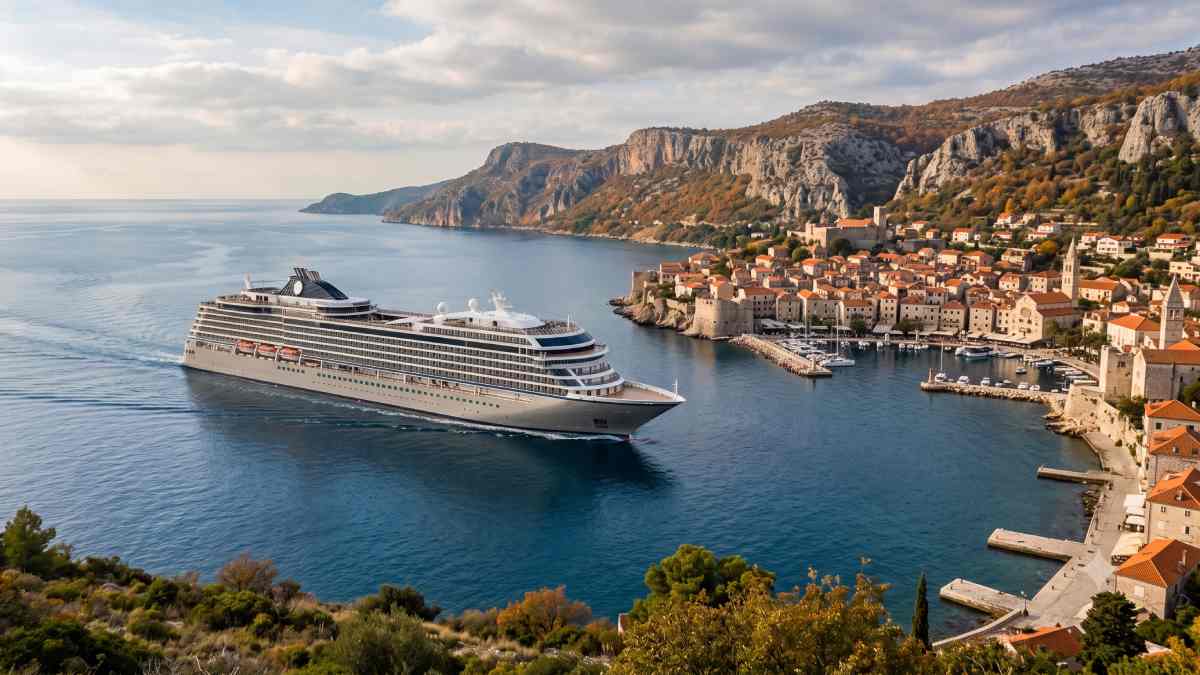
The European travel industry through sea transport is experiencing a remarkable shift in its structure where cruise liners are replacing the summer season peak congestion with lucrative autumn travel. Previously restricted to a condensed summer schedule, the late season cruise in Europe offers a valuable business solution to avoid destination over-crowding and overstressed city infrastructures. With investments in a highly modernized fleet and cultural diplomacy, cruise companies are now able to make use of the temperate weather of autumn in the Mediterranean Sea and the North Sea in order to re-distribute tourist traffic.
Macroeconomic Shifts: The Structural Realignment of European Maritime Tourism
Seasonality Strains and the De-densification Imperative
For decades, the European maritime leisure economy followed an inflexible operational calendar governed by climatic conventions and institutional holiday schedules. Between June and late August, operators concentrated high-capacity tonnage within Southern European archipelagos and historic Mediterranean rim ports. This high-density influx produced severe negative externalities, including overburdened urban transit networks, acute environmental degradation in ecologically fragile harbours, and deteriorating public sentiment among resident populations. Historic urban centres designed for medieval commerce, such as the walled cities of Dubrovnik and Kotor, frequently hosted simultaneous disembarkations of multiple mega-vessels, exceeding municipal carrying capacities.
Advertisement
Advertisement
In response to these compounding pressures, corporate strategists and municipal port authorities have initiated a structural operational shift. Rather than concluding Mediterranean itineraries in early October to reposition tonnage toward the Caribbean, major operators are extending their deployment windows deep into November. This strategic evolution transforms the traditional shoulder period into a high-yield window dedicated to late-season European cruising. By redistributing passenger flows away from the suffocating mid-summer heatwaves that increasingly disrupt Southern European travel, operators provide high-net-worth guests with a far more temperate, comfortable, and unhurried cultural immersion.
Statistical assessments by Eurostat validate the vast scale of maritime movement across the European continent. In 2024, European Union maritime ports registered a total throughput of 417.8 million seaborne passengers, representing a continuous post-pandemic recovery and structural expansion across primary gateway nations. Italy emerged as the leading maritime passenger destination in the European Union, handling substantial ferry and cruise volumes, while Greece registered a 9.7% increase between 2019 and 2024, adding 7.1 million passengers. Notably, the Mediterranean basin accounts for approximately 66.5% of all cruise passengers across the European Union. The systematic expansion of voyages into late autumn ensures that this immense volume is distributed more evenly across the calendar year, providing local port economies with sustained fourth-quarter cash flow while shielding municipal assets from peak-season strain.
Advertisement
Advertisement
European Union Policy Directives and Sustainable Port Mandates
The commercial lengthening of the sailing calendar directly supports top-down policy imperatives established by supranational European regulators. The European Commission’s Transition Pathway for Tourism, alongside the EU Agenda for Tourism 2030, places urgent priority on environmental de-densification, circular economy principles, and balanced regional development. Coastal and maritime tourism represents an indispensable pillar of the blue economy, yet unmanaged peak-season spikes directly undermine local climate resilience.
By actively facilitating off-peak scheduling, maritime governing bodies assist national ministries in meeting mandatory carrying-capacity thresholds. Destination management organisations are abandoning pure volume acquisition in favour of net-value contribution, prioritizing visitors who spend more time exploring historical archives, architectural monuments, and regional gastronomy. The alignment between cruise line deployment planning and European Union sustainable tourism objectives has transformed autumn from an operational afterthought into an essential proving ground for balanced, low-impact maritime travel.
Advertisement
Advertisement
| Operational Metric | Peak Summer Season (June–August) | Traditional Shoulder Window (September–Mid-October) | Extended Late-Season Corridor (Late October–Late November) |
| Average Port Call Density | Extreme (3–5 mega-vessels daily in major hubs) | High (2–3 vessels daily) | Optimised (1–2 premium vessels daily) |
| Passenger Demographics | Mass-market families, volume-driven groups | Mixed multi-generational demographics | High-net-worth travellers, solo cruisers, cultural scholars |
| Berth Infrastructure Stress | Severe gridlock, strained transit systems | Moderate terminal and traffic friction | Fluid passenger circulation, efficient local transit |
| Municipal Economic Yield | High aggregate spend with acute municipal costs | Moderate spend, reduced local friction | High per-capita spend, stable merchant retention |
| Shore Power Availability | Severe electrical grid load constraints | Moderate grid allocation pressure | Maximised cold-ironing connection efficiency |
Capital Allocation Economics: Modernisation Overhauls Versus Newbuild Speculation
The Financial Rationale of Mid-Life Ship Refurbishments
The viability of late-season European operations depends heavily on the physical capabilities and interior design of the deployed fleet. To attract discerning luxury travellers during cooler autumn months, cruise vessels must offer refined, weather-resilient interior lounges, world-class culinary venues, and superior environmental performance. However, the macro-financial climate within global shipping has shifted significantly. Facing elevated interest rates, lingering balance-sheet obligations, and supply-chain friction, cruise conglomerates have adjusted their capital expenditure strategies. Rather than placing multi-billion-euro orders for unbuilt mega-ships that take up to five years to enter service, executive suites are channelling capital into comprehensive fleet modernisation initiatives.
Refurbishing existing mid-sized tonnage offers distinct economic advantages over speculative new construction. Mid-sized vessels constructed during the early 2000s possess physical dimensions that allow access to constrained historic ports, such as Kotor, Corfu, and Trieste, where 6,000-passenger mega-liners face severe navigational or regulatory restrictions. By executing comprehensive drydock transformations, operators preserve the embodied carbon and capital value of their existing hulls while modernising the guest experience to rival new luxury flagships.
Holland America Line’s $500 million “Evolution” programme demonstrates this strategic focus. Spanning six mid-sized Signature- and Vista-class vessels—Oosterdam, Zuiderdam, Westerdam, Noordam, Nieuw Amsterdam, and Eurodam—this multi-year fleet enhancement is the largest revitalization campaign in the line’s 153-year history. Undertaken in direct technical collaboration with premier Italian shipbuilder Fincantieri, the Evolution project brings signature Pinnacle-class features to mid-sized ships, giving operators the agility to deploy premium hardware across extended European seasons. Furthermore, Holland America Line is expanding its fleet to 12 ships in 2029 through the acquisition of P&O Cruises’ Arcadia, which shares the proven Vista-class architectural platform, providing near-term capacity growth without the prohibitive lead times of shipyard newbuild programmes.
Architectural Reconfigurations and the Rise of High-Yield Solo Travel
The interior transformations executed during these drydocks reflect structural shifts in consumer travel demographics. Modern affluence is characterised by an expanding demographic of independent, solo cultural travellers who seek premium accommodations without punitive financial surcharges. Historically, solo cruisers were relegated to windowless single berths or forced to pay double-occupancy single supplements that often reached 100% of the baseline cruise fare.
Holland America Line’s transformation of the Oosterdam, scheduled for drydock completion in autumn 2027, addresses this long-standing demand by adding 76 new accommodations. Central to this architectural reconfiguration is the installation of 30 purpose-built Solo Verandah staterooms. These staterooms provide over 200 square feet of living space, private ocean verandas, dedicated workspaces, and glass-walled walk-in showers, demonstrating that single travellers no longer need to compromise on exterior views or comfort. The commercial performance of these dedicated accommodations is notable: premium solo verandas consistently generate high revenue yields per square foot while booking well in advance of standard staterooms.
Simultaneously, the modernization plan introduces 24 Vista Suites and two forward-facing Bridgeview Suites on Oosterdam, expanding high-margin premium inventory. Positioned directly beneath the bridge navigation wings, the Bridgeview Suites offer 180-degree forward vistas, providing prime observation settings for scenic coastal passages like Montenegro’s Boka Bay. By reallocating shipboard square footage toward premium single and luxury suite inventory, cruise operators maximize revenue yields per passenger, reducing reliance on raw passenger volume to hit corporate profitability targets.
Advertisement
Advertisement
European Shipyard Resurgence and Industrial Ripple Effects
The economic benefits of fleet modernization projects extend well beyond cruise line balance sheets, injecting critical capital into European maritime engineering clusters. Large-scale refits generate thousands of specialised jobs across drydocks, design firms, and equipment manufacturing plants throughout Italy, Germany, and the Netherlands. Fincantieri’s repair and conversion shipyards orchestrate complex structural operations, coordinating steel fabricators, electrical engineers, and naval architects over tightly budgeted four- to six-week drydock cycles.
Beyond passenger accommodations, engineering teams install targeted technical upgrades designed to reduce fuel consumption and operational carbon intensity. Engineers fit advanced variable-frequency electrical systems, apply hydrodynamic silicon hull coatings to reduce drag, and overhaul heating, ventilation, and air-conditioning (HVAC) loops to lower energy usage. Furthermore, switchboards are upgraded to ensure seamless cold-ironing shore power connectivity, allowing vessels to turn off diesel engines while berthed in European ports. These capital investments modernize mid-life hulls into eco-efficient maritime assets fully capable of meeting tightening environmental regulations across European territorial waters.
| Ship Name | Class Platform | Refit Delivery Timeline | Accommodations Modernisation Scope | Public Space Transformation | Engineering & Shipbuilding Partner |
| Oosterdam | Vista-Class | Fall 2027 | 76 new staterooms: 30 Solo Verandahs, 24 Vista Suites, 2 Bridgeview Suites | Grand Dutch Café installation, renovated Ocean Bar, redesigned Pinnacle Suite | Fincantieri |
| Zuiderdam | Vista-Class | April 2028 | Dedicated Solo Verandahs, refreshed stateroom decor, modernized suite electronics | Expanded live-music stage in Ocean Bar, Pinnacle-style destination dining | Fincantieri |
| Westerdam | Vista-Class | Phased Evolution Schedule | Upper-deck suite expansion, high-efficiency cabin lighting, digital guest keys | Atrium redesign, gallery updates, Explorations Central stage enhancements | European Drydock Network |
| Noordam | Vista-Class | Phased Evolution Schedule | Stateroom layout refresh, premium solo category conversion, HVAC overhauls | Grand Dutch Café integration, acoustic stage modernisation, outdoor seating upgrade | European Drydock Network |
| Nieuw Amsterdam | Signature-Class | Phased Evolution Schedule | High-tier suite refurbishment, expanded balcony features, shore-power switchboards | Upgraded specialty restaurants, revitalised wellness spaces, atrium modernization | European Drydock Network |
| Eurodam | Signature-Class | Phased Evolution Schedule | Premium cabin floorplan updates, energy management retrofits, suite tech additions | Enhanced cultural programming hubs, refreshed main dining venues, bar concepts | European Drydock Network |
The Southern Strategic Pivot: Adriatic and Mediterranean Port Economics
Turnaround Infrastructure and Shore Power at Civitavecchia and Trieste
The operational return on modernized ship design becomes clear during the late autumn Mediterranean season. Oosterdam begins its post-transformation sailing schedule on 31 October 2027, embarking on a 10-day Adriatic Antiquities voyage that departs from Civitavecchia (Rome) and concludes in Trieste, Italy. This voyage kicks off a series of late-season Mediterranean sailings that connect Greece, Montenegro, and Spain throughout November, demonstrating how extended autumn deployment operates in the field.
Navigating these itineraries requires well-developed turnaround port infrastructure that can process passengers, baggage, and provisions smoothly and efficiently. The Port of Civitavecchia, administered by the Autorità di Sistema Portuale del Mar Tirreno Centro Settentrionale, acts as the primary Western Italian gateway for these sailings, handling more than 3.5 million cruise passengers annually. To preserve its leadership position while complying with European clean air mandates, Civitavecchia has invested €200 million in shore power infrastructure, enabling docked vessels to draw energy from the national electrical grid and eliminate in-port emissions. Conducting homeport turnarounds in late October and November relieves pressure on the Civitavecchia-to-Rome regional rail and road corridors, easing terminal congestion and offering visitors an uncrowded arrival in the capital.
At the northeastern end of the Italian peninsula, the Port of Trieste serves as a strategic turnaround point for Adriatic cruise itineraries. Managed by the Autorità di Sistema Portuale del Mare Adriatico Orientale alongside Trieste Terminal Passeggeri, the port has positioned itself as an efficient, modern cruise gateway, projecting throughput of roughly 424,000 cruise passengers. Trieste’s deep-water quays and integrated passenger rail hub provide seamless cross-border transit toward Austria, Germany, and Slovenia, offering travellers an attractive alternative to nearby Venice, where large cruise ships face strict maritime access bans. Under port leadership headed by Marco Consalvo, Trieste has built stable, year-round operating relationships with major luxury and premium cruise operators, demonstrating how mid-sized autumn calls can anchor regional port economies.
Heritage Preservation and Carrying Capacities in the Bay of Kotor
Between its Italian bookends, late-season Adriatic itineraries depend heavily on cultural anchor ports, where destination stewardship has become an urgent civic priority. The Bay of Kotor in Montenegro, renowned for its dramatic limestone fjord and medieval maritime architecture, faces serious physical space limitations. Administered by Luka Kotor, the port operates just two berths near the historic walls alongside three deep-water anchorages in the bay. With nearly 500 vessel calls and millions of visitors arriving every year, peak summer operations frequently push the UNESCO World Heritage Old Town past its environmental carrying capacity.
Advertisement
Advertisement
To safeguard historic assets while maintaining tourism revenues, the municipal administration of Kotor entered into a formal cooperative agreement with the Cruise Lines International Association (CLIA) to execute detailed sustainable tourism and carrying-capacity studies. These assessments confirmed that scheduling calls during late autumn provides essential overtourism mitigation. When vessels call at Kotor in late October and November, passengers disembark into quiet, uncrowded streets. This allows the local community to comfortably accommodate visitor foot traffic, prevents bottlenecks at the historic Sea Gate, and delivers valuable off-season income to local artisans, restaurants, and museum collections.
Decentralisation Initiatives Across Corfu and the Ionian Basin
Further south in the Ionian Sea, Corfu illustrates how regional Greek island hubs are embracing shoulder-season cruising to build year-round economic resilience. Verified data from the Hellenic Ports Association (ELIME) recorded 894,179 cruise passenger arrivals across 467 vessel calls at Corfu in 2025, ranking it among Greece’s top cruise destinations alongside Piraeus, Mykonos, and Santorini. The Corfu Port Authority (OLKE) built upon this momentum with a 10.7% year-on-year increase in cruise passengers through the first five months of 2026, welcoming 225,018 travellers.
Greece’s broader cruise tourism industry generated €3.1 billion in total economic output and sustained 33,000 domestic jobs in 2024, according to economic impact assessments published by CLIA and Oxford Economics. However, rapid volume expansion has prompted national authorities to intervene. The Greek Ministry of Tourism established a €20 peak sustainability levy per passenger on heavily congested islands like Santorini and Mykonos to manage peak summer overcrowding, while charging a €5 baseline levy at regional ports. Corfu has leveraged these national policies to position itself as a welcoming, high-capacity autumn destination. By promoting late-season visits, Corfu helps spread tourism benefits across Greece’s regional ports, allowing cruise guests to explore Venetian fortifications, historic palaces, and olive groves in mild Mediterranean autumn weather.
| Port Gateway / Authority | Responsible Authority | Passenger Throughput Metrics (Annual Verified) | Autumn De-densification Strategy | Environmental Infrastructure & Green Initiatives |
| Civitavecchia (Rome) | AdSP del Mar Tirreno Centro Settentrionale | 3.5 million cruise passengers | Turnaround scheduling extended deep into late November | €200M cold-ironing shore power installation program |
| Trieste | AdSP del Mare Adriatico Orientale | 424,000 projected cruise passenger throughput | Developing autumn homeport itineraries to relieve regional port congestion | Direct intermodal passenger rail links to reduce highway transit emissions |
| Kotor (Boka Bay) | Luka Kotor AD | ~500 cruise ship calls, multi-million visitor counts | Staggered berth scheduling and destination capacity partnerships with CLIA | Bay emissions monitoring and strict anchorage environmental guidelines |
| Corfu (Kerkyra) | Corfu Port Authority S.A. (OLKE) | 894,179 passengers / 467 ship calls (2025 ELIME data) | Distributing passenger arrivals into autumn to ease summer island congestion | Terminal efficiency modernisations and regional green cruise framework |
Cultural Diplomacy and Brand Equity: Dutch Maritime Lineage at Sea
Rotterdam’s Transatlantic Legacy and Modern Destination Stewardship
While geographic de-densification drives itinerary planning across the Mediterranean, onboard brand identity relies on deep cultural authenticity. Modern premium cruisers actively seek voyages that offer educational immersion, curated local flavours, and clear historical provenance. Holland America Line reinforces this connection by weaving Dutch maritime heritage through every facet of its onboard experience, drawing directly on its 150-year history.
Established in Rotterdam in 1873, Holland America Line played a central role in connecting Western Europe with North America. Millions of transatlantic immigrants departed from the company’s historic quayside headquarters on Rotterdam’s Wilhelminapier, a landmark building that today operates as the iconic Hotel New York. Just steps away stands the modern Cruise Port Rotterdam terminal, linking nineteenth-century maritime history directly to contemporary cruise operations.
This authentic maritime heritage aligns closely with the strategic initiatives of NBTC Holland Marketing. Guided by its “Perspective 2030” national tourism agenda, NBTC has moved away from promoting unmanaged visitor volume, focusing instead on destination stewardship and spreading travellers geographically and seasonally. Under the leadership of Managing Director Jos Vranken, NBTC collaborates with maritime stakeholders to highlight regional travel corridors, encouraging international travellers to explore urban centres beyond Amsterdam’s canal core. By offering pre- and post-cruise land stays in Rotterdam, cruise operators support national stewardship goals, distributing tourism spending to cultural landmarks like the ss Rotterdam, the Kinderdijk windmills, and the Fenix Migration Museum.
Advertisement
Advertisement
Onboard Cultural Exports: Gastronomy, Mixology, and Fine Art Integration
Modernized ships bring this Dutch cultural heritage to life at sea through dedicated public venues and programming:
Holland America Line is introducing the Grand Dutch Café aboard the Oosterdam and across its modernized fleet, making the beloved venue available beyond its flagship Pinnacle-class vessels. Located on Deck 3 next to the main atrium, the café recreates traditional European meeting places with Delft-inspired design accents, authentic draft beers, and classic Dutch specialities like fresh stroopwafels, poffertjes, and bitterballen. The venue functions as an informal cultural gathering space where guests can experience authentic European café life while sailing between ports.
The adjacent Ocean Bar has also been refreshed with Art Deco decor that evokes the golden era of ocean liners, anchored by an integrated stage for classical string ensembles and evening cabaret performances. Dutch mixologist and spirits historian Tess Posthumus has elevated the ship’s beverage programme with exclusive regional cocktail menus created for European voyages. Signature drinks such as the Dutch Courage Martini (featuring olive-oil-washed De Lijn Gin, dry vermouth, and St-Germain), Amsterdam Ambrosia, Orange Elixir, and the Rotterdam Runner showcase historic Dutch distilling traditions like Bols Genever alongside artisanal bitters and botanical ingredients.
This cultural enrichment extends to the fine arts through a long-running partnership with the Rijksmuseum, the national museum of the Netherlands in Amsterdam. Through the “Rijksmuseum at Sea” programme, curated reproductions of Dutch Golden Age masterpieces by Rembrandt van Rijn, Johannes Vermeer, and Frans Hals are displayed throughout the ship’s atriums and public spaces. Guests can also view high-definition art lectures and historical documentaries on their stateroom entertainment systems, transforming days at sea into enriching cultural explorations.
Northern European Synchronicity: The North Sea and Baltic Corridor Dynamic
Complementary Off-Peak Deployments Across Rotterdam and Hamburg
The commercial success of autumn cruising extends well beyond Southern Europe; it is matched by robust late-season operations across Northern Europe and the North Sea basin. As Holland America deploys tonnage throughout the Mediterranean, major lines like MSC Cruises run complementary northern itineraries deep into late autumn. MSC Cruises operates the MSC Preziosa out of key northern hubs like Rotterdam, Netherlands, and Hamburg, Germany, offering North Sea circuits through late October, November, and December.
These northern late-season itineraries serve an important market niche. While Mediterranean voyages offer mild sunny weather, northern autumn sailings attract cultural travellers drawn to autumn foliage, uncrowded museums, and historic harbour cities. Operating out of Rotterdam’s Wilhelminapier terminal, these voyages leverage the Netherlands’ intermodal rail network, allowing passengers arriving at Amsterdam Airport Schiphol to reach the ship’s gangway via high-speed train in under an hour.
Advertisement
Advertisement
Northern ports of call provide exceptional access to major artistic institutions and historic neighbourhoods. In Hamburg, ships berth within walking distance of the historic Speicherstadt warehouse district and the modern Elbphilharmonie concert hall. In Rotterdam, passengers can visit world-class cultural institutions like Museum Boijmans Van Beuningen, take architectural tours of iconic Cube Houses, or join day trips to Amsterdam’s Museumplein to explore the Rijksmuseum and Van Gogh Museum. By deploying weather-resilient modern tonnage equipped with enclosed pool decks, luxury spas, and extensive indoor lounges, operators run comfortable, reliable voyages across Northern Europe despite cooler late-autumn maritime conditions.
Intermodal Connectivity and Packaging Extended Land-Sea Journeys
The simultaneous operation of northern and southern itineraries enables tour operators and luxury travel advisors to curate back-to-back land and sea journeys. Affluent long-haul travellers from North America, the United Kingdom, and Asia increasingly combine multiple regional journeys into comprehensive Grand Voyages. For example, a traveller can complete an eight-day late-October North Sea cultural loop from Rotterdam, travel across the continent via high-speed European rail, and board a 10-day Adriatic Antiquities voyage from Rome to Trieste in early November.
This integrated regional deployment model delivers key business efficiencies for cruise operators. By coordinating drydock maintenance, fleet positioning, and seasonal handovers across northern and southern ports, lines keep their ships active and earning revenue throughout the fourth quarter, avoiding unprofitable dock layups and maximizing fleet productivity.
| Turnaround / Port Hub | Maritime Waterway Location | Late-Season Deployment Model | Cultural Excursion Anchor Points | Intermodal Transport Infrastructure |
| Rotterdam (Wilhelminapier) | River Maas / North Sea | Turnaround homeport for MSC Preziosa and Holland America | Hotel New York, ss Rotterdam, Fenix Museum, Kinderdijk | High-speed rail connections to Schiphol Airport, Paris, and Brussels |
| Hamburg | Elbe River / German Bight | Late autumn and winter turnaround hub for North Sea voyages | Speicherstadt UNESCO district, Elbphilharmonie, International Maritime Museum | Direct German ICE high-speed passenger rail hub integration |
| Zeebrugge (Bruges) | Southern North Sea Basin | High-volume autumn transit call on Western European loops | Historic medieval canals of Bruges, Flemish primitive art museums | Direct local rail links to historic centres of Ghent and Brussels |
| Copenhagen | The Sound / Danish Straits | Extended autumn operations before winter Baltic repositioning | Nyhavn cultural district, National Museum, Danish Architecture Centre | Direct rapid-transit metro access connecting terminal to central city |
Policy Synthesis, Environmental Horizons, and Future Outlook
Navigating Decarbonisation Frameworks Under FuelEU Maritime and the ETS
The commercial expansion into late-season operations takes place within the strictest environmental regulatory environment in European maritime history. Under the EU Fit for 55 package, the European Union has included commercial maritime transportation in the EU Emissions Trading System (EU ETS). Cruise lines must purchase tradeable allowances covering greenhouse gas emissions from voyages between, into, and out of EU ports. At the same time, the FuelEU Maritime regulation penalises ships that exceed strict fuel greenhouse gas intensity limits, pushing the fleet toward biofuels, liquefied biomethane, and green e-fuels.
In this operating environment, modernized mid-sized cruise vessels offer meaningful environmental and operational advantages. Modernised ships equipped with smart electrical systems, automated engine controls, and waste-heat recovery units run far more efficiently, lowering fuel burn and reducing exposure to ETS carbon costs. Furthermore, sailing during cooler autumn months naturally reduces energy demand on hotel HVAC systems compared to mid-summer voyages, when cooling massive stateroom blocks in 38-degree heat consumes significant generator power.
Complementing these onboard technologies, the EU Alternative Fuels Infrastructure Regulation (AFIR) mandates that major European passenger ports provide operational shore power infrastructure by 2030. As ports like Civitavecchia, Rotterdam, and Hamburg roll out high-voltage cold-ironing shore power connections, cruise lines that have upgraded their vessels’ electrical switchgear during fleet modernisation drydocks can plug into local grids seamlessly. This allows berthed ships to eliminate auxiliary engine emissions entirely in urban ports, protecting local air quality and securing vital operating permissions from municipal governments.
Advertisement
Advertisement
The Next Decade of European Maritime Destination Stewardship
The ongoing evolution of late-season cruising demonstrates how the maritime travel sector can modernize sustainably. By aligning mid-life ship refurbishments with thoughtful destination management and long-term environmental regulations, forward-looking cruise lines have turned the autumn shoulder season into a reliable driver of high-yield luxury growth.
This seasonal transition creates a more resilient economic foundation for Mediterranean and Northern European port communities. Instead of coping with seasonal spikes that overburden civic services and alienate local residents, port cities enjoy steady, manageable tourism spending that sustains year-round maritime and hospitality jobs. Moving forward, the European cruise industry’s long-term success will rely on this cooperative approach—one that balances shipboard luxury with environmental stewardship and thoughtful heritage preservation across every port of call.
Conclusion
Autumn cruise development strategy has provided proof that the maritime tourist sector can successfully address the dilemma of achieving economic success while maintaining the preservation of the municipality. The industry has been able to turn around shoulder seasons into a season of excellence by way of major engineering changes, heritage diplomacy and prudent port allocation within both the Mediterranean and North Sea basins. By integrating the concept of luxurious sailing with the stringent environmental framework established by the European Union, the industry has set the example for sustainable industry growth. In summary, autumn European cruising is much more than extending the operating season; it is a well-rounded paradigm.
Advertisement
