

USA Challenges Germany, Canada in Global Giant Pumpkin Festival Tourism Race with California’s 2026 Spectacle

Published
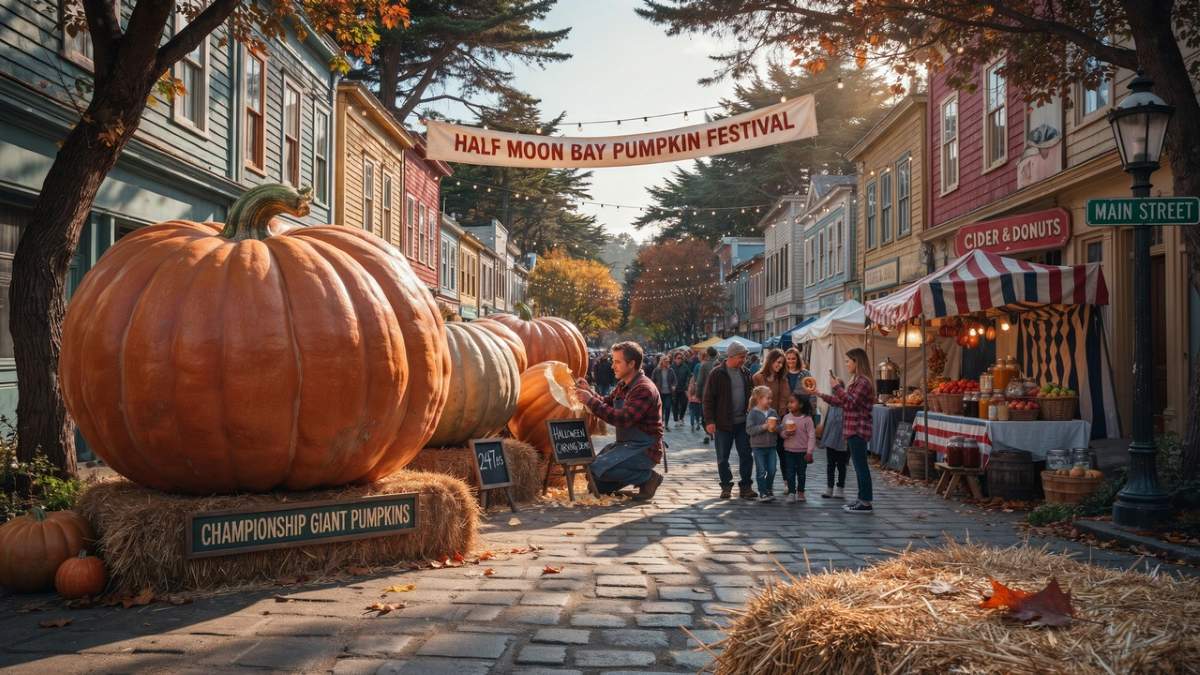
USA Challenges Germany, Canada in Global Giant Pumpkin Festival Tourism Race with California’s 2026 Spectacle.Historic downtown Main Street is completing municipal staging operations this week as the coastal enclave prepares to host the 54th Annual Half Moon Bay Art & Pumpkin Festival on October 17–18, 2026. Crowned internationally as the “World Pumpkin Capital,” this seaside community of roughly 12,500 residents in San Mateo County is projecting an influx of 250,000 to 300,000 visitors over two days, anchoring one of North America’s most prominent autumn agritourism celebrations.
The weekend gathering serves as the public culmination of harvest week, following the 53rd Safeway World Championship Pumpkin Weigh-Off held at the IDES Grounds on Monday, October 12, where championship growers hoisted Volkswagen-sized gourds exceeding 2,500 pounds onto five-ton digital scales officiated by the San Mateo County Department of Agriculture / Weights and Measures.
Where Did the Event Take Place and Who Participated?
The festival transforms historic Main Street in downtown Half Moon Bay, closing the thoroughfare between Miramontes Street and Highway 92 to vehicular traffic. Staged under special outdoor event permits coordinated by the City of Half Moon Bay, the layout spans nine pedestrianized blocks, community plazas, and multiple entertainment stages.
The 2026 participant roster brings together hundreds of agricultural, civic, and fine arts operators:
Advertisement
Advertisement
- Artisans and Craftsmen: Over 250 juried artists and fine craftspeople coordinated by Pacific Fine Arts Festivals line Main Street, presenting glasswork, ceramics, photography, textiles, and handcrafted wooden sculptures.
- Civic and Non-Profit Operators: Concession booths are operated exclusively by regional non-profit service clubs, youth athletic foundations, and school booster associations. Proceeds from pumpkin pancakes, pumpkin beer, roasted corn, and specialty baked goods flow directly back into Coastside civic programs.
- Agricultural Champions and Competitors: Master gourd carver Farmer Mike (the “Picasso of Pumpkin Carvers”) anchors live sculpturing exhibits, while the top behemoth entries from the Great Pumpkin Commonwealth (GPC) weigh-off—including winning growers from across North America—are enshrined on the Take 5 “Pumpkin Central” display deck.
- Civic Processions: The Great Pumpkin Parade mobilizes regional marching bands, equestrian units, antique tractors, and civic dignitaries along Main Street on Saturday morning.
How Has Attendance Tracked Over the Past Five Years?
Audited foot-traffic datasets and transportation telemetry monitored across Highway 92 and Highway 1 show resilient visitor density from 2021 through 2025:
| Year | Edition | Total Estimated Weekend Turnout | Participating Juried Artists & Non-Profit Booths | Audited Dynamics & Mobility Catalysts |
| 2021 | 50th | ~210,000 | 215 | Milestone golden anniversary; initial post-pandemic recovery with outdoor spacing protocols. |
| 2022 | 51st | ~245,000 | 230 | Full revival of the Great Pumpkin Parade; elevated Bay Area automotive drive-ins. |
| 2023 | 52nd | ~260,000 | 240 | Record media visibility following Travis Gienger’s 2,749 lb world-record pumpkin weigh-in. |
| 2024 | 53rd | ~275,000 | 248 | Sustained mild autumn weather; increased utilization of satellite park-and-ride shuttles. |
| 2025 | 54th (Pre-cycle) | ~285,000 | 255 | Peak single-day Saturday density; all-time high in non-profit community food concessions. |
Which Other Countries Host Similar Giant Pumpkin Events?
While Half Moon Bay holds a proprietary reputation as California’s harvest flagship, sovereign agricultural regions across the globe host structurally comparable giant pumpkin and gourd celebrations:
Advertisement
Advertisement
- Germany (Kürbisausstellung Ludwigsburg, Baden-Württemberg): Billed as the world’s largest pumpkin exhibition, showcasing massive sculptural installations and European Heavyweight Pumpkin Weigh-Offs across the grounds of Ludwigsburg Palace.
- Canada (Port Elgin Pumpkinfest, Ontario): An officially sanctioned Great Pumpkin Commonwealth weigh-off drawing top Canadian growers alongside downtown classic car shows and agricultural trade expos.
- United Kingdom (Autumn Show & Giant Pumpkin Championship, Malvern): A marquee gathering governed by the Royal Horticultural Society (RHS) showcasing British heavyweight growers and harvest produce.
- Japan (Japan Giant Pumpkin Contest, Kagawa Prefecture): Staged annually on Shodoshima Island, where domestic farmers compete for national titles, feeding into international giant gourd circuits.
Which Region of Travellers Come to This Event Most?
Mobility analytics compiled by regional transportation planners delineate three distinct inbound pipelines:
- San Francisco Bay Area & Silicon Valley (78%+ of Turnout): Day-trippers access the Coastside via the two primary mountain arterials: State Route 92 from San Mateo and Interstate 280, alongside Highway 1 traversing Pacifica and Santa Cruz County.
- Central Valley & Greater Northern California: Weekend travelers commute 2 to 3 hours from Sacramento, Stockton, and Modesto seeking coastal autumn retreats and farm-trail agritourism.
- Out-of-State & International Agronomists: Competitive growers, horticultural tourists, and overseas travelers arriving through San Francisco International Airport (SFO)—just 25 miles northeast—combine festival attendance with coastal Highway 1 itineraries.
Which Country Benefits Most and How Are Tourism and the Economy Impacted?
The United States—and specifically the State of California, the County of San Mateo, and the City of Half Moon Bay—stands as the primary fiscal and economic beneficiary.
Advertisement
Advertisement
┌────────────────────────────────────────────────────────────────────────┐
│                   MUNICIPAL ECONOMIC & TOURISM FOOTPRINT               │
├───────────────────────────────────┬────────────────────────────────────┤
│       DIRECT HOSPITALITY          │       COMMUNITY & AGRIBUSINESS     │
├───────────────────────────────────┼────────────────────────────────────┤
│ • $12M–$16M estimated direct      │ • Non-profit civic reinvestment:   │
│   spend across dining, lodging,   │   civic booths generate up to 75%  │
│   coastal retail, and fuel.       │   of local charities' annual funds.│
│                                   │                                    │
│ • Weekend hotel occupancy lift to │ • Agritourism corridor hedge:      │
│   92%–98% across coastal inns,    │   sustains commercial farm stands  │
│   motels, and luxury resorts.     │   along Highway 92 through autumn. │
└───────────────────────────────────┴────────────────────────────────────┘
- Direct Economic Injection: Regional hospitality models indicate the festival injects between $12 million and $16 million into the local Coastside economy over its staging period, supporting independent retail boutiques, coastal seafood bistros, and service stations.
- Shoulder-Season Lodging Yields: Accommodations across Half Moon Bay, Montara, Princeton-by-the-Sea, and Pacifica achieve weekend occupancy levels between 92% and 98%, driving Average Daily Rates (ADR) during a transitional coastal travel window.
- Civic Capital and Non-Profit Sustainability: Managed by the non-profit Half Moon Bay Beautification Committee, festival proceeds directly fund Main Street preservation, tree planting, and civic infrastructure upgrades, while non-profit food sales provide local youth groups and civic charities with up to 75% of their unrestricted annual operating budgets.
- Agritourism Resilience: The festival acts as an economic anchor for surrounding family-owned pumpkin patches and commercial growers, creating seasonal marketing visibility for California produce governed by the California Department of Food and Agriculture (CDFA.CA.GOV).
Advertisement
