
Travelers Stuck at Miami International Airport as American, Delta, and Envoy Lead 304 Delays and 6 Cancellations, Severing Vital Corridors to Canada, Venezuela, Colombia, the United Kingdom, and Key U.S. Hubs Like New York, Austin, and Atlanta

Published
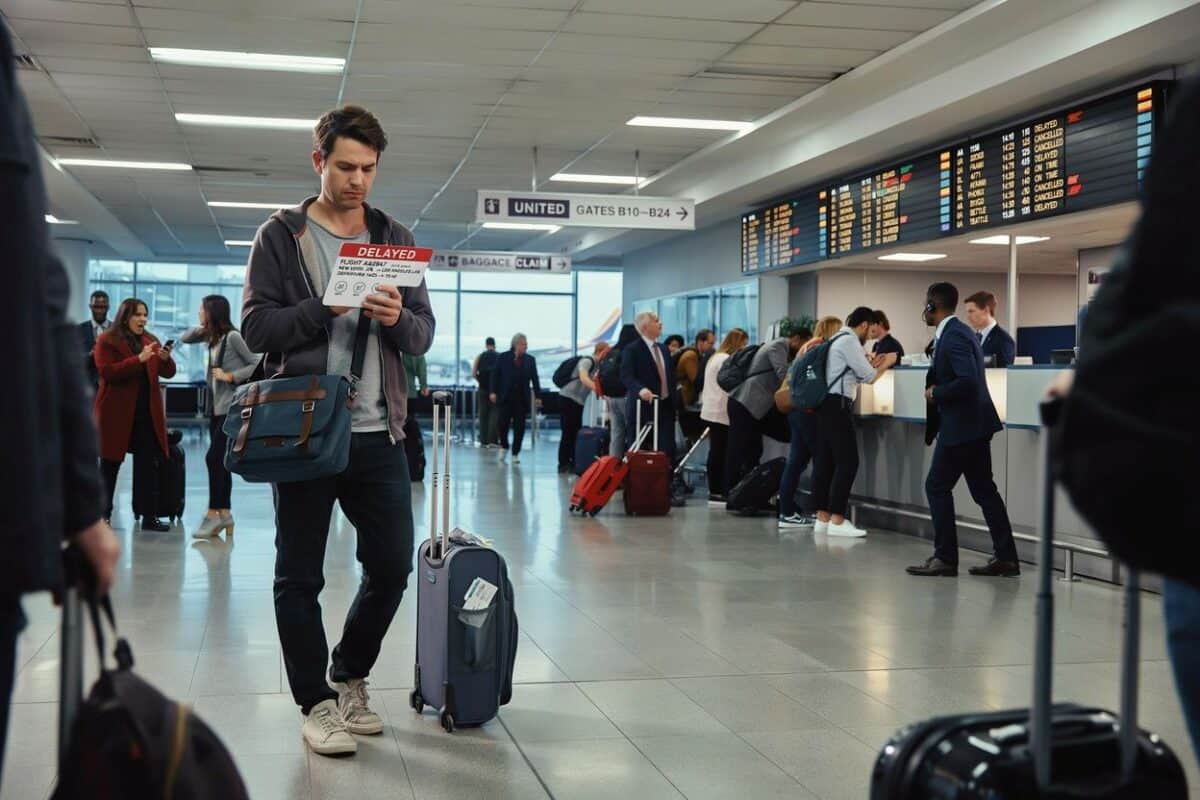
Thousands of travellers are currently stuck at Miami International Airport as a severe summer storm front triggers a massive regional scheduling collapse. The severe weather sparked cascading technical disruptions, causing American, Delta, and Envoy to lead the operational chaos. Consequently, flight tracking dashboards now report a staggering 304 delays and 6 cancellations across the terminal. This unexpected bottleneck is severely severing vital corridors connecting South Florida to major international destinations. Specifically, the cancellations and delays are blocking flights to Canada, Venezuela, Colombia, and the United Kingdom. Furthermore, the air traffic control restrictions are heavily choking domestic networks. The gridlock is now stranding passengers bound for key U.S. hubs like New York, Austin, and Atlanta. Airlines are actively advising passengers to utilize mobile applications for real-time rebooking. Meanwhile, ground crews work tirelessly to clear the massive backlog of aircraft parked across the tarmac.
Deep-Dive Analysis: The Impacted Airlines, Cities, and Countries
The operational breakdown at Miami International Airport reveals that the disruptions are not evenly distributed. A closer look at the data highlights which carriers and global routes are bearing the absolute brunt of today’s scheduling collapse.
Airline Breakdown: Volume Giants vs. Percentage Victims
The airline data shows a distinct split between major carriers suffering from massive volume backlogs and smaller airlines experiencing total operational gridlock.
- American Airlines & Envoy Air: As MIA’s dominant hub carrier, American Airlines is responsible for the largest share of the airport’s misery with 187 total delays, impacting 29% of its entire daily schedule. Its regional arm, Envoy Air, added another 15 delays (11%) and registered 4 cancellations (3%), making it responsible for the vast majority of the total cancellations at the airport.
- Delta Air Lines: Delta is having a uniquely rough operational day in Miami, recording 26 delays, which represents a painful 41% of its scheduled flights.
- Southwest & United: Southwest logged 11 delays (39%), while United managed to keep its operation comparatively stable with 7 delays (21%) and zero cancellations.
- The International Toll: International flag carriers are seeing their tight turnaround schedules fall apart. KLM topped the list with a staggering 75% delay rate (3 flights). A long list of carriers—including LATAM Colombia (2 flights), Alaska Airlines (1 flight), British Airways (2 flights), Lufthansa (1 flight), Ethiopian Airlines (2 flights), Iberia (2 flights), Avianca El Salvador (4 flights), and Virgin Atlantic (2 flights)—all saw exactly 50% of their scheduled operations delayed. Meanwhile, Air Canada Rouge suffered a devastating double-hit, logging a 28% delay rate (2 flights) alongside a 28% cancellation rate (2 flights).
Geographic & Airport Impact: Stalled Corridors
Analyzing the flight paths into and out of Miami reveals distinct geographic zones where air traffic has effectively ground to a halt.
Advertisement
Advertisement
- The Domestic Chaos: On the domestic front, the Northeast corridor is heavily restricted. Inbound flights from New York’s JFK (7 delays, 53%) and LaGuardia (7 delays, 46%), alongside Washington’s Reagan National (6 departures delayed at 54% and 4 arrivals delayed at 36%), are choking the schedule. Texas is also heavily affected, with Austin-Bergstrom seeing a massive departure failure rate of 71% (5 flights) and an arrival delay rate of 57% (4 flights). Notably, Indianapolis (IND) suffered a total standstill, with 100% of its departures (2 flights) delayed, while Dallas Love Field (DAL) saw its lone inbound flight delayed.
- The Canadian & Caribbean Bottlenecks: Toronto Pearson International (YYZ) is experiencing a near-total operational collapse on its Miami route. For arriving flights, 16% were canceled and 33% delayed; for departing flights leaving Miami, a brutal 100% of flights were disrupted (75% delayed, 25% canceled). In the Caribbean, Simon Bolivar International (CCS) in Venezuela represents the worst cancellation zone, dropping 33% of arrivals (2 flights) and 28% of departures (2 flights). Norman Manley International in Kingston, Jamaica, also saw an eye-watering 80% of its departures (4 flights) delayed.
- The Transatlantic & Latin American Standstill: Long-haul international flights leaving Miami are facing widespread gate holds. A perfect 100% of departures to Barcelona (1 flight), Frankfurt (1 flight), and Milan Malpensa (1 flight) have been hit with delays, alongside London Heathrow, which saw 60% of arrivals (3 flights) and 40% of departures (2 flights) run late. In Latin America, Comayagua, Honduras (XPL) hit a 100% departure delay rate (2 flights) and a 66% arrival delay rate (2 flights), while Cali, Colombia (CLO) saw 100% of its departing flights (3 flights) delayed. Cozumel, Mexico (CZM) was entirely blocked, with 100% of both its inbound and outbound flights delayed.
What Affected Passengers Can Do Now
For travelers currently caught in the middle of the Miami travel meltdown, sitting tight at the gate is rarely the best strategy. Here are the immediate steps passengers should take to mitigate the impact of these delays and cancellations:
Leverage Airline Mobile Apps Immediately
Do not wait in the massive customer service lines snaking through the MIA terminals. Airline mobile applications are tied directly into the carriers’ live rebooking systems. If your flight is one of the 304 delayed or 6 canceled, you can often select alternative routing, change connecting flights, or claim digital hotel and meal vouchers directly through the app much faster than a gate agent can process them manually.
Advertisement
Advertisement
Monitor Inbound Aircraft Status
Many of today’s departure delays are caused by aircraft getting stuck at their origin points. Check the status of the incoming flight assigned to your route. If the inbound aircraft coming from heavily delayed hubs like New York (JFK/LGA), Austin (AUS), or Toronto (YYZ) has not yet taken off, you can safely anticipate that your departure time from Miami will continue to slide backward.
Understand Your Consumer Rights
Because major airlines like American and Delta are bearing the brunt of the delays, passengers should review the Department of Transportation (DOT) dashboards or airline commitment policies. For the handful of passengers facing outright cancellations, you are legally entitled to a full cash refund if you choose not to be rebooked. For significant delays, ask carrier agents for meal vouchers, especially if the disruption is within the airline’s operational control.
Source: FlightAware and Affected Airports
Advertisement
