

Thailand expands QR payment system for seamless tourist spending

Published
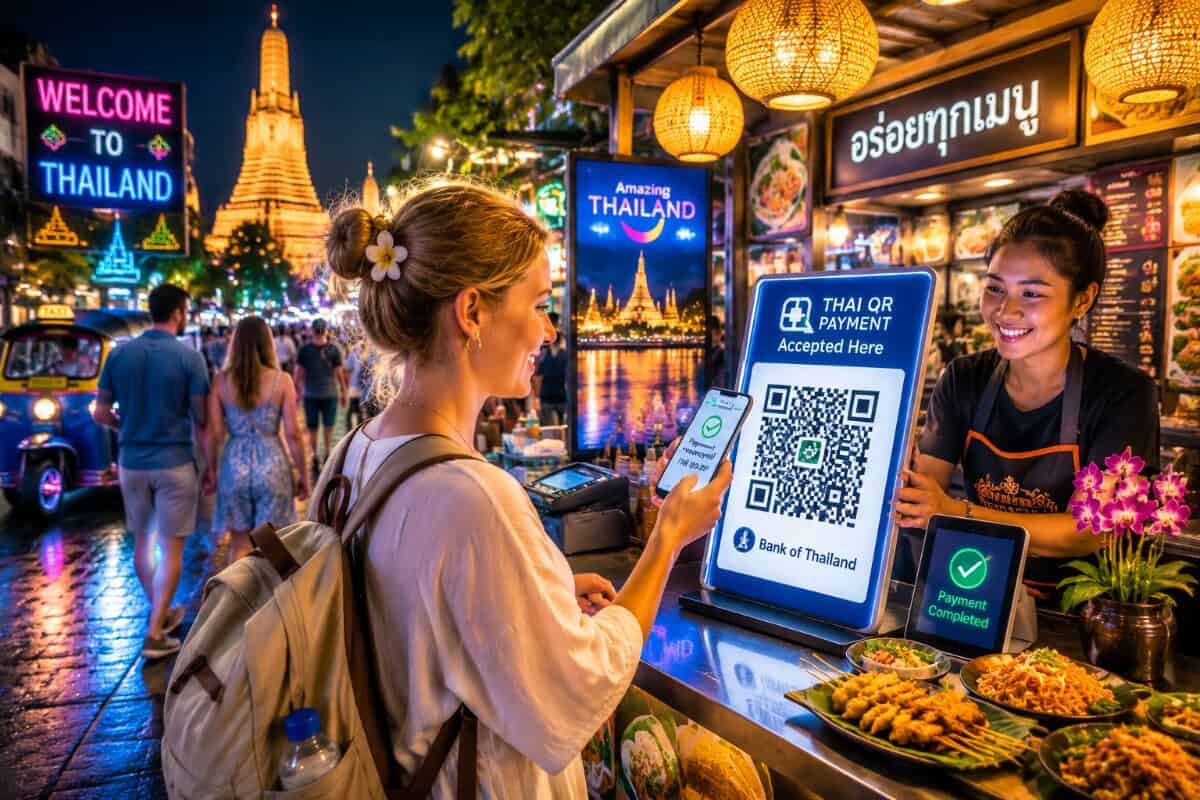
Thailand has expanded its Thailand QR payment system for international visitors, enabling tourists to make direct payments at local stores using QR codes linked to their home country banking apps and digital wallets. The initiative is designed to simplify transactions and reduce dependence on cash and currency exchange during travel.
The system is led by the Bank of Thailand and supported by eight major financial institutions, alongside international payment networks including Alipay, WeChat Pay, and UnionPay. The expansion strengthens Thailand’s position as a leading digital payments hub in Southeast Asia.
Advertisement
Advertisement
The move is expected to improve travel convenience while supporting the country’s tourism-driven economy.
Bank of Thailand Leads Cross-Border Digital Payment Expansion
The expanded QR payment framework is part of Thailand’s broader push toward a cashless and digitally integrated tourism economy. The initiative connects domestic banking infrastructure with international payment ecosystems.
Advertisement
Advertisement
Financial institutions and network integration
Eight Thai banks supporting the QR expansion
• Krung Thai Bank
• Bangkok Bank
• Kasikorn Bank
• Siam Commercial Bank
• Bank of Ayudhya (Krungsri)
• ICBC (Thai)
• Bank for Agriculture and Agricultural Cooperatives
• CIMB Thai Bank
Global payment networks integrated into the system
• Alipay for Chinese and global users
• WeChat Pay for mobile wallet payments
• UnionPay for international card-linked QR transactions
Advertisement
Advertisement
The integration allows tourists to scan Thai QR codes at participating merchants and complete payments instantly using familiar digital platforms.
How the QR Payment System Works for Tourists
The system enables foreign travellers to make purchases in Thailand without needing to exchange large amounts of cash or open local bank accounts.
Instead, transactions are processed through cross-border payment linkages between Thai banks and international digital wallets.
Payment process and user experience
Simple QR-based transaction system
• Merchants display standard Thai QR codes
• Tourists scan using home-country banking or wallet apps
• Payments are processed in real time through linked networks
Benefits for international visitors
• Reduced need for physical cash exchange
• Faster and more secure transactions
• Use of familiar payment apps while travelling
This structure supports a smoother tourism experience, particularly for high-volume visitor markets that already rely heavily on mobile payments.
Advertisement
Advertisement
Stronger Tourism Experience Through Digital Payments
Thailand’s tourism sector continues to evolve toward cashless travel experiences, particularly for visitors from Asia where QR payments are widely used.
The expansion of cross-border QR systems aligns with this trend and aims to make everyday spending easier for tourists.
Why digital payments matter for tourism growth
Improved convenience for travellers
• Tourists can pay at shops, restaurants and attractions easily
• Eliminates language and currency barriers in transactions
• Reduces reliance on physical exchange counters
Increased efficiency for merchants
• Faster transaction processing
• Broader acceptance of international customers
• Improved payment security and tracking
The system supports Thailand’s goal of enhancing tourism competitiveness through digital innovation.
Role of National ITMX and International Partnerships
The QR payment infrastructure is supported by National ITMX, which operates Thailand’s domestic payment switching system. It works alongside global financial partners to ensure interoperability between domestic and international platforms.
Advertisement
Advertisement
This collaboration is key to enabling seamless cross-border payments.
Core infrastructure and partnerships
Domestic payment backbone
• National ITMX manages QR interoperability in Thailand
• Supports real-time payment clearing systems
• Connects banks and merchant payment networks
International payment collaboration
• Integration with Alipay, WeChat Pay and UnionPay
• Cross-border QR compatibility for tourists
• Expansion of regional payment connectivity
The system forms part of a wider regional effort to improve financial integration across Asia.
Expanding Regional Digital Payment Connectivity
Thailand’s QR payment expansion is aligned with broader regional trends in digital finance, where countries are linking national payment systems to support tourism and trade.
Cross-border QR systems are increasingly becoming standard across Southeast Asia.
Advertisement
Advertisement
Regional financial integration trends
Growing adoption of QR-based payments
• Increasing use of mobile wallets among tourists
• Expansion of interoperable QR payment systems
• Reduced reliance on traditional card-based transactions
Strengthening ASEAN payment connectivity
• Regional cooperation on digital payment frameworks
• Improved financial interoperability between countries
• Support for tourism-driven economic activity
This positions Thailand as a central hub in the region’s digital payment ecosystem.
The expansion of the Thailand QR payment system marks a major step forward in the country’s digital tourism infrastructure. By enabling tourists to use familiar home-country apps and wallets, Thailand is reducing friction in travel payments while strengthening its position as a leader in cashless tourism.
With support from major Thai banks and global payment networks, the system is expected to enhance convenience for millions of international visitors and further modernise the country’s tourism economy.
Advertisement
