
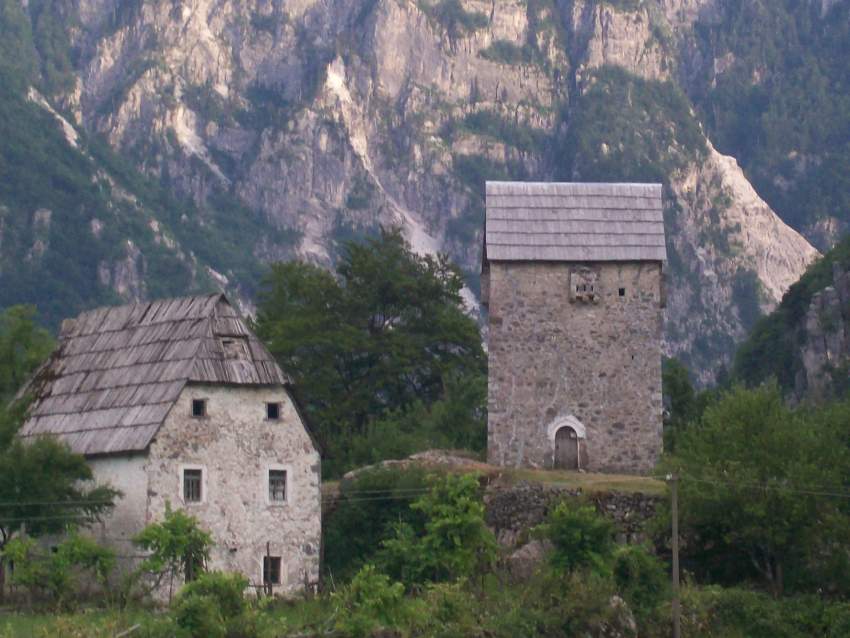
Image generated with Ai
The Albanian Alps have hundreds of stunning views, and Theth is one of their most enchanting villages, nestled in an enclosed location that is being unveiled fast to adventurous travelers. Perched between limestone peaks and vast karst valleys, the remote village of 200-odd residents is still an oasis where the clock has stopped. But with the number of visitors still growing, Theth is caught between the delicate predicament of its rich heritage and the inevitable expenses of commercialization.
Theth’s beauty lies not simply in its natural beauty but in the centuries-old laws and conventions that govern its life as well. This miniscule mountain village is governed according to the Kanun, the medieval code of laws that still governs the lives of its residents. Tourists have the special experience of being able to see real Albanian culture, yet with the growth of the tourist sector, the very future of this living and breathing village is called into question.
Theth is unique in that it is not just a village of historical interest but one where ancient practices continue to guide daily life. The stone tower houses of Theth, built from local limestone and timber, were once defensive structures against tribal warfare. Today, these historic houses still stand tall as a testament to the village’s resilience and the traditions of mountain survival. However, these structures now serve dual purposes, both as family homes and as guesthouses for visitors eager to experience a genuine mountain retreat.
Despite its growing popularity among tourists, Theth’s residents remain wary of unchecked development. The Albanian government’s demolition of illegal guesthouses in recent years has left a deep scar of mistrust. Local entrepreneurs, many of whom invested their life savings in building guesthouses, were devastated when their investments were destroyed by the authorities without notice, causing widespread protests in the village. The balance between preserving the traditional way of life and engaging in a tourist economy has become a contentious issue.
Advertisement
Advertisement
One of the unique aspects of visiting Theth is the village’s seasonal accessibility. The only road leading to Theth is an unpaved 24-kilometer stretch that winds through steep mountain passes. This route, while passable in summer months, becomes treacherous as autumn sets in, with snow sometimes arriving as early as October. After the first snowfalls, the mountain passes close, and Theth is cut off from the outside world for several months, with access remaining impossible from November to March.
During the summer months, Theth is accessible to travelers, but the small window of four months puts enormous strain on the village’s infrastructure. The growing number of tourists—approximately 15,000 during this short period—presses the already fragile water and waste management systems, and the narrow mountain road is damaged by the increased traffic. The village is experiencing a crisis in terms of infrastructure that threatens its sustainability. Visitors may not realize the impact their presence has on the village, but as more people flock to Theth, the once-untouched mountain sanctuary is under threat.
The community of Theth operates under the Kanun, a set of customary laws that regulate nearly every aspect of life in the village. These oral traditions are not just historical relics; they are living practices that shape the community’s identity and daily functions. Unlike other European villages that have commercialized their historic structures as tourist attractions, Theth continues to live by these ancient codes. In fact, it is one of the few places in Europe where such traditions are still actively practiced.
The Kanun dictates the way villagers interact with each other and with visitors. For example, hospitality is not just a courtesy, but a sacred obligation. Visitors, particularly those respectful of the local customs, are often invited into the homes of Theth’s residents to observe traditional craftsmanship, such as wood carving and stone masonry. These skills have been passed down for generations and are a vital part of the village’s cultural heritage. However, it is becoming increasingly difficult to maintain these traditions in the face of rising tourism, and many residents are concerned about what might be lost in the process.
Although tourism provides a crucial source of income for Theth, the rapid increase in visitor numbers is putting the village’s infrastructure to the test. Water systems that were once sufficient for the 100 households of Theth now struggle to meet the demands of an increasing number of tourists. Waste management systems, too, are being stretched beyond capacity. The narrow road leading to Theth is being damaged by overuse, making the journey increasingly perilous.
The tourism model in Theth is facing an existential crisis. The community, which once survived primarily on agriculture and pastoralism, now relies heavily on the income generated from visitors. While some residents embrace this new economy, others are concerned that tourism is changing the very essence of what makes Theth unique. For many, the question remains: is it possible to preserve the authenticity of Theth while also providing for the growing number of tourists?
For those who seek more than just crowded hiking trails and famous landmarks, Theth offers the opportunity for a deeper cultural experience. While many tourists flock to the Grunas Canyon waterfall and popular hiking routes, the village offers hidden gems that remain off the beaten path. The Arapi Peak, for example, is home to some of the highest rock faces in the Balkans, and the alpine meadows in Theth National Park are a haven for those interested in traditional shepherding practices.
These experiences, however, are not packaged or commercialized like those offered by other tourist destinations. Visitors to Theth are encouraged to build genuine relationships with locals, respecting the customs and ways of life that have been handed down through generations. While mass tourism can offer fleeting encounters, Theth provides opportunities for cultural immersion that are rarely found elsewhere in Albania or the Balkans.
To visit Theth responsibly, it is essential to choose accommodations that are licensed and support the local community. Tourists should respect local customs and traditions, particularly when it comes to hospitality. Certified local guides are mandatory for accessing protected areas within Theth National Park, ensuring that visitors understand the cultural significance of the sites they are visiting.
Tourists should also be mindful of the environmental impact of their visit. The fragile ecosystem of the Albanian Alps is easily disrupted by overuse, and every traveler can contribute to minimizing that impact. Supporting families who have invested in legitimate tourism infrastructure, rather than contributing to unregulated developments, helps ensure that Theth remains a sustainable destination for future generations.
Theth, with its natural splendor, rich culture, and hardy folk, is an exceptional convergence of culture and nature. The challenge of this exceptional village is one common with numerous worldwide traditional societies: how to balance the requirements of modern-day tourism with the need to preserve that which is unique about the village. For the visitor willing to be respectful of the culture and way of life, Theth offers an exceptional opportunity to experience an authentic Albanian Alps experience. But visitors must act responsibly, since the future of this exceptional village may be fixed today.
References: Albanian Tourism Ministry, The National Agency of Protected Areas (NAPA), Theth National Park, Albanian Government website
Image Credit: Thethi Guide Official Website
Advertisement
Tags: Albania, Albanian Alps, Balkan Mountains, Northern Albania, Shkodra, Theth, Theth National Park, Valbona Valley
Advertisement
Advertisement













Saturday, September 5, 2026

Friday, September 4, 2026
Saturday, September 5, 2026

Saturday, September 5, 2026

Thursday, September 3, 2026

Wednesday, September 2, 2026

Saturday, September 5, 2026

Saturday, September 5, 2026


