
Austria Joins France and Netherlands as Hallstatt, Mont-Saint-Michel and Kinderdijk Battle Overtourism Crisis, Tourist Crowds, Instagram Travel Boom and New Visitor Restrictions Across Europe

Published
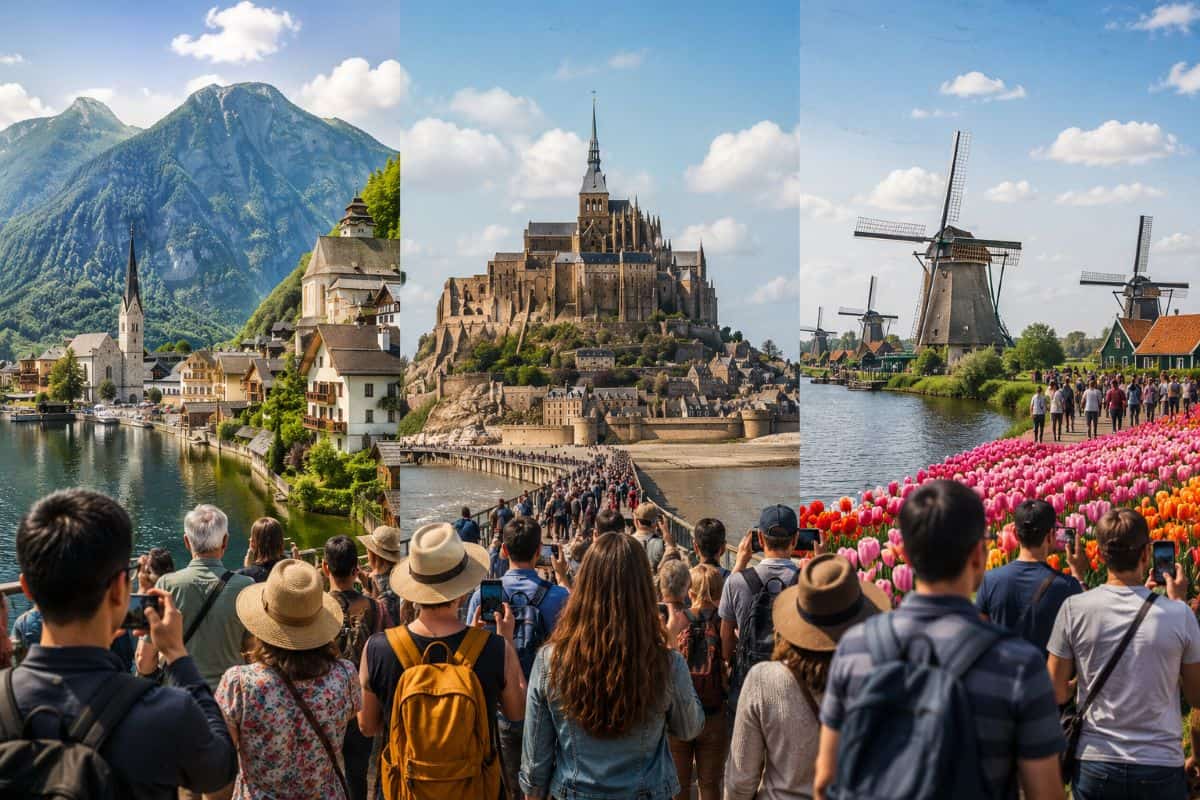
Europe’s postcard-perfect villages are attracting millions of travelers each year, but the surge in social media-driven tourism is creating unprecedented challenges for local communities. Austria’s Hallstatt, France’s Mont-Saint-Michel, and the Netherlands’ Kinderdijk have become global travel sensations thanks to breathtaking landscapes, UNESCO World Heritage recognition, and viral online exposure. While these destinations continue to inspire international travelers, the overwhelming influx of day-trippers and photo-focused visitors is placing immense pressure on fragile infrastructure, historic landmarks, and residents’ daily lives.
Authorities across Europe are now responding with visitor management strategies, transport restrictions, crowd-control measures, and sustainable tourism initiatives designed to preserve these iconic destinations for future generations. From limiting tour buses in Hallstatt to exploring reservation systems at Mont-Saint-Michel and addressing resident concerns in Kinderdijk, governments and local communities are seeking a balance between tourism growth and heritage conservation. The debate highlights a growing challenge facing Europe’s tourism industry: how to welcome visitors while protecting cultural identity, preserving authentic local experiences, and ensuring tourism benefits both travelers and residents alike.
Advertisement
Advertisement
Europe’s Most Popular Villages Are Facing a Tourism Turning Point
The growing popularity of social media has transformed several small European villages into internationally recognized travel destinations. While tourism has generated global attention and economic opportunities, many communities are now experiencing the unintended consequences of excessive visitor numbers.
Many travelers arrive for short visits focused primarily on photography rather than extended stays or meaningful local spending. This pattern has increased congestion, strained transportation networks, overwhelmed public facilities, and disrupted everyday life for permanent residents.
Advertisement
Advertisement
Hallstatt Emerges as the Symbol of Europe’s Overtourism Challenge
| Category | Details |
|---|---|
| Country | Austria |
| UNESCO Status | Hallstatt-Dachstein/Salzkammergut Cultural Landscape |
| Resident Population | Approximately 700–800 |
| Peak Daily Visitors | Up to 10,000 |
| Main Attraction | Alpine scenery, lakeside views, historic salt mines |
| Key Challenges | Traffic congestion, overcrowding, noise, trespassing, excessive tour buses |
| Measures Introduced | Tour bus limits, vehicle caps, crowd management, viewpoint controls |
Hallstatt has become one of Europe’s most photographed villages, attracting visitors from around the world. However, its limited infrastructure was never designed to accommodate thousands of daily tourists. Residents have increasingly voiced concerns about privacy, congestion, and the loss of community character as visitor numbers continue to rise.
Mont-Saint-Michel Balances Heritage Preservation with Visitor Demand
| Category | Details |
|---|---|
| Country | France |
| UNESCO Status | World Heritage Site |
| Annual Visitors | Around 3 million |
| Main Attractions | Medieval abbey, tidal island, historic architecture |
| Tourism Challenges | Crowded streets, shuttle congestion, long queues, infrastructure pressure |
| Visitor Management Plans | Reservation systems, visitor caps, off-peak incentives, improved crowd flow |
Mont-Saint-Michel remains one of France’s most visited heritage attractions. Seasonal peaks frequently result in crowded streets and extended waiting times, reducing the overall visitor experience while increasing pressure on centuries-old structures. Authorities are encouraging travelers to visit during quieter hours and shoulder seasons to improve sustainability.
Advertisement
Advertisement
Kinderdijk Residents Push Back Against Growing Tourist Numbers
| Category | Details |
|---|---|
| Country | Netherlands |
| Resident Population | Around 60 |
| Annual Visitors | Approximately 600,000 |
| Main Attraction | Historic 18th-century windmills |
| Visitor Issues | Trespassing, photography disruptions, crowded pathways |
| Local Concerns | Community impact, authenticity, infrastructure strain |
Kinderdijk’s famous windmills have become one of the Netherlands’ signature travel attractions. However, the growing number of visitors has raised concerns among residents, who report increasing disruptions to daily life. Local discussions continue over future tourism expansion and the need to preserve the village’s unique cultural identity.
Why Social Media Has Accelerated Overtourism Across Europe
Instagram, TikTok, YouTube, and travel influencers have dramatically changed how destinations gain international recognition. A single viral image or travel video can transform a quiet village into a global tourism hotspot within months.
Advertisement
Advertisement
Many visitors now prioritize iconic photo locations over cultural exploration, creating concentrated crowds at specific viewpoints while contributing relatively little to local businesses through overnight stays or broader tourism spending.
European Destinations Introduce Sustainable Tourism Strategies
| Strategy | Purpose |
|---|---|
| Visitor caps | Reduce overcrowding |
| Tour bus limitations | Ease road congestion |
| Timed entry systems | Spread visitor arrivals |
| Reservation platforms | Better manage capacity |
| Off-season promotion | Encourage year-round tourism |
| Responsible travel campaigns | Improve visitor behaviour |
| Infrastructure investment | Protect heritage sites |
| Community engagement | Support resident wellbeing |
These initiatives reflect a broader European movement toward sustainable tourism that protects both cultural heritage and local quality of life while maintaining tourism’s economic value.
What Travelers Can Do to Support Local Communities
Responsible travelers play an essential role in preserving Europe’s historic villages. Staying overnight, shopping at local businesses, respecting private property, following community guidelines, and travelling during less crowded periods all contribute to a more sustainable tourism model.
Choosing slower, experience-focused travel rather than quick photo stops allows visitors to better appreciate local culture while supporting businesses that depend on tourism income.
Advertisement
Advertisement
The Future of Europe’s Iconic Villages Depends on Sustainable Tourism
As international travel continues to recover and social media fuels global destination awareness, Europe’s smallest villages face increasingly complex decisions. Protecting historic landmarks, preserving authentic community life, and welcoming visitors must remain carefully balanced.
Austria, France, and the Netherlands are demonstrating that sustainable tourism policies are becoming essential for safeguarding UNESCO treasures while ensuring future generations can continue enjoying these remarkable destinations.
FAQs
1. Why is Hallstatt experiencing overtourism?
Hallstatt attracts thousands of visitors daily because of its scenic beauty, UNESCO status, and popularity on social media.
2. How many tourists visit Hallstatt each day?
Peak visitor numbers can reach approximately 10,000 people per day.
Advertisement
Advertisement
3. Why is Mont-Saint-Michel so popular?
Its medieval abbey, UNESCO recognition, dramatic tidal setting, and cultural significance attract millions of visitors annually.
4. How many tourists visit Mont-Saint-Michel every year?
Around three million visitors travel to the island each year.
5. What makes Kinderdijk famous?
Kinderdijk is internationally recognized for its historic 18th-century windmills and UNESCO World Heritage designation.
Advertisement
Advertisement
6. Why are residents concerned about overtourism?
Residents report congestion, privacy concerns, infrastructure strain, noise, and disrespectful visitor behaviour.
7. What measures are authorities introducing?
Authorities are implementing visitor caps, reservation systems, transport restrictions, and sustainable tourism initiatives.
8. How does social media contribute to overtourism?
Viral content encourages large numbers of travelers to visit the same iconic photo locations within short periods.
Advertisement
Advertisement
9. How can tourists travel more responsibly?
Visitors should respect local communities, avoid trespassing, support local businesses, stay overnight when possible, and travel during quieter seasons.
10. Why is sustainable tourism important for UNESCO villages?
Sustainable tourism helps protect cultural heritage, preserves local communities, reduces environmental impacts, and ensures long-term tourism benefits.
Advertisement
