
Poland Unites With Canada, Romania And Multiple Nations As Thailand Enforces Strict Visa-Free Curtailment Policy, Slashes Three-Month Stay Privileges To 30 Days And Introduces Tight Immigration Documentation Crackdown, Reshaping Travel Access Rules

Published
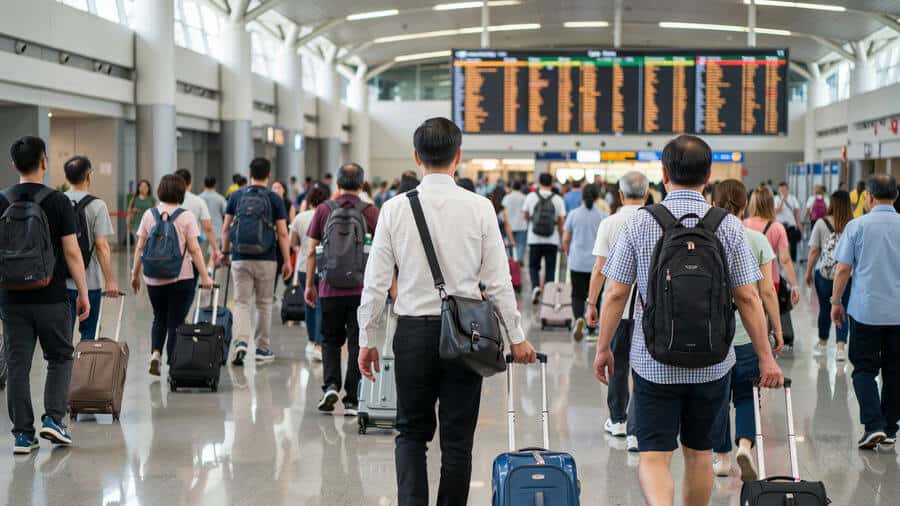
Poland Unites With Canada, Romania and More Nations As Thailand Enforces Strict Visa-Free Curtailment and Reduces Extended Stay Privileges is driven by a major immigration policy overhaul in Thailand aimed at tightening border control, reducing long-stay tourism durations, and strengthening digital entry verification systems across all visa-exempt countries. The decision comes as Thai authorities shift from extended visa-free travel arrangements to a more restrictive, data-driven immigration framework that requires stricter documentation, mandatory digital arrival registration, and enhanced traveller screening, significantly reshaping global mobility patterns for millions of international visitors.
Thailand’s latest immigration overhaul has triggered a wide international response, with countries such as Poland, Canada, New Zealand, India and Romania linked to a sweeping policy shift that reduces visa-free stay duration and strengthens border control procedures. The change reflects Thailand’s move toward tighter traveller verification, reduced long-stay allowances and expanded digital entry screening systems. For millions of tourists, this means shorter permitted stays, stricter documentation checks and a more controlled entry environment at Thai airports.
Advertisement
Advertisement
Thailand’s Visa-Free Policy Shock And Structural Immigration Reset
Thailand’s updated entry framework represents one of the most significant tourism policy adjustments in recent years. The long-standing visa-free stay model, which previously allowed eligible travellers from dozens of countries extended entry periods, is being scaled back under a stricter immigration control system.
Authorities have shifted toward a reduced stay structure (commonly reported as around 30 days for visa-exempt visitors), replacing older extended-duration flexibility that had supported long-haul tourism and digital nomad flows. This transformation is part of a wider strategy to modernise border management, reduce overstays and improve traveller data verification through digital systems.
Advertisement
Advertisement
The policy change affects a broad set of nations, including major tourism markets across Europe, Asia-Pacific, the Americas and the Middle East.
Countries Affected By Thailand’s Visa-Free Curtailment Framework
The revised policy impacts a wide group of visa-exempt and tourism-friendly nations. Below is a structured breakdown of countries linked to the updated entry system:
Advertisement
Advertisement
Europe
- Poland
- Romania
- France
- Germany
- Italy
- Spain
- United Kingdom
- Netherlands
- Belgium
- Sweden
- Norway
- Switzerland
- Austria
- Denmark
- Finland
- Greece
Americas
- Canada
- United States
- Brazil
- Mexico
- Argentina
Asia-Pacific
- India
- New Zealand
- Japan
- South Korea
- China
- Singapore
- Malaysia
- Indonesia
- Philippines
- Vietnam
- Australia
Middle East & Africa
- United Arab Emirates
- Saudi Arabia
- Qatar
- South Africa
- Mauritius
Key Interpretation of the Policy Scope
Rather than targeting only a few countries, Thailand’s revision applies broadly across its visa-free partner list. The shift is systemic, not selective, meaning most tourism-source nations are indirectly impacted through reduced stay duration and stricter entry conditions.
Digital Border Control Expansion And Mandatory TDAC System
A major pillar of Thailand’s new immigration approach is the expansion of digital entry processing. The Thailand Digital Arrival Card (TDAC) has become central to traveller clearance.
Advertisement
Advertisement
Key TDAC Requirements:
- Must be completed online before arrival
- Submission required within a short pre-arrival window (commonly 24–72 hours)
- Generates a QR code for immigration scanning
- Replaces traditional paper arrival cards
Information Required:
- Passport details
- Flight information
- Accommodation address in Thailand
- Purpose of visit
At arrival, travellers must present the QR code, which is verified against immigration databases. Any mismatch or missing submission may result in delays or secondary screening.
This system marks a shift toward pre-cleared digital border entry, where travellers are partially vetted before they even land.
Stricter Documentation Rules And Entry Verification Checks
Alongside TDAC implementation, Thailand has increased the rigor of document verification at immigration checkpoints.
Mandatory Travel Requirements:
- Passport validity of at least 6 months
- Confirmed return or onward flight ticket
- Verified accommodation booking
- Completed TDAC QR code
- Basic travel itinerary
Additional Possible Checks:
- Proof of sufficient funds
- Random financial verification
- Detailed questioning for solo travellers or extended stays
Immigration officers now operate under a risk-based assessment model, meaning not all travellers are checked equally, but selected passengers undergo deeper scrutiny based on travel patterns or documentation inconsistencies.
Advertisement
Advertisement
How Travellers Are Affected By The New Thailand Entry Rules
The updated policy framework has created noticeable changes in travel behaviour and trip planning.
1. Shorter Trip Planning Windows
Travellers from visa-exempt countries now typically plan shorter stays due to reduced permitted duration. This affects long-holiday tourism, backpacking routes and extended regional travel circuits.
2. Increased Pre-Departure Documentation Pressure
Passengers must now ensure:
- All bookings are confirmed in advance
- TDAC is completed correctly
- Passport validity exceeds minimum requirements
Even small errors can cause boarding issues or immigration delays.
3. Higher Risk Of Entry Delays
At airports such as Bangkok, Phuket and Chiang Mai, travellers may face:
- Secondary questioning
- Document verification queues
- Additional screening for financial proof
4. Reduced Flexibility For Spontaneous Travel
Last-minute travel decisions are becoming more difficult due to mandatory digital registration and strict documentation requirements.
Advertisement
Advertisement
5. Impact On Repeat Visitors
Frequent travellers are increasingly monitored for stay patterns, especially those making repeated short-term entries.
Airline And Immigration Operational Impact
The policy shift is not limited to travellers—it also affects airlines and airport operations.
Airline Responsibilities Now Include:
- Verifying passport validity before boarding
- Ensuring passengers have completed TDAC
- Checking return or onward tickets
- Preventing airline liability for rejected entry cases
Immigration System Changes:
- Faster digital pre-clearance processing
- Reduced paper-based verification
- Greater reliance on automated data matching systems
- Increased coordination between airlines and Thai immigration databases
This creates a more integrated border control ecosystem where compliance begins before departure and continues through arrival processing.
Why Thailand Is Tightening Visa-Free Access
Thailand’s policy adjustment is driven by multiple strategic factors:
1. Overstay Management
Extended visa-free stays had led to increased overstay cases, prompting stricter enforcement.
2. Tourism Quality Control
Authorities aim to balance high tourist volume with regulated, high-value tourism inflow.
Advertisement
Advertisement
3. Digital Border Modernisation
The TDAC system is part of a broader move toward smart border infrastructure.
4. Immigration Security Enhancement
Stronger screening reduces documentation fraud and improves identity verification accuracy.
Future Outlook Of Thailand’s Visa-Free System
Thailand is expected to continue refining its immigration structure over the coming years. Likely developments include:
- Further expansion of digital pre-arrival systems
- More personalised traveller risk profiling
- Possible adjustments in stay duration policies depending on tourism trends
- Increased automation at immigration checkpoints
The direction is clear: Thailand is moving from an open-entry tourism model toward a controlled, data-driven border management system.
The alignment of countries such as Poland, Canada, New Zealand, India and Romania with Thailand’s updated immigration framework highlights a major shift in global travel governance.
Poland, Canada, Romania and several other nations are linked to Thailand’s major visa-free policy rollback because the country is tightening immigration controls, reducing extended stay privileges, and introducing stricter entry documentation and digital verification systems to regulate tourist inflows more tightly.
What was once a flexible visa-free tourism model has now become a structured, digitally controlled entry system focused on verification, compliance and shorter stays. For travellers, the message is clear: preparation is now as important as the journey itself.
Advertisement
