
U.S. Passport Overhaul With New Online Application & Design Changes For Travellers

Published
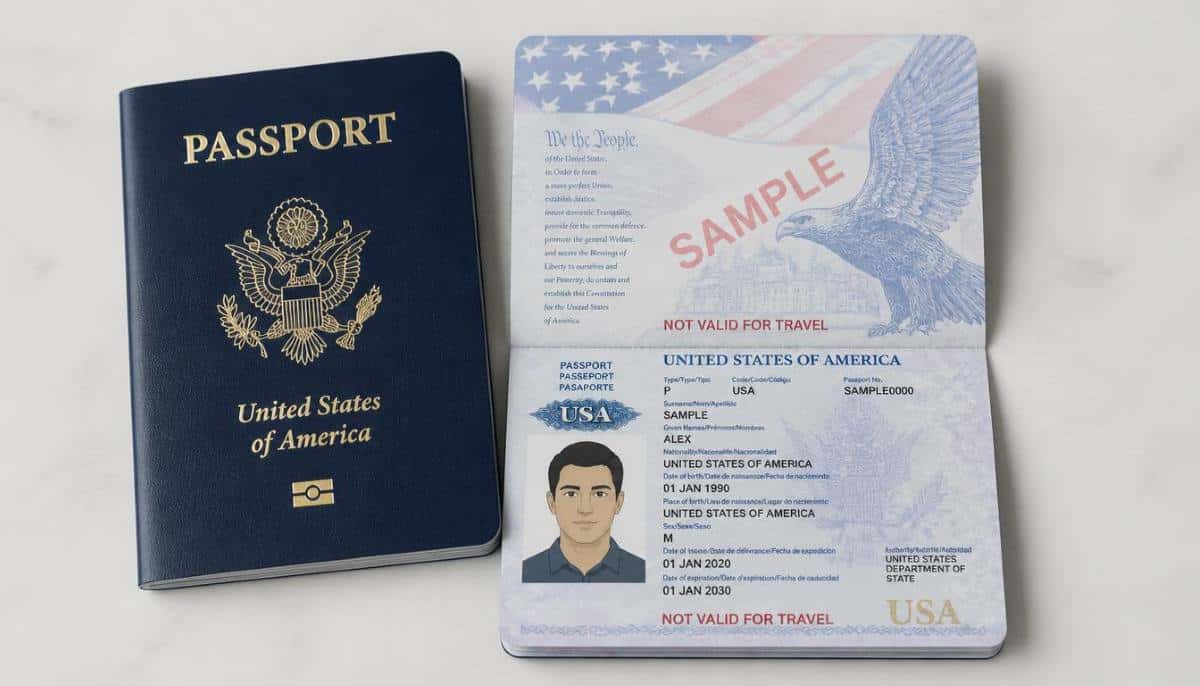
The administration of travel Passport documentation is undergoing a profound transformation as governmental authorities seek to streamline bureaucratic procedures for citizens. Recently, Secretary of State Marco Rubio unveiled significant updates regarding the issuance and visual styling of travel documents.
Historically, acquiring a formal travel credential required a meticulous process involving physical paperwork, specifically the completion of printed forms such as the DS-11. Applicants were traditionally mandated to schedule in-person appointments at authorized regional facilities, including designated post offices, local libraries, or government agencies. Furthermore, these traditional methods incurred additional administrative charges, notably a facility fee amounting to thirty-five dollars, which was billed separately from the standard application cost of one hundred thirty dollars.
Advertisement
Advertisement
While the renewal procedure for existing credentials transitioned entirely to a digital framework in recent years, first-time applicants still faced physical constraints. However, strategic initiatives have been established to migrate the entirety of the application framework into an online ecosystem. By shifting these protocols away from physical offices, the government aims to eliminate long-standing administrative bottlenecks.
Alongside these procedural modifications, aesthetic enhancements have been introduced to the physical booklet itself. The revamped identity document features a prominent visual overhaul, highlighted by an enlarged and more pronounced Great Seal embellished with a golden finish on the front cover. Internally, the artwork has been reimagined to incorporate an illustrated eagle soaring across the inner pages. Additionally, structural page counts are being standardized, replacing the traditional choice between twenty-six and fifty-two pages with a universal thirty-eight-page format for all issued booklets.
Advertisement
Advertisement
Impact on Travellers
The transition toward a streamlined digital interface offers profound advantages for citizens navigating international travel requirements. By removing the necessity for physical appointments and drugstore photo printouts, the updated procedure significantly lowers the threshold for obtaining official identification. Travelers will soon be empowered to initiate applications directly from personal digital devices. An added convenience involves image submission protocols; applicants are granted the ability to upload smartphone-captured photographs and preview how the image will appear within the finalized booklet before formal submission.
Industry Insights
The comprehensive overhaul of identification issuance protocols elicits mixed reactions and strategic adjustments across the travel and government sectors. Industry professionals have evaluated the long-term ramifications that a fully digital framework imposes on commercial entities, concierge services, and public service providers. While consumer advocates praise the reduction of administrative friction, expedited service providers highlight potential operational challenges. Concerns have been raised regarding urgent travel scenarios, where expedited processing is critical. Industry leaders note that while digital submission simplifies standard requests, uncertainties remain regarding turnaround times for emergency issuances processed through purely electronic channels.
Advertisement
Advertisement
Additionally, economic implications affect thousands of local public facilities—including courthouses, municipal libraries, and post offices—that previously relied on the collection of facility fees to support administrative operations. The sudden removal of these per-person revenues necessitates internal budgetary adjustments for these regional institutions. Concurrently, concierge and visa-expediting organizations are adapting their business models to accommodate the coexistence of automated government portals and specialized private-sector assistance, ensuring that urgent cross-border mobility remains uninterrupted for corporate and leisure clients alike.
Practical Information
For individuals currently holding valid travel documentation, immediate action is unnecessary. Existing booklets remain fully compliant and valid until their printed expiration dates, meaning that travelers are advised against initiating premature renewals solely to acquire the updated aesthetic features. Current online renewal protocols remain accessible primarily to adults aged twenty-five and older whose documents are expiring within a twelve-month window or have lapsed for less than five years.
Advertisement
Advertisement
Furthermore, regulatory bodies are actively reviewing proposals to expand online renewal eligibility further, including provisions that would permit citizens residing abroad to process their renewals without adhering to the strict expiration window currently enforced. When utilizing the upcoming digital application infrastructure, applicants must ensure that uploaded images adhere strictly to standardized digital formatting parameters to avoid processing delays. Real-time digital status trackers should be consulted regularly to monitor application progression from approval through to final mailing delivery.
Comparison with Previous Passport Policies and Developments
A comparative analysis between legacy frameworks and the newly introduced administrative policies highlights a decisive shift toward technological integration and standardization. Under former regulations, first-time applicants faced a rigid, paper-based workflow that necessitated physical attendance at designated civic locations, accompanied by separate fee structures for both processing and facility utilization.
The dichotomy between first-time applications and renewals created a fragmented user experience, wherein digital convenience was restricted solely to those extending previously issued credentials.
Advertisement
