
United States, Canada and Several Other American Countries Invest in Digital Engineering to Improve Rail Passenger Experience

Published
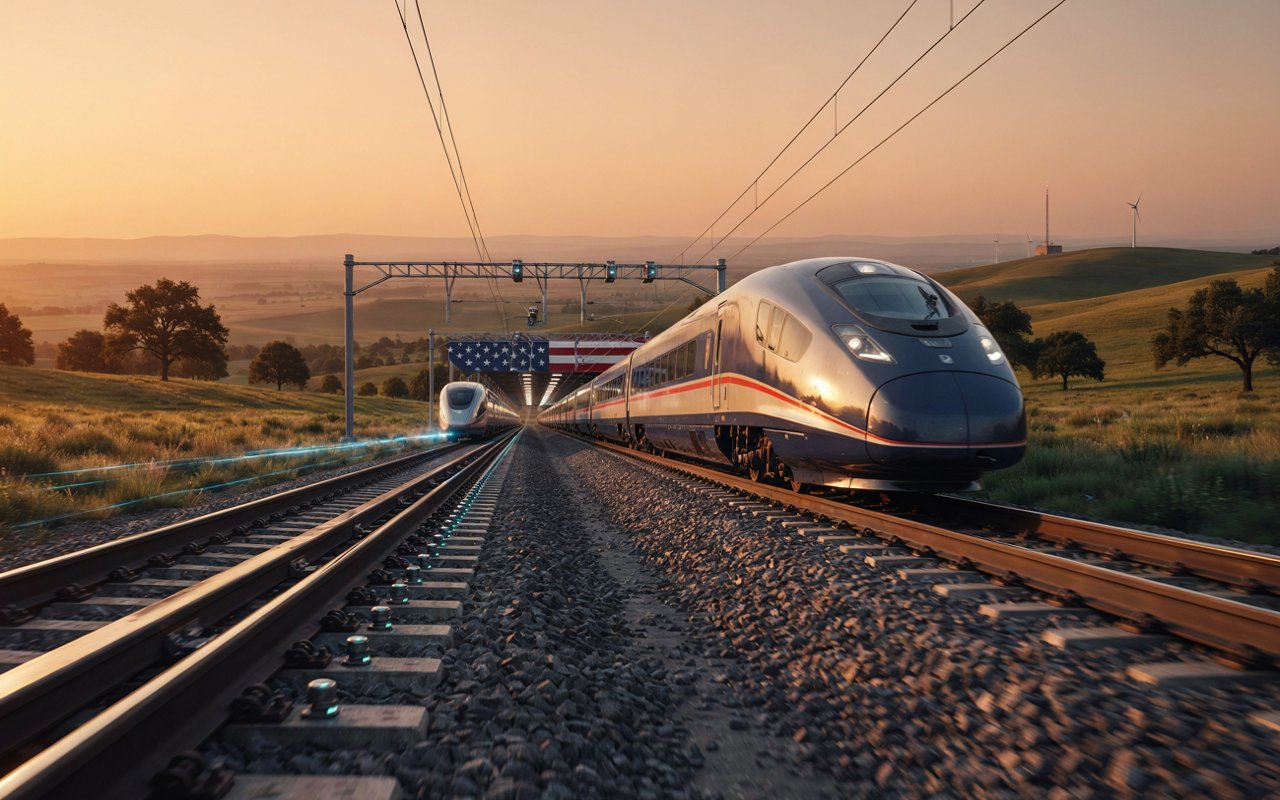
Image generated with Ai
The United States, Canada and Mexico are accelerating smart railway manufacturing before winter travel 2026 by investing in artificial intelligence, automation, domestic train production, digital engineering and advanced rail technologies designed to improve reliability, efficiency and passenger experience. Before the winter travel season of 2026, several countries across the Americas are accelerating smart railway manufacturing by investing in artificial intelligence (AI), automation, robotics, digital engineering, modern railcar production and domestic supply chains. The strongest developments are emerging in the United States, Canada and Mexico, where governments and rail manufacturers are focusing on safer, more reliable and technologically advanced passenger rail systems.
Smart railway manufacturing refers to the integration of Industry 4.0 technologies, including AI-based production systems, robotics, predictive maintenance, digital twins, automated welding, advanced materials and connected rail equipment. These upgrades aim to improve train reliability, reduce manufacturing delays and prepare rail networks for increasing passenger demand during peak travel periods.
Countries Advancing Smart Railway Manufacturing in the Americas Before Winter 2026
| Country | Major Smart Railway Manufacturing Development | Companies / Organisations Involved | Technology Focus | Passenger Travel Impact Before Winter 2026 | Key Details |
|---|---|---|---|---|---|
| United States | Expansion of advanced passenger rail manufacturing facilities | Siemens Mobility, Alstom, Federal Railroad Administration, Amtrak partners | Automated production, modern railcar assembly, digital manufacturing systems | Supports future passenger rail upgrades and fleet modernisation | Siemens opened a new passenger rail manufacturing facility in Lexington, North Carolina, focused on producing modern passenger coaches. The facility is expected to support hundreds of jobs and strengthen domestic rail production. |
| United States | Large-scale commuter rail fleet renewal programmes | Alstom, Long Island Rail Road (LIRR), Metro-North Railroad, NJ TRANSIT | Advanced railcar design, improved accessibility, energy-efficient systems | Helps prepare urban rail networks for growing winter commuting demand | Alstom secured major US contracts including 316 commuter rail cars for LIRR and Metro-North and additional NJ TRANSIT rolling stock. |
| Canada | Domestic passenger rail manufacturing revival | Government of Canada, VIA Rail, Alstom Canada | AI, Industry 4.0, robotics, augmented reality, smart production | Supports future long-distance and regional travel reliability | Canada announced a CAD 4.7 billion investment for 313 new VIA Rail passenger cars manufactured in Canada, marking the return of domestic passenger railcar production after four decades. |
| Canada | AI-powered rail manufacturing research programme | Alstom, Université Laval, UQAM, ÉTS | Artificial intelligence, robotics, smart welding, augmented reality, digital engineering | Creates a technology base for future rail manufacturing | Alstom and Quebec universities launched research cooperation focused on AI and Industry 4.0 technologies for rail design and manufacturing. |
| Canada | Modernisation of VIA Rail fleet production chain | Alstom facilities in Thunder Bay, La Pocatière and Saint-Bruno-de-Montarville | Smart assembly, engineering automation, connected manufacturing | Improves comfort, accessibility and reliability for travellers | The new fleet will include 313 passenger cars serving long-distance, regional and remote routes across Canada. |
| Mexico | Passenger rail expansion and railway technology upgrades | Mexican government, railway operators, international suppliers | Digital signalling, modern rail systems, new passenger rail infrastructure | Supports growth of domestic passenger rail services | Mexico is developing new passenger rail projects, although regulatory differences around signalling and technical standards remain part of North American rail discussions. |
| Mexico | Cross-border rail manufacturing and logistics development | Mexican rail operators, North American supply chains | Integrated manufacturing networks, freight technology, rail connectivity | Strengthens regional transport links supporting tourism and trade | Mexico remains an important part of North American rail supply chains through cross-border manufacturing and logistics networks. |
Why are American countries investing in smart railway manufacturing before winter travel 2026?
Railway manufacturers across North America are entering a new era as governments and transport companies increase investment in smart railway manufacturing before the winter 2026 travel season. The shift is being driven by rising passenger expectations, ageing rail fleets and the need for more reliable transport systems during periods of high travel demand.
Smart railway manufacturing combines advanced technologies such as artificial intelligence, robotics, digital twins, automated production lines and predictive maintenance systems. These tools allow manufacturers to design and build trains with greater accuracy while helping operators identify technical problems before they affect passengers.
Advertisement
Advertisement
The United States, Canada and Mexico are following different strategies, but all three countries are strengthening their railway capabilities. The United States is expanding domestic passenger rail production through new manufacturing facilities and fleet renewal programmes. Canada is rebuilding its passenger rail manufacturing sector through major investments in new trains and advanced research partnerships. Mexico is developing passenger rail infrastructure while remaining an important part of North America’s wider railway supply chain.
Before winter travel 2026, these developments are becoming increasingly important. Winter conditions can create challenges for railway networks, including weather-related delays, equipment failures and increased passenger demand. Modern manufacturing techniques are designed to create trains that are more durable, efficient and better prepared for changing operational conditions.
Advertisement
Advertisement
The move towards smart railway manufacturing also reflects a broader industrial transformation. Rail production is no longer limited to traditional engineering methods. Manufacturers are now using data analysis, automation and connected technologies to create the next generation of passenger rail systems.
How is the United States building a smarter passenger rail manufacturing network?
The United States is strengthening its passenger rail manufacturing industry through major investments in domestic production facilities, advanced engineering and fleet modernisation programmes. The country is focusing on increasing local manufacturing capacity while improving the quality and performance of passenger trains.
Advertisement
Advertisement
One of the major developments is the expansion of Siemens Mobility’s passenger rail manufacturing operations in Lexington, North Carolina. The facility represents a significant investment in modern rail production and supports the manufacturing of passenger rail equipment for the US market. The project is designed around advanced production methods, including efficient assembly processes and modern manufacturing technologies.
The United States is also upgrading commuter rail fleets across major metropolitan areas. Rail operators are replacing older trains with newer vehicles that offer improved accessibility, passenger comfort and operational efficiency. These upgrades are particularly important for busy urban networks where millions of travellers depend on reliable rail services.
Companies such as Alstom are playing a major role in this transformation. The manufacturer has secured large contracts to supply new commuter rail cars for major US transportation systems, including Long Island Rail Road, Metro-North Railroad and NJ TRANSIT.
The adoption of smart manufacturing technologies allows manufacturers to improve production accuracy and reduce potential defects. Digital systems can monitor manufacturing processes, while automation helps create consistent quality across large production projects.
Advertisement
Advertisement
For winter travel, these improvements could support more dependable passenger services. Modern trains are designed with improved systems that help operators manage difficult conditions and maintain smoother operations during peak seasonal demand.
Why is Canada becoming a major centre for smart railway manufacturing innovation?
Canada is emerging as one of the leading countries in North America for smart railway manufacturing due to its focus on domestic production, artificial intelligence research and next-generation passenger rail development.
A major milestone is Canada’s investment in a new passenger rail fleet for VIA Rail. The project involves the production of hundreds of new passenger rail cars and represents one of the largest railway manufacturing investments in the country’s history.
The programme aims to modernise Canada’s long-distance, regional and remote passenger services. New rail cars are expected to provide improved comfort, accessibility and reliability for travellers across the country.
Manufacturing will involve Canadian facilities operated by Alstom, including locations in Ontario and Quebec. The investment is also expected to strengthen domestic railway expertise by creating opportunities for engineers, technicians and manufacturing workers.
Beyond train production, Canada is investing in research that supports the future of railway manufacturing. Alstom has partnered with Quebec universities to explore advanced technologies linked to Industry 4.0. These initiatives focus on artificial intelligence, robotics, digital engineering and automated manufacturing systems.
Advertisement
Advertisement
Artificial intelligence could play a growing role in railway production by helping manufacturers analyse data, improve efficiency and detect potential issues during the manufacturing process. Robotics can support precision tasks, while digital engineering tools allow designers to test and improve train systems before physical production begins.
Canada’s approach demonstrates how smart railway manufacturing is becoming more than a production strategy. It is becoming a long-term industrial development plan designed to strengthen the country’s transport infrastructure.
How is Mexico strengthening its position in North American railway development?
Mexico is expanding its railway ambitions through passenger rail projects, infrastructure development and stronger connections with North American manufacturing networks. While its smart railway manufacturing sector is developing at a different pace compared with the United States and Canada, the country remains an important part of the continental rail ecosystem.
Mexico has increased its focus on passenger rail development as authorities seek to improve connectivity between regions. The expansion of passenger rail services requires modern equipment, upgraded infrastructure and improved operational systems.
The country’s railway industry is closely connected with North American supply chains. Mexico plays an important role in manufacturing networks that support industries across the United States and Canada. This position creates opportunities for future railway production partnerships and technology development.
Modern railway systems require cooperation between manufacturers, suppliers and transport operators. Mexico’s location and industrial capacity make it an important contributor to regional railway growth.
Advertisement
Advertisement
However, the country continues to face challenges, including the need for further standardisation of railway technologies and continued investment in advanced signalling and safety systems.
As smart railway manufacturing expands across North America, Mexico’s role is expected to focus on supporting regional connectivity, manufacturing partnerships and infrastructure development.
Before winter travel 2026, Mexico’s railway transformation represents a developing part of a wider continental shift towards smarter transportation systems.
What technologies are driving the future of railway manufacturing in North America?
The future of railway manufacturing in North America is being shaped by a combination of advanced technologies designed to make trains safer, smarter and more efficient.
Artificial intelligence is one of the most important developments. Manufacturers are using AI to analyse production data, identify manufacturing problems and improve decision-making. AI-powered systems can support quality control by detecting irregularities during assembly.
Robotics is also becoming increasingly important. Automated machines can perform highly precise manufacturing tasks, improving consistency and reducing production time. This technology is especially valuable when producing large numbers of rail cars.
Advertisement
Advertisement
Digital twins represent another major innovation. These virtual models allow engineers to simulate train designs, test performance and identify possible issues before construction begins. This can reduce costs and improve the final product.
Predictive maintenance technology is also changing railway operations. Sensors installed on trains can collect performance data and help operators identify maintenance needs before failures occur. This approach can reduce unexpected disruptions and improve passenger confidence.
Advanced materials are also contributing to smarter trains. Manufacturers are exploring lightweight and durable materials that can improve energy efficiency while maintaining safety standards.
Together, these technologies are creating a more connected railway manufacturing environment. The goal is not only to build trains faster but also to create systems that deliver better long-term performance.
Will smart railway manufacturing improve winter travel across the Americas?
Smart railway manufacturing could play an important role in improving winter travel reliability across North America. Although many major projects will continue developing over several years, the investments already underway are creating the foundation for stronger railway networks.
Winter travel often places additional pressure on transport systems. Heavy passenger demand, extreme weather and operational challenges can affect railway performance. Newer trains and smarter manufacturing methods are designed to address some of these issues.
Advertisement
Advertisement
Modern rail vehicles can include improved technical systems, better passenger facilities and enhanced operational monitoring. These features help railway operators manage services more effectively during challenging periods.
The United States, Canada and Mexico are approaching railway modernisation from different perspectives. The United States is expanding domestic manufacturing and fleet replacement. Canada is combining industrial investment with artificial intelligence research. Mexico is developing passenger rail capacity while strengthening its position in regional supply chains.
Together, these developments show a significant transformation in the way trains are designed and manufactured. The focus is shifting from traditional production methods towards connected, data-driven and technology-focused railway systems.
As winter travel 2026 approaches, smart railway manufacturing represents a major step towards building more reliable and efficient passenger transportation across the Americas. The investments being made today are expected to influence the future of rail travel for years to come.
The Americas are entering the winter 2026 travel period with a stronger focus on smarter railway production and modern passenger mobility. The United States is expanding advanced manufacturing capacity, Canada is rebuilding domestic rail production with AI-supported technologies, and Mexico is strengthening its role in regional rail networks.
While many of the largest manufacturing projects will deliver their full benefits over several years, these investments signal a major shift towards smarter, more resilient and technology-driven railway systems across North America. The combination of automation, artificial intelligence and modern train production is expected to shape the future of passenger travel throughout the continent.
The growing adoption of digital engineering across railway manufacturing is driven by the need for safer, faster and more reliable transport systems. The answer lies in combining advanced production methods, artificial intelligence and connected solutions with traditional rail expertise. The reason behind this transformation is clear: rising demand, ageing fleets and the challenge of delivering dependable services during busy periods. As manufacturers modernise production facilities and operators upgrade fleets, the region is moving towards a more efficient future. These developments will gradually improve reliability, comfort and operational performance, creating stronger foundations for long-term mobility growth.
Advertisement
