
South Africa and Botswana are Offering Amazing New Budget Travel Deals for Safari in December 2026

Published
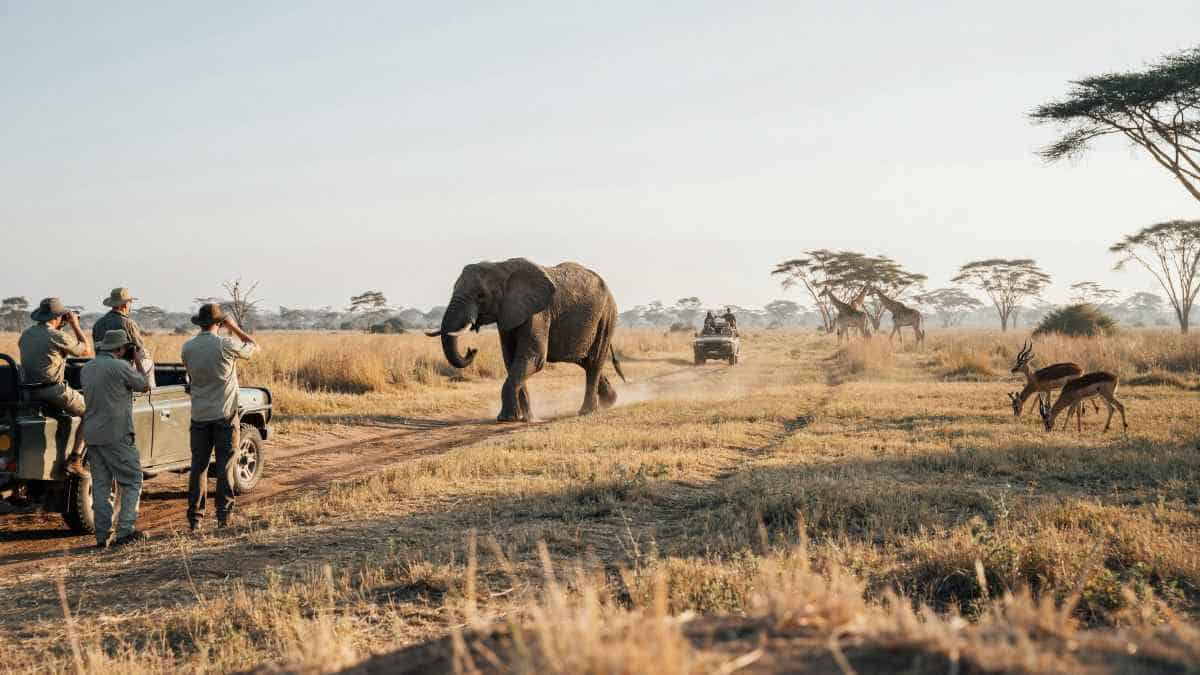
Image generated with Ai
With an increase in cost of international travel, wildlife enthusiasts see budget safari tours in December 2026 as an opportunity they cannot pass up. The green season in Southern Africa is an optimal time for viewing wildlife and at a fraction of the cost compared to other times. This season transforms the landscape from dry and barren to a vibrant emerald landscape, attracting thousands of newborn animals and migratory birds. At this time, South Africa’s Greater Kruger National Park and Botswana’s Chobe National Park are the safest, most affordable and easy to reach destinations, of which this guide focuses on. I will discuss the government policies ranked highest, the official tourism statistics and the important economic developments that are driving these areas to be the most popular end of year travel destinations.
Background: The Strategic Shift Toward Green Season African Safaris
Understanding the “Green Season” Phenomenon
Historically, international tourists have flocked to Southern Africa during the dry winter months, typically spanning from June to October. The prevailing belief was that sparse vegetation and shrinking waterholes presented the sole opportunity for optimal, unobstructed wildlife viewing. However, as global travel dynamics rapidly evolve and economic considerations take precedence for international travellers, a discernible strategic shift has emerged toward green season travel. The East and Southern African green season, which typically commences in late November and extends robustly through to March, fundamentally transforms the arid landscapes into vibrant, lush ecosystems. This specific time of year, often fondly referred to as the emerald season, is characterised by brief, dramatic afternoon thunderstorms that clear the heavy air, settle the dust, and breathe vivid life into the savanna. The precipitation triggers an immediate botanical response, resulting in a landscape teeming with nutritious grasses and blossoming flora, setting a picturesque stage for safari enthusiasts.
Breaking the Myth of Peak-Season Exclusivity
From an ecological and biological perspective, December is widely synonymous with the region’s calving season. The sudden, widespread abundance of surface water and nutrient-rich grazing grounds prompts many herbivore species—most notably impala, blue wildebeest, and springbok—to give birth in highly concentrated periods. This spectacular biological explosion subsequently attracts dense populations of apex predators, offering wildlife enthusiasts and professional photographers extraordinary, dynamic game-viewing opportunities that are entirely absent during the dry winter. Furthermore, this strategic shift is heavily driven by the immense financial benefits associated with shoulder season travel. Top-tier private lodges and national park authorities, aiming to maintain high occupancy rates during historically quieter months, significantly reduce their accommodation tariffs. This deliberate pricing strategy has successfully democratised access to some of the world’s most pristine wilderness areas. For those targeting budget safari tours in December 2026, the compelling combination of reduced accommodation rates, significantly fewer tourist crowds, and visually spectacular landscapes presents an undeniable value proposition. International visitors are increasingly realising that experiencing the African bush in its most verdant, biologically active state does not require compromising on the quality of the wildlife encounter; rather, it offers a distinct, equally captivating perspective at a fraction of peak-season costs.
Latest Official Developments in Southern African Tourism for 2026
South Africa’s R2.54 Billion Tourism Budget Boost
The operational landscape of Southern African tourism has been profoundly shaped by a series of highly progressive official developments throughout 2026, officially cementing the region’s status as a premier yet economically accessible destination. In South Africa, the Department of Tourism has actively pursued structural, long-term reforms to stimulate sector growth, particularly targeting international markets that are highly sensitive to travel friction and escalating holiday costs. As detailed comprehensively in the national budget vote delivered by Minister Patricia de Lille in May 2026, the South African government has adopted an aggressive, highly constructive posture towards enhancing the ease of access for international visitors. The department secured a substantial financial allocation of R2.54 billion for the 2026/27 financial year, with a significant R1.278 billion directly ring-fenced and transferred to South African Tourism for targeted destination marketing and widespread sector growth. This capital injection is being utilised to reposition the country’s global image, ensuring that tourists view South Africa not merely as a luxury destination, but as a diverse, accessible hub for affordable African safaris.
Advertisement
Advertisement
Botswana’s Infrastructure and Border Efficiency Enhancements
Across the northern border, the Botswana government has consistently mirrored this proactive, tourism-first approach, focusing heavily on modernising infrastructure and optimising border efficiency. The Ministry of Environment and Tourism in Botswana has overseen significant, capital-intensive upgrades to regional transit corridors, including the critical Kazungula Bridge and its adjacent one-stop border posts. These developments are specifically designed to facilitate seamless, rapid overland transit between Botswana, Zambia, and Zimbabwe. For international tourists incorporating the renowned Chobe National Park into a broader, multi-country regional itinerary, these infrastructural enhancements drastically reduce border waiting times, eliminate redundant administrative fees, and lower overall transit costs. Furthermore, the Botswana Tourism Organisation (BTO) continues to passionately advocate for a low-impact, high-value tourism model, yet has strategically supported the proliferation of regulated, budget-friendly mobile camping operators in the Chobe region. This strategic backing ensures that the country’s pristine wilderness environments remain accessible to diverse socioeconomic segments during the pivotal green season.
Government Announcements Revolutionising Safari Accessibility
South Africa’s Inter-Ministerial Visa Reforms and ETA Rollout
A major cornerstone of the 2026 developments is the official, widespread rollout of the Electronic Travel Authorisation (ETA) system by the South African Department of Home Affairs, operating in close synergy with the Department of Tourism. Now fully live and operational in key emerging and established international source markets—including China, India, Indonesia, and Mexico—the digital platform allows prospective travellers to secure their visa outcomes digitally within 24 hours from their mobile devices. This entirely frictionless entry process successfully eliminates the traditionally cumbersome, paper-based consulate applications that previously deterred spontaneous travel. This reform directly empowers modern travel decisions and appeals profoundly to tourists seeking budget safari tours in December 2026. Official economic projections presented by Minister de Lille suggest that the widespread, continued implementation of the ETA system will significantly bolster international arrival numbers, actively contributing to the creation of between 80,000 and 100,000 new, sustainable jobs within the broader hospitality, aviation, and service sectors.
Advertisement
Advertisement
Aviation Agreements and Expanded Route Networks
Simultaneously, the South African aviation sector has witnessed vital, highly competitive capacity expansions. Recent bilateral aviation agreements and the subsequent launch of new, direct commercial routes—such as those connecting Johannesburg to Perth, Cape Town to Mauritius, and the introduction of flights between Madrid and Johannesburg—have injected much-needed competition into the continental airspace. In a particularly notable breakthrough agreement with Angola earlier in 2026, passenger and cargo flight restrictions were decisively eliminated between the two nations. This increased regional and international air connectivity directly counters the negative global trend of rising airfares, which have been exacerbated by geopolitical conflicts in the Middle East and Southern Europe that historically pushed airfares up by over 20%. By actively stabilising commercial flight costs and radically expanding available route networks, the government has ensured that the initial, often prohibitive financial barrier to reaching Southern Africa remains highly surmountable for budget-conscious safari goers.
Official Statistics Validating the Green Season Safari Surge
SANParks and Greater Kruger Visitation Data
Empirical, verified data released by official national statistical agencies provides unequivocal validation of the resurgence and evolving booking patterns within Southern African tourism. According to the comprehensive tourism analytics released by Statistics South Africa (Stats SA), the nation experienced a watershed moment, welcoming 10.5 million international tourists in 2025. This landmark figure represents a robust 17.7% year-on-year increase from the 8.9 million tourists recorded in 2024, officially surpassing pre-pandemic levels for the first time. More importantly for the safari industry, the quarterly distribution of these arrivals indicates a definitive flattening of the traditional tourism seasonality curve. While the dry winter months remain historically popular, there is a statistically significant, data-backed uptick in fourth-quarter arrivals, driven heavily by international tourists purposefully capitalising on green season value. South African National Parks (SANParks) corroborates this encouraging trend through its internal visitor analytics. During targeted, highly successful promotional periods, such as the SA National Parks Week in late 2025, visitor numbers comfortably exceeded the 100,000 mark.
Advertisement
Advertisement
Botswana Tourism Organisation Q4 Analytics
In Botswana, the statistical narrative provided by official bodies is equally compelling and robust. Comprehensive data from the Botswana Tourism Organisation regarding the final quarters of recent years reveals that December has consistently emerged as a peak month for overall arrivals, accounting for an impressive 41.4% of fourth-quarter traffic in historical datasets. Specifically, Chobe National Park has demonstrated exceptional holding capacity and unprecedented revenue generation. Official government reports clearly indicate that in just a brief three-month period (April to June 2025), Chobe successfully welcomed 118,484 tourists, a massive jump from previous years, generating upwards of P21 million in direct conservation revenue. As the park transitions into the December green season in late 2026, tour operators have documented a clear shift in visitor demographics, noting a significantly higher influx of budget-conscious international groups, youth travellers, and regional self-drive tourists drawn by the dramatic reduction in lodging tariffs and the near guarantee of encountering the region’s legendary, massive elephant herds.
Policy Implications for Budget Safari Tours in December 2026
Cross-Border Synergies Between South Africa and Botswana
The careful formulation and strategic execution of progressive tourism policy in Southern Africa have had profound, positive implications for the overall affordability and logistical ease of late-year travel. Both the South African and Botswana governments have explicitly recognised that rigid, uncooperative border policies severely stifle regional tourism potential and economic growth. Consequently, there is a highly concerted, ongoing diplomatic effort to promote cross-border synergies, empowering international tourists to seamlessly blend the distinct ecological offerings of both nations into a single, cohesive, budget-friendly itinerary. The Southern African Development Community (SADC) has continually engaged in high-level policy dialogues aimed at standardising regional tourist visas. For the modern consumer, these vital policy shifts directly translate into tangible, real-world cost savings. The newfound ability to fly into Johannesburg, utilise the highly competitive domestic aviation market or robust national road networks to reach the Greater Kruger, and subsequently cross into Botswana via efficient, digitised border posts empowers travellers to entirely bypass expensive, monopolised charter flight networks.
Transparent Conservation Fee Structures
Furthermore, the official policies governing national park entry and conservation fee structures have been carefully and deliberately calibrated to support long-term volume. SANParks operates on a highly transparent tiered conservation fee model, distinguishing clearly between domestic citizens, SADC nationals, and international visitors. While international daily conservation fees remain an absolutely vital source of anti-poaching and environmental funding, they are heavily regulated by the state to ensure they do not become financially prohibitive for standard holidaymakers. Similarly, Botswana’s Department of Wildlife and National Parks (DWNP) maintains highly transparent, fixed park entry fees for the Chobe Riverfront and interior, allowing budget tour operators to accurately forecast their operational costs months in advance. This pricing stability allows these operators to offer highly competitive, all-inclusive budget safari tours in December 2026 without the fear of sudden, unannounced surcharges disrupting the consumer’s travel budget.
Industry Impact: Operators Adapting to New Consumer Demands
The Rise of Short-Stay and Packaged Mobile Camps
The private sector’s immediate response to these evolving, value-driven tourist preferences and progressive government policies has been both remarkably rapid and highly innovative. The traditional, outdated model of the African safari—which was almost exclusively associated with ultra-luxury, private-use lodges boasting highly prohibitive nightly rates—is being aggressively challenged by a massive new wave of agile, mid-market, and budget-conscious operators. Recognising the exponentially burgeoning demand for affordable African safaris, independent travel companies are actively restructuring their portfolios to highlight green season value, heavily leveraging the natural December lull in corporate travel to negotiate unprecedented, rock-bottom rates with accommodation providers. In the Greater Kruger region, this ongoing adaptation manifests most visibly in the rise of hybrid, eco-friendly accommodation models. Self-catering bush lodges, semi-permanent glamping sites, and structured eco-camps have proliferated densely alongside the immediate borders of the national park.
Advertisement
Advertisement
Digital Integration and Seamless Safari Bookings
Additionally, widespread digital integration has completely revolutionised the booking process, stripping away unnecessary middlemen. The vast majority of reputable tour operators and official SANParks facilities now utilise highly secure, real-time online reservation systems. This technological leap allows independent international travellers to curate, customize, and book their itineraries directly from their home countries, entirely bypassing traditional travel agent commissions that historically drove up the overall expenditure. In Chobe, the industry shift is strongly characterised by the massive expansion of regulated mobile camping safaris. These fully serviced but transient, temporary camps move rhythmically with the wildlife and adhere strictly to government-mandated leave-no-trace ecological principles. By completely eliminating the immense, fixed overheads associated with permanent brick-and-mortar luxury lodges, these operators can offer deeply discounted multi-day packages. During December, these mobile safaris provide a remarkably intimate, authentic bush experience that aligns perfectly with the strict financial parameters of budget-conscious international explorers.
Economic Implications of Expanded Safari Accessibility
Job Creation and the Tourism Satellite Account Rebound
The macroeconomic ramifications of expanding safari accessibility beyond the traditional luxury demographic and strictly outside of peak dry seasons are exceptionally profound. The hospitality and wildlife tourism sector is a highly labour-intensive industry, possessing one of the absolute highest job creation multipliers in the entire Southern African economy. The official Tourism Satellite Account data published regularly by Statistics South Africa consistently and clearly illustrates that domestic tourism expenditure and steady international arrivals directly sustain hundreds of thousands of local livelihoods. By actively promoting budget safari tours in December 2026, national governments and private operators are effectively smoothing out the notorious employment curve, successfully converting temporary, vulnerable seasonal jobs into stable, reliable, year-round employment for local rural communities. This economic stabilisation is critically important in the highly vulnerable rural nodes adjacent to protected areas, such as the numerous communities bordering the Greater Kruger fence line and the bustling town of Kasane located near Chobe.
Empowering Local Communities Through Sustainable Lodges
In these specific, peripheral regions, biodiversity-based tourism is very often the sole, primary catalyst for meaningful economic activity. When budget tourists frequent these areas in the green season of December, their financial expenditure cascades rapidly and deeply through the local economy. Money spent directly on official park fees heavily funds essential anti-poaching units and vital conservation management programmes. Furthermore, supplementary tourist expenditure at local supermarkets, fuel stations, community craft markets, and independent restaurants directly empowers local, grassroots entrepreneurs. This ensures that the vast economic benefits of wildlife tourism are widely distributed, rather than being exclusively captured by multinational, foreign-owned hospitality conglomerates. From a strict macroeconomic perspective, the steady influx of foreign currency generated by these December arrivals significantly aids in stabilising national current accounts, proving that inclusive, budget-friendly tourism is a highly potent, sustainable engine for national economic development and widespread poverty alleviation.
Deep Dive: Greater Kruger National Park as a Prime Budget Destination
Unrivalled Self-Drive Logistics and Infrastructure
The Greater Kruger National Park unequivocally stands as an unparalleled titan in the global realm of highly accessible, budget-friendly wildlife tourism. Encompassing nearly two million hectares of spectacular, unfenced wilderness, it represents one of the most rigorously managed, highly protected, and biologically diverse conservation areas on the planet. For astute travellers researching budget safari tours in December 2026, the Greater Kruger presents an absolute logistical masterpiece. Unlike many highly remote, inaccessible African reserves that strictly necessitate costly light aircraft transfers, the Greater Kruger is seamlessly, perfectly integrated into South Africa’s world-class national highway network. International visitors can easily, safely rent a reliable vehicle directly from O.R. Tambo International Airport in Johannesburg and undertake a highly scenic, entirely paved, and secure drive to the park gates in well under five hours.
The Biological Splendour of December in Kruger
This vital self-drive capability is the absolute linchpin of Kruger’s renowned affordability. SANParks meticulously maintains an incredibly extensive internal network of beautifully tarred and well-graded gravel roads, allowing independent tourists to safely navigate the sprawling reserve without the mandatory, exorbitant expense of a private guide or a highly specialised 4×4 vehicle. The park’s impressive physical infrastructure includes numerous meticulously maintained, secure rest camps offering a wide spectrum of budget-friendly accommodation. These range from remarkably modest, clean camping stands to fully self-contained, air-conditioned family chalets. Crucially, these camps are fully equipped with hygienic communal kitchens, traditional braai (barbecue) facilities, and well-stocked grocery shops, directly enabling visitors to self-cater and drastically reduce their daily food and beverage expenditure. Ecologically, December in the Greater Kruger is an absolute marvel. The arrival of the heavy summer rains fully extinguishes the dry, dusty pall of the winter months, rapidly replacing it with a vibrant, dense emerald canopy. The bushveld teems with thousands of newborn impala, wildebeest, and warthogs, providing critical, easy sustenance for the park’s incredibly dense populations of lion, leopard, cheetah, and the highly endangered African wild dog.
Deep Dive: Chobe National Park’s Value Proposition in Late 2026
The Elephant Capital’s Strategic Pricing Shift
Botswana is globally celebrated and highly respected for its strict high-yield, low-volume tourism model—a deliberate national policy that has highly successfully preserved its pristine, fragile ecosystems but has often unfortunately resulted in exclusionary, ultra-high pricing. However, Chobe National Park, situated strategically in the country’s extreme north, offers a brilliant, highly accessible exception to this national rule, particularly during the December green season. For those specifically seeking budget safari tours in December 2026, Chobe provides an extraordinarily rich, unforgettable wildlife experience that genuinely remains highly accessible to the average traveller. The park’s incredible accessibility is firmly anchored by the adjacent, bustling town of Kasane, which conveniently boasts a modern international airport and serves as the primary convergence point for the borders of Botswana, Namibia, Zambia, and Zimbabwe.
Advertisement
Advertisement
River Safaris and Kasane’s Evolving Transport Hub
This highly unique, strategic geographical positioning allows budget-conscious travellers to easily, cheaply incorporate Chobe into a much broader regional itinerary, very often combining it seamlessly with a visit to the nearby, majestic Victoria Falls. In December, as the broader Botswana landscape receives its heavy seasonal rainfall, the wildlife dynamics in Chobe undergo a fascinating, visually stunning transition. While it is true that some animal populations disperse deeper into the vast hinterland as surface water becomes widely available, the lush Chobe Riverfront remains an absolute, undeniable stronghold for the region’s legendary, massive elephant population. Boasting upwards of 50,000 elephants, the park practically guarantees awe-inspiring, up-close encounters with these magnificent pachyderms, completely regardless of the specific season. The true, unmatched value proposition of Chobe in December lies deeply in the diversity of its affordable activities. Operating directly from Kasane, numerous reputable operators offer highly affordable, multi-hour boat cruises along the Chobe River. These tranquil aquatic safaris provide an entirely different, serene vantage point, allowing tourists to drift silently past massive, grunting pods of hippopotamus, giant basking crocodiles, and massive herds of elephants drinking peacefully at the water’s edge.
Tourism, Business, and Public Impact of Affordable Safaris
Visiting Friends and Relatives (VFR) Driving Domestic Momentum
The massive democratisation of the authentic safari experience extends far, far beyond the traditional international leisure tourist, deeply and positively impacting regional business dynamics and public social patterns. As documented extensively in the official statistics from the Botswana Tourism Organisation, a highly significant portion of regional border crossings is attributed directly to the Visiting Friends and Relatives (VFR) demographic, which accounts for over 27.5% of visitors. As the high cost of accessing premier wildlife areas decreases drastically during the December green season, this massive VFR cohort increasingly incorporates short, highly budget-friendly safari excursions into their standard family visits. This powerful trend heavily stimulates the domestic tourism market, ensuring that local, regional citizens are actively engaging with, protecting, and deeply valuing their own national natural heritage, rather than feeling excluded from it by high prices.
Blurring the Lines Between Business and Leisure (Bleisure) Travel
Furthermore, the modern corporate landscape has permanently, fundamentally altered the intersection of work and travel, giving massive rise to the ‘bleisure’ (business and leisure) phenomenon. South Africa, acting as the primary continental economic hub, hosts many thousands of international business delegates, diplomats, and investors annually. The ready availability of accessible, budget safari tours in December 2026 provides a massive, highly compelling incentive for these corporate professionals to extend their strictly business stays into the holiday season. The seamless, highly reliable connectivity between major commercial centres like Johannesburg and Cape Town to the wild peripheries of the Greater Kruger allows a business traveller to comfortably conclude a major conference on a Friday afternoon and embark on a world-class, budget-friendly safari by Saturday morning. This overlap effectively maximizes the economic yield per international arrival, greatly boosting secondary industries.
Expert and Official Statements on the 2026 Tourism Landscape
Stats SA and the Measurement of Biodiversity-Based Tourism
The massive strategic importance of nature-based, accessible tourism has been a major, recurring theme in the official, public discourse of Southern African leaders throughout 2026. Emphasising the hard statistical realities, Statistics South Africa has boldly pioneered the rigorous measurement of this specific sector through its groundbreaking experimental estimates for biodiversity-based tourism. Official government reports explicitly, proudly note that whether a tourist visits a remote game park, hikes in a coastal nature reserve, or relaxes in a national botanical garden, this specific demographic consistently, reliably drives substantial national employment and massive direct tourism spend. The verified data unequivocally demonstrates that stringent environmental conservation and broad economic prosperity are not mutually exclusive concepts, but rather deeply, intrinsically symbiotic forces.
Ministry of Tourism Perspectives on Destination Marketing
Minister of Tourism, Patricia de Lille, perfectly encapsulated this progressive national sentiment during her highly publicised 2026/27 budget vote, firmly highlighting that highly coordinated destination marketing and robust digital visibility are translating directly, measurably into physical bookings. “When English singer Dua Lipa, posts photos from her Kruger National Park vacation, telling her 87.4 million followers on Instagram ‘I just had the most incredible trip of my life in South Africa’ she becomes an authentic ambassador for our country,” the Minister noted, validating the government’s intense, ongoing focus on streamlining access through sweeping visa reforms. In Botswana, official government discourse similarly underscores the delicate, vital balancing act between tourist volume and ecological value. Reports detailing the Chobe National Park’s remarkable, unprecedented revenue generation of P21 million over a brief three-month window clearly demonstrate the sheer, undeniable fiscal power of the region.
Future Outlook: The Maturation of the December Safari Market
Preparing for 2027: Long-Term Growth Trajectories
As the global travel community looks enthusiastically toward 2027 and far beyond, the definitive trajectory of the Southern African safari market is abundantly clear: the outdated era of the highly exclusive, peak-season-only safari is decisively, permanently giving way to a much more nuanced, highly accessible, year-round industry. The green season, once foolishly dismissed by traditional, old-school travel agents as a period of challenging logistics and dispersed wildlife, is now rightfully, globally celebrated as a time of immense biological vibrancy and truly unparalleled financial value. The highly successful, widespread implementation of digital visa platforms, the massive expansion of bilateral aviation agreements, and the rigorous stabilisation of regional border infrastructure have permanently dismantled the historical barriers to entry.
Advertisement
Advertisement
The Sustained Promise of Inclusive Safari Experiences
For prospective international and regional travellers, the fierce, ongoing commitment of regional governments to actively maintain accessible, transparent conservation fee structures absolutely guarantees that budget safari tours in December 2026 will not be a fleeting anomaly, but rather the new, permanent gold standard for value-driven eco-tourism. Private operators will undoubtedly continue to innovate aggressively, rapidly expanding their portfolios of eco-camps and mobile safaris to specifically cater to environmentally conscious, budget-aware demographics from across the globe. Ultimately, this highly inclusive, forward-thinking approach to wildlife tourism ensures the long-term, unshakeable viability of Southern Africa’s protected areas. By actively making the sheer majesty of the Greater Kruger and the winding Chobe River accessible to a vastly broader global audience, these nations are actively fostering a massive, diverse community of lifelong conservation advocates.
Advertisement
