
Germany’s December Railway Timetable Changes Christmas Travel as New ICE Services Meet Berlin Diversions

Updated
Published
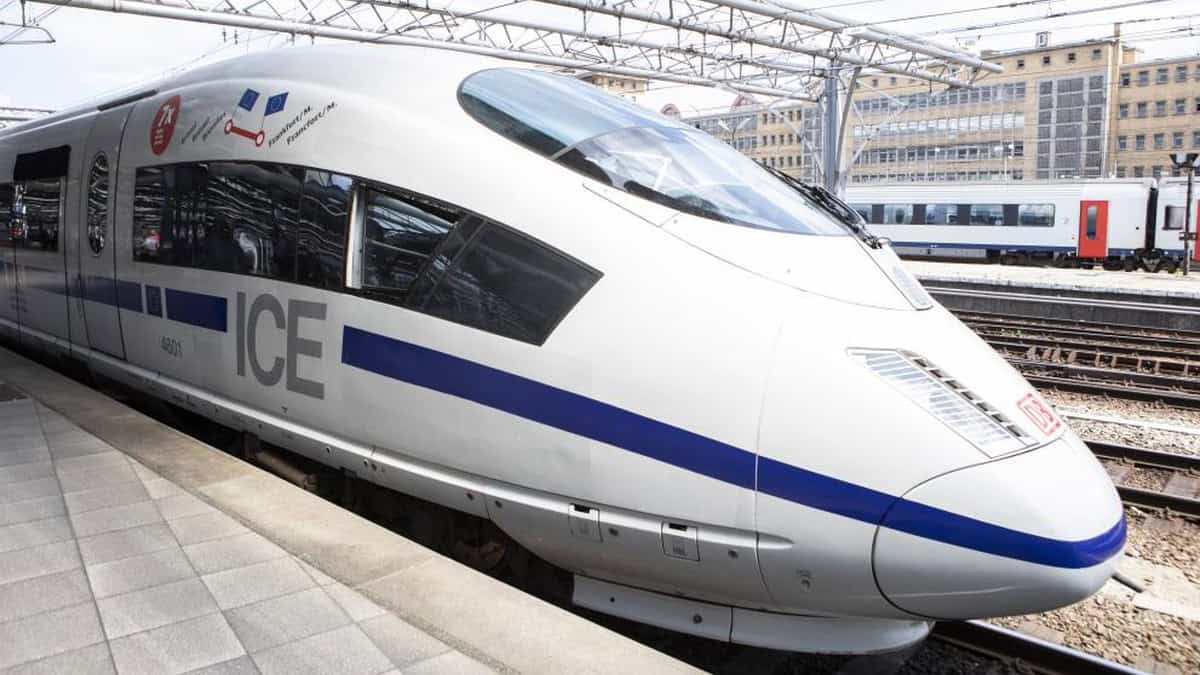
Germany will introduce its 2026/27 long-distance railway timetable on 13 December 2026, following the opening of advance ticket sales on 14 October. According to Deutsche Bahn, the changes bring faster ICE Sprinter services, restored international connections and new travel opportunities across Europe. However, major construction between Lehrte and Berlin will continue during the Christmas period, affecting routes and journey times. For travellers and tour operators, the main challenge is coordinating winter bookings, cross-border connections and holiday schedules while managing construction-related disruption.
Germany’s December Railway Timetable Creates a Critical Christmas Travel Planning Window
Germany’s railway network is approaching an important winter transition. Deutsche Bahn’s new annual timetable will change how passengers travel between major German cities and connect with neighbouring European countries. The changes arrive shortly before Christmas, when families, international visitors and holidaymakers need dependable transport arrangements.
The central development is not simply the introduction of faster trains. It is the combination of new services, continuing construction and different starting dates for international connections. Some journeys will become shorter and more convenient. Others will require longer travel times or alternative routes.
For travel agencies, this creates an important distinction between booking availability and operational certainty. A journey appearing in the reservation system may already include a planned diversion. However, passengers must still understand the connection times, route changes and limitations associated with their tickets.
Advertisement
Advertisement
The December timetable therefore represents both an opportunity for Germany’s rail tourism market and a test of winter journey planning.
The December Timetable Change Is Not a Final Booking Deadline
Deutsche Bahn announced the 2027 timetable on 13 October 2026 and opened advance reservations the following day. The new services begin operating on 13 December. Importantly, this date does not represent a final deadline for buying Christmas train tickets.
Advertisement
Advertisement
The distinction matters because not every international service starts on the same day. Some connections become available with the timetable change, while others return after construction finishes. Several additional European services are planned for later in 2027.
| Important date | Confirmed development | Traveller implication |
|---|---|---|
| 14 October 2026 | Advance bookings begin | Christmas journeys can be planned under the new timetable |
| 26 October 2026 | Family Ticket bookings reopen | Eligible families gain another domestic travel option |
| 13 December 2026 | New annual timetable begins | Revised routes, train times and ICE services take effect |
| 19 December 2026 | Direct services via Passau to Vienna return | More international connections become available |
| March 2027 | Hamburg–Copenhagen frequency increases | Additional departures are not available for Christmas 2026 |
According to Deutsche Bahn, major planned construction diversions are already included in its booking information. Nevertheless, passengers should check the full journey rather than assuming that the shortest advertised route applies equally in both directions.
Faster ICE Sprinter Trains Create New Opportunities for German City Travel
Germany’s updated ICE Sprinter network introduces faster journeys between major economic and tourism centres. The improvements particularly benefit passengers travelling long distances without needing numerous intermediate stops.
Hamburg and Munich gain three new Sprinter departures in each direction every day. Berlin and Stuttgart also receive three daily services per direction, compared with one previously.
| Railway corridor | New service pattern | Journey benefit |
|---|---|---|
| Hamburg–Munich | Three daily Sprinters each way, stopping at Hannover and Nuremberg | 5 hours 20 minutes, approximately 20 minutes faster |
| Berlin–Stuttgart | Three daily Sprinters each way | 4 hours 45 minutes, roughly one hour faster than the regular service via Frankfurt |
| Berlin–Hamburg | Approximately half-hourly long-distance service returns | Journey times of approximately 1 hour 45 minutes to 2 hours |
Deutsche Bahn expects approximately 70 ICE Sprinter journeys daily across its national network.
For the tourism industry, shorter journey times can improve weekend breaks, multi-city holidays and business travel. Berlin, Hamburg and Munich also serve as important connection points for visitors continuing to other German destinations. The improvements may make rail-based itineraries easier to sell, although faster services do not remove the need to check onward connections.
Advertisement
Advertisement
Berlin–Hannover Railway Construction Creates the Biggest Winter Connection Risk
The most consequential operational issue is the continuing reconstruction of the Lehrte–Berlin corridor.
According to DB InfraGO, the 221-kilometre corridor carries more than 400 passenger trains and approximately 90 freight trains daily. The infrastructure programme includes renewal of more than 175 switches, 260 kilometres of track and modernisation work at 25 stations.
Construction began on 2 October 2026 and is scheduled to continue in phases until December 2027.
Why the Direction of Travel Matters
During the initial October–December closure, diverted long-distance trains between Hannover and Berlin face journey extensions of approximately 60–80 minutes.
From mid-December, the operating arrangements change. Trains heading towards Hannover can use the route via Wolfsburg, while Berlin-bound services continue using the diversion through Magdeburg.
This makes the corridor especially important for return journeys. A traveller may find different routes and connection times on the outward and homeward legs. It is therefore essential to check both directions independently.
Advertisement
Advertisement
| Construction period | Main operating arrangement |
|---|---|
| 2 October–12 December 2026 | Eastern corridor closure with long-distance diversions |
| Mid-December 2026–October 2027 | Restricted operation and direction-dependent routing |
| February–July 2027 | Additional western-section closure |
| October–December 2027 | Further eastern-section closure planned |
DB InfraGO’s programme is designed to improve long-term infrastructure reliability. However, its short-term effect is reduced flexibility on an important corridor linking Berlin with western Germany.
Austria, Poland, France and the Netherlands Gain New European Rail Travel Options
Germany’s international railway timetable provides further opportunities for cross-border winter travel.
A particularly important change arrives on 19 December, when direct ICE connections from Berlin through Regensburg and Passau towards Linz and Vienna return. Two daily train pairs are planned on this route.
The Frankfurt–Nuremberg–Vienna corridor will also offer 14 long-distance services daily following completion of the relevant construction work, an increase of two compared with the period before the works.
Other international improvements broaden the market.
Berlin gains a Saturday evening EuroCity connection to Warsaw, departing at 17.50 and arriving at 23.02. A Railjet journey from Vienna through Prague will also continue to Berlin, arriving at 21.33.
Advertisement
Advertisement
Stuttgart and Paris will have six direct services per direction daily. Hamburg will have up to four direct ICE connections with Amsterdam under the new timetable arrangements.
Not Every Announced International Service Is a Christmas Service
Deutsche Bahn’s 2027 programme includes more than 320 international departures daily, representing growth of approximately 20 per cent over five years. Its network provides direct links from Germany to more than 200 cities across 14 countries.
However, the annual programme must not be confused with December availability.
The increase to seven daily Hamburg–Copenhagen train pairs is scheduled for March 2027. Direct Frecciarossa services between Munich and Milan or Rome are planned progressively from summer 2027, subject to vehicle approval.
Travel sellers should therefore distinguish confirmed December connections from later additions before advertising new European holiday packages.
German Tourism Demand and Railway Punctuality Explain the Commercial Stakes
Official tourism figures demonstrate why dependable winter transport matters for Germany’s visitor economy.
Advertisement
Advertisement
According to the Federal Statistical Office, Destatis, Germany recorded 497.5 million accommodation nights during 2025. Approximately 32 million of these occurred in December.
The latest available August 2026 figures recorded 58.7 million overnight stays, a 1.1 per cent decline compared with August 2025.
Deutsche Bahn’s September 2026 operational figures also underline the importance of realistic connection planning.
| Official indicator | Verified figure | Industry relevance |
|---|---|---|
| Germany accommodation nights, 2025 | 497.5 million | Scale of tourism accommodation demand |
| December 2025 accommodation nights | Approximately 32 million | Importance of the winter visitor market |
| August 2026 accommodation nights | 58.7 million | Latest seasonal tourism context |
| September 2026 DB long-distance operational punctuality | 52.4% | Need to account for connection reliability |
Deutsche Bahn defines operational punctuality as arrival less than six minutes late. The September figure measures historical network performance, not the expected outcome for an individual Christmas train.
These indicators do not prove that the new timetable will generate additional tourism spending. They do, however, show why efficient railway connections matter to hotels, destinations and businesses selling linked travel services.
Stable Rail Fares and Family Offers Support Winter Holiday Planning
Ticket affordability forms another part of the timetable announcement.
Advertisement
Advertisement
According to Deutsche Bahn, long-distance flexible fares and BahnCard prices remain unchanged. Saver fares continue to be advertised from €6.99, although the lowest price is not guaranteed on every service.
The DB Family Ticket becomes bookable again from 26 October 2026 for travel beginning on 1 November. It provides eligible domestic return travel for up to five people at €99.99, including seat reservations.
At least one child must travel, and no more than two passengers may be aged 15 or above.
Group travel arrangements have also improved. For groups of six or more, eligible saver fares can be held without obligation for 14 days when reserved up to 60 days before departure. A deposit option is available closer to the journey date.
These conditions may help tour operators manage booking commitments while confirming accommodation and other arrangements.
International Ticket Protection Becomes More Important as European Booking Expands
Deutsche Bahn is extending international ticket distribution through the Open Sales and Distribution Model, known as OSDM.
Advertisement
Advertisement
Its booking systems now provide access to tickets from several European rail operators and more than 10,000 additional European destinations.
However, wider online availability does not automatically mean that every multi-operator journey is covered by one transport contract.
According to Deutsche Bahn’s passenger-rights information, a single through-ticket can provide protection across the booked journey. Separate tickets may create separate contracts, limiting protection when an earlier train arrives late.
Under the applicable rules, eligible passengers can generally claim 25 per cent compensation for arrivals delayed by at least 60 minutes, rising to 50 per cent at 120 minutes, subject to the relevant conditions and exceptions.
For travel agencies, understanding the ticket structure is as important as checking departure times.
The Hidden Christmas Railway Risk Is the Gap Between Network Expansion and Journey Reliability
The deeper commercial issue is that Germany’s new timetable is improving connectivity while infrastructure works continue to restrict parts of the network.
Advertisement
Advertisement
This creates different operating conditions within the same winter travel season.
A Berlin–Munich or Hamburg–Stuttgart journey may benefit from faster long-distance services, while a connection involving the Lehrte–Berlin corridor could require a different route or additional travel time. Passengers combining these services with international trains face a more complicated planning problem.
The six-day separation between the 13 December timetable introduction and the 19 December restoration of direct services through Passau adds another scheduling consideration.
For tour operators, the solution is to assess each travel itinerary as a complete journey rather than as a collection of individual train departures.
That means examining direction-specific routing, transfer stations, ticket protection, connection margins and the actual operating dates of international services.
This is especially relevant for Christmas markets, group holidays, multi-city packages and business journeys involving fixed appointments.
Advertisement
Advertisement
The commercial opportunity lies in offering travellers clearer schedules and dependable alternatives, rather than relying only on headline journey-time improvements.
Essential Operational Priorities for Travel Agents and Tour Operators
Travel businesses preparing Germany railway packages for winter 2026 should adopt the following measures:
- Verify travel dates: Separate services launching on 13 December from those beginning on 19 December or later.
- Audit both journey directions: Check Berlin-related diversions individually for outward and return itineraries.
- Review international transfers: Allow realistic connection times where long-distance trains meet cross-border services.
- Confirm ticket protection: Establish whether a journey is covered by a through-ticket or separate contracts.
- Monitor construction updates: Recheck Deutsche Bahn and DB InfraGO information before departure.
- Communicate clearly: Explain revised routes, arrival times and possible alternative connections before clients travel.
Germany’s Railway Transformation Could Strengthen European Tourism Connectivity Beyond Christmas 2026
Germany’s December railway timetable represents more than an annual scheduling adjustment. It combines faster domestic journeys, expanding international services and a major infrastructure renewal programme.
Its immediate importance lies in Christmas travel planning, when a missed connection can affect accommodation, onward transport and carefully arranged holiday activities.
Over the longer term, expanded international rail distribution and better infrastructure could strengthen Germany’s position as a European railway hub.
However, future tourism growth will depend not only on the number of available services but also on punctuality, dependable connections and the ability of travellers to complete international journeys with confidence.
Advertisement
