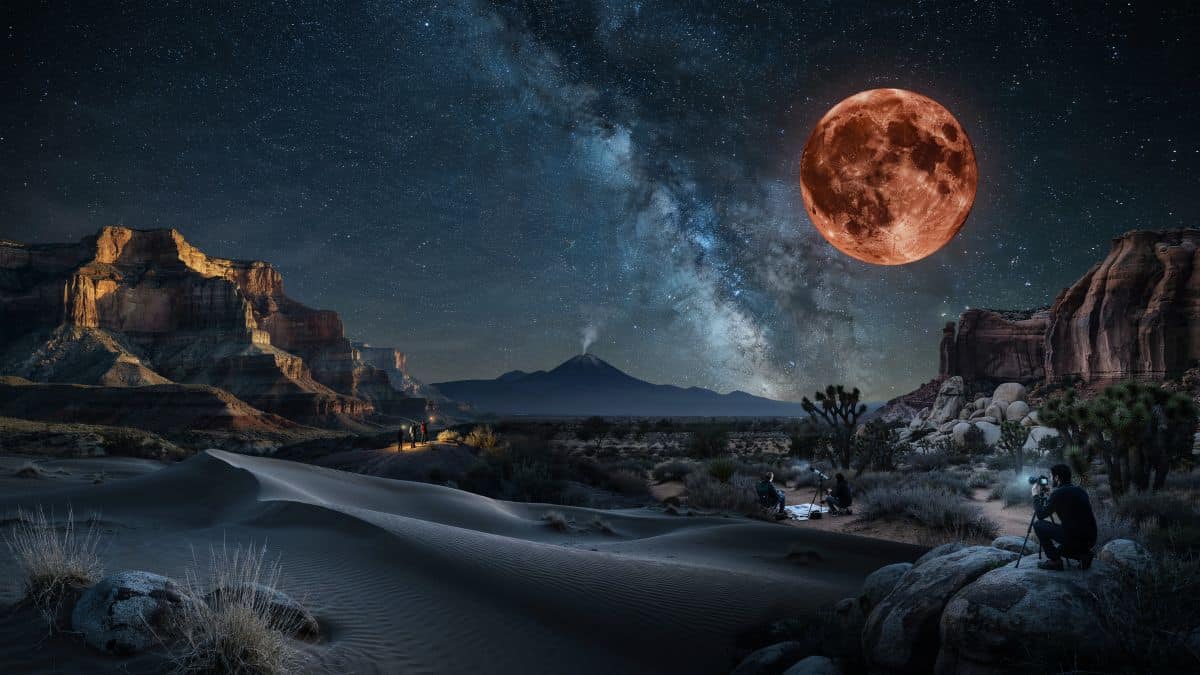
Image generated with Ai
California, Arizona and Other States in US Bring Stunning Blood Moon Night Hikes From Grand Canyon to Hawaii as travellers prepare to explore some of America’s most spectacular dark sky destinations for a rare lunar spectacle. From Joshua Tree National Park and Death Valley in California to Grand Canyon National Park in Arizona and Haleakalā National Park in Hawaii, these locations offer clear horizons, low light pollution and unforgettable outdoor experiences. The reason these Blood Moon Night Hikes are attracting attention is the combination of astronomy, adventure travel and protected natural landscapes. With national parks, state parks and recognised dark sky locations offering unique viewing opportunities, travellers can experience the beauty of the night sky while discovering America’s most iconic destinations.
A growing number of travellers are combining outdoor adventure with astronomy by searching for the best locations to experience a Blood Moon eclipse. These rare lunar events occur when the Moon passes through Earth’s shadow, creating a reddish appearance caused by sunlight filtering through the planet’s atmosphere.
The best viewing locations are usually areas far from artificial lighting, where mountains, deserts and open landscapes provide clear views of the sky. Across the United States, national parks and protected areas have become popular destinations for night hiking, astrophotography and celestial tourism.
The National Park Service highlights many protected areas where dark skies are preserved as part of conservation efforts, while DarkSky International recognises locations that actively protect natural nighttime environments.
Advertisement
Advertisement
Dark sky locations provide better conditions for viewing lunar eclipses because they reduce artificial light interference and allow visitors to experience celestial events more clearly. Unlike cities, where buildings and street lighting can reduce visibility, remote landscapes create wide views of the horizon.
For Blood Moon Night Hikes, travellers should look for destinations with:Requirement Importance Low light pollution Improves visibility of the eclipse Open eastern horizon Helps during moonrise Safe trails Supports nighttime hiking Official access Ensures legal night visits Clear weather Improves viewing conditions Visitor facilities Supports overnight travel
Dark-sky tourism has grown as travellers increasingly seek experiences connected with nature, science and outdoor adventure. National parks across the United States have become leading destinations because they combine protected landscapes with opportunities for astronomy.
Visitors planning night hikes should also prepare carefully by carrying headlamps, extra water, warm clothing and navigation tools because many dark-sky locations have limited services after sunset.
Advertisement
Advertisement
The United States offers a wide range of destinations suitable for lunar eclipse viewing, from desert landscapes in the Southwest to volcanic mountains in Hawaii.
| State | Location | Main Viewing Advantage |
|---|---|---|
| Arizona | Grand Canyon National Park | Wide canyon horizons and dark skies |
| California | Joshua Tree National Park | Desert landscapes away from city lights |
| California/Nevada | Death Valley National Park | Extremely dark desert environment |
| Utah | Dead Horse Point State Park | Certified dark-sky location |
| Colorado | Great Sand Dunes National Park | High elevation and open landscapes |
| Hawaii | Haleakalā National Park | Exceptional astronomical conditions |
| Florida | Big Cypress National Preserve | Eastern US dark-sky destination |
| Montana | Glacier National Park | Mountain landscapes and clear skies |
| Texas | Big Bend National Park | One of America’s darkest skies |
| New Mexico | Chaco Culture National Historical Park | Astronomy and cultural heritage |
These destinations provide different experiences, allowing travellers to choose between desert adventures, mountain hikes, volcanic landscapes and historic astronomy sites.
Grand Canyon National Park in Arizona is among the most iconic destinations for night-sky tourism in the United States. The park is recognised as an International Dark Sky Park because of its efforts to reduce artificial lighting and protect natural nighttime conditions.
The enormous canyon landscape creates a dramatic setting for lunar eclipse viewing because visitors can enjoy unobstructed horizons and panoramic views.
| Location | Experience |
|---|---|
| Mather Point | Accessible viewpoint with wide views |
| Hermit Road viewpoints | Remote scenic locations |
| Rim Trail | Walking route with multiple overlooks |
| Grand Canyon Visitor Center area | Visitor-friendly viewing location |
The South Rim is particularly popular because it offers easy access, visitor facilities and some of the most recognisable landscapes in America.
For travellers, a Blood Moon experience at the Grand Canyon combines astronomy with hiking, photography and one of the world’s greatest natural wonders.
Joshua Tree National Park in California is one of the strongest dark-sky destinations in the western United States. The park’s desert environment, limited development and protected status create excellent conditions for observing celestial events.
The combination of rugged rock formations, desert plants and clear skies makes Joshua Tree especially attractive for photographers and outdoor travellers.
| Location | Features |
|---|---|
| Hidden Valley | Easy access and open desert views |
| Keys View | Elevated panoramic landscape |
| Barker Dam | Desert scenery and sky visibility |
| Cottonwood area | Remote dark-sky experience |
Joshua Tree is also popular because it is accessible from major Southern California cities including Los Angeles and San Diego.
Visitors can combine eclipse viewing with:
The park provides a strong example of how astronomy can become part of adventure tourism.
Death Valley National Park, located across California and Nevada, offers one of the darkest natural environments in the United States. Its remote desert location, limited development and enormous open spaces create excellent conditions for observing the night sky.
The park is recognised for its exceptional stargazing opportunities and attracts astronomy enthusiasts throughout the year.
| Location | Advantage |
|---|---|
| Mesquite Flat Sand Dunes | Wide desert horizon |
| Badwater Basin | Vast open landscape |
| Harmony Borax Works | Accessible viewing area |
| Furnace Creek | Visitor services nearby |
A Blood Moon viewed above Death Valley creates a dramatic contrast between the red lunar glow and the surrounding desert landscape.
However, visitors should prepare carefully because desert conditions can become extreme, especially during warmer periods.
Important preparations include:
Dead Horse Point State Park in Utah is recognised as an International Dark Sky Park because of its efforts to protect nighttime visibility. The park offers spectacular views over the Colorado River and surrounding canyon landscapes. (stateparks.utah.gov)
The combination of elevated viewpoints, limited light pollution and dramatic scenery makes it a favourite destination for astronomy enthusiasts.
| Feature | Benefit |
|---|---|
| Canyon views | Creates dramatic eclipse backgrounds |
| Dark skies | Improves visibility |
| High viewpoints | Provides open horizon access |
| Nearby Moab | Easy tourism connections |
Visitors can combine Blood Moon viewing with nearby attractions including:
The region has become one of the strongest astronomy tourism destinations in the American Southwest.
Great Sand Dunes National Park and Preserve in Colorado provides a unique combination of desert, mountains and high elevation. The park’s massive sand dunes create an unusual landscape for night-sky viewing.
The contrast between the dunes and the night sky makes the location particularly attractive for photographers.
| Area | Experience |
|---|---|
| Main dune field | Open sky visibility |
| Medano Creek area | Scenic night environment |
| Mountain viewpoints | Elevated perspectives |
The park’s remote location helps reduce artificial light, allowing visitors to experience a more natural view of the Moon and stars.
A Blood Moon event here creates a rare combination of astronomy and landscape tourism.
Haleakalā National Park on the island of Maui offers one of the most unique night-sky experiences in the United States because of its extreme elevation, clear atmosphere and isolated volcanic landscape. The park’s summit rises above much of the surrounding cloud layer, creating exceptional conditions for astronomical observation.
The National Park Service recognises Haleakalā as an important location for astronomy because the summit environment provides reduced light pollution and wide views of the night sky.
| Location | Experience |
|---|---|
| Haleakalā Summit | High-altitude astronomical viewing |
| Summit overlooks | Wide horizon visibility |
| Crater viewpoints | Unique volcanic landscape |
Visitors planning a Blood Moon night experience should check park guidance because summit access may involve specific rules, reservations and safety requirements.
The destination offers more than eclipse viewing. Travellers can combine astronomy with:
Haleakalā represents one of the strongest examples of astronomy tourism because visitors travel specifically to experience the relationship between nature, science and the night sky.
Big Cypress National Preserve provides one of the strongest dark-sky experiences in the eastern United States. Located in southern Florida, the preserve protects a large wetland ecosystem and became one of the first National Park Service locations east of Colorado to receive International Dark Sky recognition. (nps.gov)
Unlike western desert destinations, Big Cypress offers a different Blood Moon experience through wetlands, forests and open landscapes.
| Feature | Benefit |
|---|---|
| Wetland environment | Unique natural setting |
| Open skies | Better moon visibility |
| Ranger programmes | Educational astronomy experiences |
| Wildlife habitat | Combines nature and astronomy |
Visitors can experience:
The preserve is particularly valuable because it provides an accessible dark-sky destination for travellers in the eastern United States who may not be able to reach western national parks.
Glacier National Park in Montana combines mountain scenery with dark skies, making it a powerful destination for lunar eclipse viewing. The park’s remote location, limited urban development and dramatic landscapes create excellent conditions for observing celestial events.
The National Park Service promotes Glacier as a destination where visitors can experience natural nighttime environments away from city light pollution.
| Location | Advantage |
|---|---|
| Logan Pass | High mountain viewpoint |
| Lake McDonald area | Scenic reflections |
| Open valleys | Wide sky visibility |
A Blood Moon above Glacier National Park offers a combination of:
Visitors should prepare carefully because mountain conditions can change quickly after sunset.
Important preparations include:
Big Bend National Park is one of the darkest locations in the United States because of its remote desert environment and minimal artificial lighting. Located in western Texas, the park is internationally recognised for its exceptional stargazing conditions.
The park provides wide-open landscapes where visitors can observe the Moon, stars and planets with limited interference.
| Location | Experience |
|---|---|
| Chisos Basin | Mountain and desert views |
| Rio Grande areas | Open horizon landscapes |
| Remote park areas | Maximum darkness |
Big Bend is especially popular among:
A Blood Moon viewing experience here combines desert exploration with one of the clearest night skies in America.
Visitors should remember that the park is extremely remote, so preparation is essential.
Chaco Culture National Historical Park in New Mexico offers a unique Blood Moon viewing experience because astronomy has been connected to the landscape for centuries. The ancient Pueblo people who built Chaco structures incorporated celestial observations into architecture and cultural practices.
The National Park Service highlights Chaco as a significant location for understanding the relationship between ancient communities and the night sky. (nps.gov)
| Feature | Importance |
|---|---|
| Dark skies | Excellent celestial visibility |
| Ancient structures | Historical astronomy connection |
| Ranger programmes | Educational experiences |
| Desert landscape | Unique viewing environment |
Visitors can experience:
Chaco provides a different perspective because the Blood Moon becomes not only a natural event but also part of a long history of human observation of the sky.
Travellers planning a Blood Moon adventure should consider accessibility, weather, accommodation and park regulations before choosing a destination.
| Destination | Nearest Major City | Travel Consideration |
|---|---|---|
| Grand Canyon | Flagstaff, Arizona | Remote park access |
| Joshua Tree | Palm Springs, California | Easy access from Southern California |
| Death Valley | Las Vegas, Nevada | Desert preparation required |
| Dead Horse Point | Moab, Utah | Combine with canyon tourism |
| Great Sand Dunes | Alamosa, Colorado | Remote mountain location |
| Haleakalā | Kahului, Hawaii | Island travel planning |
| Big Cypress | Miami, Florida | Accessible from South Florida |
| Glacier | Kalispell, Montana | Seasonal mountain conditions |
| Big Bend | El Paso, Texas | Long-distance desert travel |
| Chaco Culture | Albuquerque, New Mexico | Remote access |
Each destination offers a different type of travel experience, from desert adventure to mountain exploration and island astronomy.
Accommodation options vary depending on the destination.
| Location | Recommended Stay Areas |
|---|---|
| Grand Canyon | Tusayan, Flagstaff, park lodges |
| Joshua Tree | Joshua Tree town, Twentynine Palms, Palm Springs |
| Death Valley | Furnace Creek, Pahrump, Las Vegas |
| Dead Horse Point | Moab |
| Great Sand Dunes | Alamosa, nearby mountain communities |
| Haleakalā | Kahului, Kīhei, Maui resorts |
| Big Cypress | Everglades City, Naples, Miami |
| Glacier | Whitefish, Kalispell, park lodges |
| Big Bend | Terlingua, Chisos Basin area |
| Chaco Culture | Farmington, Albuquerque |
Visitors should book early during major celestial events because dark-sky destinations often have limited accommodation capacity.
Night hiking requires additional preparation because visibility, weather and navigation conditions change after sunset.
| Safety Measure | Reason |
|---|---|
| Carry a headlamp | Improves trail visibility |
| Hike with companions | Increases safety |
| Bring extra water | Prevents dehydration |
| Check weather forecasts | Avoids dangerous conditions |
| Stay on marked trails | Protects visitors and wildlife |
| Carry navigation tools | Helps in remote areas |
| Respect park rules | Protects natural environments |
Visitors should also follow Leave No Trace principles by avoiding litter, reducing noise and protecting wildlife habitats.
| Rank | Location | State | Main Attraction |
|---|---|---|---|
| 1 | Grand Canyon National Park | Arizona | Canyon and dark-sky views |
| 2 | Joshua Tree National Park | California | Desert astronomy experience |
| 3 | Death Valley National Park | California/Nevada | Extremely dark skies |
| 4 | Dead Horse Point State Park | Utah | Certified dark-sky landscape |
| 5 | Haleakalā National Park | Hawaii | High-altitude astronomy |
| 6 | Great Sand Dunes National Park | Colorado | Desert and mountain scenery |
| 7 | Big Bend National Park | Texas | Remote dark skies |
| 8 | Big Cypress National Preserve | Florida | Eastern US astronomy destination |
| 9 | Glacier National Park | Montana | Mountain moon views |
| 10 | Chaco Culture National Historical Park | New Mexico | Astronomy and history |
A Blood Moon occurs during a lunar eclipse when Earth moves between the Sun and the Moon, causing the Moon to appear reddish because sunlight passes through Earth’s atmosphere.
Grand Canyon National Park, Joshua Tree National Park, Death Valley and Big Bend are among the strongest destinations because of their dark skies and open landscapes.
No. Visitors should check individual park rules because some areas restrict nighttime access.
Recommended equipment includes:
Major destinations are found in:
Blood Moon Night Hikes Across America offer travellers a rare opportunity to combine astronomy, adventure and nature tourism in some of the country’s most spectacular landscapes. From Grand Canyon National Park and Joshua Tree National Park to Haleakalā, Big Bend and Chaco Culture, these destinations provide dark skies, open horizons and unforgettable lunar viewing experiences. The reason these locations stand out is their protection from artificial light and their connection with outdoor exploration. As interest in celestial tourism grows, America’s national parks and dark-sky destinations are becoming major travel choices for visitors seeking unique experiences beyond traditional sightseeing.
Advertisement
Tags: Arizona, California, Colorado, florida, hawaii
Advertisement
Advertisement













Saturday, September 5, 2026

Friday, September 4, 2026
Saturday, September 5, 2026
Friday, September 4, 2026

Thursday, September 3, 2026

Wednesday, September 2, 2026
Friday, September 4, 2026