
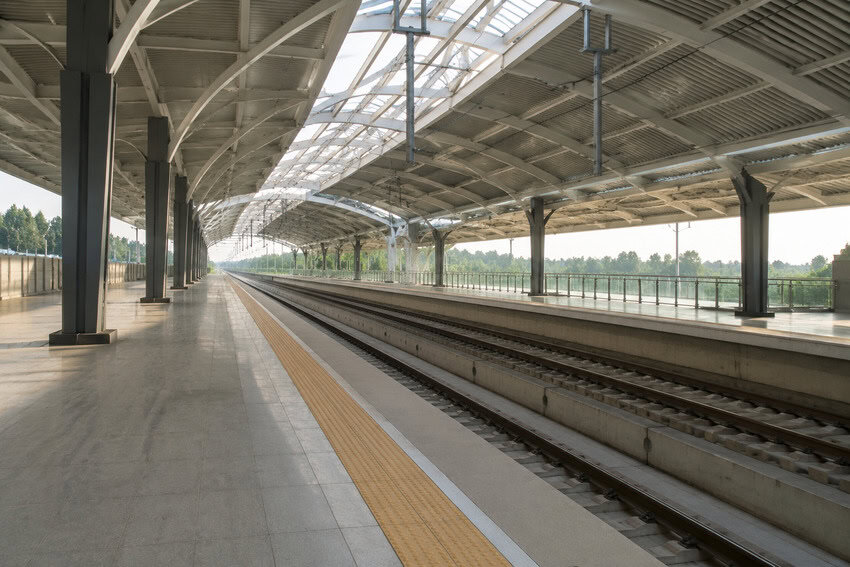
Image generated with Ai
India has taken a decisive step in reshaping its transport landscape by spearheading a high-speed rail revolution through seven new bullet train corridors across strategically important national routes, marking a major shift from conventional rail infrastructure to ultra-fast, next-generation mobility. The initiative reflects a nationwide push to fundamentally transform intercity travel by dramatically reducing journey times, strengthening economic linkages between major urban and industrial centres, and establishing a unified high-capacity rail network. With global bidding opened and standardised engineering systems introduced, the project signals a structural overhaul of India’s mobility framework, positioning high-speed rail as a central pillar of future national connectivity.
The proposed corridors are designed for speeds reaching up to 350 kmph and will be built using uniform engineering systems. These include elevated rail sections, deep tunnels, modern bridge structures and advanced station designs. The approach is intended to create a consistent high-speed rail standard across different geographies, improving both construction efficiency and operational reliability.
This expansion strengthens India’s long-term vision of building a modern rail backbone capable of reshaping passenger movement, reducing travel bottlenecks and linking major metropolitan centres more efficiently.
The seven corridors will follow a standardised construction framework to ensure uniformity in design, safety and performance. Infrastructure components such as viaducts, underground passages and station complexes will be developed under consistent engineering specifications to support high-speed operations.
Advertisement
Advertisement
Authorities have already cleared Detailed Project Reports for four corridors, while the remaining three are undergoing route surveys and technical feasibility assessments. These include ground testing, alignment studies and environmental evaluations to finalise optimal construction pathways.
The phased rollout strategy allows infrastructure to expand in a controlled sequence, ensuring technical accuracy while maintaining project momentum across multiple regions.
A key highlight of the upcoming network is an underground high-speed rail station planned beneath a major airport in the National Capital Region. This facility forms part of the Delhi–Varanasi bullet train corridor and will be connected to the main rail network through a 9.4-kilometre tunnel.
The station is designed to integrate aviation and high-speed rail systems, creating a seamless interchange for passengers transitioning between air and rail travel. This multimodal design is expected to significantly reduce transfer times and improve overall travel efficiency.
Advertisement
Advertisement
Engineers consider this segment one of the most technically demanding components of the entire project due to its underground depth, airport integration requirements and complex tunnel alignment. Once completed, it is expected to become a model for future transport integration projects.
Construction work continues on the Mumbai–Ahmedabad high-speed rail corridor, a 508-kilometre line featuring 12 stations across Maharashtra and Gujarat. The project is among the most advanced sections of India’s bullet train programme and is expected to reshape western India’s mobility landscape.
The corridor will cut travel time between Mumbai and Ahmedabad to under two hours, significantly improving connectivity between two major financial and industrial centres. This reduction is expected to support faster business movement and strengthen regional economic integration.
Along the route, cities such as Surat and Vadodara are expected to see increased development activity, particularly in real estate, logistics, manufacturing and hospitality sectors. Improved accessibility is likely to attract fresh investment and expand urban growth corridors.
A major transport interchange is also being developed at Sabarmati, where high-speed rail will connect with metro systems and conventional rail networks, forming a central mobility hub.
Once operational, the high-speed rail system is expected to significantly reduce journey times across multiple major routes, transforming intercity travel patterns in India.
Projected travel times include:
These reductions will make same-day business trips and short leisure travel between major cities far more practical. The system is expected to enhance labour mobility and improve supply chain efficiency by shortening travel durations across industrial corridors.
Secondary cities along these routes are also expected to benefit from increased accessibility, encouraging population growth, commercial expansion and new business opportunities.
Beyond transport improvements, the bullet train expansion is expected to generate wide-ranging economic benefits. Enhanced connectivity will likely drive investment in industrial parks, logistics hubs, warehousing clusters and housing developments along corridor regions.
Real estate markets in key cities are expected to strengthen as demand rises near high-speed rail stations. Improved access to major metropolitan centres is also expected to attract corporate offices, manufacturing units and service-based industries.
Major interchange hubs, particularly integrated stations like Sabarmati, are likely to evolve into commercial and employment centres. These nodes will combine rail, metro and regional transport systems, supporting retail activity and urban development.
Over time, the network is expected to reshape regional economic geography by linking emerging cities more closely with established urban centres.
India spearheads a high-speed rail revolution by launching seven new bullet train corridors across strategic national routes, marking a major shift toward ultra-fast intercity connectivity aimed at reducing travel time, strengthening economic links, and modernising the country’s transport infrastructure.
India’s expansion of its bullet train programme through seven new high-speed rail corridors represents a significant step in reshaping national transport infrastructure. With standardised engineering systems, integrated multimodal hubs and large-scale connectivity improvements, the project is positioned to redefine intercity travel. As development progresses, it is expected to reduce travel times, boost regional economies and create a more connected urban and industrial landscape across the country.
Advertisement
Tags: bullet train, India, Railway News, Travel News
Advertisement
Advertisement













Saturday, September 5, 2026

Friday, September 4, 2026

Saturday, September 5, 2026

Saturday, September 5, 2026

Thursday, September 3, 2026

Wednesday, September 2, 2026

Saturday, September 5, 2026

Saturday, September 5, 2026


