
Montenegro Stands Alongside Türkiye and More as New Visa Rules Set the Stage for a Major Balkan Travel Shift

Published
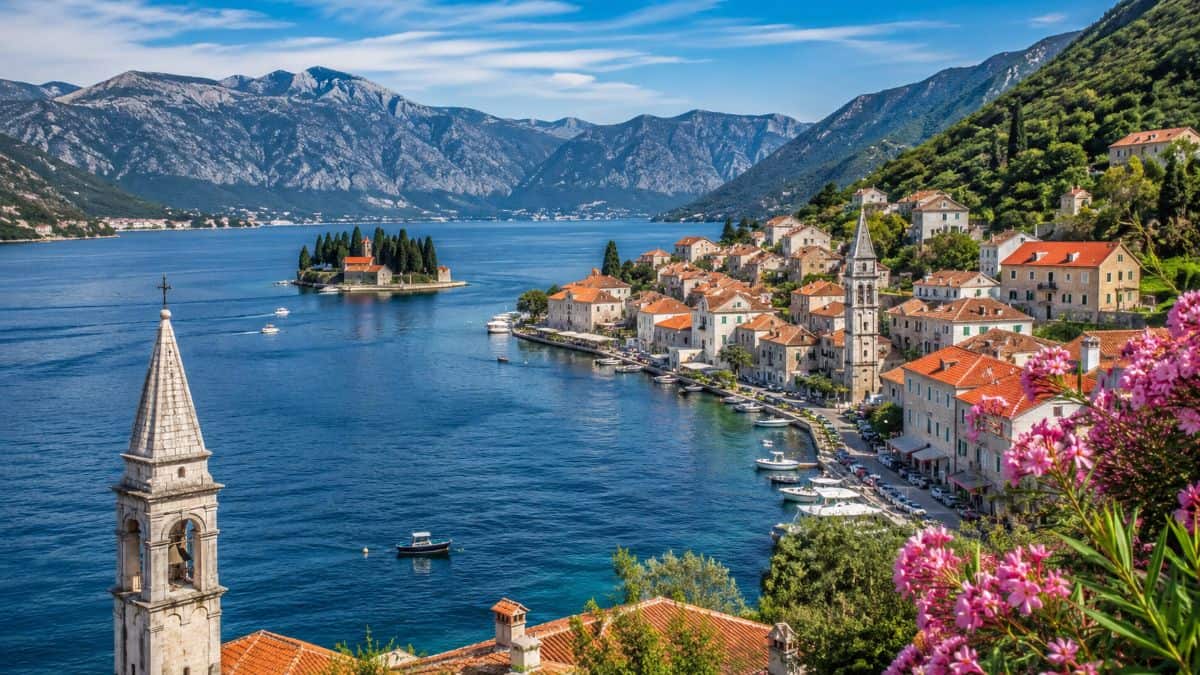
Image generated with Ai
Montenegro stands alongside Türkiye and more as new visa rules prepare to reshape Balkan travel plans. Montenegro, Türkiye, and other destinations are entering a new travel phase as visa rules change from November 1, 2026. Meanwhile, travellers watching Montenegro and Türkiye should understand what these new rules mean before planning their next Balkan journey. The changes involve Türkiye, Russia, Belarus, China, and Saudi Arabia, making visa information increasingly important for international visitors. Travel And Tour World brings the latest details, practical guidance, and key travel information together in one story. So, read the complete Travel And Tour World report to discover how Montenegro, Türkiye, and more may affect future travel plans.
Montenegro Visa Changes: What Russian, Turkish, Belarusian, Chinese and Saudi Travellers Need to Know Before Visiting
Montenegro is preparing for one of its most important entry-policy changes in 2026, with new visa requirements scheduled to affect nationals of five countries from November 1.
Advertisement
Advertisement
The Government of Montenegro adopted the amended visa regime on July 23, 2026. Under the decision, citizens of Belarus, China, Russia, Saudi Arabia and Türkiye will need a visa to enter Montenegro from November 1, 2026. The measure brings Montenegro’s visa policy into full alignment with the European Union framework.
For travellers, the change is more than a border-formality update. It affects how holidays must be planned, when applications should be submitted, what documents should be prepared and which alternative entry arrangements may be available.
Advertisement
Advertisement
The timing is especially significant because Montenegro remains heavily dependent on international tourism. In 2025, foreign visitors generated 95.8% of the country’s total tourist overnight stays, while seaside resorts accounted for 92.6% of all overnight stays.
Montenegro Visa Changes: The Five Nationalities Affected From November 1
The Government of Montenegro has confirmed five nationalities for which visas will become mandatory from November 1, 2026.
Advertisement
Advertisement
| Nationality | Current arrangement before November 1, 2026 | New position from November 1, 2026 | Traveller implication |
|---|---|---|---|
| Russia | Visa-free stay currently permitted for up to 30 days | Visa required | Apply before travel |
| Türkiye | Visa-free stay currently permitted for up to 30 days | Visa required | Check application route before booking |
| Belarus | Existing visa-free arrangements change | Visa required | Advance documentation needed |
| China | Existing visa-free arrangement changes | Visa required | Visa planning required |
| Saudi Arabia | Existing visa-free arrangement changes | Visa required | Verify visa process before departure |
Montenegro’s Foreign Ministry specifically states that Russian citizens can enter and stay for up to 30 days without a visa until October 31, 2026. Turkish citizens have the same 30-day visa-free arrangement until that date.
The Government’s July announcement confirms that the five-country change takes effect on November 1. It describes the policy as the completion of Montenegro’s alignment with the European Union’s visa regime.
Advertisement
Advertisement
Travellers therefore need to pay close attention to the date of arrival rather than only the date of booking.
A flight purchased during the summer does not automatically preserve visa-free access for a journey taking place after the new rules begin.
Montenegro Visa Application Network Is Expanding
One of the most important traveller-friendly developments is Montenegro’s effort to make applications more accessible.
The Foreign Ministry says visa applications for affected nationals will no longer have to be submitted exclusively through Montenegro’s diplomatic and consular missions.
Advertisement
Advertisement
Montenegro has begun cooperation with VFS Global to accept visa applications through dedicated visa application centres.
The government currently identifies centres in India, Bangladesh, Kyrgyzstan, Azerbaijan, Türkiye, the United Arab Emirates and Russia. It also plans additional centres in Pakistan, China, Armenia, Kazakhstan, the Philippines, Qatar, Saudi Arabia, Bahrain, Belarus, Nepal and Uzbekistan. Further expansion is planned for Jordan, Kuwait, Thailand and Indonesia.
This is particularly important for long-distance travellers.
A visitor living outside Montenegro does not necessarily need to travel to Podgorica merely to submit a visa application if an authorised application centre is available in their region.
However, travellers should verify the operational status of a centre before beginning an application because the government describes several locations as planned rather than already operational.
Montenegro Visa Requirements Travellers Should Prepare
Montenegro’s official visa guidance provides separate rules for short and long stays.
Advertisement
Advertisement
For tourism, the short-stay C visa is the relevant category for most holidaymakers. A C visa covers short visits, including tourism, and generally permits stays of up to 90 days within a 180-day period, subject to the visa issued and applicable conditions.
Applicants should expect to provide documentation supporting the journey.
Typical documentation includes a valid travel document, photograph, evidence explaining the purpose of the visit and evidence of sufficient financial means.
Travel medical insurance and additional supporting documentation may also be required depending on the individual application.
Montenegro states that visa decisions normally take 10 days. The period can extend to 30 days when additional examination is necessary and, in exceptional circumstances, to 60 days where further documentation or assessment is required.
This makes early preparation particularly important for travellers planning fixed-date holidays, weddings, cruises, sporting events or multi-country Balkan itineraries.
Advertisement
Advertisement
Existing Foreign Visas Can Matter
A traveller affected by Montenegro’s new visa requirement should not assume that a new Montenegrin visa is always the only possible route.
Montenegro’s official guidance contains specific exemptions for some third-country nationals who hold valid visas or residence permits issued by designated countries.
For example, holders of valid Schengen, United States, United Kingdom or Irish visas or qualifying residence permits can enter and stay in Montenegro for up to 30 days under the stated conditions. The stay cannot exceed the validity of the relevant visa when that visa expires earlier.
This creates an important planning point for travellers combining Montenegro with Western European holidays.
A traveller already holding a qualifying visa should examine Montenegro’s official exemption conditions before submitting another application.
The exact passport, residence status and visa validity matter. Travellers should therefore check their individual circumstances rather than relying on general social-media advice.
Advertisement
Advertisement
Five-Year Montenegro Tourism Statistics Show Why the Change Matters
Montenegro’s tourism statistics demonstrate the importance of international travel to the national economy.
The country’s Statistical Office, MONSTAT, recorded 1,670,879 tourist arrivals and 9,872,573 overnight stays in 2021.
In 2022, arrivals increased to 2,183,975, while overnight stays reached 12,428,787.
The country recorded 2,613,306 arrivals and 16,389,279 overnight stays in 2023.
In 2024, Montenegro recorded 2,606,854 arrivals and 15,594,299 overnight stays.
The latest full-year data show 2,728,564 arrivals and 15,367,166 overnight stays in 2025.
Advertisement
Advertisement
Montenegro Tourism: Five-Year Comparison
| Year | Total tourist arrivals | Total overnight stays | Foreign share of overnight stays | Key tourism observation |
|---|---|---|---|---|
| 2021 | 1,670,879 | 9,872,573 | 95.5% | Strong recovery year |
| 2022 | 2,183,975 | 12,428,787 | 95.5% | Major expansion in visitor activity |
| 2023 | 2,613,306 | 16,389,279 | 96.3% | Five-year peak for overnight stays |
| 2024 | 2,606,854 | 15,594,299 | 96.1% | Arrivals broadly stable, overnight stays lower |
| 2025 | 2,728,564 | 15,367,166 | 95.8% | Highest arrivals in the five-year period |
The five-year comparison shows that arrivals in 2025 were approximately 63.3% above 2021 levels.
Overnight stays were approximately 55.7% higher than in 2021.
However, the pattern was not linear.
Arrivals climbed by about 30.7% between 2021 and 2022. They then increased by approximately 19.7% in 2023.
Arrivals were almost unchanged between 2023 and 2024, before reaching their highest level of the five-year period in 2025.
Overnight stays followed a different pattern. They climbed by approximately 25.9% in 2022 and 31.9% in 2023 before falling by about 4.9% in 2024 and another 1.5% in 2025.
Advertisement
Advertisement
This difference matters for tourism analysis because more arrivals do not automatically mean more nights spent in the destination.
Russian Travellers Have Been a Major Part of Montenegro’s Tourism Market
Russia is particularly important in the context of the new visa regime.
In 2021, Russian tourists generated 1,140,173 overnight stays, based on MONSTAT’s published foreign-tourist total and country share. The official country table recorded 135,997 Russian arrivals and 1,140,173 overnight stays that year.
In 2022, Montenegro recorded 169,726 Russian tourist arrivals and 1,946,067 overnight stays. Russian visitors accounted for 16.4% of foreign overnight stays.
In 2023, Russian tourists generated 3,717,113 overnight stays and 246,653 arrivals. Their overnight share reached 23.6% of foreign overnight stays.
The 2024 official figures placed Russian tourists at 18.3% of foreign overnight stays.
Advertisement
Advertisement
In 2025, Russia remained Montenegro’s second-largest source market by foreign overnight stays, accounting for 16.4%.
Russian Tourism in Montenegro
| Year | Russian arrivals | Russian overnight stays | Share of foreign overnight stays |
|---|---|---|---|
| 2021 | 135,997 | 1,140,173 | 12.1% |
| 2022 | 169,726 | 1,946,067 | 16.4% |
| 2023 | 246,653 | 3,717,113 | 23.6% |
| 2024 | Official country share reported | 18.3% share | 18.3% |
| 2025 | 203,945 | 2,411,519 | 16.4% |
The available official data show a substantial Russian tourism presence throughout the five-year period.
The 2023 figure was particularly notable, with Russian visitors accounting for almost one-quarter of foreign overnight stays.
The subsequent reduction in share does not mean that Russia stopped being an important market. It remained one of the two largest foreign source markets in 2025.
For Russian travellers, the November visa deadline therefore has particular practical relevance.
Turkish Visitors Also Represent an Established Market
Türkiye has also developed into an important source market for Montenegro.
Advertisement
Advertisement
Official statistics recorded 43,536 Turkish tourist arrivals in 2022, producing 193,391 overnight stays.
In 2023, Turkish visitors accounted for 94,659 arrivals and 449,993 overnight stays.
The Turkish share of foreign overnight stays increased to 4.9% in 2024.
In 2025, Türkiye represented 4.3% of Montenegro’s foreign tourist overnight stays.
Turkish Tourism in Montenegro
| Year | Turkish arrivals | Turkish overnight stays | Foreign overnight-stay share |
|---|---|---|---|
| 2021 | 40,776 | 217,170 | 2.3% |
| 2022 | 43,536 | 193,391 | 1.6% |
| 2023 | 94,659 | 449,993 | 2.9% |
| 2024 | Official country share reported | 4.9% share | 4.9% |
| 2025 | 134,266 | 640,092 | 4.3% |
The five-year data reveal a substantial increase in Turkish arrivals between 2021 and 2025.
The new visa requirement therefore arrives while Türkiye remains an established contributor to Montenegro’s international tourism market.
Advertisement
Advertisement
Montenegro’s Tourism Is Heavily Concentrated Along the Adriatic
The visa change also needs to be understood through Montenegro’s destination geography.
In 2025, seaside resorts accounted for 92.6% of all tourist overnight stays.
Mountain resorts represented 2.8%.
The capital accounted for 2.7%, while other tourist resorts represented 2.0%.
Montenegro Tourism by Resort Type
| Resort category | 2021 | 2022 | 2023 | 2024 | 2025 |
|---|---|---|---|---|---|
| Seaside | 94.7% | 93.8% | 94.3% | 93.8% | 92.6% |
| Mountain | 2.1% | 2.0% | 2.0% | 2.2% | 2.8% |
| Capital | 2.0% | 2.9% | 2.4% | 2.6% | 2.7% |
| Other resorts | 1.2% | 1.3% | 1.4% | 1.5% | 2.0% |
The statistics provide a useful guide for travellers.
Visitors seeking Montenegro’s best-known coastal experiences can build trips around destinations such as Budva, Kotor, Herceg Novi, Tivat and the wider Bay of Kotor area.
Advertisement
Advertisement
Travellers interested in mountains can instead combine the coast with Durmitor National Park and northern Montenegro.
A Seven-Day Montenegro Travel Plan for Visitors Affected by the New Rules
Day 1: Arrive in Podgorica and Transfer to Kotor
Start the trip in Podgorica if the flight schedule provides the most convenient connection.
Travel onward toward Kotor and spend the evening exploring the historic waterfront.
A relaxed first day allows travellers to recover from a long international journey.
Day 2: Explore Kotor and the Bay
Spend the morning exploring Kotor’s historic centre.
Continue toward viewpoints overlooking the Bay of Kotor.
Advertisement
Advertisement
The bay provides an ideal introduction to Montenegro because visitors can combine architecture, maritime scenery and mountain landscapes within a compact area.
Day 3: Kotor to Budva
Travel south toward Budva.
Explore the old town, coastal promenades and nearby beaches.
Travellers who prefer a quieter experience can allocate additional time to smaller coastal settlements instead of spending the entire day in the main resort area.
Day 4: Budva and Sveti Stefan Area
Use the fourth day for coastal sightseeing.
The Budva Riviera offers opportunities for swimming during the warmer months, photography, dining and short coastal excursions.
Advertisement
Advertisement
Travellers should check seasonal operating conditions before planning activities outside the main towns.
Day 5: Move Toward Northern Montenegro
Leave the coast and travel inland toward the mountain region.
The change in landscape is substantial.
Visitors can experience a different side of Montenegro, with mountain scenery replacing the Adriatic coastline.
Day 6: Durmitor National Park
Durmitor is particularly suited to travellers seeking outdoor experiences.
Montenegro’s official tourism information highlights hiking, trekking, rafting, canyoning and skiing among the activities available in the national park. Bobotov Kuk reaches 2,523 metres.
Advertisement
Advertisement
Activity choices should match weather conditions, seasonal access and individual fitness.
Day 7: Return Toward Podgorica
Use the final day for a relaxed journey back toward Podgorica.
Travellers with evening flights can use the remaining hours for a short city visit or a final Montenegrin meal.
Those with morning departures should return to the airport the previous evening.
Traveller Planning Table for a 2026 Montenegro Holiday
| Planning stage | Recommended traveller action | Why it matters |
|---|---|---|
| Before booking | Check nationality-specific entry rules | Visa policy depends on passport |
| Before paying for flights | Check whether November 1 rules apply | Travel date determines applicable regime |
| Visa-required travellers | Identify nearest authorised application centre | Applications may be available through VFS locations |
| Documentation | Prepare passport, photo and supporting evidence | Missing documents can delay processing |
| Insurance | Arrange qualifying travel medical insurance | May form part of visa documentation |
| Accommodation | Keep booking evidence available | Supports tourism-purpose applications |
| Financial proof | Prepare evidence of sufficient means | Official visa requirements can require it |
| Transit | Check every country on the itinerary | A Balkan trip can cross several visa regimes |
| Final week | Recheck official government guidance | Entry policies can change |
| At departure | Carry relevant visa and supporting documents | Border authorities may request evidence |
Other European Countries Have Also Tightened Visa Rules
Montenegro’s decision is not an isolated European example.
Several European governments have introduced new visa requirements for particular nationalities in recent years.
Advertisement
Advertisement
These measures differ in their legal basis, timing and stated policy objectives, so they should not be treated as identical policies.
For travellers, however, the practical lesson is similar: visa-free access should never be assumed to remain permanent.
Ireland Introduced Visa Requirements for South African and Botswana Citizens in 2024
Ireland provides one recent example of a European country moving selected nationalities from visa-free access to a visa-required system.
Ireland announced on July 8, 2024, that nationals of South Africa and Botswana would need visas before travelling to Ireland from July 10, 2024.
The requirement also covered transit through Ireland.
The Irish Government said the measure would bring Ireland closer to the Schengen position for both countries and closer to the United Kingdom’s arrangements for South Africa.
Advertisement
Advertisement
Ireland also introduced transitional arrangements for people who had made travel arrangements before July 10. Those arrangements applied until August 9, 2024, under the conditions announced by the government.
The Irish authorities also established a dedicated South Africa visa-processing desk and planned three visa application centres in South Africa.
For travellers, the Irish example demonstrates why a short transition period can be important.
A person who purchased a ticket under a visa-free arrangement may not necessarily have the same requirements as someone booking after the change.
The Irish announcement also provides a useful comparison with Montenegro because both countries have used a combination of new visa requirements and application infrastructure to manage the transition.
Ireland Added Dominica, Honduras and Vanuatu to Its Visa-Required List in 2024
Ireland introduced another nationality-specific change in March 2024.
Advertisement
Advertisement
From March 7, 2024, nationals of Dominica, Honduras and Vanuatu became required to obtain visas before travelling to Ireland.
A transit visa was also required for travellers transiting Ireland to another destination.
The Irish Government explained that the change was part of a wider effort to align the national visa regime more closely with the United Kingdom and Schengen arrangements. Ireland had previously introduced a visa requirement for Bolivian nationals in September 2023.
For tourists, this example shows that European visa changes can occur in stages rather than through a single continent-wide announcement.
Travellers from countries with traditionally visa-free access therefore need to monitor official immigration announcements before each major trip.
It also demonstrates why old travel guides can become unreliable.
Advertisement
Advertisement
A traveller researching Ireland today could easily encounter information published before March 2024 and incorrectly assume that the same entry rules still apply.
The same problem can occur with Montenegro as November 1, 2026 approaches.
United Kingdom Added a Visa Requirement for Jordanian Nationals in 2024
The United Kingdom introduced a visa regime for Jordan in 2024.
The UK Government’s September 2024 immigration-rule documentation states that the change imposed a visa regime on Jordanian nationals travelling to the UK.
The government also introduced a transition arrangement.
Jordanian nationals who already held an Electronic Travel Authorisation and had qualifying confirmed travel bookings could use a limited transition period before the visa requirement became fully applicable.
Advertisement
Advertisement
The UK documentation said the policy would allow immigration authorities to assess travellers against the visitor rules before travel.
The transition period was designed to reduce disruption for travellers who had already made arrangements.
For Montenegro-bound visitors, the comparison is useful because it highlights the importance of transitional rules.
Travelers should always identify whether a government has announced exemptions for existing bookings, previously issued authorisations or specific travel dates.
United Kingdom Introduced a Visit Visa Requirement for Trinidad and Tobago in 2025
Another recent UK change affected Trinidad and Tobago.
The UK Government introduced a visit visa requirement for nationals of Trinidad and Tobago in March 2025.
Advertisement
Advertisement
The change removed the country from the list of nationalities eligible to travel under the UK’s Electronic Travel Authorisation system.
The government also created a six-week transition arrangement for travellers who already had qualifying confirmed bookings.
The UK documentation stated that the change was intended to allow visitor applications to be assessed before travel.
It also acknowledged that introducing a visa requirement could affect the number of genuine visitors travelling from Trinidad and Tobago.
For travellers, this example reinforces an important point.
A nationality moving from an electronic travel authorisation system to a conventional visit visa faces a materially different preparation process.
Advertisement
Advertisement
The traveller needs to apply in advance rather than simply obtain permission through a streamlined electronic system.
United Kingdom Added Nicaragua and Saint Lucia to Its Visa-Required System in 2026
The UK introduced another nationality-specific visa change in 2026.
The government’s March 2026 immigration documentation states that nationals of Nicaragua and Saint Lucia became subject to a visit visa requirement from March 5, 2026.
Both nationalities were removed from eligibility for the UK Electronic Travel Authorisation system.
The government stated that the change would allow travellers to be assessed against the visitor rules before travelling to the United Kingdom.
The UK government’s documentation also identifies a transition framework for the implementation.
Advertisement
Advertisement
This is another example of how European travel rules can move from relatively light pre-travel authorisation systems to conventional visa applications.
For Montenegro visitors, it underlines the need to distinguish between a visa, an electronic travel authorisation and a visa exemption.
These systems are not interchangeable.
Comparative Table: Recent European Nationality-Specific Visa Changes
| European country | Nationality affected | Announcement / effective period | Type of change | Traveller impact |
|---|---|---|---|---|
| Montenegro | Belarus | From Nov. 1, 2026 | Visa required | Advance visa application |
| Montenegro | China | From Nov. 1, 2026 | Visa required | Advance visa application |
| Montenegro | Russia | From Nov. 1, 2026 | Visa required | Visa replaces current 30-day visa-free access |
| Montenegro | Saudi Arabia | From Nov. 1, 2026 | Visa required | Advance visa application |
| Montenegro | Türkiye | From Nov. 1, 2026 | Visa required | Visa replaces current 30-day visa-free access |
| Ireland | South Africa | July 10, 2024 | Visa required | Visit and transit visa required |
| Ireland | Botswana | July 10, 2024 | Visa required | Visit and transit visa required |
| Ireland | Dominica | March 7, 2024 | Visa required | Visit and transit visa required |
| Ireland | Honduras | March 7, 2024 | Visa required | Visit and transit visa required |
| Ireland | Vanuatu | March 7, 2024 | Visa required | Visit and transit visa required |
| UK | Jordan | 2024 | Visa regime imposed | Visitor visa required |
| UK | Trinidad and Tobago | March 12, 2025 | Visit visa required | ETA route removed |
| UK | Nicaragua | March 5, 2026 | Visit visa required | ETA route removed |
| UK | Saint Lucia | March 5, 2026 | Visit visa required | ETA route removed |
The table illustrates a broader European pattern of governments adjusting entry rules for individual nationalities.
However, the reasons and legal structures vary by country.
Montenegro’s stated policy objective is specifically connected to alignment with the EU visa regime and its European integration process.
Advertisement
Advertisement
Montenegro’s Visa Policy Is Part of Its European Integration Process
The Montenegro Government describes full visa alignment with the European Union as an important benchmark under Chapter 24, covering justice, freedom and security.
The government also links the reform to its Reform Agenda and says the alignment creates conditions connected with approximately €4 million in funding under the European Union’s Growth Plan for the Western Balkans.
For travellers, this means the November change is not simply an isolated tourism measure.
It forms part of a larger regulatory process.
The practical outcome is that some passport holders who previously enjoyed easier entry will need to complete additional pre-travel procedures.
What Global Travellers Should Check Before a Montenegro Trip
A traveller planning Montenegro should begin with the passport being used for entry.
Advertisement
Advertisement
The next question should be the intended arrival date.
The third step is checking whether another visa or residence permit creates an exemption.
The fourth is identifying where the visa application can be submitted.
The fifth is preparing supporting documents early.
This sequence is particularly important for travellers planning multi-country Balkan holidays.
A route such as Istanbul–Podgorica–Dubrovnik–Sarajevo can involve several separate entry regimes.
Advertisement
Advertisement
A traveller should therefore examine every border crossing rather than treating the entire Balkan region as one visa area.
Montenegro Travel Data: Key Numbers at a Glance
| Indicator | Official figure |
|---|---|
| Tourist arrivals, 2021 | 1,670,879 |
| Tourist arrivals, 2022 | 2,183,975 |
| Tourist arrivals, 2023 | 2,613,306 |
| Tourist arrivals, 2024 | 2,606,854 |
| Tourist arrivals, 2025 | 2,728,564 |
| Overnight stays, 2021 | 9,872,573 |
| Overnight stays, 2022 | 12,428,787 |
| Overnight stays, 2023 | 16,389,279 |
| Overnight stays, 2024 | 15,594,299 |
| Overnight stays, 2025 | 15,367,166 |
| Foreign overnight share, 2025 | 95.8% |
| Seaside overnight share, 2025 | 92.6% |
| Mountain overnight share, 2025 | 2.8% |
| Capital overnight share, 2025 | 2.7% |
| Russian share of foreign overnight stays, 2025 | 16.4% |
| Turkish share of foreign overnight stays, 2025 | 4.3% |
MONSTAT’s figures include tourist activity in collective and individual accommodation. The statistical authority notes that non-registered tourists are not included in the survey.
This limitation is important when interpreting visitor statistics.
Official accommodation statistics should not automatically be treated as a complete count of every person crossing Montenegro’s borders.
The Traveller Takeaway
Montenegro remains a highly international destination, with millions of annual tourist arrivals and more than 15 million recorded overnight stays in 2025.
At the same time, its entry system is changing.
Advertisement
Advertisement
From November 1, 2026, nationals of Belarus, China, Russia, Saudi Arabia and Türkiye will need to comply with Montenegro’s new visa requirements.
Russian and Turkish citizens currently have visa-free access for stays of up to 30 days until October 31, 2026.
For affected travellers, the safest approach is to plan around the new deadline rather than the date on which flights or hotels are purchased.
Visitors should verify their passport-specific requirements, investigate qualifying exemptions and use Montenegro’s official visa information or authorised application channels.
For travellers combining Montenegro with other European destinations, the same principle applies throughout the itinerary.
Entry rules can differ between neighbouring countries and can change independently.
Advertisement
Advertisement
The best-prepared Montenegro holiday therefore begins before the flight.
It begins with checking the correct visa regime, preparing the required documents and confirming the latest official government instructions before departure.
Conclusion
For global travellers, Montenegro’s new visa rules mark an important change in Balkan travel planning. From November 1, 2026, Türkiye, Russia, Belarus, China, and Saudi Arabia will face new visa requirements for Montenegro. Therefore, travellers should check their eligibility, prepare documents early, and confirm the latest official requirements before departure. Montenegro continues to offer coastal escapes, historic towns, mountain adventures, and diverse European experiences. Travel And Tour World urges travellers to stay informed and plan carefully as these visa changes approach. By understanding the new rules in advance, visitors can prepare smoother Montenegro journeys and explore the Balkans with greater confidence.
Advertisement
