

UK Airport Immigration Enters New Era as Passport-Free eGates Promise Faster Arrivals and Major Changes for Travellers

Published
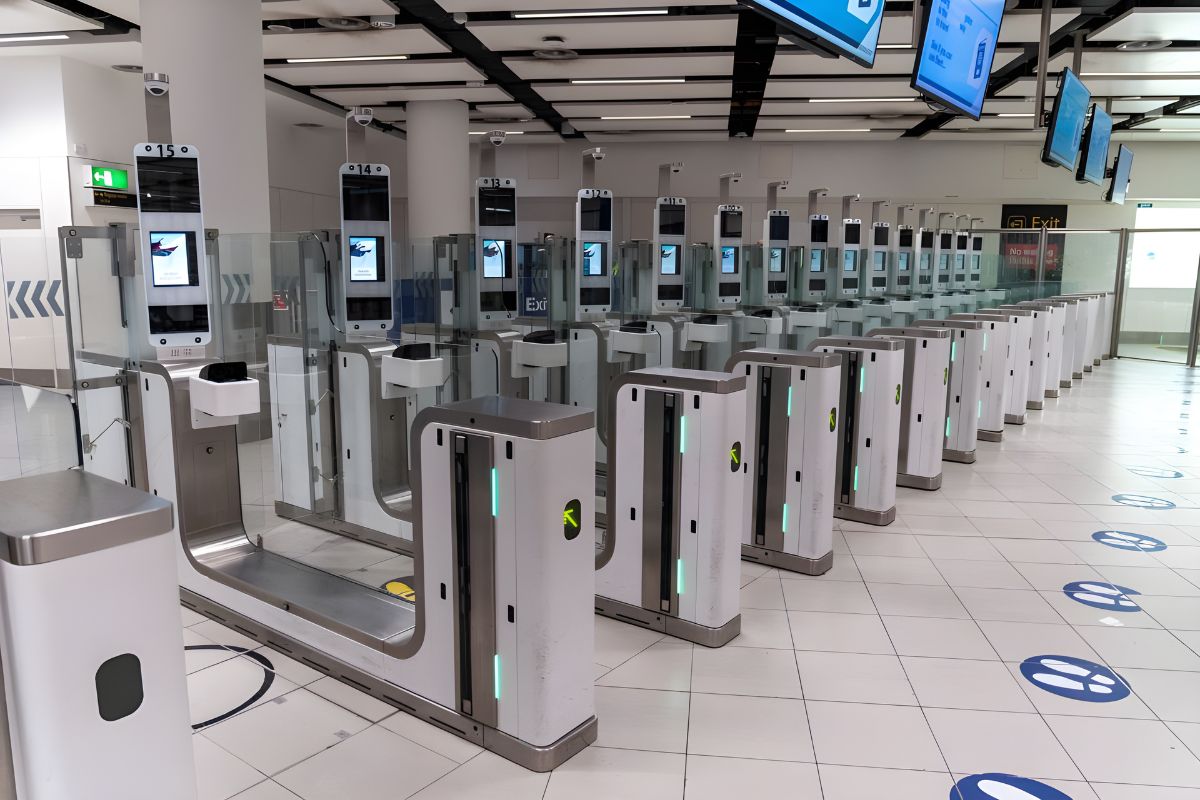
Image credit – official website of UK goverment
The United Kingdom has begun introducing passport-free eGates at airports, allowing eligible passengers to clear immigration through facial recognition without scanning their physical passports. The UK Home Office and Border Force launched the phased rollout on 6 October 2026, starting at East Midlands Airport, with Birmingham Airport also among the early locations. Testing indicates that contactless processing can be up to 25% faster than existing eGates. British citizens are the first eligible users, while wider deployment is planned for early 2027. Indian travellers must continue following existing passport, visa and immigration requirements.
Advertisement
Advertisement
The change represents a significant development in Britain’s airport border operations. Rather than requiring passengers to position their passports on an electronic reader, the upgraded gates compare a live facial image with verified digital records.
However, passport-free processing does not mean passport-free international travel. Every passenger must still carry a valid passport and satisfy the relevant immigration conditions.
Advertisement
Advertisement
How Do the UK’s New Passport-Free eGates Work?
The contactless system identifies eligible passengers using facial comparison technology instead of requiring them to scan their passports at the gate.
The Home Office confirmed that existing immigration and security checks will continue, even though the identity-verification process is changing.
Advertisement
Advertisement
Three Steps in the New Contactless Process
- Approach the eGate: An eligible passenger enters the automated border-control area, where a camera captures their facial image.
- Verify identity: The technology compares the photograph with verified passport, immigration and travel information.
- Complete entry checks: Once the necessary checks are successful, the gate opens automatically.
Passengers whose identities cannot be verified automatically may need to scan their passports or speak to a Border Force officer.
The government says this approach will improve passenger processing while maintaining border security.
Advertisement
Advertisement
Which UK Airports Are Introducing Contactless eGates?
East Midlands Airport became the first UK airport to offer the new technology on 6 October 2026.
Birmingham Airport is also participating in the early deployment. The Home Office expects every existing UK airport eGate to receive the contactless upgrade by early 2027.
The following 13 airports are included in the published rollout programme.
| UK airport | Contactless eGate rollout status |
|---|---|
| East Midlands Airport | Initial deployment began 6 October 2026 |
| Birmingham Airport | Early rollout location |
| Bristol Airport | Planned phased upgrade |
| Cardiff Airport | Planned phased upgrade |
| Edinburgh Airport | Planned phased upgrade |
| Gatwick Airport | Planned phased upgrade |
| Glasgow Airport | Planned phased upgrade |
| Heathrow Airport | Planned phased upgrade |
| London City Airport | Planned phased upgrade |
| Luton Airport | Planned phased upgrade |
| Manchester Airport | Planned phased upgrade |
| Newcastle Airport | Planned phased upgrade |
| Stansted Airport | Planned phased upgrade |
These are airports covered by the government’s programme, not locations where all contactless gates are already operational.
Advertisement
Advertisement
Individual installation dates have not been confirmed for every airport. Passengers should follow the signs and instructions displayed at their arrival terminal.
Will Contactless eGates Really Reduce Airport Immigration Waiting Times?
Border Force testing indicates that the upgraded system can process eligible passengers up to 25% faster than the existing passport-scanning procedure.
This figure refers to the automated processing method, not a guaranteed 25% reduction in total immigration queue times.
Overall waiting times also depend on passenger volumes, staffing, flight arrivals and additional security checks.
East Midlands Airport has separately improved its immigration hall to help passengers navigate border-control areas more easily.
Government data provides useful historical context. In a parliamentary answer published in February 2026, the Home Office reported that 97.9% of sampled border-control measurements in July–September 2025 met established service standards.
Advertisement
Advertisement
Those historical service standards were 25 minutes for specified eGate and eligible-nationality queues and 45 minutes for queues serving other nationalities.
These figures predate the contactless rollout and should not be interpreted as evidence of its actual performance.
What Changes for Indian Travellers Arriving in the UK?
For Indian passport holders, the October 2026 launch does not introduce a new right to use the contactless gates.
India is not among the nationalities automatically eligible for standard UK eGates solely on the basis of nationality.
The existing list includes Australia, Canada, Japan, New Zealand, Singapore, South Korea and the United States, alongside eligible European nationals and other qualifying travellers.
Some passengers from additional eligible nationalities may use eGates through the Registered Traveller Service. India is not included in the government’s published list of eligible Registered Traveller passport nationalities.
Advertisement
Advertisement
Consequently, an Indian visitor holding an ordinary Indian passport should not assume they can use a contactless eGate simply because they have a valid UK visa.
India also remains on the UK’s visa-national list. Indian visitors generally require the appropriate UK visa rather than an Electronic Travel Authorisation for ordinary visits.
Existing immigration permissions, exemptions and individual circumstances determine the applicable entry procedures.
Why This Matters
The contactless eGate rollout could improve the arrival experience for passengers travelling through some of Britain’s busiest international airports.
Faster processing at the gate may help reduce unnecessary handling of documents and improve passenger movement through immigration areas.
For airports, automated identity verification offers another way to manage large passenger flows while keeping existing security procedures.
Advertisement
Advertisement
The technology could also support more efficient airport operations as the government expands its digital border infrastructure.
However, the immediate benefits remain limited to eligible British citizens using participating gates.
Other already eGate-eligible nationalities are expected to gain access as deployment progresses. The Home Office has not announced unrestricted eligibility for all international travellers.
The initiative therefore represents a technological improvement rather than a general relaxation of British immigration policy.
Who Can Use the New Contactless eGates?
The government has confirmed that British citizens are the initial users.
Existing eGate eligibility remains unchanged. Eligible travellers must satisfy the applicable passport, age, height and immigration conditions.
Advertisement
Advertisement
From 8 July 2026, the UK lowered the minimum age for standard eGate use to eight.
Children aged between eight and 17 must be accompanied by an adult, while passengers must be at least 120 centimetres tall.
The government plans to extend contactless use to other already eligible nationalities, but has not confirmed an individual activation date for each nationality.
Its longer-term consideration of expanding general eGate access is separate from the immediate contactless technology rollout.
What Travellers Should Know
Passengers arriving in Britain should continue carrying their passports and complying with all existing immigration requirements.
The new technology eliminates the passport-reading step for qualifying passengers, not the requirement to possess a valid travel document.
Advertisement
Advertisement
Before Booking or Travelling
- Carry a valid passport: Contactless processing does not remove passport requirements.
- Check visa conditions: Indian visitors must hold the appropriate entry permission for their circumstances.
- Confirm eGate eligibility: Not every foreign passport qualifies for automated entry.
- Check digital immigration records: Travellers with UK eVisas should ensure their current passport is linked to their UKVI account.
- Follow border instructions: Border Force may request a passport scan or additional checks.
- Prepare children: Families should confirm the applicable age, height and accompaniment requirements.
Passengers should consult the official UK border-control guidance before departure.
How Does the New System Fit Britain’s Wider Digital Border Plans?
The contactless programme forms part of the UK’s broader effort to modernise immigration controls using digital identity and pre-travel information.
Britain already operates an Electronic Travel Authorisation system for eligible visa-exempt visitors and uses digital immigration records through its eVisa system.
These mechanisms serve different purposes.
An ETA concerns permission to travel for specified nationalities, while an eVisa provides digital evidence of immigration status. Contactless eGates deal with identity verification at the border.
The distinction is important because a faster arrival procedure does not change whether someone needs a visa, an ETA or another form of immigration permission.
Advertisement
Advertisement
The Home Office expects contactless deployment to cover UK airport eGates by early 2027, although individual travellers will continue to be subject to eligibility requirements.
Frequently Asked Questions
1. When did the UK launch passport-free airport eGates?
The UK began its phased contactless eGate rollout on 6 October 2026, with East Midlands Airport becoming the first location.
2. Can Indian passport holders use the new contactless eGates?
Indian nationality alone does not provide eligibility. Indian travellers must continue following existing UK border-control procedures, visa requirements and any applicable exemptions.
3. Will passengers still need to carry passports?
Yes. All passengers must continue travelling with valid passports, even when their identity can be verified without scanning one at the eGate.
4. How much faster are the new UK contactless eGates?
UK Border Force testing indicates that the contactless system can be up to 25% faster than the existing passport-reading process. This does not guarantee equivalent reductions in airport queues.
5. When will all UK airport eGates become contactless?
The UK government expects its airport eGate upgrades to be completed by early 2027. Exact activation dates may differ between airports.
Advertisement
Advertisement
Closing Update
As of 8 October 2026, Britain’s contactless airport eGate programme is operational on a limited basis at East Midlands Airport, with further deployments planned across the country. The Home Office expects the technology to reach airport eGates nationwide by early 2027.
British citizens are receiving access first, while expansion to other already eligible nationalities will follow. The government has not announced general access for Indian passport holders.
Travellers should continue carrying valid passports and ensuring their visas or other immigration permissions are in order. The programme changes how eligible passengers verify their identity at the border, not the legal requirements for entering the United Kingdom.
Advertisement
