
Spain Works Alongside Portugal and More in Tightening Cruise Ship Rules as Europe Intensifies Fight Against Overtourism

Published
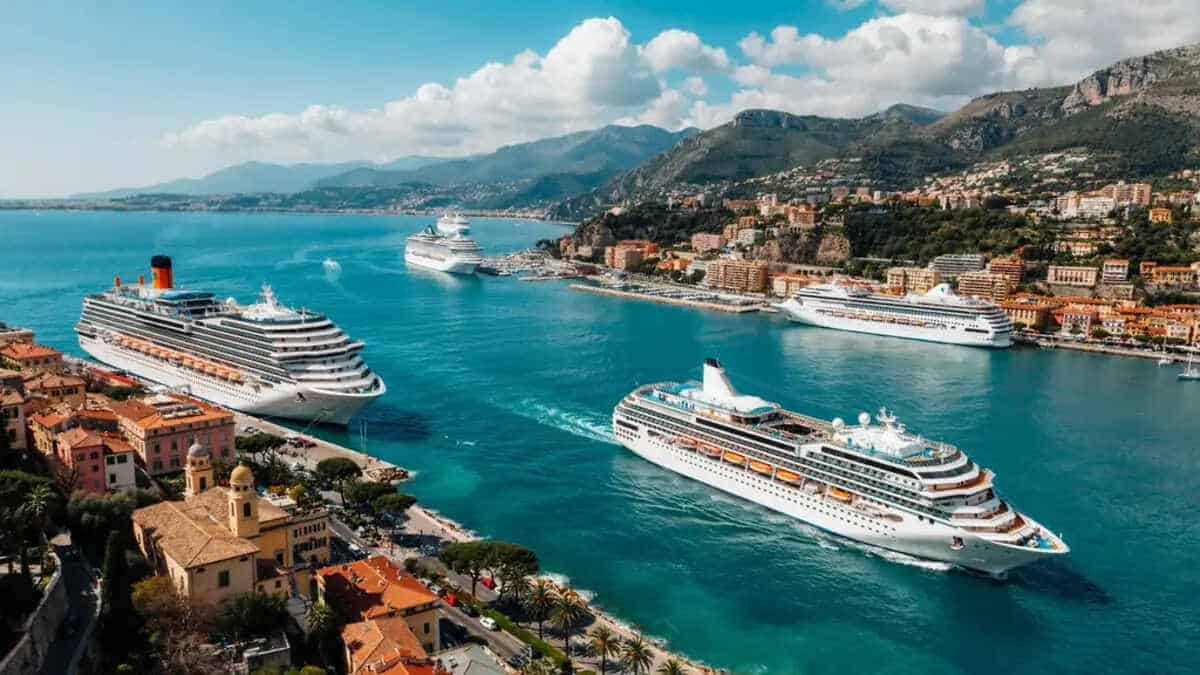
Spain and Portugal are introduce strict new cruise tourism rules due to growing concerns about overtourism. Cruise tourism in Europe is set to change as Spain, Portugal and several other popular destinations enforce new restrictions on the number of ships, passengers, tourism taxes and environmental regulations. Mallorca has joined the list of European destinations limiting cruises as authorities look to curb growing numbers of tourists, without undermining the economic benefits brought by international visitors.
A new framework for cruise activity in Mallorca has been established through an agreement between the island’s authorities and the Cruise Lines International Association. Under the rules, no more than three cruise ships per day will be permitted to visit. Across those vessels, a combined maximum of 7,500 passengers will be allowed.
Advertisement
Advertisement
The move reflects a wider shift now being seen across Spain, Portugal, Greece, France, Italy, Croatia, the Netherlands, Norway and Iceland, where cruise tourism is increasingly being managed through capacity controls and new visitor charges.
Mallorca Tightens Cruise Limits as Visitor Pressure Comes Under Greater Scrutiny
Mallorca remains one of Europe’s best-known holiday destinations. More than 13 million visitors are received by the island each year, according to the figures provided, with approximately 1.4 million visitors arriving by cruise through Palma.
Advertisement
Advertisement
Cruise travellers therefore represent just over nine per cent of Mallorca’s overall visitor numbers.
Despite this relatively limited share, cruise activity has become highly visible because thousands of passengers can be released into central tourism areas within a short period. Pressure can consequently be felt around historic streets, transport networks, attractions, shopping districts and waterfront areas.
Advertisement
Advertisement
Under the new restrictions, only three cruise ships will be permitted each day, with the total number of passengers limited to 7,500. The rules also specify that only one mega-ship carrying more than 5,000 passengers can be accommodated within the daily allocation.
The policy has been presented as part of Mallorca’s response to overtourism, with greater control being placed on the number of visitors entering Palma from large cruise vessels at the same time.
Cruise Tourism Remains an Important Part of Mallorca’s Visitor Economy
Although restrictions are being increased, the economic role of cruise tourism remains significant.
Cruise passengers may remain in a destination for only several hours, meaning their individual spending may be lower than that of travellers staying for several nights. However, cruise visitors still spend money across a wide range of local tourism businesses.
Revenue can be generated through restaurants, retail outlets, local transport, attractions, cultural sites, excursions and leisure services.
Palma is also used both as a port of call and an embarkation point. This can create additional tourism activity because some passengers may arrive before their cruise departure or stay on the island after completing their voyage.
Advertisement
Advertisement
Such travel patterns can support hotels, airport transfers, restaurants, local transport and other tourism services beyond the immediate cruise visit.
The wider debate therefore extends beyond the amount spent by an individual passenger. Cruise tourism can also support local suppliers, port operations, tourism businesses and employment linked to the wider visitor economy.
Key Cruise Restrictions Across Europe
| Destination | Main Cruise Measure | Important Detail |
|---|---|---|
| Mallorca, Spain | Daily ship and passenger cap | Maximum 3 ships and 7,500 passengers per day |
| Mallorca, Spain | Mega-ship restriction | Only one vessel above 5,000 passengers per day |
| Greece | Cruise passenger tax | Up to €20 per passenger at Santorini and Mykonos in peak summer |
| Santorini, Greece | Passenger cap | Maximum 8,000 cruise visitors daily |
| Amsterdam, Netherlands | Cruise call reduction | Annual calls reduced from 190 to 100 from 2026 |
| Amsterdam | Cruise visitor tax | €15 per passenger day tourism charge |
| Amsterdam | Environmental measure | Shore power required from 2027 |
| Barcelona, Spain | Terminal reduction | Two central terminals planned for closure |
| Barcelona | Higher visitor taxation | Cruise taxes expected to increase progressively |
| Cannes, France | Large-ship controls | Restrictions on ships carrying more than 1,000 passengers |
| Cannes | Passenger cap | Maximum 6,000 cruise visitors per day |
| Nice, France | Ship and call restrictions | Controls placed on large vessels and operator calls |
| Valencia, Spain | Mega-ship restriction | Large cruise vessels restricted from the main municipal port |
| Venice, Italy | Large ship controls | Major cruise liners restricted from the historic lagoon |
| Lisbon, Portugal | Passenger tax | €2 per disembarking cruise passenger |
| Dubrovnik, Croatia | Ship cap | Maximum two large ships plus one smaller vessel |
| Dubrovnik | Passenger management | Around 4,000–4,500 simultaneous cruise visitors |
| Norway | Tourism taxation | Port communities can apply a 3% tourism tax |
| Norway | Environmental restrictions | Stronger zero-emission rules for fjord cruising |
| Iceland | Accommodation taxation | ISK 1,000 per cabin per night aboard qualifying vessels |
Spain Expands Cruise Controls Beyond Mallorca
Mallorca is not the only Spanish destination where cruise tourism is being reconsidered.
In Barcelona, cruise activity is being pushed farther away from the most heavily visited parts of the city. Two central cruise terminals are expected to be closed, while operations are being reorganised within the wider port area.
Cruise passenger taxation is also being increased. Under the figures provided, charges for some short-stay cruise travellers are expected to rise to around €18 by 2027 and potentially reach €30 by 2030.
Meanwhile, Valencia has moved towards restricting mega-cruise ships from using its main municipal port.
Advertisement
Advertisement
These measures show how Spanish destinations are moving away from unlimited cruise growth and towards a model in which visitor capacity, environmental concerns and pressure on communities are given greater weight.
Portugal Adds Cruise Passenger Tax in Lisbon
Portugal has also joined Europe’s broader shift towards managing cruise arrivals more actively.
In Lisbon, a flat €2 tourist tax has been introduced for every cruise passenger disembarking in the city.
Lisbon remains an important Atlantic cruise destination and is frequently included on itineraries connecting northern Europe, the Mediterranean, the Canary Islands and transatlantic routes.
The passenger charge means cruise tourism is being asked to contribute more directly towards the costs associated with receiving large visitor numbers.
For travellers, the tax represents another example of how additional destination charges are becoming increasingly common across European cruise ports.
Advertisement
Advertisement
Greece Uses Passenger Charges and Daily Arrival Limits
In Greece, cruise management has been strengthened through a combination of passenger taxes and capacity controls.
A seasonal cruise passenger charge has been introduced, with the highest fee applying to heavily visited islands such as Santorini and Mykonos.
During the busiest summer period, a charge of €20 per passenger is applied at these high-demand destinations. Lower charges ranging from approximately €1 to €5 are used at other ports and during less crowded periods.
Santorini has also established a daily ceiling of 8,000 cruise passengers.
The policy is intended to spread tourism pressure more evenly and reduce extreme visitor concentrations during peak travel periods.
France Places Greater Restrictions on Large Cruise Vessels
French Mediterranean destinations are also tightening their approach.
Advertisement
Advertisement
From 2026, Cannes is set to restrict cruise ships carrying more than 1,000 passengers from entering or docking directly in the city’s main harbour.
Larger ships will instead be required to remain farther offshore, while total cruise arrivals will be limited to around 6,000 visitors per day.
Nearby Nice has also adopted measures restricting larger vessels and limiting the number of cruise calls that can be operated.
These measures are being introduced as coastal cities attempt to balance cruise tourism revenue against crowding, environmental concerns and pressure on local infrastructure.
Amsterdam Reduces Cruise Calls and Pushes Cleaner Port Operations
In Amsterdam, one of Europe’s strongest cruise-reduction policies has been introduced.
The number of ocean-going cruise calls is being cut from approximately 190 annually to 100 from 2026.
Advertisement
Advertisement
A €15 day tourist tax is also applied to cruise visitors.
Environmental measures are being strengthened at the same time. From 2027, ships docking in Amsterdam will be required to use shore-power connections, allowing vessels to switch off onboard engines while berthed.
This is intended to reduce emissions and pollution around the port.
Venice and Dubrovnik Continue Managing Heavy Cruise Traffic
Venice has already become one of Europe’s best-known examples of cruise restrictions.
Large cruise liners have been prevented from travelling through sensitive sections of the historic lagoon, while a separate €5 to €10 access fee can apply to day visitors on selected high-demand dates.
The charge also affects cruise passengers who enter the city without staying overnight.
Advertisement
Advertisement
In Dubrovnik, cruise ship arrivals are also carefully controlled. No more than two large cruise ships and one smaller vessel are allowed at the main port each day.
Simultaneous passenger arrivals are also limited to around 4,000 to 4,500 cruise visitors.
Norway and Iceland Put Greater Focus on Sustainability and Taxation
Northern Europe is applying a different combination of environmental and taxation measures.
In Norway, port towns are being allowed to impose a 3% tourism tax on cruise visitors.
At the same time, increasingly strict environmental requirements are being introduced for vessels entering the country’s famous fjords.
Zero-emission requirements are being expanded, meaning ships that cannot meet stricter environmental standards could face limitations when entering protected areas.
Advertisement
Advertisement
In Iceland, the national accommodation tax has been extended to include qualifying cruise ship stays.
Passengers sleeping aboard vessels while docked or anchored in Icelandic waters are charged ISK 1,000 per cabin per night.
Europe’s Cruise Tourism Model Is Entering a New Phase
Cruise travel is unlikely to disappear from Europe’s major tourism destinations. However, the way it is managed is clearly changing.
Rather than allowing unrestricted ship growth, destinations are increasingly turning towards daily passenger limits, cruise taxes, terminal closures, ship-size restrictions, shore-power requirements and zero-emission rules.
The changes are particularly significant in places where residents have raised concerns about overcrowding, congestion, environmental pressure and the wider effects of mass tourism.
Cruise ships often become a visible symbol of overtourism because thousands of passengers can arrive at the same time, even when cruise travellers represent only a small proportion of overall tourism numbers.
Advertisement
Advertisement
Mallorca demonstrates this tension clearly. Cruise visitors account for only a fraction of the island’s annual tourism market, yet restrictions are being imposed because passenger concentrations can create considerable pressure around Palma.
What Travellers Should Know
Travellers planning European cruises should increasingly expect new local taxes, tighter port schedules and changing docking arrangements.
Some ships may be moved farther from historic city centres. Larger vessels may face restrictions at particular ports. Passenger charges may also be added to cruise costs or collected during port visits.
Itineraries could therefore be influenced not only by weather and operational conditions but also by destination-level tourism policies.
For the European cruise sector, the challenge will now be to maintain the economic benefits generated by cruise tourism while respecting stricter limits imposed by destinations.
Spain and Portugal are taking steps to tighten up cruise rules as a result of the pressures of over-tourism. They have put limits on passengers, imposed taxes and set restrictions for ports.
As Spain works with not only their European counterparts but also Portugal on restricting cruise ships, a different type of tourism is being introduced. There is now a more balanced growth between the community and their environment along with the amount of space they can spread out in order to not overcrowd an area.
Advertisement
