
Mexico Opens New US Flight Opportunities as Cancún Expands Biometric Airport Technology

Published
A major boost for Mexico’s international aviation industry, Mexico will now be able to add more services to the US from Mexico City’s two main airports, after the US lifted restrictions that barred Mexican airlines from expanding services to the US from Mexican airports. The US Department of Transportation announced the move on 16 October 2026.
The measures had been an element of a broader aviation row between the two countries over their 2015 air transport agreement. Today’s ruling returns more flexibility to Mexican carriers’ ability to grow transborder operations from Mexico City’s airport system. “We are exploring opportunities to grow our US presence,” confirmed Aeroméxico, which said that it was “evaluating possibilities” after the restrictions were eliminated. Finance director Ricardo Sánchez said that the airline was assessing possible routes after the restrictions were lifted. The airline has the aircraft it needs for further routes, including some that it brought in through its Chapter 11 restructuring. Chief executive Andrés Conesa subsequently announced that the airline may reveal a handful of new US routes as early as next week, but neither destinations, frequencies or debut dates have been disclosed. The move is significant for Mexico City as it increases its international flight capacity choices. A new AIFA airport designed for international flights north of the city has been built to complement the long-established Benito Juárez airport, offering new options for Mexico-US passengers.
Aeroméxico Reviews Opportunities at AIFA
Aeroméxico’s review of additional US services places AIFA in the spotlight as Mexico seeks to improve the utilisation of its airport infrastructure. The airport, officially opened in March 2022, forms part of the country’s wider strategy to increase capacity around Mexico City.
The removal of the US restrictions does not automatically guarantee that every proposed route will be commercially viable. Airlines must still consider airport slots, operating permissions, aircraft availability, passenger demand and the cost of launching new services.
Advertisement
Advertisement
For Aeroméxico, the opportunity is particularly relevant to its wider network strategy. Additional US connections could support business travel, family visits and tourism flows, while giving passengers more choices when planning journeys through the Mexican capital.
The airline has not confirmed that specific shelved routes from AIFA will return immediately. Its route assessment remains a commercial decision rather than an announced programme of new services.
Advertisement
Advertisement
Mexico’s Tourism Market Records Strong International Growth
The aviation development comes as Mexico continues to report substantial international visitor numbers. According to the country’s Ministry of Tourism, Mexico received 98.2 million international visitors during 2025, an increase of 13.6 per cent compared with 2024.
International tourist arrivals, which count visitors staying at least one night, reached 47.8 million, rising by 6.1 per cent. International visitor expenditure totalled US$34.99 billion, an increase of 6.2 per cent year on year.
The momentum continued in 2026. Between January and August, Mexico received 67.69 million international travellers, representing growth of 6.3 per cent compared with the same period in 2025. International tourist arrivals reached 32.68 million, up 3.9 per cent. During August alone, international tourists arriving by air spent an average of US$1,270 per person, 15.2 per cent more than in August 2025.
These figures reinforce the importance of air connectivity to Mexico’s tourism economy. Better access from the United States could benefit established destinations such as Mexico City, Cancún, Los Cabos and the Riviera Maya, while supporting business travel and international event attendance.
Mexico City MICE Emissions Tax Credit Claim Remains Unverified
Mexico City remains an important destination for meetings, incentives, conferences and exhibitions, supported by its hotel inventory, convention facilities and international air connections. However, no reliable government announcement was found confirming a new green corporate emissions tax credit programme introduced by the city’s convention authorities.
The proposed incentive should therefore not be presented as an implemented policy. Environmental considerations remain relevant to event organisers, particularly those assessing accommodation, transport, catering, venue energy consumption and waste management. Yet a dedicated tax credit for US corporate retreats would require formal confirmation from the relevant authorities.
Advertisement
Advertisement
For Mexico’s meetings industry, the stronger immediate opportunity lies in improving international access and providing reliable event infrastructure. The easing of aviation restrictions could support that objective by creating more scope for direct services from US cities.
Cancún Expands Biometric Immigration Infrastructure
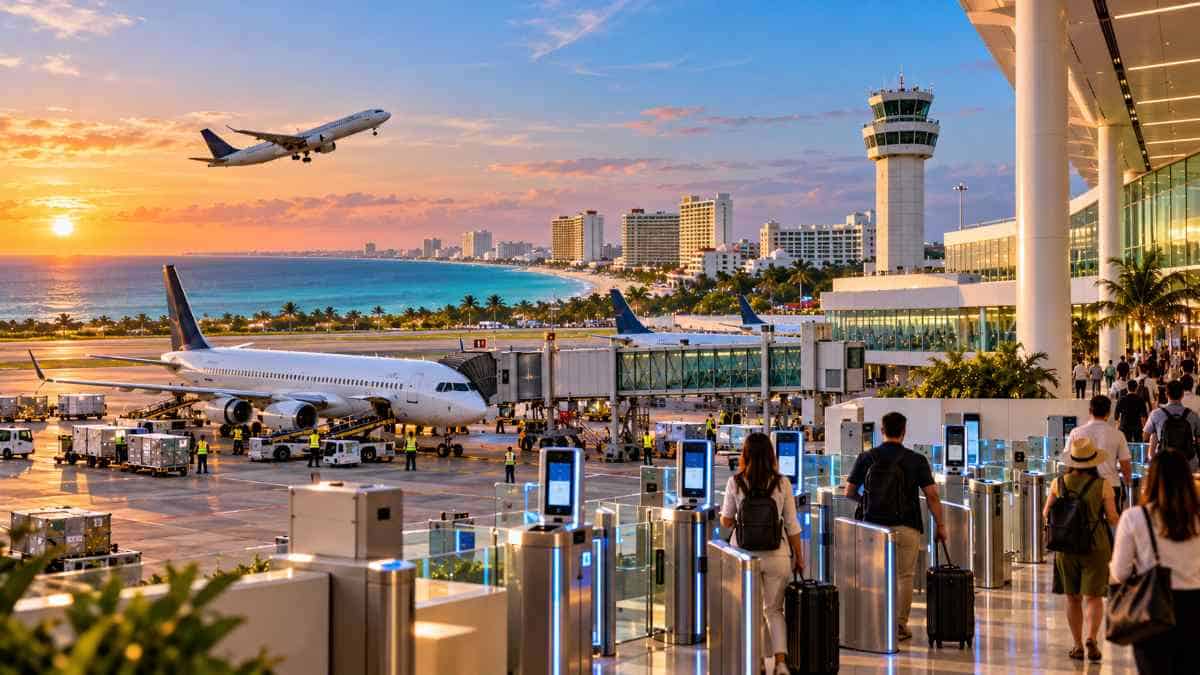
Cancún International Airport is also advancing passenger-processing improvements through the expansion of biometric electronic gates. In April 2026, Quintana Roo Governor Mara Lezama announced plans for 40 e-gates across Terminals 3 and 4, with 20 allocated to each terminal.
The programme is being developed in coordination with Mexico’s National Migration Institute. Terminal 4 is set to increase its biometric e-gate capacity from four to 20, while Terminal 3 is also being upgraded to reach 20 automated gates. Traditional immigration inspection points are planned to increase from 48 to 54.
These gates are designed to automate eligible immigration checks and help manage passenger arrivals. They are not contactless security screening gates reserved for frequent flyers or premium airline customers. The distinction matters because immigration clearance and airport security screening are separate processes.
For Cancún, which serves one of Mexico’s busiest international leisure markets, improved arrival processing can support the passenger experience during peak holiday periods. The airport’s modernisation is particularly relevant as the Mexican Caribbean continues to attract visitors from North America and other international markets.
Passenger Rail Projects Strengthen Regional Tourism Potential
An important step toward opening the Mexican international aviation market was taken recently, when the US government announced that it would no longer limit the number of seats that Mexican airlines can operate between Mexico and the US. The US Department of Transportation (DOT) last 16 October 2026 agreed to modify its authority to operate more flights.
Advertisement
