

Akrotiri and Santorini Reveal the Lost World of the Aegean as Greece’s ‘Minoan Pompeii’ Fuels Atlantis Tourism Fascination

Published
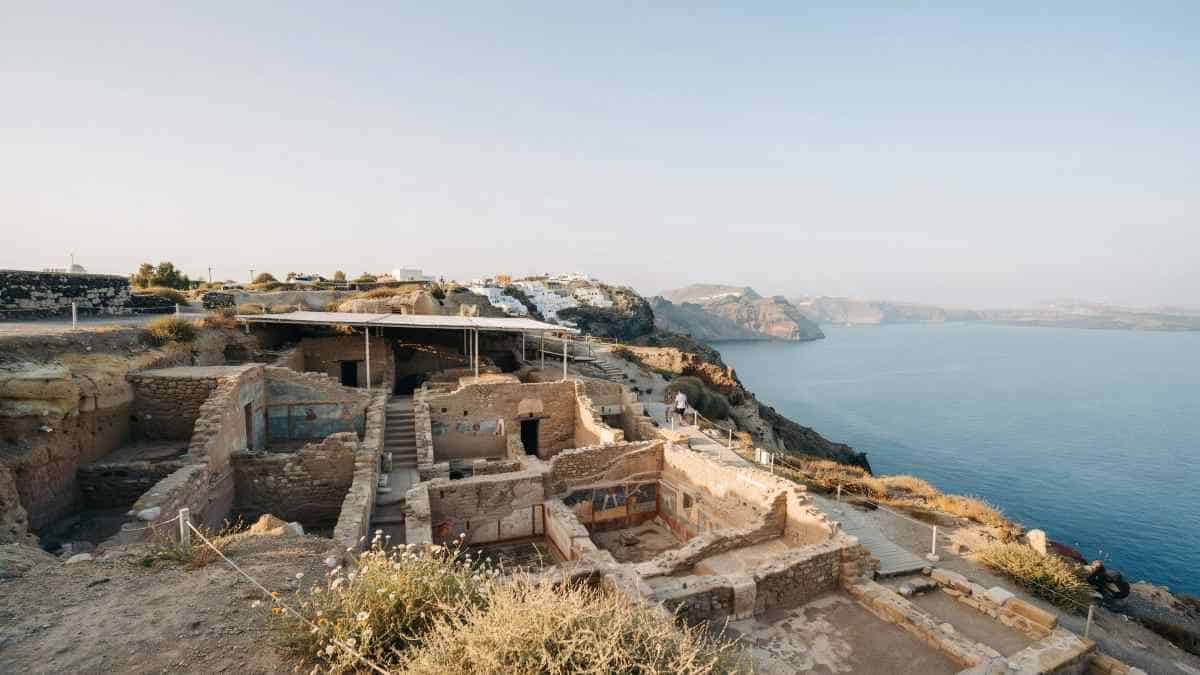
Akrotiri and Santorini continue to captivate travellers from around the world, drawing visitors into one of the Mediterranean’s most intriguing archaeological mysteries. Often called the “Minoan Pompeii,” Akrotiri is a remarkably preserved Bronze Age settlement that was buried beneath volcanic ash following a catastrophic eruption around 1600 BC. Today, the site stands as one of Greece’s most important archaeological treasures and remains central to ongoing fascination with the legend of Atlantis.
For visitors arriving in Santorini, the island is often associated with whitewashed villages, dramatic caldera views and spectacular sunsets. Yet beneath this modern tourism image lies a much older story—one of advanced urban planning, artistic achievement and a civilisation that disappeared almost overnight.
Advertisement
Advertisement
Akrotiri Offers a Window into a Lost Civilisation
Located on the southern coast of Santorini, Akrotiri was once a thriving settlement connected to the wider Minoan world that flourished across the Aegean.
Excavations have revealed an urban centre that was remarkably sophisticated for its time. Streets were carefully planned, buildings rose three and four storeys high, and advanced drainage systems served residents centuries before similar developments appeared elsewhere in Europe.
Advertisement
Advertisement
Unlike many ancient sites where only foundations remain, Akrotiri preserves an extraordinary level of detail. Walls, staircases, rooms and public spaces remain visible beneath a protective structure, allowing visitors to experience the scale and complexity of the settlement.
The preservation occurred because volcanic ash covered the town rapidly, shielding it from weather and human activity for thousands of years.
Advertisement
Advertisement
Volcanic Eruption Changed the History of Santorini
Around 1600 BC, one of the largest volcanic eruptions in recorded human history transformed Santorini forever.
The eruption devastated the island and dramatically altered the surrounding landscape. Massive quantities of ash were expelled into the atmosphere, while parts of the island collapsed, creating the caldera that defines Santorini today.
Advertisement
Advertisement
Although researchers continue debating the exact impact on surrounding civilisations, there is little doubt that the eruption had significant consequences across the eastern Mediterranean.
For Akrotiri, however, the disaster also became the reason for its preservation.
The ash layer effectively sealed the settlement, creating archaeological conditions similar to those later seen at Pompeii in Italy.
Stunning Frescoes Reveal a Sophisticated Society
Among Akrotiri’s most celebrated discoveries are its remarkable frescoes.
Advertisement
Advertisement
These colourful wall paintings provide valuable insight into daily life, trade, religion and social customs during the Bronze Age. Many depict scenes of nature, maritime activity and ceremonial events, illustrating a society closely connected to the sea.
The sophistication of the artwork suggests a prosperous community with strong cultural traditions and advanced artistic skills.
Some frescoes feature vivid depictions of flowers, animals and landscapes, while others portray human figures engaged in activities that offer clues about life more than 3,500 years ago.
Today, many of these artworks are preserved in museums, where they continue attracting historians, archaeologists and travellers alike.
The Atlantis Connection Continues to Fascinate
One of the reasons Akrotiri attracts global attention extends beyond archaeology.
For decades, researchers, writers and visitors have explored possible links between Santorini and the legend of Atlantis.
Advertisement
Advertisement
The story of Atlantis was first described by Plato, who wrote of a magnificent civilisation that disappeared beneath the sea following a catastrophic event.
While no definitive evidence connects Akrotiri to Atlantis, the similarities have fuelled ongoing speculation. A prosperous society, advanced architecture and a devastating natural disaster have encouraged many to view Santorini as a possible inspiration behind the famous legend.
Although most historians regard Atlantis as a philosophical narrative rather than a historical account, the association continues to enhance Santorini’s appeal as a cultural tourism destination.
Archaeological Tourism Drives Visitor Interest
Akrotiri has become one of Santorini’s most important cultural attractions.
Visitors increasingly seek experiences that combine natural beauty with historical discovery, and the archaeological site offers exactly that combination. Travellers can explore ancient streets, admire preserved structures and gain insight into one of Europe’s earliest urban societies.
The site complements Santorini’s broader tourism offering, which includes coastal scenery, traditional villages, volcanic landscapes and culinary experiences.
Advertisement
Advertisement
As cultural tourism continues growing globally, destinations with strong historical narratives are attracting increasing attention from travellers seeking meaningful experiences.
Santorini Balances Heritage and Modern Tourism
The popularity of Santorini has created opportunities and challenges.
While tourism supports the island’s economy, preserving archaeological heritage remains a priority. Conservation efforts at Akrotiri focus on protecting structures and artefacts while ensuring visitors can continue accessing the site.
Modern protective infrastructure allows tourists to explore the excavation while safeguarding fragile remains from environmental damage.
The balance between preservation and tourism development has become a key consideration for cultural destinations across the Mediterranean.
Key Statistics
- Akrotiri was buried following a volcanic eruption around 1600 BC.
- The settlement features three and four-storey buildings.
- Advanced drainage systems existed within the city.
- The site is often referred to as the “Minoan Pompeii.”
- Akrotiri is one of Greece’s most significant Bronze Age archaeological discoveries.
Chronological Tracker
Before 1600 BC
Akrotiri flourishes as a prosperous Bronze Age settlement.
Advertisement
Advertisement
Around 1600 BC
A major volcanic eruption buries the city beneath ash.
Modern Era
Archaeological excavations uncover the settlement and its frescoes.
Present Day
Akrotiri remains one of Santorini’s leading cultural tourism attractions.
FAQ
Why is Akrotiri called the Minoan Pompeii?
The settlement was preserved beneath volcanic ash, similar to how Pompeii was later preserved following the eruption of Mount Vesuvius.
Is Akrotiri connected to Atlantis?
Advertisement
Advertisement
No definitive evidence exists, but the site’s advanced civilisation and destruction by a volcanic eruption have inspired theories linking it to the Atlantis legend.
What can visitors see at Akrotiri?
Travellers can explore preserved streets, buildings, drainage systems and learn about the frescoes and culture of the Bronze Age settlement.
Dates
Around 1600 BC – Volcanic eruption buries Akrotiri beneath ash.
Modern Archaeological Era – Excavations reveal one of the Mediterranean’s most significant Bronze Age settlements.
Conclusion
Akrotiri and Santorini offer one of the most compelling journeys into the ancient world anywhere in the Mediterranean. Preserved beneath volcanic ash for more than three millennia, the settlement provides an extraordinary glimpse into a sophisticated Bronze Age civilisation whose achievements continue to impress archaeologists and visitors alike. Whether viewed as a remarkable archaeological discovery or as a possible inspiration for the legend of Atlantis, Akrotiri remains a powerful reminder of the fragile relationship between human achievement and natural forces. Today, it stands not only as a cornerstone of Greek cultural tourism but also as one of the world’s most fascinating windows into a lost civilisation.
Advertisement
