
Germany Joins Belgium, Denmark, Czechia, Poland, Austria, Italy, France, Netherlands, and Switzerland in Major Summer 2026 International Rail Expansion as Deutsche Bahn Adds New High-Speed and Overnight European Connections

Published
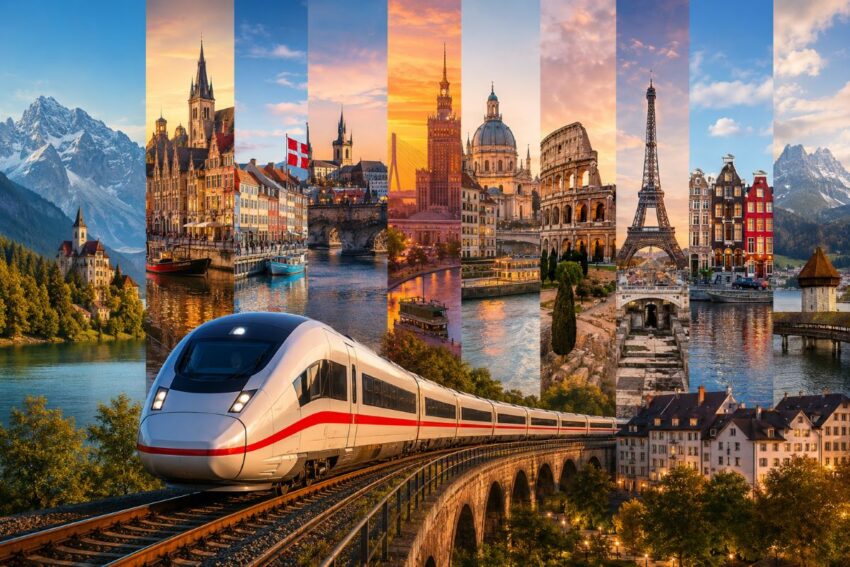 Image generated with Ai
Europe’s tourism industry is preparing for a dramatic shift in summer 2026 as Germany launches a sweeping international railway expansion that could significantly change how travelers move across the continent. Deutsche Bahn is introducing new high-speed routes, expanding cross-border frequencies, and strengthening overnight rail services linking some of Europe’s most visited tourism markets.
The expansion places Germany at the center of a rapidly growing European travel transformation where tourists are increasingly choosing international rail journeys over short-haul flights. Rising environmental awareness, easier city-center access, and growing demand for comfortable long-distance travel are accelerating the shift toward rail tourism throughout Europe.
Advertisement
Advertisement
According to information published by Deutsche Bahn International Services, international passenger demand has increased sharply compared with pre-pandemic travel levels, prompting one of the largest cross-border service expansions in recent years.
Germany and Belgium Open a New Era for Coastal Rail Tourism
Germany’s newest summer rail expansion is expected to dramatically reshape tourism flows between western Germany and Belgium’s coastal destinations.
Advertisement
Advertisement
For the first time, selected high-speed ICE trains departing from Cologne will continue beyond Brussels and travel directly to Ghent, Bruges, and Ostend during busy summer weekends. The move creates a seamless tourism route connecting Germany’s urban population centers with Belgium’s famous North Sea coastline and historic heritage cities.
The direct connection is expected to strengthen weekend tourism, reduce road congestion, and encourage more environmentally sustainable travel between the neighboring countries.
Advertisement
Advertisement
At the same time, Deutsche Bahn is increasing the number of daily train services between Cologne and Brussels, giving tourists greater flexibility for short city breaks and international holiday travel.
A further boost to western European tourism connectivity will arrive in September 2026 when a new direct route linking Cologne and Antwerp through Brussels Airport and Leuven officially begins operation. The expansion is expected to improve tourism access while also helping international visitors connect more easily between rail and air transport networks.
| Region / Route | Countries Involved | New or Expanded Service | Key Travel Benefit | Launch / Timeline |
|---|---|---|---|---|
| Cologne – Brussels – Ghent – Bruges – Ostend | Germany, Belgium | ICE trains extended to Belgium’s North Sea coast on summer weekends | Direct seaside tourism access from Germany to Belgian coastal cities | Summer 2026 |
| Cologne – Brussels | Germany, Belgium | Daily ICE frequency increased to nine train pairs | Faster and more flexible cross-border travel | Summer 2026 |
| Cologne – Brussels Airport – Leuven – Antwerp | Germany, Belgium | New direct ICE route with two daily round trips | Improved tourism and airport connectivity | September 7, 2026 |
| Prague – Berlin – Hamburg – Copenhagen | Czechia, Germany, Denmark | New direct daytime international rail corridor | Seamless Central Europe to Scandinavia travel | May 1, 2026 |
| Berlin – Warsaw | Germany, Poland | Services increased by 50% to seven daily trains each way | Stronger tourism and business connectivity | Summer 2026 |
| Leipzig – Krakow | Germany, Poland | New EuroCity services | Better access between eastern Germany and southern Poland | Summer 2026 |
| Munich – Vienna | Germany, Austria | Additional ICE trains during infrastructure works | Preserves Alpine tourism and rail capacity | Mid-2026 |
| Munich – Milan – Rome | Germany, Italy | Expanded future Frecciarossa high-speed cooperation | Faster sustainable travel across the Alps | Gradual rollout in 2026 |
| Paris – Brussels – Berlin Night Train | France, Belgium, Germany | European Sleeper overnight service | Long-distance overnight tourism travel | March 2026 onward |
| Amsterdam – Brussels – Germany – Switzerland – Milan | Netherlands, Belgium, Germany, Switzerland, Italy | New overnight rail service | Direct North Sea to Northern Italy tourism link | June 18, 2026 |
| DB Website and DB Navigator Upgrade | Germany and wider Europe | New Open Sales and Distribution Model (OSDM) | Easier international through-ticket booking | 2026 rollout |
Prague Berlin and Copenhagen Become a Powerful New Travel Corridor
Another major tourism breakthrough arrives with the launch of a new direct daytime railway connecting Prague, Berlin, Hamburg, and Copenhagen.
The route is expected to become one of Europe’s most important long-distance tourism corridors because it directly links Central Europe with Scandinavia through a comfortable daytime rail journey.
According to official information published by Deutsche Bahn, the route will begin operations in May 2026 with two daily services in each direction.
The connection significantly improves travel opportunities for tourists exploring multiple European countries in one itinerary. Travelers will gain easier access to historic capitals, coastal destinations, cultural attractions, and northern European tourism markets without relying on airports or complicated transfers.
Advertisement
Advertisement
The service will also introduce new-generation trains designed specifically for long-distance international comfort, helping strengthen the appeal of rail tourism across northern Europe.

Germany and Poland Witness Explosive Growth in Rail Travel Demand
Cross-border tourism between Germany and Poland is also entering a powerful new growth phase as Deutsche Bahn expands services between Berlin and Warsaw.
The number of trains connecting the two capitals is increasing substantially, creating a more frequent and reliable schedule for leisure travelers, business tourists, and international visitors exploring Central Europe.
The stronger railway network is expected to support growing tourism demand between Germany and Poland, especially as travelers continue seeking affordable multi-country European itineraries.
At the same time, a new rail connection between Leipzig and Krakow is set to improve tourism access to southern Poland. The route is expected to strengthen cultural tourism and increase visitor flows to historic destinations throughout the region.
The expansion highlights how international rail travel is becoming a major driver of regional tourism growth across Central Europe.
Advertisement
Advertisement
Austria and Italy Receive Major Tourism Rail Support
Germany is also reinforcing tourism connectivity toward Austria and Italy during the important summer travel season.
Additional services between Munich and Vienna are being introduced while major engineering work affects parts of Germany’s rail infrastructure. The temporary measures are designed to protect tourism capacity and maintain strong travel demand across the Alpine corridor.
Meanwhile, Germany continues expanding cooperation with Italian and Austrian railway operators to strengthen future high-speed rail services connecting Munich with Milan and Rome.
The growing rail partnership is becoming increasingly important for tourism across the Alps as more travelers search for sustainable alternatives to short-haul flights.
International railway travel between Germany and Italy has become especially attractive for visitors seeking scenic journeys, reduced airport stress, and direct access to city centers.
Europe’s Sleeper Train Revival Transforms Overnight Tourism

One of the biggest travel trends reshaping Europe in 2026 is the rapid return of overnight rail tourism.
Advertisement
Advertisement
New sleeper train services are creating fresh opportunities for travelers to move across Europe while combining transportation with accommodation savings and lower environmental impact.
A recently introduced overnight service linking Paris, Brussels, and Berlin is continuing operations throughout the summer season, while another new route connecting Amsterdam, Brussels, Germany, Switzerland, and Milan is scheduled to launch in June 2026.
The expansion reflects growing traveler demand for convenient long-distance rail experiences that eliminate airport transfers and maximize vacation time.
Sleeper trains are increasingly becoming part of Europe’s premium tourism experience as travelers rediscover the comfort and efficiency of overnight international rail journeys.
Germany Pushes Europe Toward a New Travel Future
Germany’s international rail expansion represents far more than a transportation upgrade. It signals a major transformation in how tourism across Europe may function in the years ahead.
Governments and railway operators throughout Europe are increasingly prioritizing sustainable transportation strategies as climate concerns, airport congestion, and fuel costs continue affecting the travel industry.
Advertisement
Advertisement
At the same time, tourists are showing stronger interest in flexible multi-country rail journeys that provide direct city-center access and reduced travel stress.
Germany’s aggressive investment in international rail connectivity now positions Deutsche Bahn as one of the central forces driving Europe’s next tourism era.
As summer 2026 approaches, the continent’s travel landscape is being reshaped by faster railway links, expanded tourism access, and growing demand for greener international mobility. Europe’s new travel revolution is no longer happening in the skies alone. It is rapidly accelerating across the railway tracks connecting the continent’s most powerful tourism destinations.
Advertisement
