
European Aviation Incident: Ryanair Flight Returns to Greece After Damaged Window Causes Passenger Scare and Emergency Landing

Published
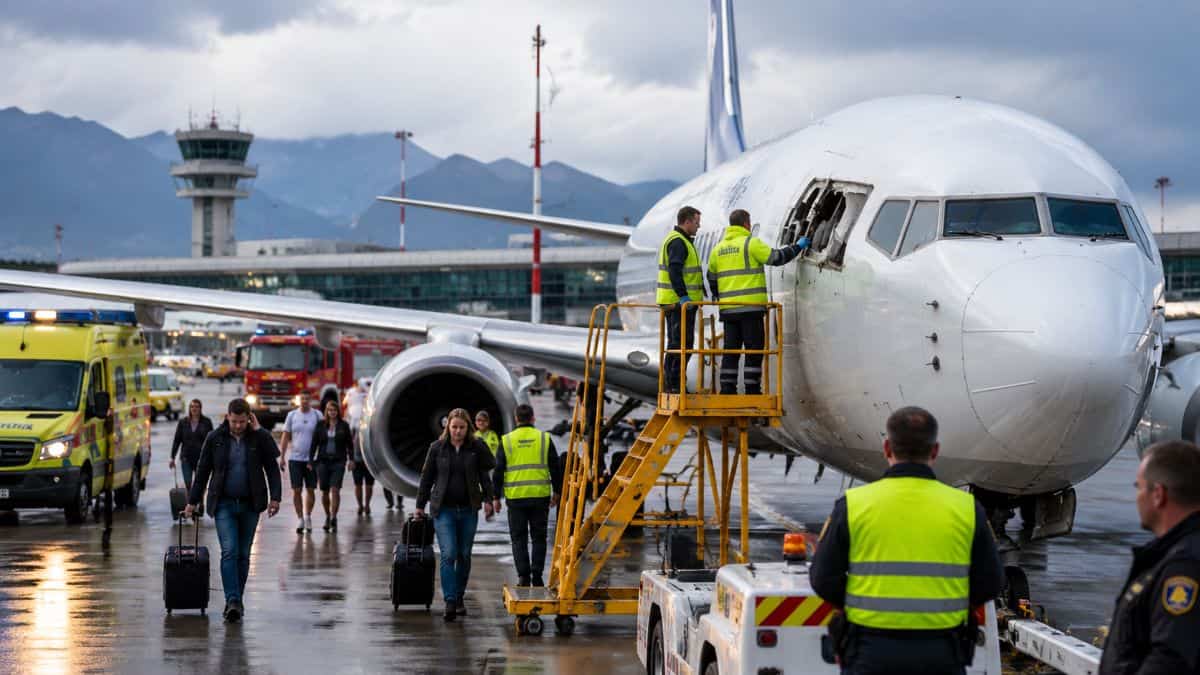
Thessaloniki, Greece — A routine journey from Greece to Germany turned into a frightening aviation emergency after a Ryanair-operated Boeing 737 experienced a serious cabin issue shortly after departure, forcing the aircraft to return safely to Thessaloniki International Airport. Passengers onboard faced a tense situation when a cabin window became damaged during the flight, leading to a rapid response from the crew and emergency procedures being activated.
For travellers watching the incident unfold, the moments inside the aircraft highlighted the importance of aviation safety systems, trained flight crews and strict emergency procedures. Although the situation created panic among passengers, the aircraft landed safely and authorities began examining what caused the window failure.
Advertisement
Advertisement
The incident involved a Ryanair service operating from Thessaloniki, Greece, to Memmingen, Germany, with aviation officials now reviewing technical information, aircraft condition and operational records.
Ryanair flight forced to return after aircraft window emergency
The Ryanair-operated flight departed from Thessaloniki International Airport in Greece and was scheduled to arrive at Memmingen Airport in Germany.
Advertisement
Advertisement
During the flight, passengers reported a sudden cabin emergency involving damage to one of the aircraft windows. The situation resulted in cabin pressure concerns and required the aircraft to return to its departure airport.
According to reports, oxygen masks were deployed as part of standard emergency procedures after the aircraft experienced cabin pressure issues.
Advertisement
Advertisement
The pilots responded according to established aviation safety protocols and completed a controlled return to Thessaloniki, where emergency services were prepared to assist passengers.
The aircraft landed safely, allowing passengers to leave the plane while technical teams began assessing the situation.
Passenger injured after window damage during flight
The most serious concern from the incident involved a passenger seated near the affected window.
Reports stated that the passenger suffered injuries after being pulled towards the damaged area during the cabin emergency. Other travellers and members of the passenger’s family helped restrain him until the aircraft situation was stabilised.
The passenger was later treated for injuries connected with the incident, including physical trauma caused during the emergency.
Several passengers reported experiencing fear and confusion as the aircraft underwent emergency procedures. Some travellers received medical attention after landing as a precaution.
Advertisement
Advertisement
The incident has highlighted how passengers seated near aircraft windows can be affected during rare structural emergencies and why following crew instructions remains critical during unexpected situations.
Aviation authorities investigate cause of aircraft window failure
Following the emergency landing, investigators began examining the circumstances behind the aircraft damage.
Authorities are expected to review several areas, including:
- Aircraft maintenance history
- Structural components
- Cabin window condition
- Possible external damage
- Engine-related factors
- Flight data and cockpit information
The investigation aims to determine whether the window failure was caused by a technical malfunction, external impact or another operational issue.
International aviation investigations typically involve cooperation between airline operators, aircraft manufacturers and national safety authorities.
The focus remains on identifying the exact cause and preventing similar incidents in the future.
Advertisement
Advertisement
Boeing 737-800 aircraft involved in emergency
The aircraft involved was a Boeing 737-800, one of the most widely used commercial aircraft models worldwide.
The Boeing 737-800 is operated by hundreds of airlines globally and has a strong safety record accumulated over decades of commercial service.
Investigators will focus on the specific aircraft involved rather than drawing conclusions about the wider aircraft fleet.
Aircraft windows are designed using multiple layers of specialised materials to withstand major differences between cabin pressure and outside atmospheric conditions during high-altitude flight.
Any failure involving cabin windows is treated as a serious aviation event because maintaining cabin pressure is essential for passenger safety.
Ryanair provides assistance after emergency landing
Ryanair confirmed that the aircraft experienced a technical issue during the journey and returned safely to Thessaloniki.
Advertisement
Advertisement
The airline arranged support for affected passengers and worked to continue their journey to Germany.
Passengers were provided with alternative travel arrangements after the aircraft was removed from normal operations for inspection.
Airlines follow strict procedures after technical incidents, including engineering checks and safety assessments before returning aircraft to service.
The airline’s response remains part of the wider investigation process involving aviation authorities.
Cabin pressure emergencies remain rare in commercial aviation
Aircraft operating at cruising altitude fly in conditions where outside air pressure is too low for passengers without pressurisation systems.
Commercial aircraft cabins are therefore designed to maintain a controlled environment throughout the flight.
Advertisement
Advertisement
A sudden loss of cabin pressure can trigger automatic safety procedures, including oxygen mask deployment and emergency descent protocols.
Flight crews receive extensive training to manage such situations and guide passengers through emergency responses.
Although dramatic aviation incidents receive significant public attention, cabin pressure failures involving passenger aircraft remain extremely uncommon due to strict aircraft certification and maintenance requirements.
Europe aviation safety remains under close monitoring
The Ryanair incident has renewed attention on aviation safety standards across Europe.
European aviation authorities maintain strict requirements covering:
- Aircraft maintenance
- Airline operations
- Crew training
- Safety reporting
- Emergency procedures
Organisations such as the European Union Aviation Safety Agency (EASA) work with national aviation authorities to maintain safety standards across European air travel.
Advertisement
Advertisement
The incident also demonstrates the importance of rapid coordination between airlines, airports and emergency response teams.
Passenger safety remains priority after rare aircraft emergency
For travellers, the Ryanair incident serves as a reminder that modern aviation depends on multiple layers of protection working together. From aircraft engineering to pilot training and emergency procedures, every element plays a role in protecting passengers.
The flight’s safe return to Thessaloniki showed how aviation systems are designed to manage unexpected situations even under stressful conditions. While the investigation continues, airlines and authorities remain focused on understanding what happened and strengthening safety measures.
For passengers travelling across Europe, the incident reinforces the importance of following crew instructions, keeping seatbelts fastened when seated and trusting established aviation safety procedures that protect millions of travellers every day.
Advertisement
