 Somudranil Sarkar Somudranil Sarkar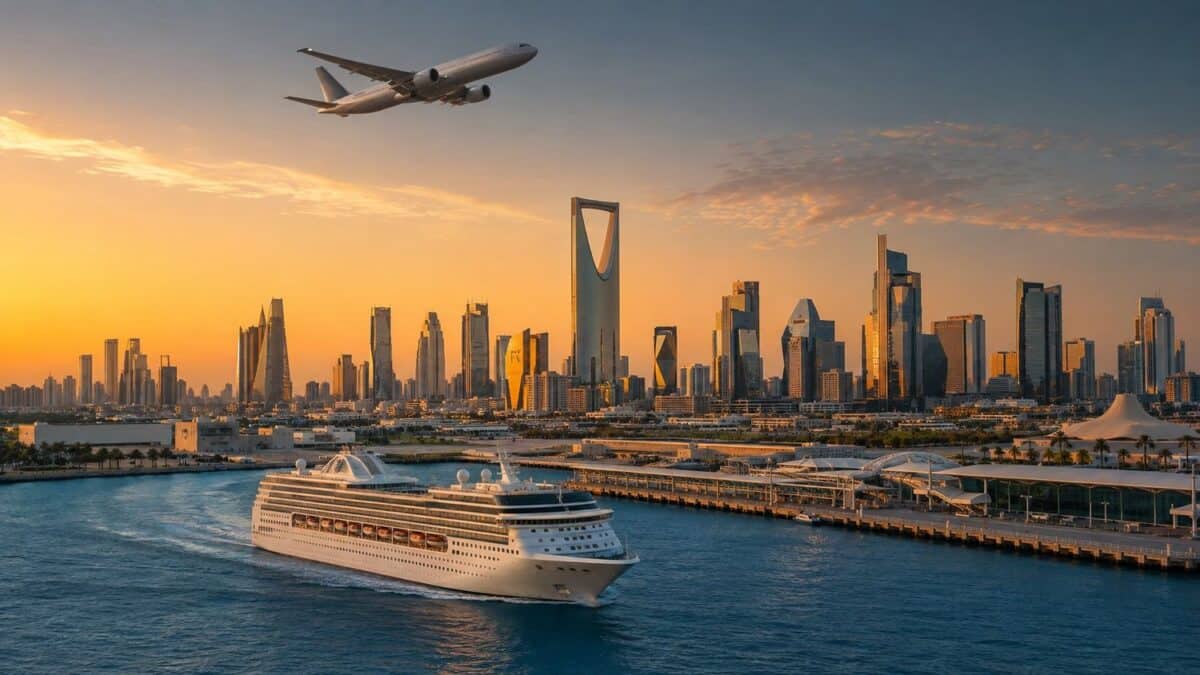
Image generated with Ai
The Middle East is undergoing a significant change in the way it produces and manages its energy sources. The rapidly growing opportunity to produce energy using offshore wind in the GCC region will play an important role in the region’s transformation. The Gulf countries are challenged to ensure fairness. Vibrant coastal tourism depends on finding the right balance. The Red Sea and Arabian Gulf coasts are unspoiled and currently house luxury tourism and essential marine habitats. This article focuses on how Saudi Arabia, the UAE, and Oman have been working on alternate legislation, technology, and ways to successfully incorporate the use of offshore wind energy while protecting the environment.
For decades, the Gulf Cooperation Council (GCC) nations have been universally recognised as the world’s most significant fossil fuel producers and exporters. Historically, this immense hydrocarbon wealth has driven rapid economic expansion and unprecedented infrastructural development across the Middle East. However, this economic model has also positioned the region among the highest per capita emitters of carbon dioxide globally. Recognising the existential threat of climate change and the volatile nature of global oil markets, regional governments have orchestrated a monumental strategic pivot. The energy transition is no longer viewed merely as an environmental obligation; it is fundamentally recognised as a crucial pillar for long-term economic diversification and national security.
Advertisement
In the early stages of this transition, the primary focus rested almost entirely on onshore solar photovoltaic (PV) installations and onshore wind farms. The vast, sun-drenched deserts of the Arabian Peninsula provided ideal, low-cost environments for utility-scale solar arrays. Yet, as electricity demand surged—driven by rapid population growth, industrialisation, and energy-intensive desalination plants—policymakers realised that solar power alone could not provide the required baseload stability, especially given the dramatic seasonal variations in regional energy consumption. This realisation has catalysed the exploration of marine-based renewable resources, officially giving rise to the modern GCC offshore wind opportunity.
Offshore wind presents a compelling solution to the intermittency challenges associated with solar energy. Coastal regions along the Red Sea and the Arabian Gulf boast remarkably consistent wind patterns that often peak during the evening and night-time hours, perfectly complementing daytime solar generation profiles. According to comprehensive geographical assessments, Oman displays the highest onshore and nearshore wind speed ranges in the region, clocking between 3 and 6.3 metres per second, while the northwestern coastlines of Saudi Arabia record highly viable wind speeds ranging from 3 to 6 metres per second.
Advertisement
Advertisement
The drive to exploit these resources is fundamentally reshaping the Middle East’s energy landscape. Harnessing this untapped offshore wind potential allows GCC nations to diversify their renewable energy portfolios significantly. Furthermore, offshore wind farms can operate at higher capacity factors than their onshore counterparts, providing a more reliable and resilient power supply to critical coastal infrastructure. As technology matures and the levelised cost of energy (LCOE) for marine turbines continues to plummet, governments are confidently integrating offshore wind into their overarching national decarbonisation agendas.
As of mid-2026, Saudi Arabia has drastically accelerated its clean energy ambitions. Under the visionary framework of Vision 2030, the Kingdom has officially revised its renewable energy capacity target to a staggering 130 gigawatts (GW) by the end of the decade, a substantial leap from the earlier, more conservative intermediate target of 58.7 GW. This aggressive expansion is meticulously designed to ensure that 50 per cent of the nation’s electricity is generated from renewable sources by 2030, with the remaining 50 per cent supplied by highly efficient, carbon-capture-ready gas plants.
The financial and institutional architecture supporting this target is robust. The Public Investment Fund (PIF), acting through its strategic partners, is mandated to develop 70 per cent of this massive renewable capacity. The remaining 30 per cent is competitively tendered through the National Renewable Energy Programme (NREP), operated by the Saudi Power Procurement Company (SPPC). As part of this comprehensive strategy, a monumental $32 billion green energy investment pipeline spanning 2025–2030 has been activated, firmly positioning Saudi Arabia offshore wind initiatives at the epicentre of global renewable energy markets.
Beyond the borders of Saudi Arabia, neighbouring GCC states are aggressively pursuing their own offshore wind strategies. The United Arab Emirates has cemented its commitment to achieving 5,000 MW of renewable capacity to meet its 30 per cent clean energy target by 2030. The UAE is increasingly looking towards its shallow coastal waters to deploy advanced turbine technologies that minimise technical risks and reduce upfront capital expenditures.
Advertisement
Advertisement
Similarly, Oman is rapidly emerging as a highly promising market for offshore wind development. Guided by the principles of Oman Vision 2040, the Sultanate has identified its southern Dhofar coast as a prime location for major renewable installations. Crucially, both Oman and the UAE are deeply integrating their offshore wind strategies with ambitious green hydrogen production projects. By directly linking offshore wind farms to large-scale electrolysis facilities, these nations are deliberately bypassing traditional grid constraints to position themselves as premier exporters of clean fuels to European and Asian markets.
While the industrial appetite for offshore wind is voracious, it is currently intersecting with another massive pillar of regional economic diversification: luxury coastal tourism. Saudi Arabia’s Vision 2030 heavily relies on transforming the Red Sea coastline into a premier, world-class destination for high-net-worth eco-tourists. Multi-billion-dollar giga-projects, most notably NEOM, the Red Sea Project, and AMAALA, are actively reshaping the hospitality landscape. These exclusive resorts are fundamentally marketed on the promise of untouched natural beauty, pristine waters, and unparalleled ecological integrity.
Therefore, any industrial development—including the deployment of offshore wind farms—must be executed with extreme caution. The Red Sea coastal tourism sector demands absolute aesthetic and ecological care. The visual impact of massive turbine arrays dotting the horizon line could severely detract from the luxury experience that these exclusive resorts promise. Consequently, developers are legally required to balance aggressive energy targets with rigorous aesthetic preservation, ensuring that turbines are positioned strategically over the horizon or elegantly integrated into the broader coastal seascape without disrupting the idyllic environment.
Beyond aesthetics, the ecological fragility of the Red Sea and Arabian Gulf cannot be overstated. These waters host some of the world’s most resilient and biodiverse coral reef systems, alongside critical habitats for endangered marine species such as dugongs, sea turtles, and numerous endemic fish populations. The construction and operational phases of offshore wind farms pose inherent risks to these delicate ecosystems. The installation of traditional monopile foundations can generate intense underwater noise pollution, severely disorienting marine mammals, whilst subsea cable laying can disrupt the seabed and damage ancient coral formations.
To mitigate these risks, the Saudi government has instituted uncompromising environmental protections. Under the Saudi Green Initiative (SGI), a staggering $1.8 billion has been officially earmarked specifically for marine and coastal protection programmes. These well-funded initiatives are strictly dedicated to rebuilding damaged coral reefs, establishing expansive marine protected areas, and ensuring that any new offshore infrastructure strictly adheres to world-leading conservation standards. This level of care ensures that the push for green energy does not inadvertently inflict irreversible harm on the region’s natural aquatic heritage.
The regulatory landscape governing the GCC offshore wind opportunity is evolving rapidly to keep pace with technological advancements. The Saudi Green Initiative’s ambitious implementation plan is currently advancing through its critical five-phase approach. As of 2026, the Kingdom has officially entered Phase 3 (2026–2027), which is specifically focused on incorporating cutting-edge technologies into the national grid and accelerating the deployment of massive, utility-scale renewable projects.
This phase is characterised by the introduction of stringent Marine Spatial Planning (MSP) directives. These official frameworks meticulously zone the coastal waters, officially designating explicit areas for renewable energy leasing while strictly off-limiting ecologically sensitive zones and vital shipping lanes. By comprehensively mapping the marine environment, the Ministry of Energy and the Ministry of Environment, Water and Agriculture can systematically prevent spatial conflicts between industrial developers, local fishing communities, and tourism operators.
To access the lucrative $32 billion investment pipeline, international developers must navigate one of the most rigorous Environmental Impact Assessment (EIA) protocols in the world. Bidders competing for offshore wind leases are legally mandated to submit exhaustive baseline environmental surveys, detailing precise mitigation strategies for acoustic pollution, sediment dispersal, and potential bird migration disruptions. The Saudi Power Procurement Company (SPPC) has made it explicitly clear that bankability is inherently tied to environmental compliance. Projects that fail to demonstrate harmonious integration with the surrounding marine ecosystem are systematically disqualified, ensuring that only the most responsible and innovative engineering firms successfully penetrate the GCC market.
The macroeconomic statistics underpinning the regional pivot to offshore wind are thoroughly compelling. According to comprehensive analyses published by the International Renewable Energy Agency (IRENA), achieving the stated renewable energy targets across the GCC will officially save 354 million barrels of oil equivalent, representing a profound 23 per cent reduction in domestic fossil fuel consumption. Furthermore, this transition will effectively slash the regional power sector’s carbon dioxide emissions by a massive 22 per cent.
Crucially, the socio-economic dividends are highly substantial. IRENA data projects that the aggressive expansion of the renewable energy sector will create more than 220,500 highly skilled jobs across the GCC by 2030. This robust job creation directly supports national policies aimed at reducing unemployment and transitioning the domestic labour force away from traditional oil and gas dependencies toward sustainable, future-proof industries.
The commercial viability of the sector is further evidenced by striking market projections. Recent industry reports estimate that the Middle East offshore wind turbine market, valued at $33.67 million in 2024, is currently projected to surge to $96.70 million by 2033, expanding at a robust Compound Annual Growth Rate (CAGR) of 12.3 per cent. Within this rapidly growing regional market, Saudi Arabia firmly maintains the dominant position, holding a massive 27 per cent market share as of recent valuations.
Interestingly, current technological deployment is heavily skewed toward shallow water installations. Projects operating in water depths of less than 30 metres accounted for a commanding 60.73 per cent of total revenue share recently. This initial strategic focus on nearshore pilot projects allows regional governments to safely minimise technical risks, dramatically simplify grid connections, and keep installation costs well within budget before eventually scaling out into deeper, more complex offshore environments.
The rapid acceleration of the GCC offshore wind opportunity has forced a fundamental restructuring of ministerial operations across the region. Historically, ministries of energy operated with near-total autonomy, singularly focused on maximising hydrocarbon extraction. Today, the landscape requires deep, continuous inter-ministerial collaboration. The Saudi Ministry of Energy must actively harmonise its ambitious 130 GW renewable capacity rollout with the Ministry of Tourism’s eco-resort development schedules and the environmental conservation mandates enforced by regulatory wildlife authorities.
This delicate balancing act has officially birthed a new era of cohesive policy design. Government regulations enacted in 2026 legally mandate that large-scale offshore wind developers physically integrate marine enhancement features into their structural designs. For example, turbine foundations are increasingly engineered to double as artificial reefs, deliberately designed to foster local marine biodiversity. Such integrated policies ensure that industrial infrastructure actively contributes to, rather than simply mitigates harm against, the fragile coastal ecosystems that support the broader tourism economy.
Given the enclosed nature of the Arabian Gulf and the specific geographical constraints of the Red Sea, environmental impacts are inherently transboundary. A major industrial mishap off the coast of Saudi Arabia could swiftly devastate the pristine coastlines of neighbouring GCC states. Consequently, 2026 has witnessed unprecedented regional policy alignment. The GCC nations are actively harmonising their marine spatial planning protocols, sharing critical oceanographic data, and standardising their environmental baseline metrics. This collaborative regional approach severely minimises bureaucratic friction, standardises cross-border supply chains, and presents a highly unified, attractive front to global green energy investors.
As the most viable shallow-water sites (<30 metres) near high-demand coastal zones become saturated, the regional industry is swiftly pivoting towards advanced deep-water technologies. Floating offshore wind farms are increasingly viewed as the ultimate solution to the aesthetic and ecological challenges posed by coastal tourism. By tethering turbines to the seabed via advanced mooring lines rather than driving fixed foundations into fragile coral reefs, floating structures can be deployed far beyond the visible horizon line of luxury eco-resorts. This spatial separation guarantees that the pristine visual appeal of the Red Sea is rigorously preserved while simultaneously unlocking access to stronger, more consistent deep-ocean wind corridors.
The integration of offshore wind with green hydrogen production is dramatically altering the regional industry’s trajectory. Producing green hydrogen requires vast, uninterrupted supplies of clean electricity. The Middle East clean energy strategy heavily relies on this synergy. Projects currently under development in Oman and the United Arab Emirates are explicitly designed to bypass domestic grid bottlenecks by directly piping offshore wind energy into massive coastal electrolysis plants. This innovative approach effectively transforms intermittent wind energy into a stable, exportable liquid commodity (green ammonia), thereby securing the GCC’s status as a dominant global energy supplier in the impending post-oil era.
The core economic rationale driving the massive investments in Saudi Arabian and wider GCC renewable infrastructure is highly strategic. Historically, these nations have burned millions of barrels of valuable crude oil domestically simply to generate baseload electricity and power energy-intensive desalination plants. By rapidly scaling up offshore wind and solar PV capacities, governments can effectively displace this inefficient domestic oil consumption.
Every kilowatt-hour of electricity generated by an offshore wind turbine fundamentally frees up a corresponding volume of crude oil, which can then be profitably exported at lucrative global market prices. This highly profitable economic arbitrage effectively self-funds the entire renewable procurement programme, underwrites the extensive battery storage build-out, and seamlessly justifies gigawatt-scale capital expenditures that might prove financially unviable in non-hydrocarbon-producing jurisdictions.
Furthermore, the economic implications extend deeply into domestic industrialisation. Through stringent local content requirements integrated into modern Power Purchase Agreements (PPAs), GCC governments are legally forcing international developers to establish robust domestic manufacturing supply chains. Factories producing massive turbine blades, subsea transmission cables, and advanced electrical switchgear are rapidly emerging across regional industrial zones. This aggressive localisation strategy not only drastically reduces logistical costs and project timelines but also accelerates the promised creation of hundreds of thousands of high-paying technical jobs for the youthful local demographics.
The successful execution of the GCC offshore wind opportunity yields profound benefits for the broader public and the regional business ecosystem. For local coastal communities, the influx of massive green infrastructure projects brings revitalised port facilities, upgraded grid resilience, and lucrative new employment opportunities in vessel operation, marine engineering, and environmental monitoring.
For the booming business sector, particularly sustainable hospitality operators, the impact is transformational. The entire premise of luxury eco-tourism relies heavily on achieving genuinely net-zero operational footprints. By securing long-term access to reliable, locally generated offshore wind power, mega-resorts can decisively eliminate their reliance on noisy, polluting diesel generators. This seamless integration of clean energy directly enhances the authentic eco-credentials of the resorts, allowing them to confidently market a genuinely guilt-free, hyper-luxury experience to environmentally conscious global travellers.
The general public also stands to inherit a significantly healthier environment. The massive reduction in domestic fossil fuel combustion directly correlates with drastically improved coastal air quality and a substantial decrease in atmospheric pollutants. Additionally, the $1.8 billion allocated under the Saudi Green Initiative to combat plastic waste, regulate sustainable fishing, and physically rebuild coral habitats ensures that the natural heritage of the region is rigorously preserved for future generations to enjoy.
Official government rhetoric in 2026 leaves absolutely no ambiguity regarding the region’s long-term trajectory. Publications and official mandates from the Saudi Ministry of Energy explicitly frame the 130 GW renewable energy capacity target as an immovable cornerstone of Vision 2030. Officials consistently reiterate that the deployment of offshore wind is not merely a supplementary measure, but rather a vital, strategic mechanism for ensuring year-round grid stability and securing dominance in emerging green hydrogen markets.
Similarly, the International Renewable Energy Agency (IRENA) has publicly lauded the aggressive policy shifts occurring across the Gulf. In comprehensive regional analyses, IRENA explicitly notes that while the GCC’s past was clearly forged by fossil fuels, its long-term future will undeniably be shaped by renewables. The agency highlights that the region possesses a highly formidable existing energy infrastructure that can be efficiently leveraged, adapted, and built upon to swiftly accommodate massive influxes of marine-generated clean power, presenting an unprecedented opportunity for both climate mitigation and deep economic diversification.
Looking toward the remainder of the decade and into the early 2030s, the trajectory of the GCC offshore wind opportunity points toward massive, unprecedented scale. With 2026 serving as the pivotal phase for initial grid connections and technology proving, the subsequent years will witness the rapid commercialisation of multi-gigawatt offshore wind arrays. The eventual successful integration of massive pumped hydro storage systems and advanced battery energy storage (BESS) solutions will decisively solve the lingering challenges of seasonal wind intermittency, ensuring a rock-solid, unwavering baseload power supply for the entire Arabian Peninsula.
Ultimately, the Middle East is actively writing a definitive global blueprint for the sustainable Blue Economy. By meticulously proving that multi-billion-dollar industrial renewable infrastructure can successfully coexist with ultra-fragile coral ecosystems and highly sensitive luxury tourism developments, Saudi Arabia, the UAE, and Oman are setting a spectacular new standard for global coastal management. The successful realisation of this integrated vision will firmly cement the GCC’s legacy not just as a dominant energy exporter, but as a pioneering global leader in holistic environmental stewardship and sustainable economic innovation.
Advertisement
Tags: GCC offshore wind opportunity, green hydrogen export, Middle East clean energy, Red Sea Coastal Tourism, renewable energy capacity target
Advertisement
Advertisement













Saturday, September 5, 2026

Friday, September 4, 2026

Saturday, September 5, 2026

Saturday, September 5, 2026

Thursday, September 3, 2026

Wednesday, September 2, 2026

Saturday, September 5, 2026

Saturday, September 5, 2026


