
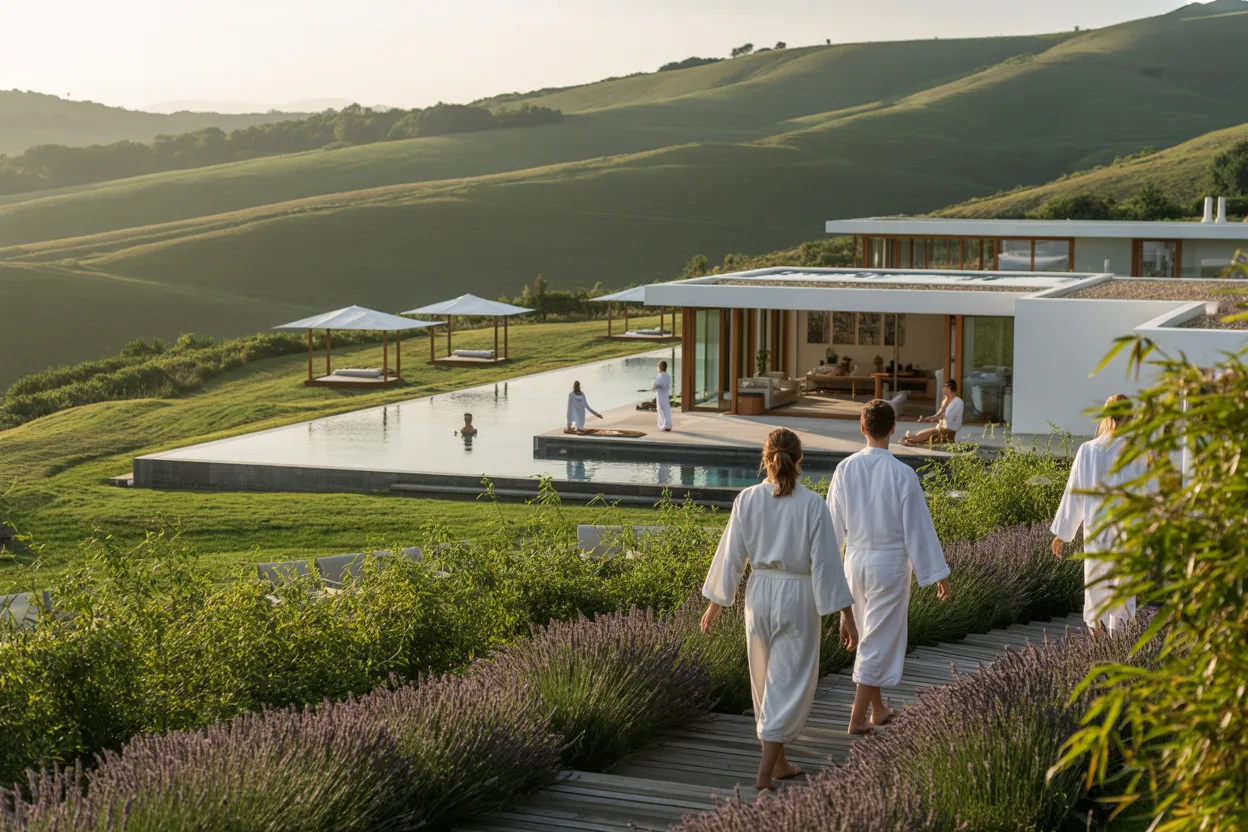
Image generated with Ai
The global tourism industry is being reshaped at an unprecedented pace as wellness tourism continues gaining momentum across international travel markets in 2026. Travel experiences centered around relaxation, mindfulness, spiritual healing, fitness, and emotional well-being are increasingly being prioritized by travelers seeking deeper and more meaningful journeys.
The rise of wellness tourism, global wellness travel, luxury wellness retreats, wellness travel trends in 2026, and sustainable wellness tourism has significantly transformed the way vacations are being planned worldwide. From yoga retreats and meditation escapes to thermal spa resorts and nature immersion programs, wellness-focused travel has evolved into one of the fastest-growing sectors within the international tourism economy.
Advertisement
According to data released by the Global Wellness Institute, the wellness tourism market is projected to reach nearly $1.4 trillion globally by 2029, reflecting extraordinary growth driven by changing traveler priorities and increased awareness surrounding mental and physical health. The sector has already been identified as one of the tourism industry’s most resilient and rapidly expanding segments following the pandemic-era shift toward self-care and conscious living.
Wellness tourism has been broadly defined as travel associated with the pursuit of maintaining or enhancing personal well-being. Unlike medical tourism, which is typically focused on treatments, surgeries, or medical procedures, wellness tourism is centered on prevention, balance, relaxation, and lifestyle improvement.
Advertisement
Travelers are now increasingly selecting destinations that provide opportunities for emotional restoration, stress reduction, and physical renewal. Long work schedules, digital fatigue, urban stress, and growing mental health awareness have contributed heavily to this trend.
As a result, wellness experiences are no longer being viewed as luxury add-ons reserved for elite travelers. Instead, they are being integrated into mainstream tourism offerings across multiple price categories and travel styles. Wellness-focused itineraries are now being developed by resorts, airlines, cruise companies, hospitality groups, and tourism boards worldwide.
Across Asia, Europe, the Middle East, and North America, strong growth has been witnessed in demand for yoga retreats, mindfulness programs, thermal spa resorts, forest immersion experiences, and spiritual travel destinations.
Countries such as Thailand, India, Indonesia, Japan, Switzerland, and Iceland have continued investing heavily in wellness tourism infrastructure. Nature-based experiences, including forest bathing, mountain retreats, eco-resorts, and digital detox holidays, are increasingly being promoted as solutions to modern lifestyle stress.
Travelers are also showing stronger interest in experiences connected to local healing traditions, holistic therapies, and spiritual practices. Meditation retreats, Ayurveda programs, wellness festivals, and silent retreats have seen a noticeable rise in international bookings throughout 2026.
Hot springs and thermal bathing destinations have similarly experienced renewed popularity. Wellness travelers are increasingly being drawn toward destinations that combine natural beauty with restorative experiences, particularly locations offering sustainable hospitality practices and environmentally conscious tourism models.
Global search behavior and tourism spending patterns have revealed a major shift in traveler motivations. Travel companies and tourism analysts have reported growing online searches linked to wellness vacations, spa holidays, mindfulness retreats, and nature-focused escapes.
Consumers are increasingly prioritizing experiences that contribute to emotional balance and healthier lifestyles rather than traditional sightseeing-focused travel alone. The demand for slower, experience-driven journeys has expanded significantly among younger travelers, families, retirees, and corporate professionals.
Industry reports have shown that travelers are often willing to spend more on accommodations and experiences that offer wellness-related benefits. Luxury wellness resorts, eco-lodges, organic culinary programs, and spa-centered stays have therefore become key revenue drivers for hospitality operators globally.
The integration of wellness services into mainstream hospitality has also accelerated. Hotels are now commonly offering meditation sessions, sleep-enhancement programs, fitness activities, healthy dining menus, and mental wellness experiences as standard features rather than premium extras.
One of the most significant developments within the sector has been the growing connection between wellness tourism and sustainable travel practices. Wellness travelers are increasingly demonstrating interest in destinations and businesses that prioritize environmental responsibility, local community engagement, and cultural preservation.
This trend has strengthened the rise of regenerative tourism, where tourism experiences are designed not only to minimize environmental harm but also to positively contribute to ecosystems and local communities.
Eco-conscious wellness resorts are increasingly being developed in remote natural settings while focusing on renewable energy, organic farming, locally sourced ingredients, and conservation initiatives. Travelers are often being encouraged to reconnect with nature while supporting sustainable economic development within host communities.
Tourism boards across several countries have also begun integrating wellness tourism into broader national sustainability strategies. Wellness experiences are now frequently promoted alongside eco-tourism, heritage tourism, and cultural tourism as part of long-term destination development plans.
The influence of wellness tourism is no longer limited to leisure travel alone. Wellness concepts are increasingly being incorporated into corporate travel, conferences, and incentive tourism programs.
Business travelers are now showing greater demand for accommodations and events that support work-life balance, stress management, and employee well-being. As a result, wellness-focused corporate retreats and incentive trips have become increasingly popular among international companies.
Hotels and convention centers are adapting to this trend by offering wellness amenities such as mindfulness workshops, yoga sessions, healthy catering options, outdoor team-building activities, and relaxation spaces within meeting venues.
The blending of business and wellness travel has been accelerated by changing workplace expectations and growing recognition of employee mental health. Corporate wellness tourism is now being viewed as an investment in productivity, creativity, and long-term workforce satisfaction.
The rapid growth of wellness tourism is increasingly being regarded as a defining transformation within the global travel industry. Tourism experts have noted that modern travelers are no longer seeking vacations based solely on entertainment or sightseeing. Instead, journeys are increasingly being planned around personal growth, emotional well-being, physical renewal, and meaningful experiences.
The industry’s projected expansion toward the $1.4 trillion mark by 2029 demonstrates the scale of this global shift. Tourism operators, hospitality brands, airlines, and governments are therefore intensifying investments in wellness-focused offerings to remain competitive within the evolving travel landscape.
As international tourism continues to recover and diversify in 2026, wellness tourism is expected to remain one of the most influential drivers shaping destination strategies worldwide. Through mindfulness, sustainability, cultural connection, and holistic well-being, a new era of travel is now being embraced by millions of travelers seeking balance and restoration in an increasingly fast-paced world.
Advertisement
Tags: Luxury Wellness Retreats, meditation travel, Regenerative tourism, Spa Tourism, sustainable wellness tourism
Advertisement
Advertisement













Saturday, September 5, 2026

Friday, September 4, 2026

Saturday, September 5, 2026

Saturday, September 5, 2026

Thursday, September 3, 2026

Wednesday, September 2, 2026

Saturday, September 5, 2026

Saturday, September 5, 2026


