
Keralam Launches Be a Malayali for a Day Experiential Tourism Campaign to Redefine Cultural Travel

Published
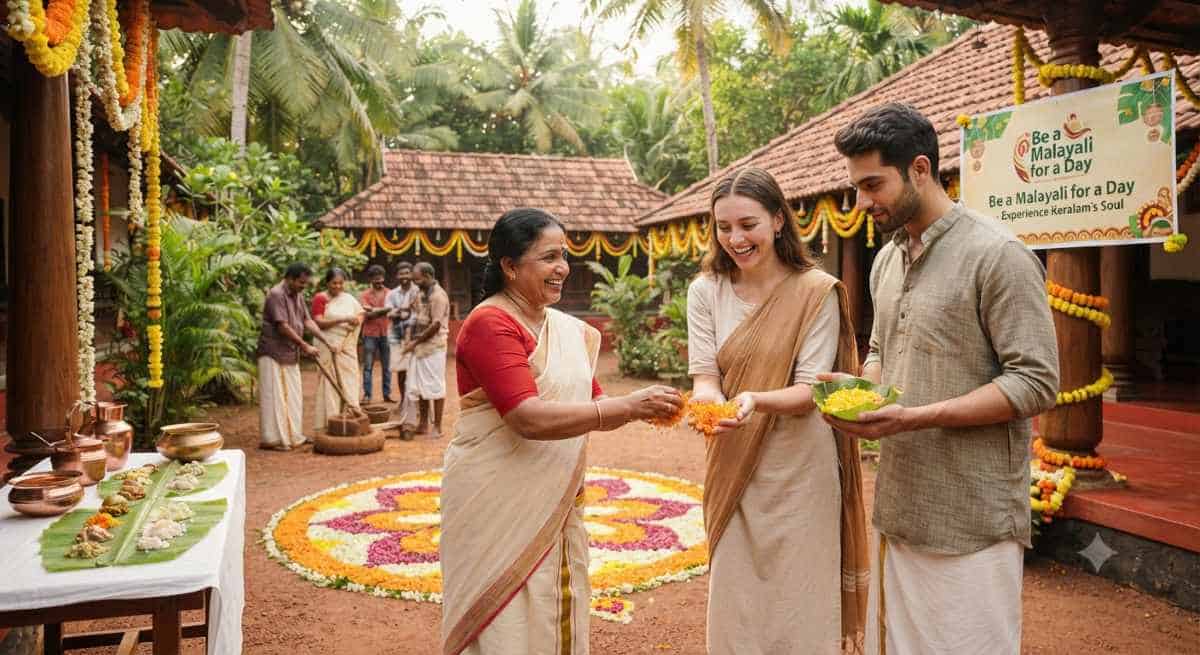
The state of Keralam has officially unveiled a novel experiential tourism initiative titled Be a Malayali for a Day. This strategic announcement was made by P C Vishnunadh, the Minister for Tourism, on the eve of Thiruvonam. Traditionally, global and domestic travel campaigns have focused on inviting visitors simply to witness the natural scenery, backwaters, and beaches of the region.
However, this newly introduced program aims to fundamentally alter that dynamic. Instead of remaining passive observers, travelers are formally encouraged to step into the daily rhythms of local life. The overarching vision is driven by a desire to transition the global messaging from a passive invitation to see the land to an active call to live within it. By anchoring the campaign in cultural authenticity, the government seeks to foster deeper connections between visitors and the indigenous population.
Impact on Travellers
For individuals journeying through the region, the initiative opens up a wide array of hands-on, culturally enriching activities. Participants are given the unique opportunity to collaborate directly with local communities to create an Athapookalam, which is the traditional floral carpet laid out during regional festivities. Furthermore, tourists are taught how to prepare authentic regional meals, thereby gaining deep insight into the complex culinary heritage of the destination.
Traditional art forms also become accessible through direct, practical instruction provided by seasoned artists who have dedicated their lives to refining their crafts. Rather than looking at heritage artifacts behind glass displays, visitors are welcomed into living traditions, ensuring that every journey leaves a lasting, personal impact on both the mind and the spirit.
Advertisement
Advertisement
Industry Insights
From a broader economic and structural standpoint, the initiative reflects a sophisticated evolution in destination management. Industry stakeholders have noted that the tourism department is actively working to establish a distinct cultural tourism brand for every single district within the state. This localized branding effort is designed to integrate regional festivals, art forms, and cultural events directly into the global tourism calendar, thereby securing year-round visibility and visitor engagement.
Moreover, significant emphasis is placed on scientific documentation and digital preservation to ensure that centuries-old heritage art forms are protected while remaining easily accessible via modern digital platforms. Officials have emphasized that the ultimate objective is not merely to maximize tourist footfall, but rather to elevate the overall quality of life for local artists and empower grassroots businesses.
Advertisement
Advertisement
Practical Information
The rollout of this experiential concept coincides with extensive state-supported celebrations during Onam Week in Thiruvananthapuram. During this festive period, more than three hundred and forty distinct art programs are hosted across roughly thirty-five different venues. These events feature approximately three thousand local artists alongside more than eight thousand performers gathered from various parts of the state.
Additionally, the Nishagandhi festival serves as a premier showcase for traditional performing arts such as Mudiyettu, Tholpavakoothu, Padayani, the Arjuna dance, and Poothanum Thira. These performances bring together approximately one hundred and sixty artists representing ten states, stretching geographically from Jammu and Kashmir down to Tamil Nadu. Furthermore, ongoing administrative efforts are currently underway at the final stages to grant official industry status to the broader tourism sector, fulfilling a long-standing request from industry partners.
Advertisement
Advertisement
Comparison with Previous Policies or Developments
When evaluated against historical tourism policies and preceding developments, the launch marks a clear departure from standard promotional strategies. Earlier promotional frameworks typically relied heavily on generic marketing slogans such as Come to see Keralam, which inherently cast the tourist in the role of a detached spectator.
In contrast, the current administration has systematically pivoted toward a more inclusive strategy encapsulated by the phrase Come to experience Keralam. While previous milestones focused heavily on recording quantitative jumps in overall arrivals—such as the massive influx of over two point five crore visitors recorded in the previous year—the contemporary framework prioritizes qualitative depth, community involvement, and sustainable economic growth over mere numerical expansion.
Advertisement
