
French Capital Reshapes Executive Conventions as Paris Records Unprecedented Growth in Sustainable Winter MICE Assemblies

Updated
Published
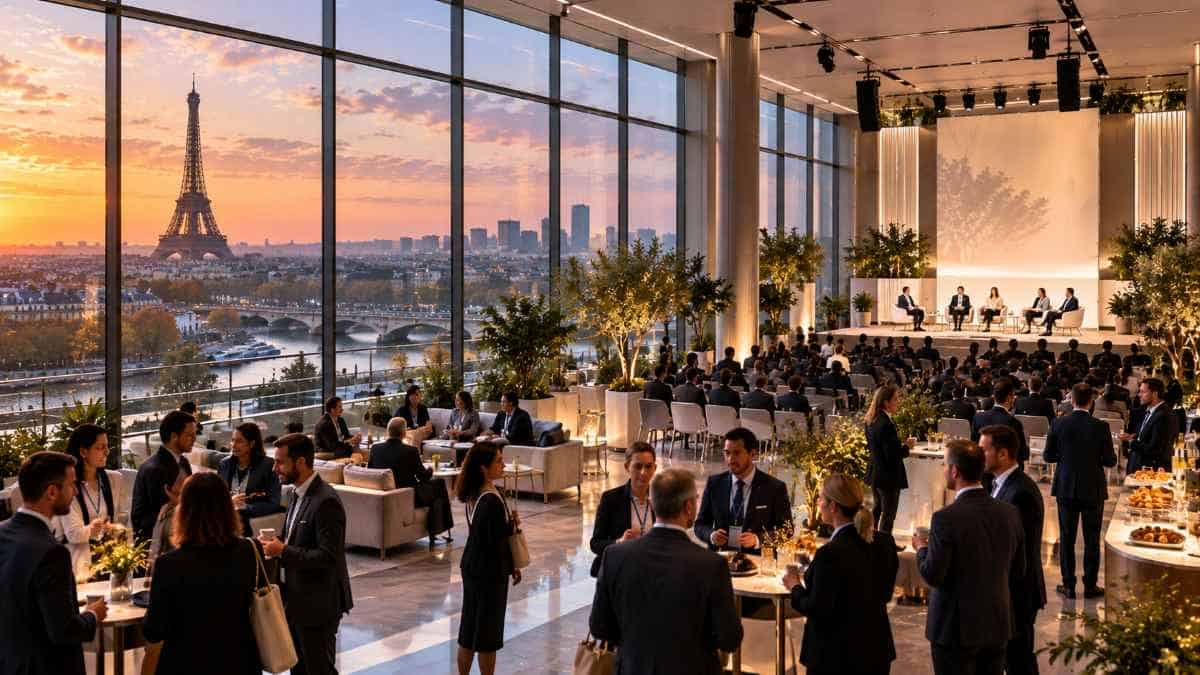
Paris is strengthening its position as a business-events destination through a growing emphasis on sustainable event planning, improved visitor services and the adoption of digital hospitality technology. As meeting planners prepare their 2027 programmes, the French capital is seeking to attract conferences, corporate gatherings and international exhibitions while responding to changing expectations around environmental responsibility and operational efficiency. The wider developments are nevertheless significant. Official regional figures show that Paris continues to attract substantial business-event activity, while international meeting planners are expressing confidence about the year ahead. Hotels are also expanding digital services, although technology is increasingly being positioned as a complement to personal hospitality rather than a replacement for staff.
Paris Business Events Show Signs of Recovery
The business-events sector remains an important contributor to the Paris regional economy. According to the Paris Île-de-France Chamber of Commerce and Industry’s September 2026 assessment, congresses in the region welcomed 716,195 participants in 2025, representing a 4% increase compared with 2024.
These congresses generated an estimated €942 million in economic benefits for the region. Paris also secured second place in the International Congress and Convention Association’s annual ranking of international meeting destinations.
The figures indicate continued demand for the French capital as a location for international professional gatherings. However, the recovery has not been uniform. The regional assessment noted that fewer major congresses took place in 2025, with a greater number of smaller and medium-sized events. International attendance was also lower.
Advertisement
Advertisement
Professional meetings performed more positively, with increased activity compared with 2024. Fashion shows, product launches, conferences, corporate conventions and seminars contributed to this performance.
Sustainability Becomes a Greater Priority for Event Planners
Environmental responsibility is becoming a more visible part of destination marketing and event planning in France. Paris is promoting sustainable business events through its Convention Bureau, which provides support to organisers seeking venues and local suppliers committed to responsible practices.
Advertisement
Advertisement
The bureau offers assistance to organisers of conferences, seminars and other MICE programmes, including large events involving more than 1,000 participants. Its approach encourages planners to consider environmental performance, inclusion and the longer-term benefits that events can bring to the host region.
France is also supporting wider European initiatives. One example is the Sustainability Hub for Events, launched in August 2026. The platform is designed to help European MICE professionals plan and operate more sustainable events, using digital tools and destination-specific guidance.
The initiative brings together Gevme, the Net Zero Carbon Events initiative and industry partners, with support from the Strategic Alliance of European Convention Bureaux. Atout France is among the organisations supporting the initiative.
These developments demonstrate a stronger institutional focus on sustainable event management. They do not, however, establish a specific 12% rise in sustainable bookings at Paris venues.
Meeting Planners Remain Optimistic About 2027
The outlook for the international meetings industry provides another indication of potential demand. American Express Global Business Travel’s 2027 Global Meetings and Events Forecast, published in October 2026, found that 93% of surveyed meeting professionals were optimistic about the sector’s prospects.
The survey covered 500 meeting professionals across 11 countries. Some 91% expected their meeting budgets to increase in 2027, while respondents anticipated more events across different meeting formats.
Advertisement
Advertisement
The findings also show that organisers are balancing higher costs with expectations for better attendee experiences. Improving participant experience ranked among the leading priorities, alongside risk management, compliance and the adoption of new technology.
For Paris, these trends offer an opportunity to attract corporate meetings and international conferences. However, the survey reflects global industry expectations and should not be treated as a direct forecast of bookings at individual Paris convention centres.
Hotels Explore Digital Services as Recruitment Remains Challenging
Technology is also influencing hotel operations across France. Digital check-in, online arrival procedures, automated payment options and mobile guest services can reduce repetitive administrative work and give visitors greater control over parts of their stay.
Accor, the French hospitality group, has continued expanding its digital guest services. In September 2026, it announced the full launch of ALL Concierge, a conversational AI service designed to assist guests with travel inspiration, hotel information and booking-related interactions. The company also introduced The Butler, an AI-powered tool intended to help hotel employees access operational information and manage everyday tasks.
These initiatives demonstrate how technology can support both guests and hotel teams. They are not evidence of a citywide rollout of physical check-in kiosks across Paris luxury properties.
Staffing remains a genuine operational concern. France Travail’s recruitment survey for 2025 recorded 336,850 recruitment projects across the accommodation and food-service sector, with 50.2% classified as difficult to fill. In Paris, the corresponding figure for the T1 Paris employment area was 37.6%.
Advertisement
Advertisement
The data illustrate recruitment pressure but do not establish that hotels are replacing reception teams with automated systems.
Guests Still Value Human Hospitality
The expansion of digital services does not mean that travellers want hotels to remove personal assistance. An Ipsos. Digital survey conducted for Mews and published in December 2025 found that 77% of French travellers preferred services handled by people, while 74% favoured a hybrid model combining human interaction with self-service options. The findings suggest that hotels have an opportunity to use technology for routine processes while retaining staff for personalised assistance, complex requests and guest relations. For Paris, where international visitors expect high service standards, the balance between digital convenience and personal attention will remain important as the city competes for corporate events and premium travellers
Advertisement
