

Michelin Keys 2026 Transform Luxury Travel Across Europe, Asia, Africa and the Americas as 2,832 Hotels Redefine the Global Luxury Stay

Published
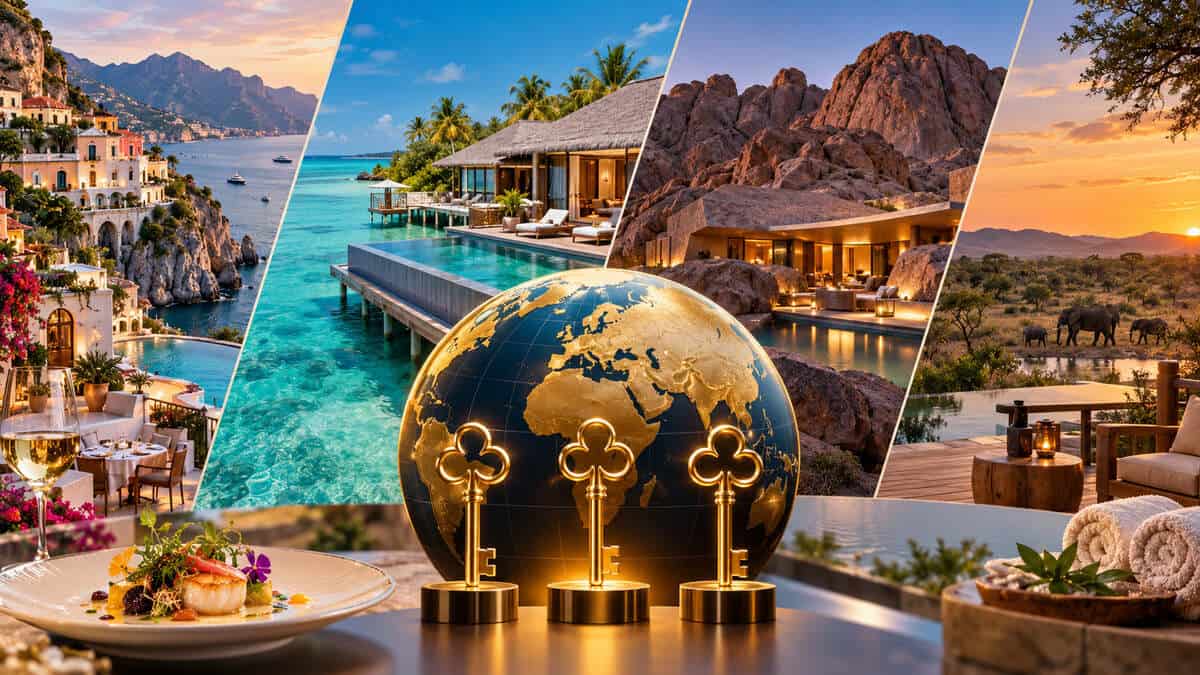
The 2026 Michelin Key selection is transforming luxury travel across Europe, Asia, Africa, Oceania and the Americas, after the Michelin Guide recognised 2,832 hotels across 79 destinations on 18 September 2026, reflecting a global shift towards hotels built around distinctive design, food, wellness, personalised service and a strong connection with their destination. The latest expansion comes as high-end travellers increasingly look beyond conventional opulence and choose properties that can shape an entire journey rather than simply provide accommodation within it.
The global announcement represents one of Michelin’s biggest steps yet in extending its influence from restaurants into accommodation. The Michelin Guide’s wider hotel collection has now grown to more than 9,400 properties worldwide, while the number holding at least one Michelin Key has climbed to 2,832. Michelin added 470 newly distinguished hotels in 2026, while more than 80 existing Key properties moved to a higher distinction.
Advertisement
Advertisement
That growth is being accompanied by a wider transformation in the meaning of luxury itself. Large rooms, marble bathrooms and expensive finishes remain important in parts of the market. However, properties are increasingly being assessed and chosen for more complex qualities such as architectural identity, local culture, privacy, gastronomy, landscape, wellness and the emotional character of the stay.
Michelin Keys 2026 at a Glance
Michelin’s hotel distinction follows a three-level structure similar in concept to its restaurant rating system.
Advertisement
Advertisement
| Michelin distinction | Meaning | 2026 global total |
|---|---|---|
| One Michelin Key | A very special stay | 2,020 hotels |
| Two Michelin Keys | An exceptional stay | 657 hotels |
| Three Michelin Keys | An extraordinary stay | 155 hotels |
| Total Key hotels | Hotels holding at least one Key | 2,832 |
| New Key hotels in 2026 | Newly distinguished properties | 470 |
| New Three-Key hotels | New awards and promotions | 18 |
| New or promoted Two-Key hotels | Additions and upgrades | 120 |
| Hotels promoted overall | Properties moving to a higher tier | More than 80 |
Michelin says its inspectors visit properties anonymously and independently, selecting hotels across categories that range from grand heritage hotels and internationally known resorts to small boutiques, remote lodges and highly individual new openings.
Europe Leads the Michelin Key Map as Italy and France Dominate
Europe remains the largest Michelin Key region in the world. There are now more than 1,300 Key hotels across more than 35 European destinations, with Italy leading the continent with 224 Michelin Key properties, followed closely by France with 220. The United Kingdom has 131 Key hotels.
Advertisement
Advertisement
Europe also accounted for eight of the 18 newly recognised Three-Key hotels in 2026. One of the most prominent is Borgo Santandrea on Italy’s Amalfi Coast, which was promoted from Two Keys to Three Keys. The cliffside property reflects one of the strongest trends shaping contemporary luxury hospitality: architecture that becomes inseparable from the destination itself.
Rather than offering a globally standardised version of luxury, properties such as this increasingly use geography, history and local design to create an identity that could not easily be reproduced elsewhere. Europe’s expansion also reached new territory in 2026, with Slovakia and Liechtenstein receiving Michelin Key hotels for the first time. The development suggests that luxury tourism demand is spreading beyond the traditional capitals and resort markets towards smaller destinations capable of delivering more individual experiences.
Asia Accelerates as Private and Experience-Led Luxury Gains Ground
Asia has emerged as another major centre of Michelin’s hotel expansion. Michelin reported particularly strong additions across China, India, Indonesia, Japan, Thailand and Saudi Arabia in 2026. The region also produced six of the year’s 18 new Three-Key hotels. Among the most striking additions is Soneva Secret in the Maldives, which entered directly at the Three-Key level rather than progressing from a previous Two-Key distinction. Asia now has 34 Three-Key hotels.
The Maldives property is especially relevant to a broader change in high-end tourism because it represents the growing attraction of very small, highly private resorts. Across Michelin’s 2026 global selection, inspectors have highlighted increased interest in private villas, tiny properties with only a handful of rooms and remote nature-focused accommodation.
This development challenges the idea that luxury must be expressed through size. For a growing segment of affluent travellers, exclusivity can instead mean isolation, personal service, fewer rooms and the ability to experience a destination without feeling separated from its landscape.
Ten New Destinations Join the Michelin Key Network
One of the most important changes in the 2026 selection is its geographic expansion.
Advertisement
Advertisement
Michelin Keys have been awarded for the first time in 10 destinations:
- Armenia
- Benin
- Botswana
- Kazakhstan
- Liechtenstein
- Mongolia
- Myanmar
- Rwanda
- Slovakia
- Zimbabwe
The expansion demonstrates how luxury hospitality is becoming more geographically dispersed. Countries traditionally associated with safari tourism, emerging cultural tourism, mountain travel and remote landscapes are increasingly appearing in international hotel distinction systems. That development can be significant for destination marketing because an internationally recognised property can introduce travellers to places they might otherwise have overlooked.
Africa Gains Momentum With 113 Michelin Key Hotels
Africa’s position within the Michelin system has strengthened considerably. The continent now has 113 Michelin Key hotels across 15 countries, calculated from Michelin’s published destination totals. South Africa leads with 32 properties, followed by Morocco with 31 and Egypt with 13.
Michelin Keys are also held by hotels in Seychelles, Kenya, Mauritius, Rwanda, Namibia, Tanzania, Zimbabwe, Benin, Botswana, Mozambique, Tunisia and Zambia. Four African destinations entered the Key selection for the first time in 2026: Benin, Botswana, Rwanda and Zimbabwe. Africa also now has seven Three-Key hotels across four countries. One of the newest is Delaire Graff Estate in Stellenbosch, South Africa, which was elevated to Three Keys. Its setting in the Cape Winelands illustrates how accommodation, gastronomy, wine tourism, art and landscape can operate as one integrated luxury tourism product.
South America and Oceania Show the Strength of Remote Luxury
South America has 94 Michelin Key hotels across seven countries, including five Three-Key properties. The regional selection stretches from major cities to remote landscapes and coastal areas, showing how luxury demand is increasingly distributed between urban hospitality and nature-led experiences.
Oceania has 92 Michelin Key hotels across Australia, New Zealand, Fiji and French Polynesia, representing an increase of almost one-third from the previous year. Two new Three-Key hotels were added in Oceania in 2026.
Advertisement
Advertisement
Among them is Southern Ocean Lodge on Kangaroo Island, Australia, which has become one of the strongest examples of a hotel whose remote setting forms a central part of the travel experience. The lodge was rebuilt after devastating bushfires and returned with an emphasis on landscape, privacy and connection with Kangaroo Island. Its recognition illustrates the expanding appeal of accommodation that travellers may specifically cross long distances to experience.
United States Adds 65 New Keys and Upgrades
The United States remains one of the world’s largest Michelin Key hotel markets. Michelin recorded 65 new Key hotels and upgrades across the country in 2026, taking the US selection to more than 350 properties. The updated US selection includes nature retreats, urban hotels, waterfront properties, farm-based stays, historic buildings and luxury resorts.
That variety also reflects a broader international trend. Luxury travellers are becoming less tied to one particular hotel format. A small inn, mountain lodge or restored historic property may now compete for attention alongside major international hotel brands when the experience is distinctive enough. Nature-oriented properties have become particularly visible in the latest American selection, indicating stronger demand for stays where scenery and outdoor access form an important part of the trip.
Food Is Becoming a Reason to Travel, Not Just Part of the Holiday
The transformation of luxury accommodation is occurring alongside another major change: food is increasingly becoming one of the main reasons people choose where to travel. At the Euronews Travel & Tourism Summit 2026 in Brussels, the changing relationship between accommodation and gastronomy was highlighted as an important emerging travel behaviour. Travellers increasingly research hotels and restaurants together rather than treating them as separate parts of a holiday.
Some trips are now being built around a single dining experience. Travellers may choose a destination because they want to experience a particular regional dish, visit a celebrated restaurant, explore local markets or join a walking food tour. Television and digital media can also influence this behaviour, with travellers attempting to recreate food experiences they have previously seen on screen.
For hotels, this means the restaurant is no longer simply an amenity. Food can become an essential part of the property’s identity. Hotels capable of connecting guests with local produce, regional cooking traditions, vineyards, markets and destination-specific culinary experiences are increasingly positioned to benefit from this shift.
Advertisement
Advertisement
Michelin Stars and Michelin Keys Are Creating a Wider Travel Ecosystem
Michelin began awarding restaurant Stars in 1926, while its hotel Key distinction was introduced in 2024. A century after Michelin started building its global reputation around dining, restaurants and hotels are increasingly being connected within a single travel ecosystem.
Michelin already showcases properties where high-level hotel distinctions sit alongside Michelin-recognised restaurants. Examples include luxury hotels across destinations including Japan, Thailand, Vietnam, China, France, Italy, Ireland and the United Kingdom. The crossover is important because it reflects how traveller behaviour is evolving. Accommodation, dining and destination discovery are becoming less fragmented. A traveller may discover a restaurant and then choose the hotel nearby. Another may discover an exceptional hotel and build dining experiences around it. Both behaviours strengthen the relationship between hospitality and destination tourism.
Michelin’s 2026 Special Hotel Awards Show How Luxury Is Changing
Michelin also announced four global Special Hotel Awards alongside its 2026 Key selection.
| Award | Winner | Destination | Why it stands out |
|---|---|---|---|
| Architecture & Design Award | Desert Rock Resort | Umluj, Saudi Arabia | Integrated into the Hijaz mountain landscape |
| Wellness Award | Schloss Elmau Luxury Spa Retreat & Cultural Hideaway | Bavaria, Germany | Extensive spa and wellness environment |
| Opening of the Year Award | Airelles Palladio Venice | Venice, Italy | New luxury interpretation of the Giudecca setting |
| Local Gateway Award | Londolozi Game Reserve | Kruger, South Africa | Strong connection with wildlife, conservation and local experience |
The awards underline the widening definition of hotel excellence. Desert Rock Resort in Saudi Arabia was recognised for architecture that works directly with the surrounding Hijaz Mountains rather than competing with them. Schloss Elmau in Germany was recognised for wellness, with six spa environments positioned within the Bavarian Alps.
Londolozi Game Reserve in South Africa received recognition for connecting visitors with wildlife, conservation and regional heritage. Meanwhile, Airelles Palladio Venice received the Opening of the Year Award after establishing a new luxury property on Giudecca Island with views across towards St Mark’s Square.
Luxury Moves Beyond Marble Bathrooms and Predictable Five-Star Design
The larger story behind the 2026 selection is the changing definition of luxury. Traditional high-end hotels were often judged according to recognisable physical signals. Large rooms, polished marble, chandeliers, formal service, extensive facilities and expensive materials became common international markers of status. Those characteristics remain part of the market, but they no longer define luxury on their own.
Advertisement
Advertisement
Travellers increasingly want accommodation that has a recognisable personality. A small lodge embedded in nature may feel more exclusive than a large urban hotel. A restored historic property may attract travellers because its design cannot be duplicated elsewhere. A remote resort may justify an international journey simply because the experience is unavailable anywhere else. Michelin’s hotel portfolio reflects this diversity, spanning grand hotels, independent boutiques, historic properties, secluded resorts and unconventional nature-based accommodation.
The Rise of the ‘Sense of Place’ Hotel
One of the strongest ideas shaping high-end hospitality in 2026 is the concept of sense of place. Hotels increasingly need to communicate where they are. Architecture may draw from the local landscape. Food may reflect regional ingredients. Wellness experiences may use local traditions. Excursions may connect visitors with nearby communities, natural environments, cultural heritage or agriculture.
This is fundamentally different from the globally standardised hotel model, where guests might encounter a similar room and service structure in multiple countries. For destinations, the shift creates an opportunity. The hotel itself can function as a storytelling platform for the region. The better a property communicates its location, the more likely travellers may be to explore the surrounding destination and spend across other tourism businesses.
Travellers Are Starting to Plan Holidays ‘Backwards’
One of the most significant changes emerging from the luxury sector is a reversal in the traditional travel-planning process. The conventional sequence is simple: choose a country, choose a city and then find a hotel. High-end travellers are increasingly capable of doing the opposite. They may discover an extraordinary property first and only afterwards research where it is located.
Instead of asking which hotel to book in Rome, Paris or Bangkok, the question can become which part of the world contains the hotel they most want to experience. This hotel-first approach has significant implications for tourism boards and hospitality operators. An exceptional resort or lodge can effectively become a destination anchor. It can create demand for a rural area, island, mountain region or secondary city that might otherwise receive less international attention. That is particularly important for emerging tourism markets joining the Michelin Key system for the first time.
Hotels Are Becoming Destinations in Their Own Right
The 2026 Michelin Key selection therefore represents far more than another hotel ranking. It provides a snapshot of how luxury travel is changing. With 2,832 Michelin Key hotels across 79 destinations, 470 new properties joining the selection, 18 new Three-Key hotels and new markets entering the system across Europe, Africa and Asia, the global hotel landscape is becoming broader and more diverse.
Advertisement
Advertisement
Food, architecture, wellness, privacy, landscape and local identity are increasingly being combined into one travel proposition. That shift is changing how travellers search, book and build itineraries. The hotel is no longer always the final decision made after choosing a destination. Increasingly, the property itself can be the first decision. For the international tourism industry, that represents a fundamental change. The hotels attracting the strongest attention in the new luxury era are not simply offering somewhere impressive to stay. They are increasingly giving travellers a reason to make the journey in the first place.
Advertisement
