
Russia’s Oymyakon Tourism Reality Check Reveals How the World’s Coldest Permanently Inhabited Settlement Is Becoming a Rare Extreme Travel Magnet While Demanding Serious Safety Planning, Remote Yakutia Logistics and Advisory-Aware Tour Operations

Published
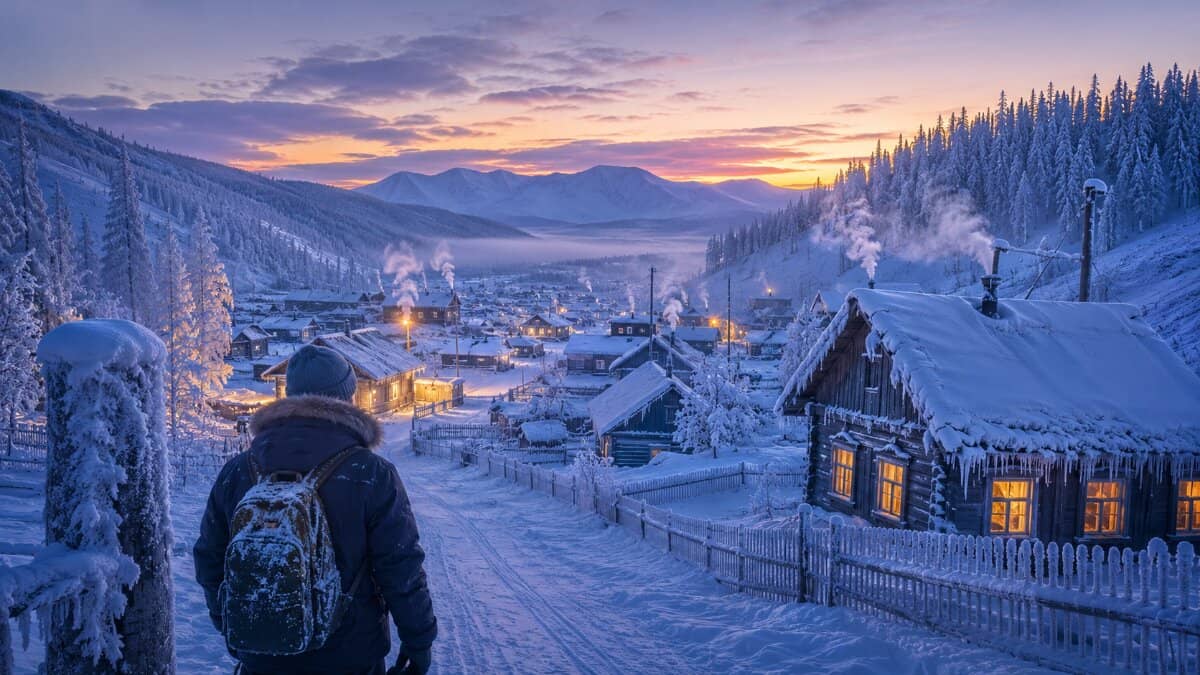
Russia’s Oymyakon in the Sakha Republic is tourist-friendly only for highly prepared adventure travellers, specialist operators and niche expedition groups. The settlement carries powerful destination appeal as the coldest permanently inhabited place on Earth, but its severe winter climate, remote access, limited accommodation, complex ground logistics and current Russia travel advisories make it unsuitable for mainstream leisure packaging. For travel businesses, Oymyakon is not a comfort-led holiday product. It is an extreme climate, cultural resilience and expedition tourism proposition requiring strict risk control.
Russia’s Oymyakon Tourism Appeal Sits Between Global Curiosity And Operational Risk
Oymyakon has become one of Russia’s most recognisable extreme travel names because it offers a rare product that few destinations can match. Its value lies in authenticity, remoteness and the psychological pull of visiting a place where everyday life continues under conditions that most travellers would consider uninhabitable.
The destination’s strongest positioning is not luxury. It is endurance tourism, cold-climate photography, cultural immersion and specialist expedition travel. This gives Oymyakon clear commercial potential for high-yield niche operators, but it also limits scale. The product cannot be sold like a standard winter escape. It needs controlled group sizes, trained guides, reliable vehicle support and advance client screening.
Institutional record data places Oymyakon at minus sixty-seven point seven degrees Celsius in February nineteen thirty-three, making it the coldest permanently inhabited place in the world. That record is the core brand asset. However, the word town should be used carefully. Oymyakon is more accurately framed as a rural settlement or village in the Sakha Republic.
Advertisement
Advertisement
Why Russia’s Sakha Republic Matters For Extreme Tourism Strategy
The Sakha Republic, also known as Yakutia, gives Russia a distinctive cold-climate tourism identity. Oymyakon sits on the Indigirka River in eastern Yakutia and forms part of a wider regional narrative built around permafrost, northern cultures, reindeer herding, ice roads, winter festivals and survival in extreme continental conditions.
For B2B travel, this matters because Oymyakon should not stand alone as a single-stop attraction. It works better as part of a wider Yakutia itinerary anchored through Yakutsk, with onward access to cultural, natural and event-based experiences. This allows operators to spread risk, improve itinerary depth and create more commercially viable packages.
Advertisement
Advertisement
Yakutsk remains the practical gateway. The airport has maintained annual passenger traffic above one million passengers and continues to support regional connectivity across remote areas. Seasonal schedules show services from Yakutsk to Ust-Nera, one of the key access points for the Oymyakon district, alongside wider links to Moscow, Irkutsk, Novosibirsk, Vladivostok and other domestic destinations.
Oymyakon Is Tourist-Friendly Only Under Specialist Conditions
Oymyakon can welcome visitors, but it is not tourist-friendly in the conventional sense. The settlement has basic services, limited public transport and severe weather exposure. Winter temperatures can regularly drop far below levels that ordinary leisure travellers can handle without specialist clothing and support.
Advertisement
Advertisement
The most marketable season is winter, because extreme cold is the selling point. Yet winter also creates the greatest operational challenge. Batteries fail quickly. Vehicles require heating and preparation. Frostbite risk rises sharply. Itinerary timing becomes weather-dependent. Minor delays can turn into safety issues.
Summer and shoulder seasons create softer access conditions, but they dilute the headline experience. This creates a key product-design question for operators. Winter sells the legend. Spring and summer reduce operational pressure. The most balanced commercial approach is to develop both products separately rather than promising one universal Oymyakon experience.
Tourism Infrastructure In Oymyakon Remains Expedition-Led, Not Mass-Market
The local tourism offer remains small-scale. Accommodation is likely to centre on guest houses, local stays or basic lodging rather than branded hotels. Dining options are limited. Retail, medical and transport support cannot be compared with urban winter destinations.
This does not make the destination weak. It makes it specialised. For premium adventure clients, limited infrastructure can be part of the value proposition. For mainstream clients, the same limitation becomes a booking barrier.
Advertisement
Advertisement
| Tourism Factor | Current Position | B2B Travel Impact | Operator Response |
|---|---|---|---|
| Destination identity | Coldest permanently inhabited settlement | Strong global curiosity and media appeal | Sell as extreme expedition travel, not leisure comfort |
| Access gateway | Yakutsk with onward regional movement | Requires multi-stage logistics | Build buffer days and avoid tight connections |
| Accommodation | Basic and limited | Low luxury compatibility | Set clear expectations before sale |
| Climate | Winter can fall far below minus fifty degrees Celsius | High health and equipment risk | Require specialist clothing and emergency plans |
| Events | Cold Pole festival and extreme marathon activity | Supports seasonal travel demand | Package around fixed dates only with contingency |
| Market fit | Adventure, documentary, research and photography segments | Small but high-value audience | Target experienced travellers and specialist groups |
| Advisory exposure | Several Western governments advise against travel to Russia | Insurance and duty-of-care complications | Conduct market-specific legal and insurance checks |
Russia’s E-Visa System Improves Entry Convenience But Does Not Remove Risk
Russia’s unified electronic visa system improves administrative access for eligible nationalities. It provides single-entry access, a validity period of one hundred and twenty days from issue and a permitted stay of up to thirty days. Applications can be submitted online and are processed within four calendar days.
For operators, this helps planning. It supports short expedition itineraries and reduces some consular friction. However, visa convenience does not solve the wider destination-risk equation. Entry paperwork, travel insurance, sanctions-related payment issues, airline routing and official travel advisories must all be assessed market by market.
Western outbound markets require particular caution. The UK advises against all travel to Russia. The US maintains a Level Four Do Not Travel advisory. Canada and Australia also advise against travel. These positions affect insurance, corporate duty of care, agent liability and traveller confidence.
Event Tourism Gives Oymyakon A Stronger Commercial Base
Oymyakon is not only a record-setting cold settlement. It also supports event-led tourism through the Journey to the Pole of Cold festival and winter extreme marathon formats. These events add structure to a destination that otherwise depends heavily on private expedition planning.
The festival model helps create reasons to travel beyond simply standing in a cold place. It can include cultural programming, local traditions, winter sports, reindeer-related experiences and community participation. This matters for international buyers because structured events make remote destinations easier to package, price and explain.
The extreme marathon concept also builds a sports tourism angle. It gives Oymyakon a clear identity in the endurance travel market, where participants often accept higher discomfort in exchange for rare achievement value. This segment is smaller than mainstream tourism, but it can support premium pricing and strong destination storytelling.
Advertisement
Advertisement
Economic Context Shows Why Niche Destinations Matter To Russia’s Tourism Mix
Russia’s tourism policy environment continues to emphasise domestic travel, regional development and international market diversification. Official economic messaging has identified domestic tourism as the main driver, with domestic trips reaching ninety-four million in twenty twenty-five. Foreign tourist trips to Russia have also grown over a two-year period to around five point six million.
Against this backdrop, Oymyakon serves a strategic function beyond its visitor numbers. It helps Russia showcase regional depth, climate extremity and non-urban tourism assets. It also supports the wider Far East and Arctic tourism narrative, where remoteness becomes a differentiator rather than a weakness.
For international B2B partners, the opportunity is narrow but distinctive. Oymyakon can support special-interest products for travellers from markets that retain operational access and risk appetite. It is less suitable for mass-market European, North American or corporate incentive groups under current advisory conditions.
Route And Ground Access Shape The Real Traveller Experience
The traveller journey usually begins with long-haul or regional access into Russia, followed by domestic movement to Yakutsk and onward travel towards Oymyakon district. In practice, ground travel remains one of the most critical parts of the experience.
Remote roads, severe cold and long distances require reliable vehicles, experienced drivers and contingency planning. Operators must avoid selling the route as simple transfer time. It is part of the expedition product and part of the risk profile.
| Access Layer | Practical Role | Risk Point | Commercial Planning Need |
| International entry | Brings travellers into Russia through permitted gateways | Advisory restrictions and limited routing | Confirm nationality-specific entry and flight options |
| Domestic air link | Connects major Russian cities with Yakutsk | Weather and schedule disruption | Add overnight buffers in Yakutsk |
| Regional air movement | Supports access to remote Yakutia points such as Ust-Nera | Seasonal and aircraft limitations | Verify schedules close to departure |
| Winter road transfer | Completes the extreme journey | Mechanical failure and cold exposure | Use convoy logic where feasible |
| Local hosting | Provides cultural and accommodation support | Limited service inventory | Pre-book and avoid last-minute group expansion |
MICE Potential Exists Only In Micro-Event And Research Formats
Oymyakon should not be positioned as a conventional MICE destination. It lacks the hotel base, venue scale, transport flexibility and risk profile required for mainstream meetings, incentives, conferences and exhibitions.
Advertisement
Advertisement
However, it can support micro-MICE formats. These include specialist leadership retreats, research delegations, documentary production teams, endurance sport groups, climate study missions and ultra-premium challenge travel. The commercial logic is not volume. It is rarity.
For incentive travel, the destination may appeal to brands seeking extreme achievement narratives. Yet any such programme needs strong medical protocols, participant screening and insurance clarity. It is not appropriate for broad employee reward trips or mixed-ability corporate groups.
Travel Agents Must Treat Oymyakon As A High-Diligence Sale
Oymyakon requires a more disciplined sales process than ordinary winter destinations. Agents should document traveller expectations, explain advisory issues, assess medical suitability and confirm equipment standards before booking.
The destination is attractive because it feels extreme. That same extremity makes mis-selling dangerous. Travellers should understand that comfort may be limited, itineraries may change, and the cold is not a visual backdrop. It is the main operating condition.
Operators should also avoid exaggerated promises about luxury, connectivity or easy access. The strongest sales language should focus on rare experience, authentic climate resilience, guided expedition support and realistic preparation.
Critical Operational Takeaways For Travel Agents And Tour Operators
- Position Oymyakon as Russia’s coldest inhabited settlement experience, not as a mainstream winter holiday.
- Use village, settlement or rural locality rather than town when accuracy is essential.
- Build every itinerary through Yakutsk with buffer days for weather, flight changes and road delays.
- Screen clients for cold tolerance, mobility, medical risks and previous adventure travel experience.
- Require expedition-grade clothing, battery protection, emergency communication planning and guided transfers.
- Check each client’s nationality, visa eligibility, insurance validity and government travel advisory exposure before confirming.
- Avoid large groups unless transport, lodging, heating and emergency support are fully secured.
- Package winter for the extreme climate story and spring or summer for softer access and cultural discovery.
- Treat festival and marathon dates as strong sales anchors, but include contingency plans.
- Disclose limited infrastructure clearly before payment to reduce complaints, cancellations and liability.
Russia’s Oymyakon Could Influence The Future Of Extreme Travel Demand
Oymyakon’s long-term strategic influence lies in its ability to turn climatic severity into tourism value. As travellers increasingly seek rare, story-rich and transformative journeys, the destination has a powerful identity that cuts through crowded global marketing. Few places can offer such a clear claim.
Advertisement
Advertisement
Yet growth will depend on safety, access, advisory conditions and responsible product design. Oymyakon will not become a mass tourism hub, and it should not try to become one. Its future lies in carefully managed expedition tourism, culture-led regional travel and small-format event programming that protects both visitors and local communities.
For the global travel market, Oymyakon shows how remote destinations can compete through uniqueness rather than scale. For Russia, it strengthens the Sakha Republic’s profile within cold-climate tourism. For tour operators, it offers a valuable but high-risk product that rewards precision, honesty and operational discipline.
Advertisement
