
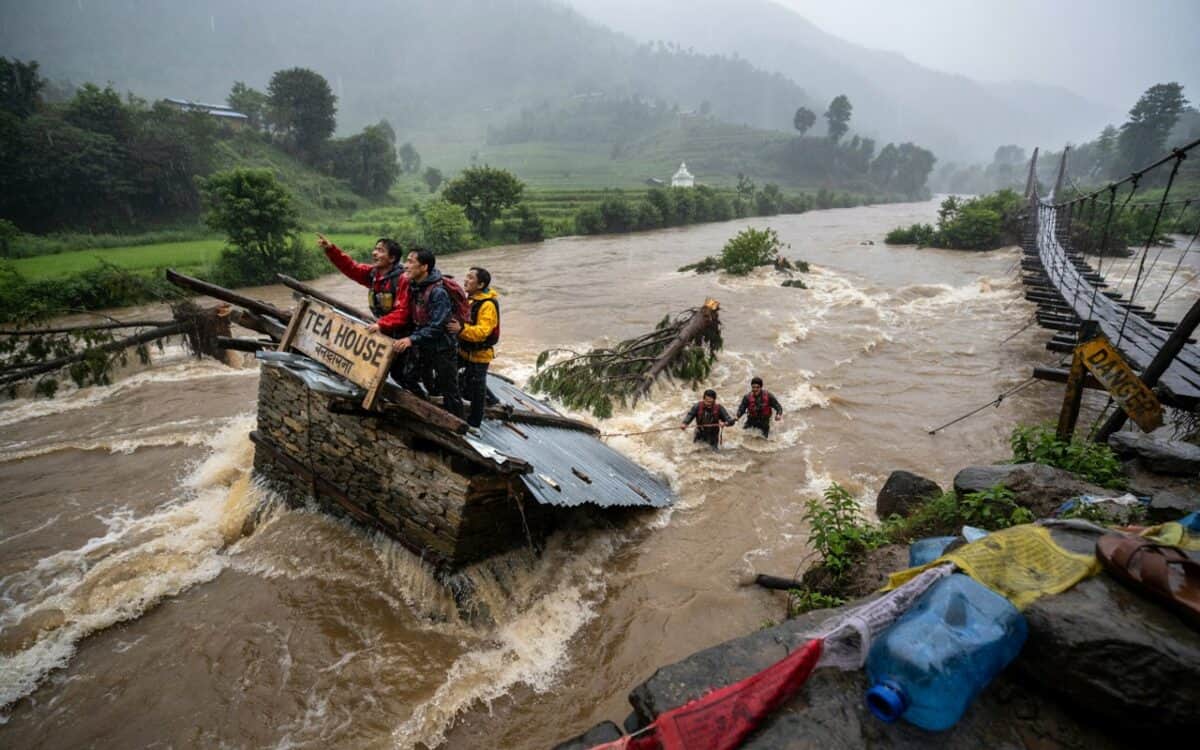
Image generated with Ai
Nepal Travel is facing a serious disruption after devastating floods and infrastructure damage affected Himalayan regions near the Nepal-China border, forcing travellers, trekking operators and authorities to reassess safety conditions. The UK Foreign, Commonwealth & Development Office (FCDO) has updated its travel advice following severe flooding in northern Nepal, warning visitors that further flooding remains possible and conditions may change quickly.
The emergency has affected roads, bridges, communication systems and transport links in areas important for trekking, pilgrimage and adventure tourism. Rescue teams continue working in damaged regions while government agencies monitor risks for residents and international visitors.
Nepal remains one of the world’s most admired mountain destinations, attracting travellers for Everest expeditions, Himalayan trekking, spiritual journeys and cultural experiences. However, the latest disaster highlights the growing importance of safety planning in vulnerable mountain environments.
The latest Nepal travel warning focuses on areas around Rasuwa district and the Nepal-China border, where flooding caused widespread damage to communities and transportation networks. The FCDO has advised travellers to follow instructions from Nepalese authorities, monitor official updates and avoid areas affected by dangerous conditions.
Advertisement
Advertisement
Rasuwa is a strategically important region for tourism because it provides access to Himalayan landscapes, mountain communities and routes connected with northern Nepal. The area is also used by travellers undertaking trekking adventures and religious journeys linked with Tibet.
Damage to roads, bridges and communication infrastructure has created significant challenges for movement. For tourists, this may mean delayed transportation, changed itineraries and difficulty reaching remote destinations.
The Nepal government and emergency agencies are working to restore access while supporting communities affected by the disaster.
Authorities have warned that additional flooding remains possible in affected areas, increasing concerns for residents and visitors. Mountain environments can change rapidly because heavy rainfall, unstable terrain and glacier-related events can create sudden hazards.
Advertisement
Advertisement
The FCDO has encouraged travellers already in Nepal to stay connected with local authorities, accommodation providers and tour operators. Visitors planning mountain journeys are advised to check conditions before departure and remain flexible with travel arrangements.
The Himalayan region attracts adventure travellers because of its spectacular landscapes, but the same geography also creates challenges. Steep valleys, remote communities and limited infrastructure can make emergency response more complicated during extreme weather events.
For Nepal’s tourism sector, maintaining visitor confidence while prioritising safety has become a major focus following the disaster.
International travellers have been among those affected by the flooding, with foreign nationals reported among people missing after the disaster. The situation has raised concern among governments, travel companies and families monitoring the safety of visitors.
The affected region includes routes connected with major pilgrimage journeys towards Tibet, including travel corridors associated with Mount Kailash. These routes attract thousands of spiritual travellers seeking cultural and religious experiences across the Himalayan region.
Nepal’s tourism appeal extends far beyond the affected areas. Popular destinations include:
Mount Everest trekking routes, Annapurna mountain trails, Kathmandu Valley heritage sites, Pokhara adventure tourism and wildlife experiences across national parks.
However, travellers visiting remote regions are being encouraged to remain cautious and follow official safety guidance.
Tourism remains one of Nepal’s most important economic sectors, supporting hotels, airlines, trekking companies, mountain guides and local communities.
The flood emergency has created temporary challenges for businesses operating near affected areas. Trekking programmes may require adjustments, pilgrimage schedules could face delays and transportation services may experience disruption while infrastructure repairs continue.
Tourism operators are expected to focus on providing updated information, supporting affected travellers and ensuring future visitors have accurate safety guidance.
The FCDO also advises travellers to ensure their insurance policies cover planned activities, including trekking, adventure tourism and emergency assistance. Proper insurance coverage is particularly important for visitors travelling in remote Himalayan regions where rescue operations can be complex.
Visitors planning Nepal trips should carefully review travel conditions and prepare for possible changes. Mountain tourism requires additional planning because weather and environmental conditions can affect journeys quickly.
Travellers should check government travel advice, confirm routes with local operators, avoid restricted areas and follow instructions from Nepalese authorities.
Those planning trekking or adventure activities should select experienced operators and ensure emergency evacuation coverage is included in their travel insurance.
The Nepal government continues operating emergency support systems for affected communities and travellers, while international diplomatic missions are monitoring developments.
Responsible preparation can help visitors experience Nepal safely while supporting the country’s long-term tourism recovery.
The recent flooding has renewed global attention on safety challenges facing Himalayan tourism. Nepal’s mountains remain a major attraction because of their natural beauty, cultural importance and adventure opportunities, but increasing environmental risks require stronger preparation.
Climate-related events, including floods, landslides and glacier changes, are creating new challenges for mountain destinations worldwide.
Tourism organisations are increasingly focusing on early warning systems, emergency communication, infrastructure improvements and sustainable travel practices.
For Nepal, protecting tourism growth will require balancing visitor demand with stronger safety measures. The country’s natural attractions remain its greatest tourism asset, but ensuring traveller security will be essential for future success.
Despite the current emergency, much of Nepal’s tourism network continues operating outside directly affected areas. Major travel hubs including Kathmandu and Pokhara remain important gateways for international visitors.
The recovery process will depend on successful rescue operations, infrastructure restoration and rebuilding confidence among travellers.
Nepal’s global reputation as a Himalayan adventure destination remains strong because of its extraordinary mountains, ancient traditions and welcoming communities. However, the latest disaster serves as a reminder that travellers must remain informed when exploring vulnerable environments.
The future of Nepal Travel will depend on cooperation between government agencies, tourism businesses, local communities and international partners.
Nepal Travel is facing a critical moment as Himalayan floods disrupt important routes and create new safety concerns for visitors. The disaster has affected tourism infrastructure and highlighted the risks faced by travellers exploring remote mountain regions. However, Nepal’s resilience, cultural richness and extraordinary landscapes continue making it one of the world’s most remarkable destinations. As rescue efforts continue and recovery plans develop, strengthening safety systems and restoring traveller confidence will be essential. The future of Nepal tourism will depend on combining adventure experiences with responsible planning, improved infrastructure and stronger protection for visitors and communities.
Advertisement
Advertisement
Advertisement













Saturday, September 5, 2026

Friday, September 4, 2026

Saturday, September 5, 2026

Friday, September 4, 2026

Thursday, September 3, 2026

Wednesday, September 2, 2026

Friday, September 4, 2026



