
Japan Tourism Faces New Pricing Debate as Foreign Visitors Could Pay More While the Country Tackles Overtourism

Published
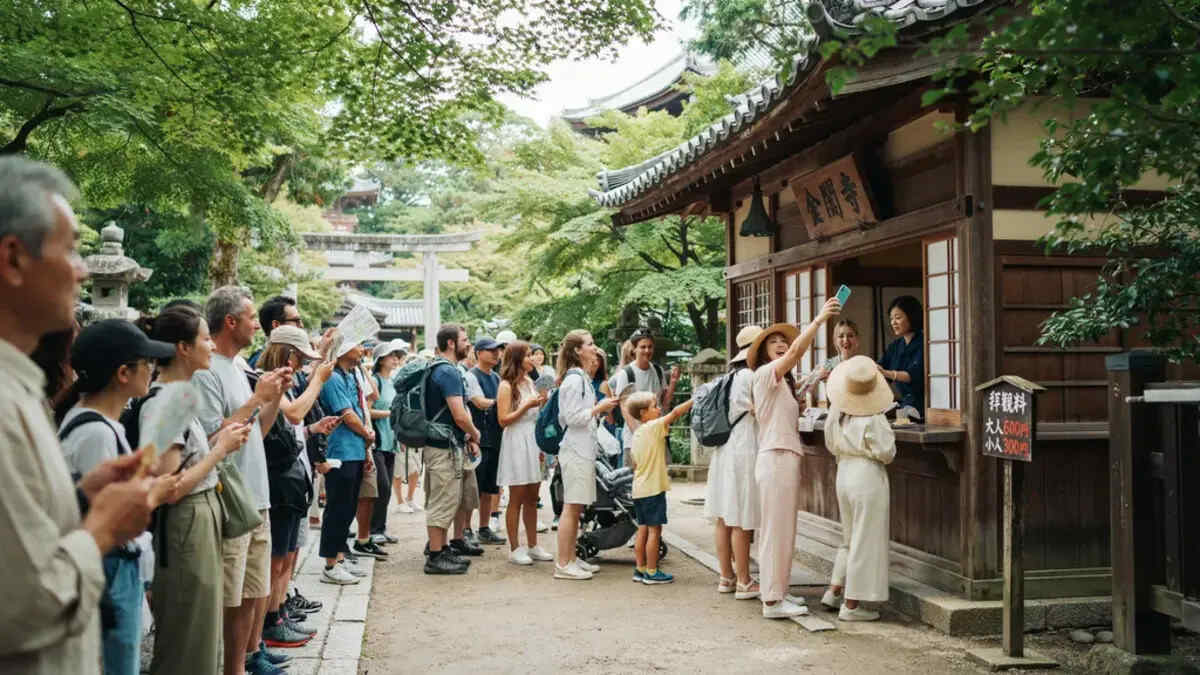 Image generated with Ai
Japan is at odds with a new debate over a tourism industry that charges foreign travellers higher prices at certain attractions and tourism facilities. At an online briefing held on 13 October 2026, the Japan Tourism Agency proposed an approach in which it would be up to individual tourism operators to make decisions on charging different prices. As Japan strives to strike a balance between overtourism, reducing pressure on popular destinations and encouraging more international visitors to visit regional areas, the country has record visitor arrivals and has ambitious tourism targets for 2030 – and is seeking a better balance between economic growth, visitor experiences and the daily lives of local residents.
Japan Tourism Pricing Debate Gains Attention as Foreign Visitors Could Face Higher Charges
Japan’s approach to dual pricing for foreign tourists has become an important issue as international tourism continues to expand. Under dual pricing, different charges may be applied to overseas visitors and domestic customers for the same service or attraction.
Advertisement
Advertisement
The Japan Tourism Agency has indicated that decisions over such charges will generally be made by individual tourism businesses rather than through a compulsory nationwide pricing system.
This means that foreign tourists could face higher admission fees or service charges at certain locations if operators choose to introduce different prices.
Advertisement
Advertisement
However, no blanket requirement for higher foreign visitor prices has been announced. Pricing decisions will remain dependent on individual operators and applicable regulations.
Japan Tourism Agency Leaves Dual Pricing Decisions to Individual Operators
The position outlined during the 13 October briefing follows an earlier explanation provided by the Japan Tourism Agency in March.
Advertisement
Advertisement
Tourism operators were identified as the main decision-makers regarding service prices, including whether different customer groups should be charged different amounts.
Under this approach, the possibility of higher prices for overseas travellers may be considered by attractions and other tourism businesses according to their individual circumstances.
However, the government has not introduced a nationwide requirement for foreign visitors to pay more than Japanese customers.
This distinction is important for international travellers, as a change in one destination or attraction should not be interpreted as a change affecting every tourism facility across Japan.
New Tourism Pricing Guidelines Are Being Developed to Improve Transparency
Alongside the discussion over dual pricing, the Japan Tourism Agency has been developing guidelines to support tourism businesses when determining their charges.
The proposed guidance is intended to help operators explain pricing differences clearly and ensure that customers understand the charges applied to them.
Advertisement
Advertisement
Greater transparency is considered important because international visitors may encounter different admission fees or service prices while travelling between destinations.
Where different prices are introduced, clear information will help visitors understand the conditions attached to their purchases.
The guidelines are being developed as part of Japan’s wider efforts to support responsible tourism management. Their final provisions and implementation details have not been established in the supplied information.
Accommodation Taxes Remain Under Local Control as Tourism Costs Face Scrutiny
Tourist accommodation taxes have also become part of Japan’s wider discussion about tourism management and visitor costs.
During the October briefing, it was explained that decisions on introducing or increasing accommodation taxes would remain subject to local discretion.
Such taxes may be collected as part of accommodation costs, depending on the destination and the rules applied by local authorities.
Advertisement
Advertisement
Importantly, accommodation taxes are not necessarily restricted to foreign tourists. Domestic visitors may also be required to pay where local regulations apply.
For international travellers, this means accommodation-related charges may differ between destinations. The possible introduction or adjustment of these taxes should not be confused with a nationwide foreign tourist surcharge.
Tokyo, Osaka and Kyoto Remain at the Centre of Japan’s Overtourism Challenge
The debate over tourism pricing has emerged alongside growing concerns about overtourism in Japan’s most popular destinations.
Tokyo, Osaka and Kyoto remain major centres of international tourism activity. Together, these three destinations account for approximately 60% of overnight stays by foreign visitors, according to the figures cited in the supplied reporting.
Such a concentration places considerable attention on the management of tourism facilities, public spaces and local communities.
Japan’s sustainable tourism strategy is intended to address these pressures while protecting residents’ quality of life.
Advertisement
Advertisement
Rather than relying on pricing alone, tourism authorities are also encouraging visitors to travel beyond the busiest destinations. This approach is intended to distribute the benefits of international tourism more widely.
Japan Sets Ambitious 2030 Regional Tourism Target to Spread Visitor Growth
A central part of Japan’s tourism strategy involves increasing international overnight stays in regional destinations.
According to the targets outlined during the October briefing, foreign visitor overnight stays in regional areas are expected to rise from 60.56 million in 2025 to 130 million annually by 2030.
This represents an ambition to more than double regional international overnight stays within five years.
The target is designed to encourage a wider distribution of international tourism activity across the country.
By attracting more travellers beyond Tokyo, Osaka and Kyoto, regional destinations could benefit from additional accommodation demand, visitor spending and tourism activity.
Advertisement
Advertisement
However, the target concerns the number of overnight stays rather than the number of individual tourists, an important distinction when assessing tourism growth.
Japan’s Record 42.7 Million International Visitors Add Urgency to Tourism Management
The pricing discussion comes after Japan recorded an exceptional year for international tourism.
According to the Japan National Tourism Organization, approximately 42.7 million international visitors arrived in Japan in 2025, representing a 15.8% increase compared with the previous year.
This established a new annual visitor record and demonstrated the scale of international demand for travel to Japan.
The strong growth has also increased the importance of managing visitor activity across major tourism centres.
As international travel demand expands, greater attention is being directed towards balancing tourism revenue with the needs of local communities.
Advertisement
Advertisement
The latest discussions show that tourism management is becoming increasingly important alongside the country’s efforts to attract visitors and strengthen regional economies.
What Higher Tourism Prices Could Mean for International Travellers Visiting Japan
For foreign travellers planning holidays in Japan, the most immediate consideration is the possibility of different prices at selected tourism facilities.
Higher admission fees, attraction charges or other tourism service prices could be introduced where individual operators decide that differentiated pricing is appropriate.
However, no universal increase in visitor charges has been established through the policy position described.
Travellers should therefore review published admission prices, booking conditions and accommodation taxes when preparing their itineraries.
Pricing information may differ between attractions and destinations, making advance planning particularly useful for visitors travelling across several regions.
Advertisement
Advertisement
Tourists should also distinguish between operator-led dual pricing and local accommodation taxes, as the two involve different decisions and charging arrangements.
What Happens Next as Japan Moves Towards More Sustainable Tourism Growth?
Japan’s tourism strategy is expected to remain focused on three connected priorities: pricing transparency, overtourism management and regional tourism expansion.
Individual operators will continue to play an important role in determining their charges, while local authorities will retain responsibility for decisions concerning accommodation taxes.
Further details about pricing guidelines will be important for businesses and travellers seeking clarity about the use of different visitor rates.
At the same time, progress towards the 2030 target of 130 million annual regional overnight stays will provide an important measure of the country’s efforts to spread tourism activity.
The primary objective is to prevent the international tourism growth from only benefiting and putting pressure on a limited destination.
As far as the travellers are concerned, Japan’s strategy might result in a more extensive range of prices, offering opportunities for discovering the region’s destinations. The main point is that high prices for foreigners will remain an occasional circumstance rather than the general trend.
Advertisement
