
Italy Faces Travel Disruption as ITA Airways, Ryanair, Lufthansa, easyJet and Other Flights Hit 172 Delays and 15 Cancellations Across Rome, London, Milan, Amsterdam and More

Published
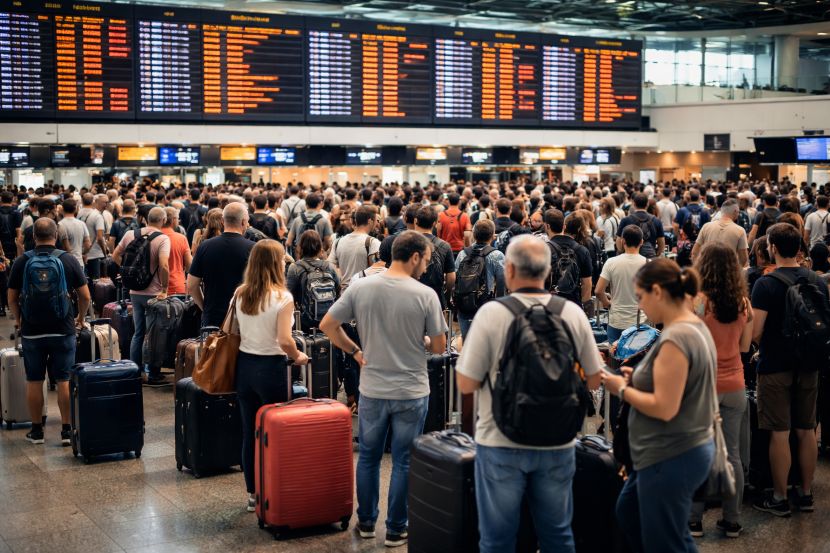
Major disruptions of travel occurred at all of Italy’s major aviation gateways. Operational data shows that Rome’s Leonardo da Vinci International Airport (Fiumicino) recorded operational data for 84 flight delays and 7 cancellations, while his colleague at Milan Malpensa International Airport 88 delays and 8 cancellations.
Disruptions at border airports that connect Italy with hundreds of foreign destinations and serve millions of passengers. The Rome airport system offers more than 230 destinations and serves more than 53 million passengers a year, according to Aeroporti di Roma, which shows how much traffic these airports receive.
Because of this, passengers in other European and global destinations had to reschedule, find other connections, and had to wait for longer periods of time to board. It also affected other flights and destinations that are connected to Rome and Milan international networks.
Major Airports Experiencing Operational Disruptions
The travel disruption was concentrated at two of Italy’s most important aviation hubs:
Advertisement
Advertisement
- Leonardo da Vinci–Fiumicino International Airport (Rome)
- Milan Malpensa International Airport (Milan)
Fiumicino Airport is Italy’s busiest airport and among the largest aviation hubs in Europe, serving tens of millions of passengers each year and connecting the Italian capital to international destinations across Europe, Asia, and the Americas.
Malpensa Airport serves as the primary international gateway for Milan and northern Italy, playing a crucial role in business travel and long-haul connectivity. Together, these airports form the backbone of Italy’s international aviation network.
Advertisement
Advertisement
With more than 170 delayed flights and 15 cancellations combined, the disruption caused operational challenges across airline schedules and airport services.
Airlines Potentially Affected
Because both airports function as international hubs, a wide range of airlines operating through Rome and Milan experienced operational disruption. Carriers commonly serving these airports include:
- ITA Airways (Italy’s national carrier)
- Lufthansa Group airlines
- Ryanair
- easyJet
- Air France
- British Airways
- Emirates
- Qatar Airways
These airlines operate both short-haul European flights and long-haul intercontinental services. When delays occur at hub airports, the effects often cascade through airline networks, disrupting aircraft rotations and passenger connections across multiple destinations.
Affected Cities and Routes
Flight disruptions at Rome and Milan affect not only local passengers but also travelers across Europe and beyond.
Cities commonly linked to these airports include:
From Rome (Fiumicino):
Advertisement
Advertisement
- Paris
- London
- Madrid
- Barcelona
- Frankfurt
- New York
- Dubai
From Milan (Malpensa):
- Amsterdam
- Zurich
- Vienna
- Doha
- Tokyo
- Singapore
Passengers traveling between these destinations may face knock-on delays because hub airports coordinate large numbers of connecting flights.
Estimated Number of Passengers Affected
To understand the potential impact, it is useful to consider passenger capacity.
A typical commercial aircraft operating within Europe carries 150–180 passengers, while long-haul aircraft may carry 250–350 passengers. Based on the reported delays and cancellations, the disruption could potentially affect 25,000 to 35,000 travelers throughout the day.
Passengers most affected include:
- Transit passengers connecting through Rome or Milan
- Tourists traveling to Italian cultural destinations
- Business travelers heading to European financial centers
Even relatively small delays at hub airports can disrupt schedules across airline networks, creating a domino effect that affects multiple flights.
Advertisement
Advertisement
Impact on Tourism and Travel Industry
Italy is one of the world’s most visited travel destinations, attracting millions of tourists every year. Rome and Milan serve as primary entry points for visitors exploring historic cities, cultural landmarks, and Mediterranean destinations.
Rome’s Fiumicino Airport alone has recently surpassed 50 million passengers annually, highlighting the strong demand for travel to the Italian capital and surrounding regions.
When delays occur at such large hubs, the tourism sector can feel immediate effects. Travel disruptions can lead to:
- Missed hotel check-ins and tour bookings
- Delayed cruise embarkations
- Disrupted business travel schedules
- Additional accommodation and transportation costs for travelers
For international tourists on tight itineraries, even a few hours of delay may force itinerary changes across multiple cities.
Broader Operational Challenges in European Aviation
Operational disruptions at large European airports can occur due to several factors, including weather conditions, air traffic congestion, technical issues, or staffing constraints within aviation operations.
European airspace is one of the busiest in the world, and hub airports such as Rome and Milan handle thousands of aircraft movements every week. Even minor disruptions can quickly ripple across the network due to the interconnected nature of modern airline scheduling.
Advertisement
Advertisement
Aviation authorities and airport operators continuously monitor flight movements and coordinate with airlines to restore normal operations as quickly as possible.
Conclusion
Recent problems with operations at Milan Malpensa and Rome Fiumicino Airports illustrate how quickly international flights can experience delays and cancellations. Major international gateways in Italy recorded more than 15 flight cancellations and over 170 flight delays affecting thousands of passengers.
These Airports act as major connecting hubs for Europe, North America, Asia, and the Middle East. Therefore, the delays and cancellations affect travelers in many countries and disrupt many airline networks.
Despite the disruptions, Italy’s travel gateways can accommodate a growing number of travelers and their significance within Europe is growing. Meanwhile, airline operators and authorities are trying to minimize delays on the flight schedule, stabilize the flow of flights, and mitigate the impacts on travelers and the travel industry.
The travel and tourism industry as a whole needs effective coordination between air traffic control, airports, and airlines – this is particularly true as passenger demand continues to grow.
Source: FlightAware
Advertisement
