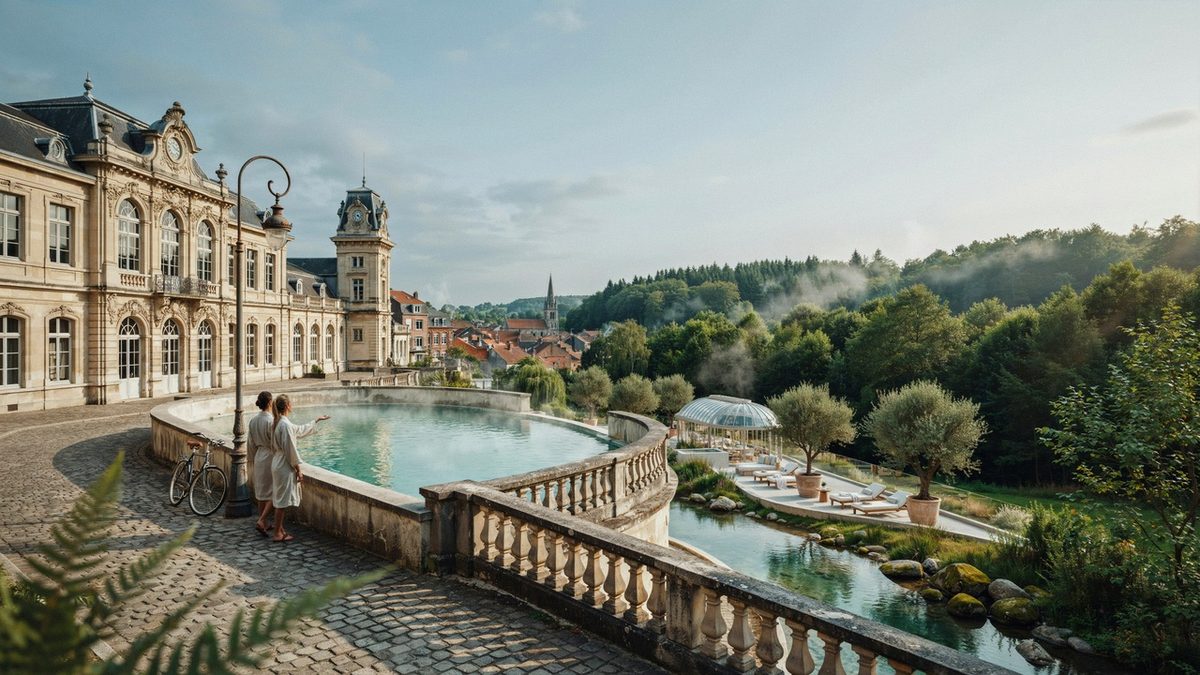
Image generated with Ai
In the heart of Belgium’s Ardennes region lies a town where water is not just a natural resource but the foundation of an entire identity. Spa has built its global reputation around mineral springs, wellness traditions and a centuries-old relationship between people and healing waters.
Long before modern wellness resorts became popular, visitors travelled to Spa seeking the benefits of its mineral-rich springs. The town became internationally recognised as a destination where health, relaxation and nature came together, eventually giving the word “spa” its worldwide meaning.
Today, Spa continues to attract travellers looking for wellness escapes, cultural discovery and outdoor adventures. Surrounded by forests, hills and natural landscapes, the Belgian town offers a rare combination of historic charm and modern relaxation.
The destination represents a different side of Belgium beyond famous cities such as Brussels, Bruges and Antwerp. Here, water remains the central character of the journey.
Advertisement
The story of Spa began with its natural springs, which attracted visitors searching for therapeutic benefits from mineral waters.
During earlier centuries, travellers arrived in the town to drink spring water as part of a health practice known as “taking the waters”. This tradition helped transform Spa from a small settlement into one of Europe’s most recognised wellness destinations.
The popularity of the springs increased as European aristocracy and international visitors began visiting the town. The reputation of Spa expanded beyond Belgium, creating a cultural movement centred around wellness travel.
| Period | Development |
|---|---|
| 16th–17th centuries | Mineral springs gain attention for health-related traditions |
| 18th century | Spa becomes a fashionable European wellness destination |
| 19th century | Thermal bathing and organised wellness facilities expand |
| Modern era | Spa develops into a global wellness and tourism destination |
Water became more than an attraction. It shaped the economy, architecture and cultural identity of the entire town.
Advertisement
Advertisement
Few destinations have influenced global travel language as strongly as Spa.
The town’s name became associated worldwide with relaxation, treatments and wellness experiences because of its historic reputation as a place for mineral water therapies.
As wellness tourism expanded internationally, the term “spa” began representing health resorts and relaxation facilities across the world.
However, Belgium’s Spa remains the original destination behind the concept. Its heritage connects modern wellness culture with centuries of European traditions.
The town’s influence demonstrates how a natural resource can create a powerful global identity.
Spa combines natural surroundings with a long history of health tourism.
Visitors today can experience modern thermal facilities while exploring the heritage that made the destination famous.
The town’s wellness attractions are closely connected with the surrounding Ardennes landscape, creating opportunities for relaxation as well as outdoor exploration.
| Attraction | Visitor Experience |
|---|---|
| Thermal wellness facilities | Modern relaxation treatments and mineral water experiences |
| Historic spring locations | Discover the origins of Spa’s water culture |
| Museum of the City of Water | Learn about the town’s relationship with springs |
| Ardennes forests | Hiking, cycling and nature exploration |
| Historic centre | Explore architecture linked to wellness tourism |
The combination of wellness and nature makes Spa attractive for travellers seeking slower, experience-focused journeys.
Although Spa’s history began with drinking mineral water, modern visitors experience the destination through contemporary wellness facilities.
Today’s thermal experiences combine traditional water-based relaxation with modern treatments, creating a destination suitable for international wellness travellers.
The town’s thermal centre continues to use local spring water as part of its identity, connecting modern tourism with centuries of tradition.
| Experience | Benefit for Travellers |
|---|---|
| Thermal pools | Relaxation surrounded by natural landscapes |
| Wellness treatments | Health and lifestyle-focused experiences |
| Sauna and relaxation areas | Stress reduction and recovery |
| Nature-based activities | Combining wellness with outdoor travel |
This approach reflects the growing global demand for wellness tourism, where travellers seek destinations that support physical and mental wellbeing.
Although water remains the foundation of Spa’s reputation, the town offers many other reasons to visit.
Its location in the Ardennes provides a scenic setting filled with forests, walking routes and outdoor activities.
The destination also attracts motorsport enthusiasts because of the famous Circuit de Spa-Francorchamps, one of Europe’s most recognised racing venues.
This creates an unusual combination where wellness travellers, nature lovers and motorsport fans can all find reasons to explore the area.
| Traveller Type | Recommended Experience |
|---|---|
| Wellness visitors | Thermal treatments and relaxation |
| History lovers | Museums and heritage sites |
| Nature travellers | Ardennes hiking trails |
| Motorsport fans | Circuit de Spa-Francorchamps |
| Slow travellers | Scenic walks and local culture |
Spa provides an excellent base for discovering Wallonia, the French-speaking region of southern Belgium.
Visitors can combine a wellness stay with nearby cultural attractions, historic towns and natural landscapes.
| Destination | Travel Appeal |
|---|---|
| Liège | Historic city with museums, architecture and gastronomy |
| Durbuy | Charming medieval town surrounded by nature |
| The Ardennes | Forest landscapes and outdoor adventures |
| Verviers | Heritage destination connected with water traditions |
| Mons | Historic city with cultural attractions |
The wider region allows travellers to create multi-day Belgian itineraries beyond the country’s most famous tourist routes.
Spa’s success reflects a broader transformation in European travel.
Modern visitors increasingly search for experiences focused on relaxation, nature and personal wellbeing rather than traditional sightseeing alone.
European destinations with thermal waters, forests and historic wellness traditions are benefiting from this shift.
| Trend | Tourism Impact |
|---|---|
| Health-focused holidays | More travellers seek restorative experiences |
| Nature tourism | Visitors combine wellness with outdoor activities |
| Slow travel | Longer stays focused on local discovery |
| Heritage tourism | Historic destinations gain renewed attention |
Spa represents this movement perfectly because its identity has always been connected with wellbeing.
Spa is famous for its mineral springs and its historic role as one of Europe’s earliest wellness destinations. The town gave its name to the global term “spa”.
Yes. Spa offers thermal experiences, historic attractions, outdoor activities and access to the scenic Ardennes region.
Spring, summer and early autumn are ideal for combining wellness experiences with hiking and outdoor exploration.
Yes. Travellers can explore museums, forests, local attractions and nearby destinations even without visiting wellness centres.
Yes. Its compact size makes it suitable for short wellness breaks, while longer stays allow exploration of the wider Wallonia region.
Spa’s uniqueness comes from its historic influence. It is not only a wellness destination but also the birthplace of a concept recognised worldwide.
Spa remains one of Belgium’s most distinctive travel destinations because its relationship with water has shaped centuries of history, tourism and culture.
The town demonstrates how a natural resource can become a global symbol of wellbeing. From historic mineral springs to modern thermal experiences, Spa continues to connect past traditions with contemporary travel trends.
For visitors seeking a European escape built around relaxation, heritage and nature, Belgium’s legendary water town offers an experience unlike any other.
Advertisement
Tags: Belgium hidden gems, Belgium wellness tourism, European spa towns, Spa Belgium travel, thermal tourism
Advertisement
Advertisement











Thursday, September 3, 2026
Thursday, September 3, 2026
Thursday, September 3, 2026
Thursday, September 3, 2026

Wednesday, September 2, 2026
Wednesday, September 2, 2026

Thursday, September 3, 2026

Thursday, September 3, 2026



