 Angana Dutta Angana Dutta
Image generated with Ai
Cambodia tourism shock is worse in 2026 as the country describes a 47.9% reduction in international visitors for the first half of the year with 1.75 million versus 3.36 million in the previous year. The shrinking of numbers is happening now and matters the most as it describes the dramatic new phase in slashing demand for global long-haul travel, and specifically travel from the United States and other major source markets. This is an immediate concern for tourists, airlines, and travel businesses as it indicates rising prices, declining demand, and new travel patterns that will affect the planning of trips, pricing of travel, and selection of travel destinations.
The Cambodia tourism shock is not an isolated event. It reflects a deeper shift in global travel demand.
Tourism is one of Cambodia’s four core economic pillars, alongside agriculture, construction, and exports. In 2025, the country generated $3.87 billion from 5.57 million visitors.
Now, a nearly 48% decline signals:
Advertisement
For travellers, this means changing prices, fewer crowds, and possible route adjustments.
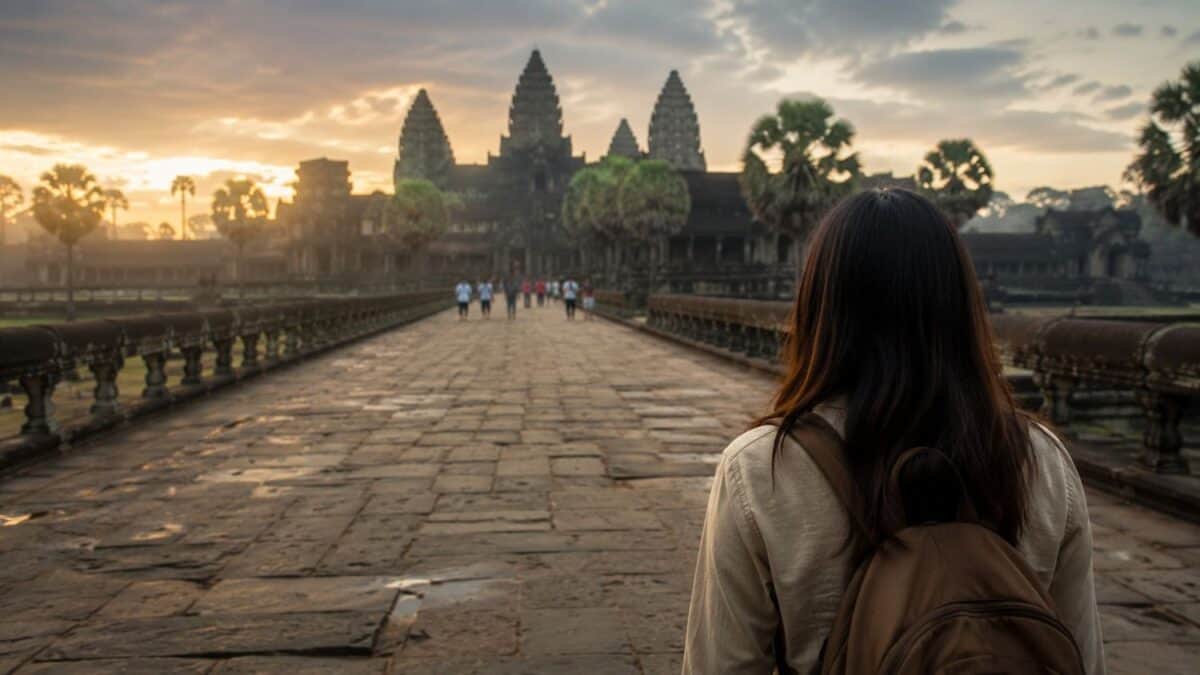
Image generated with Ai
Cambodia is facing one of the sharpest tourism declines in Asia.
The slowdown is directly impacting hotels, guides, and local businesses.
The United States remains a key long-haul market.
Advertisement
Advertisement
This signals declining long-haul travel appetite, driven by:
Although not in the headline, these markets are critical.
This shows a regional slowdown in outbound travel, compounding Cambodia’s tourism crisis.
The Cambodia tourism shock is closely tied to aviation economics.
| Factor | Impact on Travel |
|---|---|
| Rising jet fuel prices | Higher ticket costs |
| Middle East airspace disruptions | Longer flight routes |
| Reduced airline capacity | Limited seat availability |
| Weak long-haul demand | Fewer flights to Southeast Asia |
This creates a competitive disadvantage for Cambodia.

Image generated with Ai
Several lesser-known factors are accelerating the decline:
Negative global reports about online scams have impacted traveller trust.
Even minor disputes reduce cross-border tourism flows.
Travellers are cutting non-essential spending, including international trips.
Flights to Southeast Asia are becoming more expensive, especially from the US.
Angkor Wat, Cambodia’s flagship attraction, is seeing reduced footfall.
This is significant because:
A slowdown here indicates a system-wide tourism contraction.
If you are planning a trip to Cambodia in 2026, take these steps:
The Cambodia tourism shock highlights a broader shift:
Cambodia now faces the challenge of rebuilding trust, improving connectivity, and attracting high-value travellers.
The decline is due to economic slowdown, rising flight costs, reduced long-haul demand, and regional travel disruptions.
International arrivals fell by 47.9% in the first half of 2026, dropping to 1.75 million visitors.
Yes. Cambodia remains safe for tourists. In fact, fewer crowds and lower prices may offer a better travel experience.
The Cambodia tourism shock is not just a local issue. It reflects how global travel is becoming more sensitive to cost, safety perception, and connectivity. Cambodia’s reliance on a few key markets makes it vulnerable. Recovery will depend on airline strategy, pricing, and restoring traveller confidence.
Travellers should act smart and plan ahead. Cambodia still offers unmatched heritage, culture, and value. With fewer crowds and competitive pricing, this could be the best time to explore Angkor Wat before demand returns.
Advertisement
Advertisement
Advertisement













Saturday, September 5, 2026

Friday, September 4, 2026

Saturday, September 5, 2026

Saturday, September 5, 2026

Thursday, September 3, 2026

Wednesday, September 2, 2026

Saturday, September 5, 2026

Saturday, September 5, 2026


