 Somudranil Sarkar Somudranil Sarkar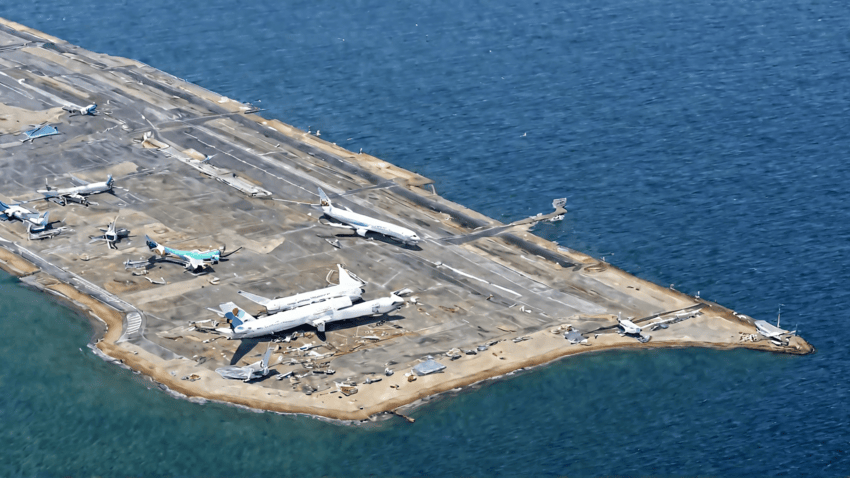
Image generated with Ai
It has been widely reported that Kansai International Airport, one of the world’s most expensive aviation projects, is facing a critical long-term challenge—sinking into the sea. The airport, which was built entirely on a man-made island in Osaka Bay, Japan, was originally designed to relieve pressure from Osaka International Airport. Since its opening in 1994, it has become Japan’s third-busiest airport, handling over 25 million passengers annually.
However, experts have pointed out that despite advanced engineering efforts, the airport has already sunk approximately 38 feet (11.5 meters) since its construction. Forecasts suggest that by 2056, it could sink another 13 feet (4 meters)—potentially reaching sea level if no significant interventions take place. The situation has raised major concerns not only for Japan’s aviation industry but also for global infrastructure projects that rely on land reclamation techniques.
At the time of its construction, Kansai International Airport was regarded as one of the most ambitious infrastructure projects ever undertaken. Initially built at a cost of $14 billion, the total price had risen to $20 billion (£16.1 billion) by 2008 after expansions, including the addition of two more runways and terminal buildings. Some experts estimate that, with inflation and modern costs factored in, the project would now cost as much as $40 billion (£32.2 billion) if built today.
The airport was considered a technological marvel when it first opened. It was one of the first fully operational airports built on artificial land, and despite major seismic activity in Japan, it remained fully operational after the devastating 1995 Kobe earthquake. The airport’s foundation included 900 hydraulic jacks, which allow engineers to adjust and compensate for uneven sinking. Its flexible asphalt runway was designed to absorb seismic shocks rather than crack under pressure.
Advertisement
However, while the airport was able to withstand earthquakes, the ongoing sinking issue has proved to be a far more complex and persistent challenge.
Infrastructure experts have attributed the airport’s sinking problem to its construction on reclaimed land—a technique that is notoriously unstable due to the alluvial clay seabed beneath it. Reports from the Institution of Civil Engineering (ICE) suggest that this loose clay foundation has been gradually compressing under the airport’s weight, forcing water out of the clay layers and causing the island to sink over time.
To mitigate the problem, engineers installed nearly one-meter-wide sand drains throughout the seabed before construction. These sand-filled columns were intended to accelerate the drainage process, helping compact the clay and stabilize the land. However, it has now been revealed that the clay had not fully settled when construction began, leading to continued sinking despite these preventive measures.
The gradual sinking of Kansai International Airport poses a serious risk to Japan’s aviation sector and infrastructure resilience. The airport is a critical hub for international travel, and any long-term disruption could impact:
In response to the flooding, authorities raised the seawall by 2.7 meters to prevent similar future incidents. However, experts have warned that more drastic interventions will be required to stop the airport from sinking completely by mid-century.
Kansai International Airport’s struggle with land subsidence raises important questions for future airport and infrastructure projects worldwide. Many major aviation hubs have been built or expanded using land reclamation techniques, including Hong Kong International Airport, Singapore Changi Airport, and Dubai’s Al Maktoum International Airport.
The lessons from Kansai suggest that reclaimed land projects require significantly longer soil settlement periods before construction begins. Future projects may also need to factor in rising sea levels as part of their design, particularly with climate change accelerating coastal erosion and extreme weather patterns.
Aviation planners and airport authorities worldwide may need to reassess the risks of building large-scale infrastructure on artificial islands—particularly if Kansai’s ongoing sinking problem remains unresolved.
Despite the challenges, some potential solutions have been suggested by experts:
However, none of these options come without major financial and logistical challenges.
For those who frequently travel through Kansai International Airport, it is essential to remain aware of the potential disruptions that could arise in the coming years. Airlines operating at KIX might introduce contingency plans, rerouted services, or alternative hubs if major issues occur.
Some practical steps that passengers and airlines can take include:
Kansai International Airport remains one of the most ambitious aviation engineering projects ever completed, yet its long-term sustainability is now under question. While it has stood resilient against earthquakes, its gradual sinking into the sea poses a unique challenge that requires urgent attention.
The aviation industry will be closely watching how Japanese authorities manage this billion-dollar challenge, as it could shape how future coastal and artificial island airports are planned worldwide. Whether through continued engineering innovation, advanced stabilization methods, or alternative expansion strategies, the next few decades will determine whether Kansai International Airport remains a marvel of engineering or a cautionary tale of infrastructure planning.
Advertisement
Advertisement
Advertisement













Saturday, September 5, 2026

Friday, September 4, 2026

Saturday, September 5, 2026

Saturday, September 5, 2026

Thursday, September 3, 2026

Wednesday, September 2, 2026

Saturday, September 5, 2026

Saturday, September 5, 2026


