
A Journey Through Historic Rails and Nordic Fjords

Updated
Published
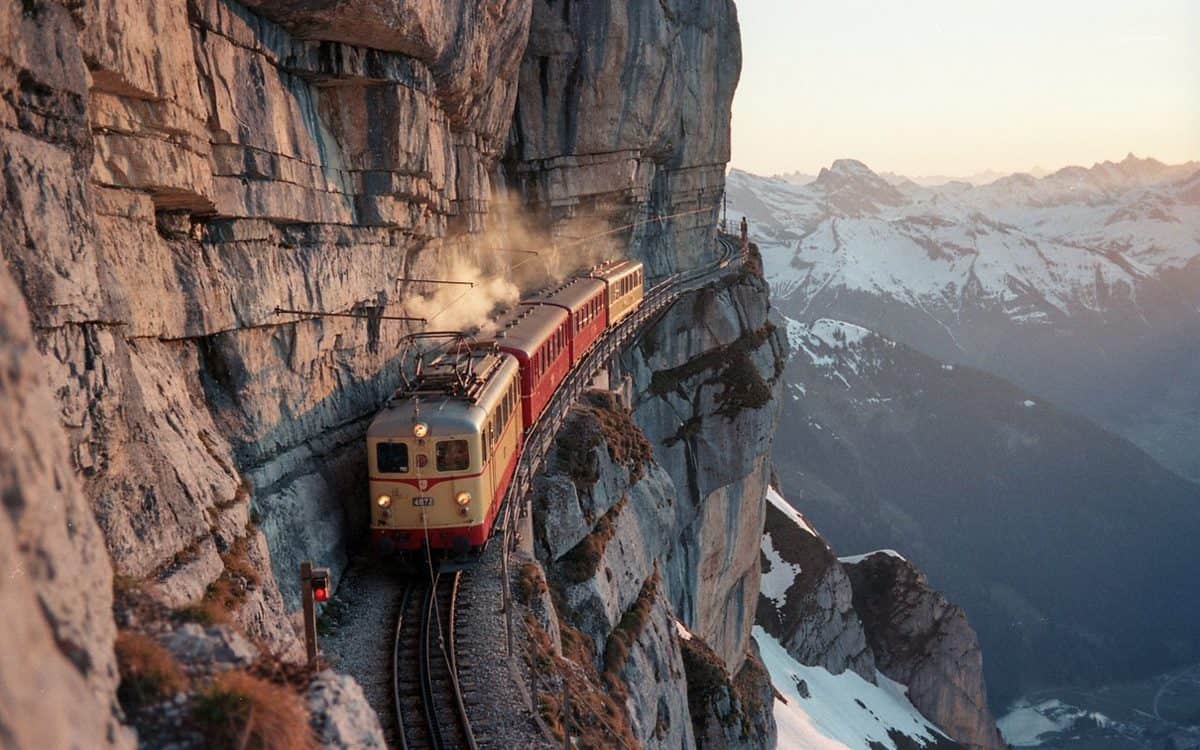
Vintage railways and old mountain tunnels are a favorite of tourists who want an alternative to modern high-speed trains in many ways, but also very different destinations around the world. Moreover, these two transport hits are examples of the early development of technology and nature, and a way to experience the past when people fought with incredible tenacity and smartly designed structures to overcome daunting obstacles.
Vintage rail systems and historic mountain engineering continue to captivate global travellers seeking a slower, mechanically immersive alternative to modern high-speed bullet trains across remarkably diverse international destinations. These living testaments to human ingenuity bridge the gap between early industrial progress and breathtaking natural geography, offering a profound glimpse into how previous generations conquered seemingly impassable terrain through sheer mechanical tenacity and brilliant civil design.
Why Do Historic Rack Railways Still Dominate High-Alpine Terrain?
The engineering marvels of the Bernese Oberland and central Swiss Alps rely on specialized rack-and-pinion systems to conquer vertical gradients that would completely immobilise standard adhesion locomotives through continuous wheel slippage on sheer ice and rock faces. Early mechanical pioneers discovered that smooth iron rails lacked sufficient friction when confronted with the punishing inclines leading up to high-altitude alpine passes, prompting the ingenious integration of a toothed middle rail that securely engages with heavy driving gears underneath the carriage. This robust mechanical linkage allows vintage electric motor units to safely haul passengers up sheer vertical drops exceeding twenty five percent without losing traction during unpredictable mountain weather events. Tourists embarking on these century-old open air funicular networks experience a seamless blend of historical preservation and industrial prowess as overhead catenary lines supply raw electrical power to vintage motors chugging faithfully along the precipitous limestone cliffs. Preservation societies invest heavily in maintaining these fragile historical artefacts to ensure that future generations can witness the raw power of early electrical engineering operating flawlessly within pristine glacial environments.
What Makes The Flåmsbana Descent An Absolute Masterpiece Of Civil Engineering?
Plunging nearly nine hundred meters from the desolate mountain station of Myrdal down to the deep waters of the Aurlandsfjord, the legendary Flåm Railway represents an extraordinary triumph over inhospitable Scandinavian geography and unforgiving natural terrain. Construction workers spent decades painstakingly carving twenty tunnels through solid rock formations almost entirely by hand, creating a daring rail corridor where eighty percent of the entire route operates on an exceptionally steep five point five percent gradient. Heavy duty electric traction units equipped with redundant mechanical and dynamic braking systems manage the perilous descent, ensuring that carriages navigate tight gorge curves and roaring waterfalls safely without risking catastrophic brake fade. Passengers peering out of vintage windows witness a dramatic ecological transition from barren, snow-swept alpine plateaus down into lush, sheltered valleys while listening to the rhythmic hum of electrical resistors working tirelessly to control the downward momentum. This breathtaking infrastructural achievement continues to draw global engineering enthusiasts who marvel at the sheer audacity required to construct a reliable rail link across such an uncompromising wilderness.
Advertisement
Advertisement
How Do Soviet-Era Aerial Cable Cars Defy Gravity In Chiatura?
Tucked deep inside the rugged river gorges of western Georgia, the remarkable industrial mining town of Chiatura preserves a sprawling, gravity-defying network of mid-century aerial passenger cable cars and steep funicular lines designed to transport workers across vast chasms. Originally established during the Soviet era to eliminate grueling daily walks up to high-altitude manganese deposits, these brutalist ropeway systems utilized massive, centralized electrical winch houses to suspend public cabins high above the valley floor. Although many of the original rust-accented cabins have undergone modern retrofits or safety overhauls, the network retains its striking industrial aesthetic, featuring weathered concrete terminal stations clinging precariously to sheer cliff edges. Travellers venturing into this remote region experience a surreal journey through time as vintage suspension cables groan softly while ferrying passengers smoothly across jaw-dropping aerial vistas above the rushing river below. This fascinating remnant of industrial heritage highlights an era when bold vertical transportation solutions were engineered out of absolute logistical necessity rather than modern tourist novelty.
“This fascinating deep-dive into vintage rail engineering truly highlights why heritage transit routes remain entirely irreplaceable in our modern era. Exploring the mechanical ingenuity behind Swiss rack systems, Norwegian fjord descents, Soviet-era ropeways, and classic steam lines offers a refreshing antidote to sterile high-speed commuting. These historic networks do much more than simply transport passengers across difficult terrain; they preserve the beating heart of early industrial history. By supporting local preservation efforts and experiencing these mechanical marvels firsthand, travellers help safeguard vital technological heritage for future generations to appreciate and cherish.”
Advertisement
Advertisement
— Anup Kumar Keshan, Founder and Editor-in-Chief, Travel And Tour World
Why Do Heritage Steam Lines Remain Vital To New Zealand Rail Preservation?
Navigating the dramatic southern landscapes of New Zealand, historic heritage rail corridors such as the Kingston Flyer showcase the enduring legacy of nineteenth-century colonial civil engineering through hand-built rock cuttings and vintage timber viaducts. These preserved regional routes rely on classic heavy-machinery steam locomotives—including iconic vintage engine classes—to haul authentic, polished timber-bodied carriages across sprawling high-country terrain flanked by pristine alpine lakes. Preservationists painstakingly maintain every single moving piston, valve, and coupling rod using traditional blacksmithing techniques to ensure the mechanical integrity and authentic rhythmic cadence of the steam era remain completely undisturbed. Travellers stepping aboard these vintage carriages enjoy an unhurried, panoramic journey that highlights the pioneering spirit of early railway builders who linked isolated pastoral communities long before modern highways existed. These living museums of rail technology preserve irreplaceable mechanical history while providing deep educational insights into how mechanized transport fundamentally transformed isolated geographical frontiers.
Advertisement
Advertisement
Company details and filings for Interlink (UK) Ltd can be viewed on the official Companies House GOV.UK portal.
| Destination & Route | Traction Technology | Key Engineering Milestone | Primary Experience |
| Switzerland Bernese Oberland | Electric rack-and-pinion & open-air funiculars | Toothed center rails conquering gradients exceeding 25% | Scaling alpine passes and glacial cliffs via historic overhead catenary networks |
| Norway Flåmsbana | Heavy-duty electric units with dual braking | 80% of route on a 5.5% gradient; 20 tunnels hand-carved through rock | Descending 863 meters from Myrdal mountain plateaus down to the Aurlandsfjord |
| Georgia Chiatura | Soviet-era aerial cable cars & industrial funiculars | Centralized electrical winches spanning deep river gorges | Riding brutalist mid-century cabins connecting valley floors to mining plateaus |
| New Zealand Kingston Flyer | Classic steam engines (Ab class) | Hand-built rock cuttings, timber viaducts, and vintage wooden carriages | Traversing high-country terrain along the scenic southern shores of Lake Wakatipu |
Preserving these vintage mechanical marvels are important to future generations that want to reminisce in the bold innovations of the nineteenth and twentieth centuries. While the high-tech network of the current times continues to thrive, these heritage lines bring out an educational aspect to the younger generations that modern bullet trains cannot compete with. Therefore, preserving these local railways ensures the legacy of technological history will continue to thrive despite the passage of time. The old-world charm serves as a reminder that modern-day obstacles and difficult terrain are made possible by the hard work of the past.
These legacy railway lines continue to exist because of the passionate engineers and the communities willing to keep old locomotives running in numbers despite the financial challenges. As a result, today’s world is witness to the marvel of the industrial past that continues to thrill and captivate nature lovers who dare to explore the world on wheels. The vintage equipment continues to serve as open-air museums captivating thousands of curious visitors every year, all because of the perseverance of the local community in keeping these links between wildernesses alive.
Advertisement
