
Hundreds of Travelers Impacted Over Asia as 3,744 Delays and 268 Cancellations Hit Mumbai, Jeddah and More Airports

Updated
Published
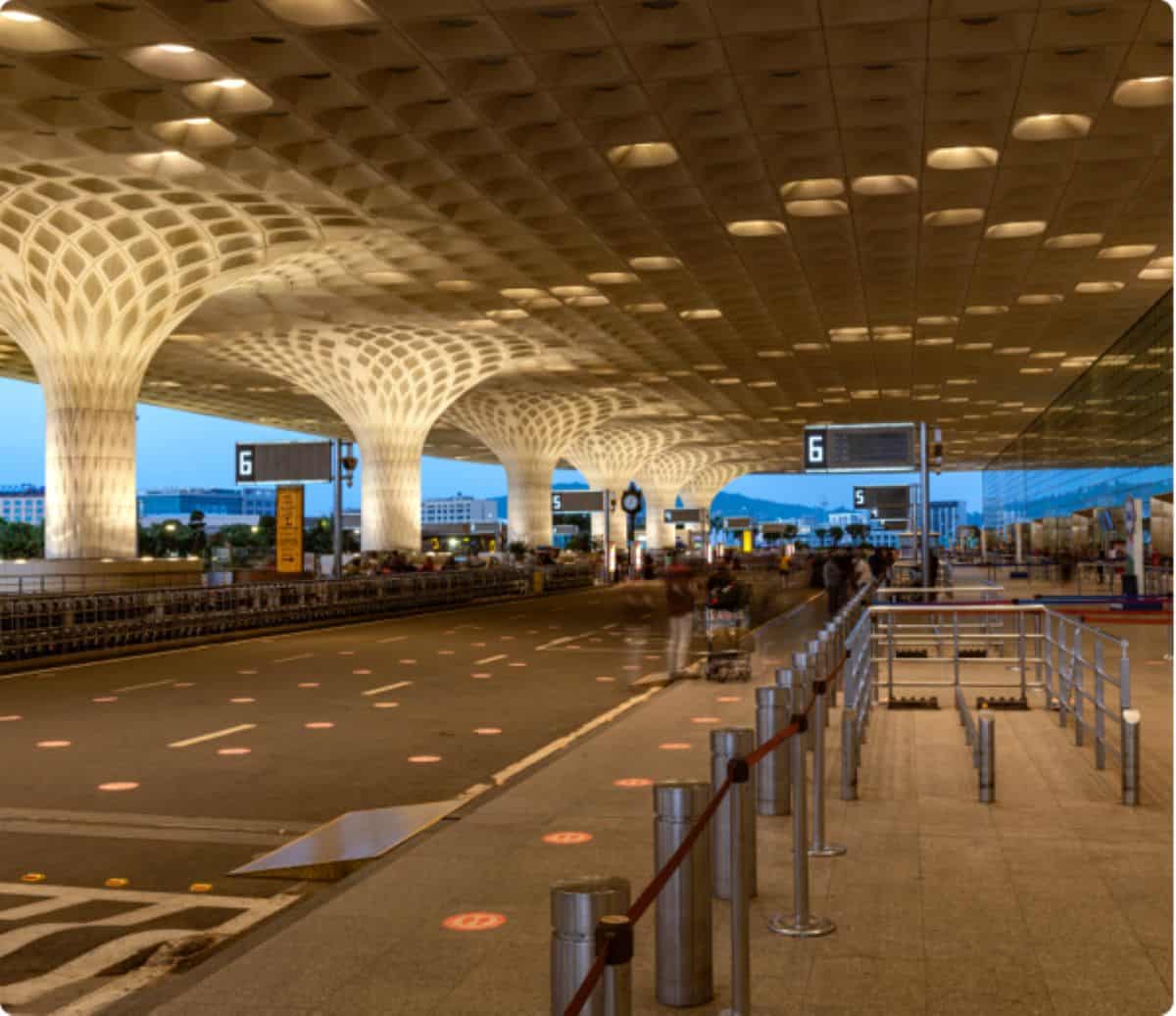
3,744 delays and 268 cancellations hampered airline operations at key airports, including Mumbai, Jeddah, and numerous other international hubs, affecting hundreds of travelers around Asia. Passengers were affected by the extensive disruption because of the operating strain on crowded aviation networks, which resulted in schedule changes for numerous airlines and airports. Major cities also experienced considerable flight delays due to difficulties with aircraft movements, connections, and day-to-day operations. Due to the rapid impact of delays at strategic places on broader routes, the incident demonstrated how linked regional air travel has become. Travelers had to deal with lengthier wait times and altered travel schedules, but airlines continued to oversee customer services.
Which Asian Airports Recorded the Highest Flight Disruptions Today?
The largest concentration of delays was reported at some of Asia’s busiest international gateways.
Shanghai Pudong International Airport in China recorded the highest delay volume among the listed airports, with 318 delays and 12 cancellations. The airport remained one of the most affected points in the regional aviation network.
Tokyo Haneda Airport in Japan followed with 219 delays and 5 cancellations, while Jakarta Soekarno-Hatta International Airport in Indonesia reported 215 delays and 15 cancellations.
Advertisement
Advertisement
India’s major airports also experienced significant disruption. Indira Gandhi International Airport in Delhi recorded 174 delays and 9 cancellations, while Chhatrapati Shivaji International Airport in Mumbai reported 88 delays and 8 cancellations. Other Indian hubs including Bengaluru International Airport recorded 73 delays and 4 cancellations, while Rajiv Gandhi International Airport in Hyderabad reported 42 delays and 4 cancellations.
In Southeast Asia, Suvarnabhumi Bangkok International Airport recorded 148 delays and 5 cancellations, while Tan Son Nhat International Airport in Ho Chi Minh City, Vietnam reported 147 delays and 4 cancellations. Noi Bai International Airport in Hanoi recorded 157 delays and 5 cancellations.
Advertisement
Advertisement
China continued to account for a large share of the regional disruption. Guangzhou Baiyun International Airport recorded 161 delays and 2 cancellations, while Beijing Capital International Airport reported 85 delays and 13 cancellations. Beijing Daxing International Airport recorded 90 delays and 6 cancellations, while Shenzhen Bao’an International Airport saw 112 delays and 4 cancellations.
How Were Airlines from Asia Affected by Today’s Disruptions?
The impact extended across multiple carriers, with both full-service and low-cost airlines experiencing delays and cancellations.
China Eastern recorded the highest number of cancelled flights among the listed airlines, with 38 cancellations (1%) and 296 delays (12%). Air China followed with 25 cancellations (1%) and 90 delays (5%).
Regional carriers also faced operational challenges. Batik Air recorded 16 cancellations (5%) and 85 delays (26%), while Hainan Airlines reported 14 cancellations (1%) and 21 delays (2%).
Indian airlines experienced notable disruption levels. SpiceJet recorded 10 cancellations (12%) and 28 delays (35%), while Air India reported 7 cancellations (1%) and 62 delays (10%). IndiGo, despite recording only 5 cancellations (0%), experienced 197 delays (10%), making it one of the most delayed carriers in the data set.
Other affected airlines included AirAsia, with 6 cancellations (1%) and 94 delays (19%), and Vietnam Airlines, which recorded 7 cancellations (1%) and 70 delays (18%).
Advertisement
Advertisement
Japanese carriers also reported disruption. Japan Airlines recorded 2 cancellations (0%) and 104 delays (13%), while All Nippon reported 1 cancellation (0%) and 88 delays (15%).
Chinese regional carriers were also impacted. Juneyao Airlines recorded 2 cancellations (0%) and 78 delays (21%), while China Express Airlines reported 1 cancellation (0%) and 78 delays (17%).
Which Countries and Cities of Asia Were Most Affected?
The disruption pattern showed pressure across several major aviation markets.
China Experiences Wide Network Pressure
China recorded some of the largest disruption figures, with multiple airports reporting high delay numbers. Shanghai, Guangzhou, Beijing, Shenzhen, Chengdu, Chongqing, Hangzhou, Nanjing, Wuhan and Xi’an all recorded delays and cancellations.
Key figures included:
- Shanghai Pudong: 318 delays, 12 cancellations
- Guangzhou Baiyun: 161 delays, 2 cancellations
- Beijing Capital: 85 delays, 13 cancellations
- Beijing Daxing: 90 delays, 6 cancellations
- Shenzhen Bao’an: 112 delays, 4 cancellations
- Chongqing Jiangbei: 97 delays, 4 cancellations
- Chengdu Tianfu: 61 delays, 4 cancellations
- Xi’an Xianyang: 69 delays, 4 cancellations
The scale across multiple Chinese airports indicates widespread network pressure rather than disruption concentrated at a single location.
Advertisement
Advertisement
India Sees Delays Across Major Domestic and International Gateways
India’s aviation network also experienced significant delays.
Delhi’s Indira Gandhi International Airport recorded 174 delays and 9 cancellations, while Mumbai’s Chhatrapati Shivaji International Airport recorded 88 delays and 8 cancellations.
Bengaluru recorded 73 delays and 4 cancellations, and Hyderabad recorded 42 delays and 4 cancellations.
Airlines including IndiGo, Air India, SpiceJet and Akasa Air all reported operational impacts.
Southeast Asia Faces Disruption at Major Hubs
Indonesia, Thailand and Vietnam experienced notable pressure.
Jakarta’s Soekarno-Hatta International Airport recorded 215 delays and 15 cancellations, the highest cancellation figure among the airports listed.
Advertisement
Advertisement
Bangkok’s Suvarnabhumi International Airport recorded 148 delays and 5 cancellations, while Vietnam’s Hanoi and Ho Chi Minh City airports recorded 157 delays and 5 cancellations and 147 delays and 4 cancellations respectively.
Gulf-Linked Asian Routes Also Report Pressure
Airports connecting Asia with the Middle East also experienced disruptions. Dubai International Airport recorded 116 delays and 8 cancellations, while Hamad International Airport in Doha recorded 66 delays and 3 cancellations.
Saudi Arabia’s airports also saw impacts, including King Abdulaziz International Airport with 120 delays and 12 cancellations, King Khalid International Airport with 96 delays and 9 cancellations, and Abha Regional Airport with 16 delays and 8 cancellations.
| Airport (IATA) | Origin cancelled % | Destination cancelled % |
|---|---|---|
| Abha Regional (AHB) | 9% | 5% |
| Queen Alia Int’l (AMM) | 1% | — |
| Suvarnabhumi Bangkok Int’l (BKK) | 0% | 0% |
| Bengaluru Int’l (BLR) | — | 0% |
| Chatrapati Shivaji Int’l (BOM) | 0% | 1% |
| Guangzhou Baiyun Int’l (CAN) | — | 0% |
| Jakarta-Soekarno-Hatta Int’l (CGK) | 1% | 0% |
| Chongqing Jiangbei Int’l (CKG) | 0% | — |
| Changsha Huanghua Int’l (CSX) | — | 0% |
| Chengdu Shuangliu Int’l (CTU) | 0% | 0% |
| Da Nang Int’l (DAD) | 1% | 2% |
| Indira Gandhi Int’l (DEL) | 0% | 0% |
| Hamad Int’l (DOH) | — | 0% |
| Dubai Int’l (DXB) | 0% | 0% |
| Noi Bai Int’l (HAN) | 0% | 0% |
| Hangzhou Xiaoshan Int’l (HGH) | 0% | 0% |
| Tokyo Int’l Haneda (HND) | 0% | 0% |
| Rajiv Gandhi Int’l (HYD) | 0% | 0% |
| Istanbul Airport (IST) | 0% | 0% |
| King Abdulaziz Int’l (JED) | 1% | 1% |
| Kunming Changshui Int’l (KMG) | 1% | 0% |
| Kuala Namu International (KNO) | — | 2% |
| Guiyang Longdongbao (KWE) | 0% | — |
| Allama Iqbal Int’l (LHE) | 3% | 3% |
| Lanzhou Zhongchuan International (LHW) | 1% | 1% |
| Lüliang (LLV) | 42% | — |
| Manila Int’l (MNL) | 0% | — |
| Ningbo Lishe Int’l (NGB) | — | 1% |
| Nanjing Lukou Int’l (NKG) | 1% | 1% |
| Nanning Wuxu Int’l (NNG) | 2% | 2% |
| Beijing Capital Int’l (PEK) | 1% | 0% |
| Beijing Daxing International Airport (PKX) | 0% | 0% |
| Shanghai Pudong Int’l (PVG) | 0% | 0% |
| King Khalid Int’l (RUH) | 1% | 0% |
| Tan Son Nhat Int’l (SGN) | 0% | 0% |
| Shijiazhuang Zhengding International Airport (SJW) | 2% | 2% |
| Shenzhen Bao’an Int’l (SZX) | 0% | 0% |
| Sanya Phoenix Int’l (SYX) | 3% | 2% |
| Qingdao Jiaodong Int’l (TAO) | 1% | 1% |
| Chengdu Tianfu Int’l (TFU) | 0% | 0% |
| Taipei Songshan (TSA) | 2% | — |
| Sultan Hasanuddin Int’l (UPG) | — | 1% |
| Wuhan Tianhe (WUH) | 1% | 1% |
| Wuxi (WUX) | 1% | — |
| Xi’an Xianyang Int’l (XIY) | 0% | 0% |
What Can Affected Passengers Do Now?
Passengers travelling through affected airports in Asia should take several steps to manage possible schedule changes.
- Travellers should first check their latest flight status through the airline’s official website or mobile application before leaving for the airport. Airport information displays should also be monitored regularly because departure times can change during periods of network disruption.
- Passengers with connecting flights should allow additional transfer time, particularly when travelling through heavily affected hubs such as Shanghai Pudong, Tokyo Haneda, Jakarta Soekarno-Hatta, Delhi, Bangkok and Guangzhou.
- Those facing cancellations should contact airlines directly for rebooking options, alternative routes or updated departure information. Keeping booking confirmations, boarding passes and communication records can help passengers manage any claims or travel arrangements.
- Travellers should also arrive earlier than usual at airports experiencing higher disruption levels, as check-in, security and boarding procedures may take longer when airlines adjust schedules.
- Asia’s aviation network remains highly interconnected, meaning delays at major hubs can quickly affect aircraft rotations and connecting services across multiple countries. Today’s figures show that disruption was spread across several markets, with thousands of passengers affected by delayed and cancelled flights across the region.
Data Verification Notice
The data has been extensively curated by our editorial team using real-time aviation figures recorded on 17 September 2026 at 2:50 pm ET USA (18 September 2026, 12:20 am IST).
Primary Source: FlightAware.
Verification Protocol: All statistics have been independently reviewed and cross-checked by our human editorial desk. Timestamped records, data logs and feed snapshots are securely archived internally to support historical accuracy and editorial transparency.
Note: Real-time flight-tracking figures reflect active airspace and operational data. Minor variations may occur when compared with information displayed at individual airport terminals or airline departure gates.
You can check our earlier reports on flight disruptions over Asia. Check here to read our earlier coverage.
Advertisement
Verified by Rana Pratap
