
Spain’s Electric Planes Could Transform Island Travel as Barcelona and Ibiza Lead Zero Emission Aviation Breakthrough

Published
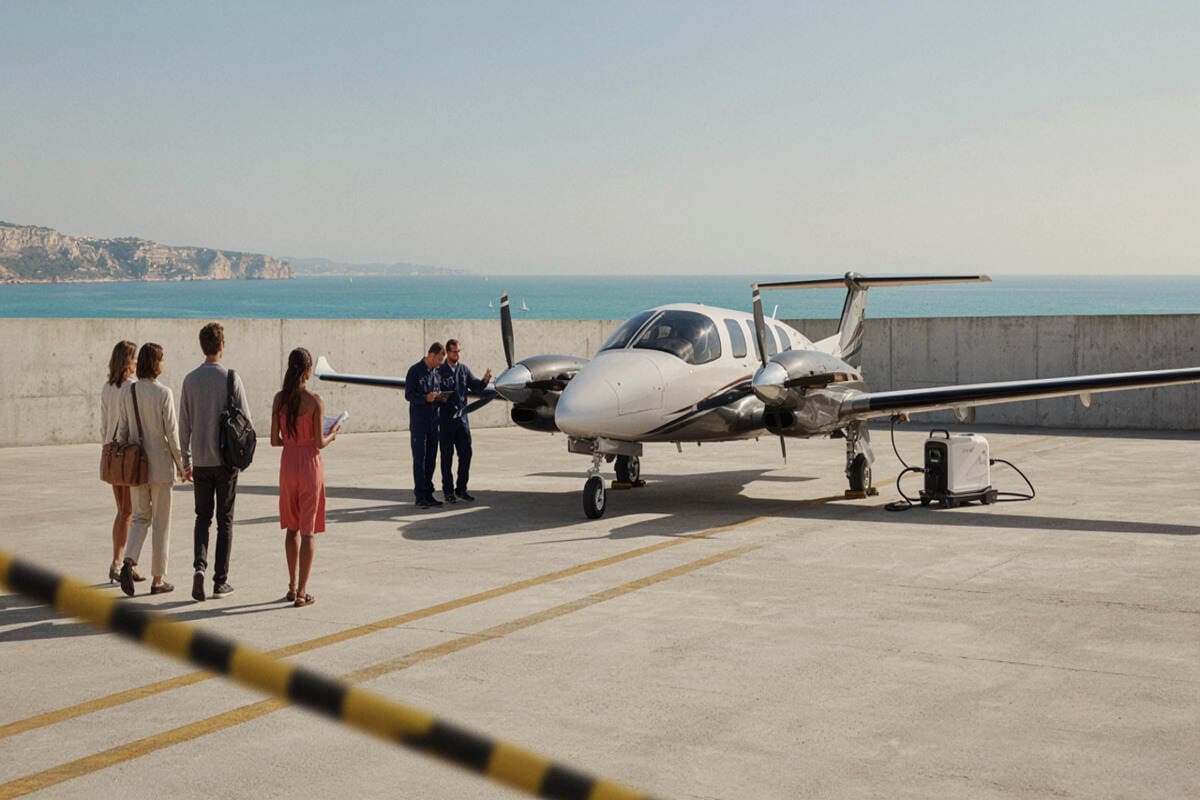
Image generated with Ai
Spain sees electric flights as a new way to travel from Barcelona to Ibiza. Electric flights between Barcelona and Ibiza could be a part of Europe’s future air network as Spain tries to see the benefits of using electric planes for regional travel. Engineers are developing technology to change the way passengers reach islands from the mainland, by having planes with electric engines instead of today’s gas powered planes.
The emerging technology is focused on smaller aircraft rather than large commercial jets. Early electric planes are expected to carry fewer than 20 passengers and operate on short routes where battery technology can currently provide practical performance. While Barcelona–Ibiza has been identified as a possible future market, no electric passenger service has been launched and travellers cannot currently purchase tickets for an electric flight between the two destinations.
Advertisement
Advertisement
Spain’s Island Routes Offer Ideal Testing Ground for Electric Aviation Growth
Spain’s unique geography makes it an attractive location for the development of electric aviation. The country has numerous short-distance connections between coastal cities, islands and regional airports, creating conditions where smaller zero-emission aircraft could eventually replace conventional planes.
Routes linking mainland Spain with destinations such as Ibiza represent the type of market where electric aircraft could have long-term potential. Short regional flights often involve smaller passenger numbers and shorter distances, making them more suitable for early electric aviation technology.
Advertisement
Advertisement
However, the Barcelona–Ibiza connection also highlights the current limitations of battery-powered aircraft. The distance between the two destinations is longer than the range of many fully electric aircraft concepts currently being developed. Future operations on such routes may depend on improved battery technology or the introduction of hybrid-electric aircraft that combine electric systems with additional power sources.
Existing Aircraft Could Be Converted Into Future Electric Planes
A major part of Spain’s electric aviation development approach involves modifying existing small aircraft rather than creating completely new aircraft designs.
Advertisement
Advertisement
Engineers are exploring how conventional aircraft can be transformed by replacing traditional propulsion systems with electric motors and battery units. This approach could help accelerate the introduction of cleaner aircraft by reducing the time and complexity involved in developing entirely new models.
Electric conversions could offer a practical pathway for regional aviation operators looking to reduce emissions. Instead of waiting for large-scale aircraft manufacturers to deliver new electric models, existing aircraft platforms could potentially be adapted for low-carbon operations.
The initial focus remains on smaller aircraft designed for fewer than 20 passengers. These planes would primarily serve regional routes where demand does not require large aircraft but where reliable air connectivity remains important.
Fully Electric Aircraft Expected to Begin With Short Regional Flights
The first generation of fully electric passenger aircraft is expected to operate on very short routes. Current development targets focus on flights covering approximately 100 to 150 kilometres.
These aircraft could support regional mobility by connecting smaller airports, remote communities and nearby destinations. Electric aircraft may also provide opportunities for airports that currently have limited flight options due to operational costs associated with traditional aircraft.
Short-distance flights are considered the most realistic starting point because electric aircraft face significant energy limitations. Longer journeys require larger batteries, but heavier batteries increase aircraft weight and reduce efficiency.
Advertisement
Advertisement
For routes requiring greater distances, hybrid-electric propulsion is being studied as a potential solution. By combining electric motors with another energy source, hybrid aircraft could extend operational range while still delivering improvements in fuel efficiency and emissions compared with conventional aircraft.
Spain Moves Toward Testing Electric Aircraft Technology
Electric aviation has not yet entered commercial passenger service in Spain. Current development efforts remain focused on testing aircraft systems, evaluating battery performance and ensuring that electric propulsion technology meets strict aviation safety standards.
Experimental flight approvals have allowed engineers to begin testing aircraft performance in real operating conditions. These trials will provide important information about reliability, energy consumption, handling characteristics and operational requirements.
Before passengers can board electric aircraft, manufacturers must complete extensive certification procedures. Aviation authorities require detailed evidence that aircraft, propulsion systems and battery technologies meet safety regulations.
Certification is expected to be one of the most important steps in bringing electric aircraft into commercial operations. Even if the technology proves successful during testing, passenger services will depend on regulatory approval and the ability of operators to integrate electric aircraft into existing aviation networks.
Battery Weight and Airport Charging Remain Major Challenges
Battery technology remains the biggest obstacle preventing widespread electric aviation adoption. Aircraft require large amounts of energy during take-off and flight, but batteries currently store less energy compared with traditional aviation fuels.
Advertisement
Advertisement
Increasing battery capacity can improve flight range, but it also increases aircraft weight. A heavier aircraft requires more energy, creating a complex challenge for engineers trying to balance passenger capacity, distance and efficiency.
The challenge becomes even greater when airlines aim to carry more passengers or operate longer routes. Smaller aircraft with fewer passengers are currently considered the most realistic option for early commercial electric aviation.
Airports will also need significant upgrades to support electric aircraft operations. Charging infrastructure, electrical capacity and turnaround procedures must be developed to allow aircraft to recharge quickly and efficiently between flights.
Electric Flights Could Create a New Era for Regional Travel in Spain
If engineers overcome challenges related to battery performance, aircraft certification and airport infrastructure, Spain could become one of Europe’s leading markets for electric passenger aviation.
The country’s extensive network of islands, coastal destinations and regional airports provides a strong environment for testing and introducing new aircraft technologies. Electric planes could eventually create cleaner connections between smaller communities while reducing aviation emissions.
For travellers, however, electric flights remain a future possibility rather than an immediate travel option. The Barcelona–Ibiza route represents the type of connection that could benefit from electric aviation in the coming years, but commercial operations will depend on successful testing, regulatory approval and continued advances in battery technology.
Advertisement
Advertisement
The development of electric aircraft marks a major shift in regional aviation. While widespread adoption will take time, Spain’s short-distance travel markets could become an important proving ground for the next generation of cleaner air transport.
Advertisement
