
France Teams Up with Spain And More Boost Rail Routes Across Europe For Seamless Green Travel

Updated
Published
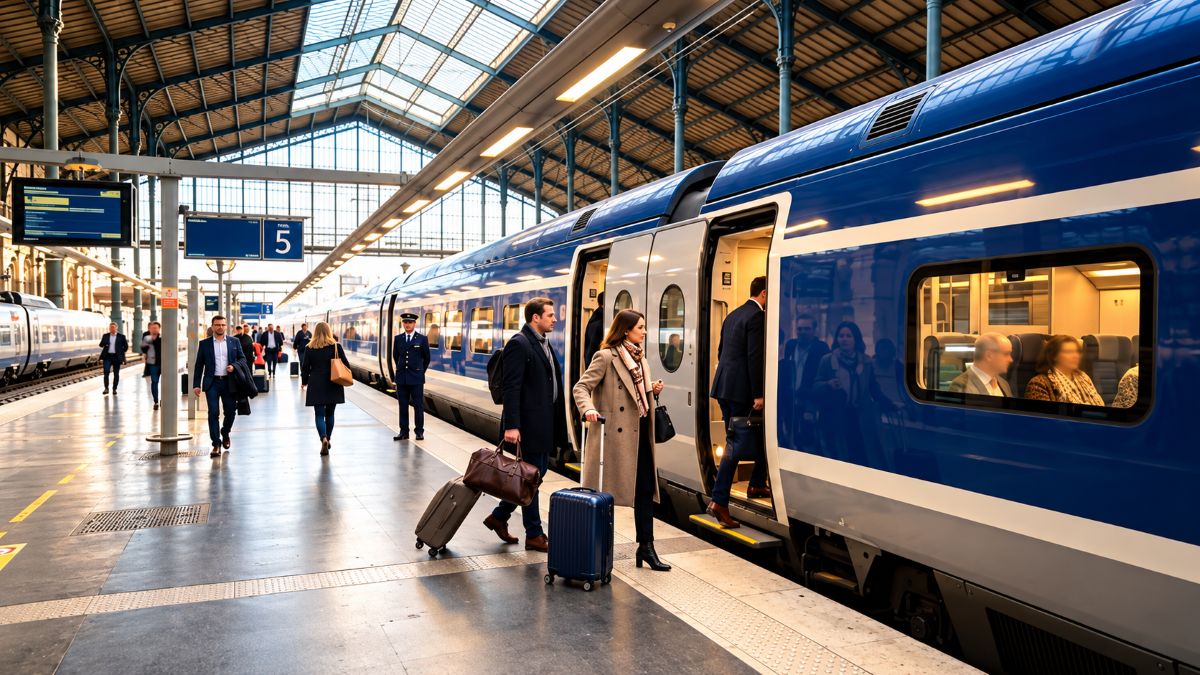
International railway authorities across Western Europe have confirmed an ambitious multilateral treaty designed to unite fractured cross-border rail systems into a single, high-frequency network. France has joined forces with Spain, Germany, and Italy to remove historic operational bottlenecks that have long complicated continental journeys. Transport ministries and national carriers have committed substantial capital reserves towards standardising electrical voltages, digital signalling mechanisms, and terminal ticketing platforms. This coordinated deployment provides holidaymakers with an authentic, low-emission alternative to carbon-heavy short-haul aviation corridors across the European mainland.
Travellers will witness the introduction of modern overnight sleeper links alongside daytime express routes connecting major cultural centres without requiring frustrating multi-hub transfers. By aligning public railway infrastructure with forward-thinking regional transport policies, participating governments aim to reduce intercity journey times while providing panoramic travel corridors through countryside landscapes. Early scheduling models demonstrate that business travellers and leisure wanderers can reach Iberian and Mediterranean destinations comfortably overnight. Industry specialists view this coordinated trans-European agreement as a vital milestone towards achieving continental decarbonisation objectives and modernising public transport infrastructure.
Establishing A Truly Unified European Transit Framework
For decades, international rail tourism across continental boundaries suffered from disjointed scheduling frameworks and disparate track gauges that forced long waits at border junctions. The newly formalised alliance between the French transport sector, Spanish operators, and adjacent European partner networks directly dismantles these historic boundaries through synchronised capital investments. Engineers have prioritised the implementation of unified rolling stock capable of transitioning effortlessly between different electrical feeds and modern signalling installations.
Experienced transport planners recognise that technical compatibility represents only half the challenge of international travel organisation. The new cross-border initiative therefore mandates integrated timetables across all participating national carriers, eliminating stressful tight connections for international tourists. Travellers can now plan continuous multi-country journeys through streamlined online reservation inventories that combine local itineraries, luggage regulations, and seat assignments into unified booking confirmations.
Advertisement
Advertisement
Expanding Continental Routes And Border Connectivity
The operational rollout focuses on strengthening high-traffic holiday corridors that historically suffered from limited direct options. Enhanced daytime services will connect Paris, Lyon, Barcelona, and Madrid, enabling passengers to traverse dynamic landscapes without airport security queues. Furthermore, revived sleeper services will link German, French, and Italian transit hubs directly with Mediterranean ports, restoring the golden age of European sleeper trains with private ensuite berths, high-speed wireless connectivity, and fine dining options.
| Route Corridor | Target Journey Time | Frequency Profile | Primary Border Crossings | Travel Experience Focus |
|---|---|---|---|---|
| Paris to Madrid Express | 8 hours 45 minutes | Twice Daily | Hendaye and Irun | High-speed daytime dining and scenic countryside |
| Barcelona to Milan Sleeper | 11 hours 15 minutes | Nightly Departure | Cerbère and Portbou | Luxury private berths and overnight hotel comfort |
| Frankfurt to Marseille Direct | 7 hours 20 minutes | Daily Morning Run | Strasbourg and Mulhouse | Seamless vineyard vistas and culinary dining service |
| Lyon to Valencia Connection | 6 hours 50 minutes | Daily Afternoon Run | Figueres and Girona | Mediterranean coastlines and coastal city transfers |
By establishing predictable departure schedules and reducing intermediate locomotive exchanges, operators are delivering dependable international travel. Passengers will no longer face fragmented claims processes during delays, as the multilateral agreement guarantees cross-operator passenger protections across all scheduled sectors.
Advertisement
Advertisement
Driving Sustainable Tourism Through Modern Rail Investment
Environmental sustainability remains the fundamental cornerstone of this ambitious intergovernmental project. With aviation accounting for an enormous proportion of regional transport emissions, shifting passenger volume onto electrified railway lines offers an immediate and measurable ecological benefit. Leading environmental assessments indicate that completing a cross-border holiday via electrified high-speed train reduces carbon expenditure by more than eighty percent compared to equivalent commercial flight routes.
Regional tourism boards located along newly established secondary stops anticipate substantial economic benefits from the influx of independent travellers. Historic market towns and scenic rural areas that were previously bypassed by point-to-point flights now serve as convenient intermediate stops on continental itineraries. This dynamic encourages dispersed tourism, mitigating the acute overcrowding experienced by major capital cities while introducing holidaymakers to regional cultural heritage, traditional cuisine, and local boutique accommodation.
Advertisement
Advertisement
Redefining Passenger Comfort And Station Accessibility
Modern passenger expectations demand elevated comfort levels that match or exceed conventional business-class aviation standards. The rolling stock introduced across the international network features ergonomically designed passenger coaches equipped with climate regulation systems, quiet focus lounges, and dedicated storage areas for oversized luggage and bicycles. Culinary carriages have also been completely re-evaluated, offering regionally sourced dishes and locally produced wines that showcase the territories traversed throughout the journey.
Station facilities are receiving parallel investments to provide smooth end-to-end accessibility for every passenger. International terminals in Paris, Barcelona, and secondary transit hubs are integrating dedicated bilingual transit lounges, level-boarding platform modifications, and rapid connection passages. Clear multilingual digital signage assists international visitors in navigating transfer corridors effortlessly, ensuring that railway stations function as welcoming gateways rather than complex logistical hurdles for overseas travellers.
Strategic Future For Cross-Border European Exploration
The long-term vision of this multinational rail agreement extends beyond the immediate operational corridors between France, Spain, and neighbouring territories. Future planning phases propose extending the unified network eastward towards Central Europe, integrating scenic Alpine routes and Eastern European lines into the same reliable operating framework. Transport ministers have established joint oversight committees tasked with continually monitoring travel performance, tracking customer satisfaction scores, and refining technical operations on an ongoing basis.
As sovereign states collaborate closely to eliminate international transit barriers, European holiday travel enters a sophisticated, eco-conscious era. The revival of long-distance rail travel offers travellers a calm and restorative way to view the changing terrain of the continent. By prioritising reliable infrastructure, transparent consumer ticketing, and responsible environmental stewardship, European railway networks are setting a definitive global benchmark for cross-border transit excellence.
Advertisement
Advertisement
FAQs
What countries are participating in this new cross-border rail expansion? France and Spain are leading the partnership alongside Germany, Italy, and neighbouring Western European transport networks.
How will this railway agreement benefit international travellers? Travellers will experience unified booking systems, reduced border transfer delays, restored overnight sleeper services, and guaranteed consumer protections across different national operators.
Are journey times between France and Spain decreasing significantly? Yes, technical modernisations and streamlined track integration will remove unnecessary engine changes, cutting overall intercity travel times between major hubs like Paris and Madrid.
Will new overnight sleeper trains be included in the network? The initiative introduces modern night trains featuring private ensuite cabins, digital workspaces, and refined dining cars across major long-distance holiday routes.
How does choosing high-speed rail over flying reduce carbon emissions? Taking electrified high-speed trains reduces individual travel emissions by over eighty percent compared with equivalent commercial aviation flights across the continent.
Can passengers book multi-country journeys on a single ticket? Participating operators are integrating their digital booking systems so passengers can purchase comprehensive international journeys on a single itinerary.
Advertisement
Advertisement
What amenities are offered aboard the newly commissioned rolling stock? Trains feature ergonomic seating, onboard wireless connectivity, quiet carriages, regional dining menus, and dedicated storage compartments for bicycles and luggage.
Will secondary and regional destinations benefit from these routes? Direct stops at regional junction points allow independent travellers to discover smaller towns and scenic rural regions, supporting local businesses outside crowded capitals.
How are participating stations upgrading accessibility for passengers? Major railway terminals are installing step-free platform access, bilingual assistance lounges, and clear digital navigation systems to support international visitors and passengers with reduced mobility.
When will the new international train services become operational? Phased service rollouts begin within the current operating year, with complete network synchronisation scheduled to conclude across all corridors over the coming seasons.
Advertisement
