Mohamaya Singh Mohamaya Singh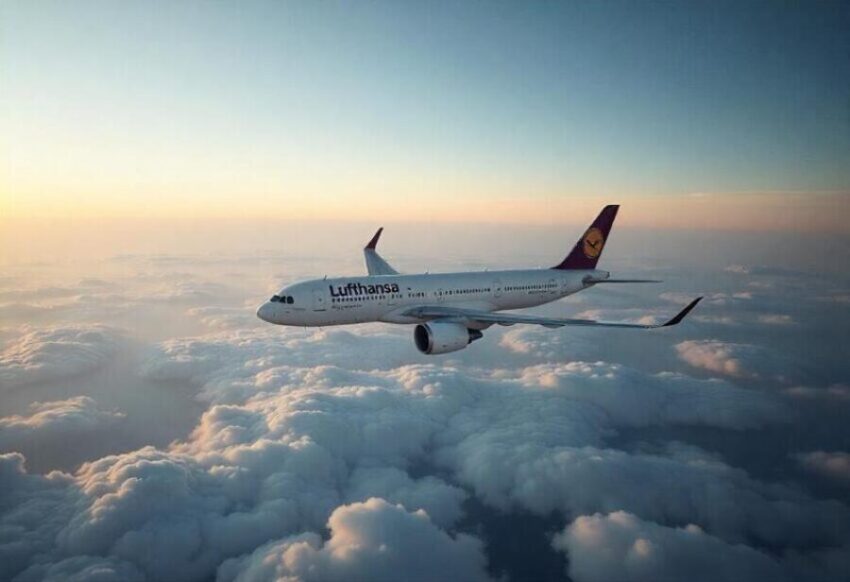
Image generated with Ai
Lufthansa is pushing hard to extend service for its oldest Airbus A340 fleet to meet severe capacity shortages arising from global aircraft deliveries and booming demand for premium travel. While most carriers retired these four-engine aircraft, Lufthansa kept them flying to support long-haul flights, monopolize high-margin international routes, and assure premium cabin supply until its next-generation aircraft models become available.
Lufthansa Continues to Operate Its Aging Airbus A340 Fleet Despite Industry Shifts
Germany’s largest airline remains one of the few global carriers still actively flying the Airbus A340, a four-engine aircraft that has largely disappeared from most commercial fleets. While many airlines have retired these older jets, Lufthansa continues to operate twenty-two A340s: fifteen A340-300s and seven A340-600s. The average age of these aircraft stands at nearly twenty-three years, yet they remain a vital part of Lufthansa’s long-haul operations even in 2025.
Despite the aircraft’s age and inefficiency when compared to newer models, these jets serve a very deliberate purpose in Lufthansa’s current network strategy. The decision to keep the A340 operational is not based on nostalgia, but rather on a combination of practical necessity, fleet transition delays, and unique operational requirements.
Advertisement
Advertisement
Temporary Yet Crucial Role in Fleet Gaps
The main reason for keeping the A340 in active service lies in its ability to fill a temporary but significant gap in long-haul capacity. The pandemic caused major disruptions across the aviation industry, forcing airlines to reassess fleet plans. As long-haul travel rebounded faster than anticipated, Lufthansa needed to quickly reactivate retired aircraft to meet surging demand.
The A340’s spacious cabin configuration, especially on the A340-600 variant, makes it ideal for routes with high premium demand. With a large first-class cabin and expansive business-class layout, the aircraft is well-suited for long-haul routes from major hubs such as Frankfurt to North America and Asia. These aircraft have played a critical role in meeting premium demand while Lufthansa waits for delayed deliveries of newer aircraft models.
A History of A340 Operations
Historically, Lufthansa operated a significant fleet of A340 variants, including the A340-200, A340-300, and A340-600, reaching a peak of sixty-two aircraft. The older A340-200 models were the first to leave the fleet back in 2003. However, during the pandemic, several newer A340s that were previously retired were reactivated to compensate for capacity shortages and the delayed arrival of replacement aircraft.
Currently, twenty-two A340s remain in active service. They continue to operate on long-haul routes, primarily from Lufthansa’s Frankfurt hub. The airline has already announced that it plans to fully retire the A340 fleet by 2026 as part of its ongoing fleet modernization program, once sufficient numbers of newer aircraft are delivered.
Key Factors Behind Continued Operations
Multiple factors contribute to the decision to keep the A340 flying. The most pressing issue is aircraft availability. Deliveries of new widebody aircraft such as the Airbus A350 and Boeing 787 have faced delays, limiting Lufthansa’s ability to fully transition to more efficient models.
In addition, the A340-600’s premium-heavy configuration makes it uniquely valuable. Many of these aircraft include first-class cabins and larger business-class sections, which generate higher revenue on select routes. Replacing these aircraft with newer jets that can match this seating density would require significant financial investment and logistical complexity.
Furthermore, reactivating grounded A340s is faster and more cost-effective than introducing entirely new aircraft types. With updated interiors and ongoing maintenance, these aircraft can be swiftly deployed to handle spikes in travel demand without the added burden of retraining crews or investing in new maintenance infrastructure.
Future Retirement Timeline
The airline has confirmed that its A340s and older Boeing 747-400s will both be retired by 2028, with the A340 fleet scheduled to exit service by early 2026. The final A340 flight is currently planned for January 12th, 2026, operating between Riyadh and Frankfurt. This timeline reflects the airline’s broader strategy of replacing aging widebodies with next-generation aircraft as soon as they are available.
Unique Operational Benefits
While newer aircraft are more fuel-efficient, the A340 still provides certain advantages. Its four-engine design offers added redundancy on long overwater routes or high-altitude operations. Additionally, passengers often praise the aircraft’s quiet cabin, particularly in premium cabins where the overall comfort level remains competitive with newer models.
Several A340-600s continue to fly regularly, primarily from Frankfurt, according to updated fleet data. These aircraft are expected to remain part of Lufthansa’s schedule throughout the 2025 summer season, providing crucial capacity as the airline transitions to its next-generation fleet.
Comparison with Other Aircraft Models
Compared to larger, less flexible aircraft like the Airbus A380 or older Boeing 747-400s, the A340-600 offers more operational versatility. While the 747-400 is gradually being retired, the A380’s limited route flexibility makes the A340 a more practical interim solution for Lufthansa’s smaller premium-heavy markets.
Although newer widebody models such as the Airbus A350 and Boeing 787 are more efficient, integrating these aircraft requires significant planning. Transitioning pilots, maintenance teams, and ground staff takes time, making the A340 an important stopgap during this phase.
Operational Challenges and Environmental Concerns
Operating the A340 comes with notable trade-offs. The aircraft’s four engines consume more fuel, emit more carbon dioxide, and require more frequent maintenance compared to modern twin-engine aircraft. This compromises Lufthansa’s long-term sustainability goals as environmental regulations grow increasingly strict.
The A340 was originally introduced to overcome early restrictions on long overwater flights that limited twin-engine aircraft operations. However, with modern twinjets now fully capable of operating transatlantic routes, the A340’s design is increasingly outdated from an environmental and cost standpoint.
Additionally, sourcing parts for the A340 is becoming more challenging, as production ended in 2011. Lufthansa relies on a shrinking pool of suppliers and maintenance providers to keep these aircraft operational. Although recent interior updates have refreshed the passenger experience, especially in premium cabins, economy class still reflects the aircraft’s older design.
Technical Comparison Between A340-600 and A330-300
The A340-600 measures 247 feet in length, significantly longer than the A330-300’s 208 feet. Its wingspan extends over 208 feet, while the A330’s wingspan reaches just under 198 feet. The A340’s maximum takeoff weight reaches 811,000 pounds, compared to the A330’s 514,000 pounds.
In terms of performance, the A340 cruises at Mach 0.86 and has a maximum range of 7,700 miles. The A330 operates at a cruising speed of Mach 0.82 and can travel distances of up to roughly 6,200 miles. Both aircraft operate at similar cruising altitudes. Cabin width is virtually identical, with the A340 slightly narrower by an inch.
Lufthansa’s A340-600 typically seats 281 passengers with a full first-class section, while its A330-300 variant carries around 255 passengers without a first-class cabin.
Conclusion: A Temporary but Necessary Solution
Lufthansa continues to operate the Airbus A340 primarily because it remains essential for now. While not the most efficient or environmentally friendly option, the aircraft provides critical premium capacity, operational flexibility, and short-term fleet stability as Lufthansa transitions toward newer, more sustainable widebody models.
Lufthansa is keeping its old Airbus A340 fleet active in service to meet immediate long-haul capacity shortages, cater to soaring demand for premium travel, and cover new aircraft deliveries that are running late.
Until sufficient numbers of A350s and 787s are fully integrated into the fleet, the A340 will quietly continue serving long-haul travelers, offering a surprisingly comfortable experience, particularly for those flying in First or Business Class. Although its retirement is firmly scheduled, the Airbus A340 remains an important—if temporary—workhorse in Lufthansa’s global network.
Advertisement
Tags: airbus a340, aircraft delays, aircraft shortage, airline industry, aviation strategy, fleet expansion, fleet modernization, Global Travel Demand, lufthansa, Premium Travel, Travel News
Advertisement
Advertisement













Saturday, September 5, 2026

Friday, September 4, 2026

Saturday, September 5, 2026

Friday, September 4, 2026

Thursday, September 3, 2026

Wednesday, September 2, 2026

Friday, September 4, 2026