
Europe Confirms New 2026 Christmas Market Dates as Vienna and More Destinations Prepare for Winter Crowds

Updated
Published
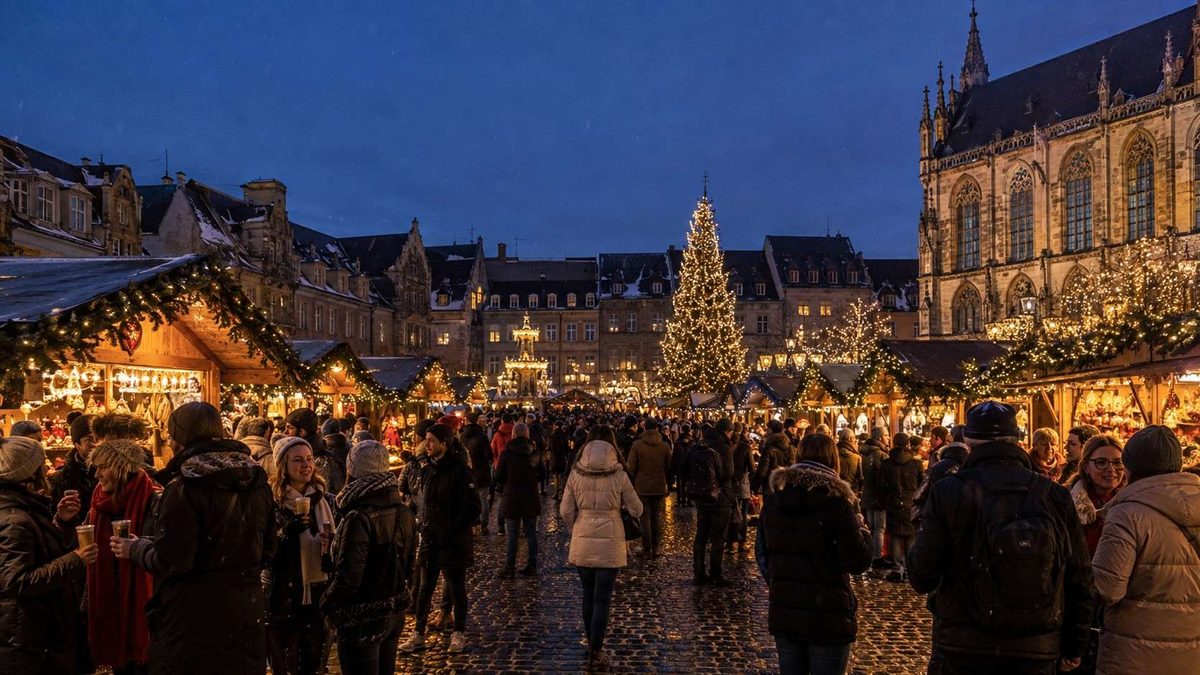
Europe has confirmed 2026 Christmas market dates giving travelers a better idea of when to visit Vienna, Berlin and Nuremberg. The Europe Christmas markets 2026 season will start in Vienna in November followed by Berlin and Nuremberg later in the same month. The main markets in Vienna will have schedules. The Christmas Magic in Berlin will come back to Gendarmenmarkt. The Christkindlesmarkt, in Nuremberg will end on Christmas Eve. These announcements are important because these events bring in hotel stays, train rides, restaurant visits and shopping. Travelers can now check the dates avoid markets and plan trips to multiple cities with more confidence before they make their bookings.
Confirmed dates establish a staggered festive season

The three cities will not switch on their principal markets at the same time. That difference creates several travel windows across November, December and the opening days of January.
Advertisement
Advertisement
Vienna will move first. The Christmas Market at Schönbrunn Palace is scheduled from 6 November 2026 to 6 January 2027, while the market at Rathausplatz will operate from 13 November to 26 December 2026, according to the Vienna Tourist Board’s official market calendar.
Berlin’s Christmas Magic will run at Gendarmenmarkt from 23 November to 31 December 2026. Nuremberg will follow on 27 November, with Christkindlesmarkt continuing until 24 December.
Advertisement
Advertisement
| Destination and market | Confirmed 2026 dates | Main planning implication |
|---|---|---|
| Vienna, Schönbrunn Palace | 6 November 2026–6 January 2027 | Earliest opening and latest closing among the principal markets compared |
| Vienna, Rathausplatz | 13 November–26 December 2026 | Long central-city season extending beyond Christmas Day |
| Berlin, Gendarmenmarkt | 23 November–31 December 2026 | Suitable for Advent and post-Christmas visits |
| Nuremberg, Christkindlesmarkt | 27 November–24 December 2026 | Concentrated traditional season ending on Christmas Eve |
This staggered calendar matters. A traveller arriving in Vienna on 15 November can visit operating markets, but the principal Berlin and Nuremberg events in this comparison will not yet have opened.
The position changes after Christmas. Nuremberg closes on 24 December, while selected markets in Berlin and Vienna continue towards New Year or Epiphany.
Advertisement
Advertisement
Berlin’s Christmas Magic returns to Gendarmenmarkt

Berlin’s most important change is geographical as well as seasonal. Christmas Magic is returning to Gendarmenmarkt following the refurbishment of the historic square.
The event had moved to nearby Bebelplatz while work took place. Its return restores the market to a setting framed by the Konzerthaus, the French Cathedral and the German Cathedral.
The relocation is useful information for visitors who may still find older travel guides pointing towards Bebelplatz. Travellers should use the 2026 address when arranging accommodation, restaurant bookings and public-transport journeys.
Berlin’s official visitor information lists the market from 23 November to 31 December. The official Berlin Christmas-market guide also identifies markets continuing beyond Christmas, including the Humboldt Forum and Breitscheidplatz events until 3 January 2027.
That later programme gives Berlin a different position from Nuremberg. It can serve travellers arriving during the quieter period between Christmas Day and New Year, when many traditional German markets have already closed.
Nuremberg concentrates demand into a shorter period

Nuremberg’s Christkindlesmarkt will open on 27 November and close on 24 December. The city’s official programme lists daily opening from 10am to 9pm, with reduced hours on Christmas Eve.
Advertisement
Advertisement
The ceremonial opening is scheduled for 5.30pm on 27 November. These timings come from the official Nuremberg Christkindlesmarkt website, which should be checked again shortly before travel in case operational details change.
Nuremberg’s timetable is shorter than the principal Vienna and Berlin seasons in this comparison. That concentrates visits into fewer days and makes weekend planning particularly important.
The market is rooted in the city’s historic centre around Hauptmarkt. Written evidence of the event dates to the 17th century, and its opening ceremony, traditional goods and regional food remain central to Nuremberg’s international winter identity.
Visitors should not assume it continues into the New Year. Anyone arriving after 24 December will need a different festive itinerary, with Vienna and Berlin offering stronger late-season options.
Tourism data shows why the winter calendar matters
Christmas markets are cultural events, but they also sit inside large visitor economies. The latest official tourism figures show the scale of the accommodation, hospitality and transport systems that will support the 2026 season.
Vienna recorded 20.065 million overnight stays in 2025, according to the Vienna Tourist Board. That was a six per cent increase from 2024 and the city’s highest annual total on record.
Advertisement
Advertisement
Berlin recorded 12.4 million guests and 29.4 million overnight stays in 2025, according to visitBerlin. International travellers accounted for 41 per cent of its visitors, with the United States, United Kingdom and Netherlands identified as the leading overseas source markets.
Berlin’s first-half 2026 results were more restrained. Official figures recorded 5.9 million guests and 13.6 million overnight stays, with nights down 2.7 per cent from the comparable 2025 period.
That decline is an important editorial qualification. Confirmed Christmas-market dates create a clear winter travel product, but they do not by themselves prove that Berlin will experience a tourism surge.
Nuremberg registered 3,866,470 overnight stays in 2025, marginally above the 2024 result. Arrivals rose 2.5 per cent to 2,147,101.
The strongest evidence of the Christmas market’s importance appears in Nuremberg’s December figures. The city recorded 400,578 overnight stays in December 2025, up 3.3 per cent year on year and the highest monthly total since its accommodation statistics began.
| Official tourism indicator | Latest available result | Context |
|---|---|---|
| Vienna overnight stays | 20.065 million in 2025 | Up 6% and a city record |
| Berlin guests | 12.4 million in 2025 | Down 2.7% from 2024 |
| Berlin overnight stays | 29.4 million in 2025 | Down 3.8% from 2024 |
| Nuremberg arrivals | 2,147,101 in 2025 | Up 2.5% |
| Nuremberg overnight stays | 3,866,470 in 2025 | Up 0.1% |
| Nuremberg December nights | 400,578 in December 2025 | Up 3.3% and a monthly record |
The figures show three different market positions. Vienna entered 2026 after record growth, Berlin remained one of Europe’s largest city destinations despite softer demand, and Nuremberg demonstrated an unusually strong December peak.
Advertisement
Advertisement
A longer calendar creates distinct booking windows
The Europe Christmas markets 2026 timetable creates an early season, a core Advent period and a post-Christmas phase. Travellers can use those phases to choose the experience they want.
Early-November demand will centre more strongly on Vienna because Schönbrunn opens on 6 November. The broadest overlap begins on 27 November, when the named markets in all three cities are operating.
That common window ends on 24 December with Nuremberg’s closure. From 25 December, visitors should concentrate on confirmed events in Vienna and Berlin rather than assuming the entire European market network remains open.
| Travel period | Available options in this comparison | Best use |
|---|---|---|
| 6–12 November | Schönbrunn Palace, Vienna | Early festive visit |
| 13–22 November | Schönbrunn and Rathausplatz, Vienna | Wider Vienna market trip |
| 23–26 November | Vienna and Berlin | Two-city itinerary before Nuremberg opens |
| 27 November–24 December | Vienna, Berlin and Nuremberg | Full three-city market journey |
| 25–26 December | Selected Vienna and Berlin markets | Christmas holiday visit |
| 27–31 December | Schönbrunn and selected Berlin markets | Christmas-to-New-Year break |
| 1–6 January 2027 | Schönbrunn and selected late-running events | Epiphany-period travel |
Travellers must still confirm the dates of every individual market. A city may have several events, each with separate opening days, admission conditions and holiday hours.
Hotels and local businesses face different demand patterns
Hotels gain the clearest direct benefit when day visitors convert their market trip into an overnight stay. Nuremberg’s December 2025 record shows that festive demand can support accommodation even when some international markets weaken across the full year.
Restaurants, cafés and food vendors also benefit from longer visitor dwell time. Markets lead people into surrounding shopping streets, museums and neighbourhoods, widening spending beyond the stalls.
Advertisement
Advertisement
Retail effects are more distributed. Independent makers can reach large seasonal audiences, while established shops gain footfall from visitors moving between transport hubs, hotels and historic centres.
The benefits are not automatic. Dense crowds increase pressure on cleaning, policing, public transport and pedestrian space, while event security can raise operating costs.
Berlin’s Gendarmenmarkt return will require visitors and businesses to adjust to the restored location. In Nuremberg, the shorter operating period means that demand can be compressed around Advent weekends.
Rail operators gain from a calendar-led itinerary
Vienna, Berlin and Nuremberg can be combined by rail, although they should not be marketed as a newly created route. The fresh opportunity comes from arranging existing connections around the confirmed event dates.
A traveller beginning after 27 November can build a three-city journey while the principal markets in this comparison overlap. The order should reflect the traveller’s arrival point, available fares and the closing date in Nuremberg.
Rail travel also connects central stations with urban public-transport networks. This can reduce the need for a car in historic centres where parking is limited and seasonal pedestrian activity is high.
Advertisement
Advertisement
Passengers must check live timetables, engineering works and reservation requirements before departure. Market announcements do not guarantee rail capacity or protect a traveller from timetable changes.
Airlines and airports gain a seasonal travel reason, not a new policy
The confirmed calendar gives airlines and airports a clear winter city-break proposition. Vienna International Airport, Berlin Brandenburg Airport and Nuremberg Airport act as the principal air gateways for the three destinations.
However, the market announcements do not introduce new flights, airport infrastructure or aviation policy. Any claim that new air capacity has been created specifically for these events would require a separate airline or airport announcement.
International travellers should compare flight schedules with market dates before booking. A low fare after 24 December may be less useful for someone whose main purpose is visiting Nuremberg’s Christkindlesmarkt.
Open-jaw itineraries can reduce backtracking. A visitor might arrive through one city and leave through another, but the practical value depends on fare rules, baggage needs and the chosen rail sequence.
City strategies are placing greater emphasis on managed tourism
The three destinations are not relying only on greater visitor volume. Their official tourism work also addresses quality, neighbourhood distribution and the visitor experience.
Advertisement
Advertisement
Vienna’s Visitor Economy Strategy promotes tourism that benefits visitors, residents and businesses. Its direction includes managing visitor flows, supporting quality experiences and distributing tourism value beyond a narrow group of central attractions.
Berlin describes its approach as city-compatible tourism. Its policy direction seeks to protect residents’ quality of life, strengthen neighbourhoods and manage demand across the city rather than concentrating every visitor in the same central locations.
Nuremberg has expanded its digital “Nürnberger Quartiere” guide to help visitors find food, retail, culture and places beyond the most familiar routes. The service recorded about 50,000 users and 270,000 page views in the figures released with the city’s 2025 tourism results.
Christmas markets test these policies because they attract dense crowds at predictable times. Clear public-transport information, accessible walking routes and promotion of nearby districts can help spread some benefits without weakening the central event.
Economic value extends beyond market stalls
The visitor economy supports accommodation, food services, retail, cultural venues and passenger transport. Christmas markets provide an additional reason to travel during a cold-weather period that might otherwise produce weaker leisure demand.
Berlin’s Tourism Satellite Account estimated that tourism generated around €8.4 billion in direct and indirect gross value added in 2023. It also supported approximately 224,800 jobs, equivalent to 10.3 per cent of employment in the city.
Advertisement
Advertisement
Comparable market-specific economic totals were not published with the three 2026 calendar announcements. It would therefore be inaccurate to assign a precise revenue or employment gain to the coming season before official results are available.
Nuremberg’s monthly accommodation evidence provides a narrower but useful indicator. December’s record shows that the festive period coincided with unusually high overnight demand, although the market was not the only event influencing travel.
Visa rules remain separate from the Christmas calendar
The announcements do not create a special festive visa, border exemption or passport arrangement. Austria and Germany remain part of the Schengen Area, but entry requirements depend on nationality, residence status and the purpose and length of the visit.
Travellers who require a Schengen visa must secure the correct permission before departure. Visa-free visitors must still meet entry conditions and respect the applicable stay limit.
Passports should satisfy the rules applying on the travel date. Visitors should use the official immigration authority or consulate serving their country rather than relying on a market organiser for border advice.
What travellers should arrange before booking
The safest approach is to treat every market as a separate event. Confirm the precise market, location and opening hours before paying for transport or accommodation.
Advertisement
Advertisement
Visitors should also consider the following:
- Choose dates first. Nuremberg is unavailable after 24 December, while selected Vienna and Berlin markets continue.
- Reserve central accommodation early. Advent weekends can produce concentrated demand near historic centres.
- Check holiday hours. Christmas Eve, Christmas Day and New Year’s Eve may have reduced schedules.
- Use public transport. Central market districts can be crowded and difficult to access by car.
- Allow security time. Bag checks or controlled entrances may slow access at busy events.
- Check accessibility. Cobblestones, temporary stalls and dense crowds can affect step-free movement.
- Carry more than one payment option. Individual vendors may apply different payment arrangements.
- Confirm entry rules. Market dates do not override immigration or passport requirements.
Future outlook rests on confirmed programmes and recorded demand
The published calendars support advance travel planning, but official authorities have not issued a combined forecast for visitor numbers across Vienna, Berlin and Nuremberg. Claims of record 2026 attendance would therefore be premature.
The evidence does show established demand. Vienna entered the year after record overnight stays, Berlin maintained a very large visitor economy, and Nuremberg recorded its strongest accommodation month during December 2025.
The next reliable indicators will be official monthly accommodation statistics, public-transport reporting and post-event results. Those releases will show whether the confirmed programme increased stays, shifted demand between weeks or mainly served existing visitor flows.
Frequently Asked Questions
When do the principal 2026 Christmas markets open in Vienna, Berlin and Nuremberg?
Schönbrunn Palace in Vienna opens on 6 November, followed by Rathausplatz on 13 November. Berlin’s Gendarmenmarkt event opens on 23 November, while Nuremberg Christkindlesmarkt begins on 27 November.
Can travellers visit these Christmas markets after Christmas Day?
Selected markets remain open, but not all of them. Nuremberg closes on 24 December. Berlin’s Gendarmenmarkt continues until 31 December, while Vienna’s Schönbrunn market is scheduled until 6 January 2027.
Advertisement
Advertisement
Do the 2026 market announcements change visa or passport requirements?
No. The dates do not create new visa exemptions or border rules. International visitors must follow the Schengen entry requirements applicable to their nationality and circumstances.
Conclusion
The confirmed Europe Christmas markets 2026 dates give travellers a foundation, for planning Vienna, Berlin and Nuremberg visits. Vienna offers the opening and longest season among the principal events compared. Berlin regains Gendarmenmarkt. Retains useful post-Christmas options. Nuremberg delivers a traditional programme that ends on 24 December. Official tourism figures show why the season matters to hotels, transport providers, restaurants and retailers. They do not yet prove a 2026 surge. Travellers should match bookings to market dates check holiday hours and verify transport and entry requirements before leaving home this winter throughout the journey.
Advertisement
