

Namibia Aligns with Egypt and South Africa on Driving Africa’s Multi-Modal Tourism Boom as Road Trips, Luxury Rail Journeys and Nile Cruises Redefine Travel

Published
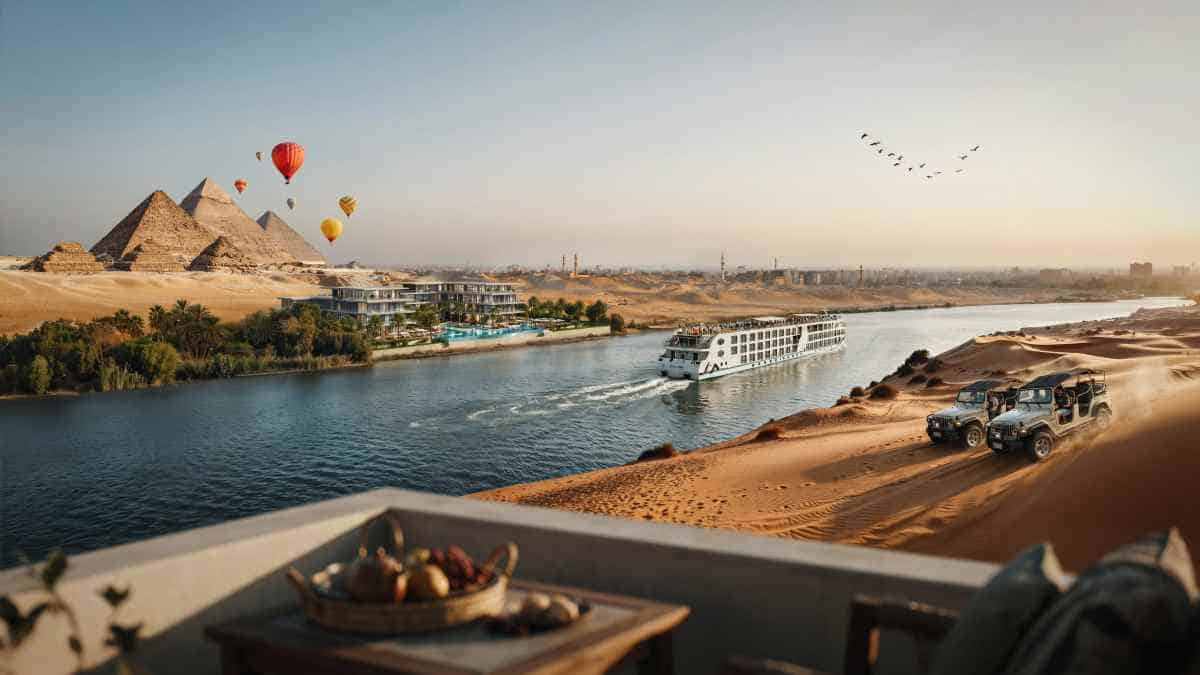
Namibia Aligns with Egypt and South Africa on Driving Africa’s Multi-Modal Tourism Boom as Road Trips, Luxury Rail Journeys and Nile Cruises Redefine Travel. South Africa, Namibia and Egypt are leading a major transformation in African tourism as travellers increasingly replace traditional fly-in, fly-out holidays with longer, multi-modal journeys that combine self-drive road trips, luxury rail travel and river cruising. Instead of spending several days at a single destination, visitors are choosing itineraries that cross borders and connect diverse landscapes, cultures and transport experiences within one holiday.
The trend reflects growing demand for immersive travel. International visitors are planning holidays that combine driving through deserts, travelling by rail across historic regions and cruising along some of the world’s most famous rivers, allowing them to experience Africa at a slower and more comprehensive pace.
Self-Drive Holidays Are Expanding Across Southern Africa
One of the fastest-growing travel styles is the self-drive route linking South Africa and Namibia. Travellers begin in cities such as Cape Town or Johannesburg, hire four-wheel-drive vehicles and journey across changing landscapes that include vineyards, mountain passes, wildlife reserves, coastal roads and vast desert scenery.
A popular route starts in Cape Town before travelling north through the Northern Cape to the Vioolsdrif Border Post, crossing into Namibia and continuing towards Fish River Canyon, Lüderitz, Sossusvlei, Swakopmund and Etosha National Park.
Advertisement
Advertisement
The journey from Cape Town to the Namibian border covers approximately 700 kilometres, while Sossusvlei lies roughly 350 kilometres from Swakopmund by road. Travellers often spend two to three weeks completing the circuit, allowing time for wildlife viewing, hiking and photography.
South Africa Remains the Main Gateway
South Africa continues serving as the principal entry point for many regional road trips. OR Tambo International Airport in Johannesburg is located approximately 22 kilometres from Sandton and is connected by the Gautrain network.
Advertisement
Advertisement
Cape Town International Airport, situated around 20 kilometres from the city centre, provides another major gateway for visitors beginning self-drive holidays. Car rental services are widely available at both airports, making it easy for travellers to begin cross-border adventures immediately after arrival.
Shopping districts such as the V&A Waterfront in Cape Town and Sandton City Mall in Johannesburg remain popular stops before travellers head towards Namibia or neighbouring countries.
Namibia Offers One of Africa’s Greatest Road Journeys
Namibia’s well-maintained highways, low traffic volumes and dramatic scenery have made the country one of Africa’s leading self-drive destinations.
Visitors explore towering red dunes at Sossusvlei, colonial architecture in Swakopmund, abundant wildlife in Etosha National Park and the spectacular landscapes of Damaraland.
Hosea Kutako International Airport, approximately 42 kilometres east of Windhoek, serves as Namibia’s primary international airport, while Windhoek acts as the country’s transport hub for visitors continuing towards Botswana, Angola or South Africa.
The flexibility of self-drive travel allows tourists to explore remote regions that are difficult to experience through conventional package holidays.
Advertisement
Advertisement
Luxury Rail Is Returning to North Africa
Rail travel is also experiencing renewed interest across North Africa. Travellers increasingly view luxury train journeys as an opportunity to experience multiple cities while enjoying comfortable accommodation and panoramic scenery.
Rail services connect major destinations across Morocco, while Egypt’s modernised rail network links Cairo, Luxor and Aswan, enabling visitors to combine ancient archaeological sites with scenic overland travel.
Luxury rail experiences are becoming an attractive alternative to domestic flights, particularly for travellers seeking slower, more immersive holidays.
Nile Cruises Continue to Attract Global Visitors
River cruising remains one of Africa’s most iconic travel experiences. Cruises along the River Nile connect Luxor and Aswan, allowing visitors to explore ancient temples, archaeological sites and riverside communities over several days.
The distance between Luxor and Aswan is approximately 220 kilometres by river. Cruise itineraries typically include visits to Karnak Temple, Luxor Temple, Edfu Temple, Kom Ombo Temple and the Valley of the Kings.
Visitors usually arrive through Luxor International Airport or Cairo International Airport, with rail connections also available between Cairo and Upper Egypt.
Advertisement
Advertisement
Multi-Modal Travel Encourages Longer Holidays
The growing popularity of combining road, rail and river transport is encouraging travellers to extend their holidays. Rather than spending four or five days at a single destination, visitors are increasingly planning two- and three-week itineraries that include multiple countries and transport experiences.
This approach benefits hotels, restaurants, local tour operators, museums, national parks and transport providers across several destinations instead of concentrating visitor spending in one location.
It also allows travellers to experience a greater diversity of landscapes, cultures and historical attractions within a single journey.
Infrastructure Investments Are Supporting Growth
Governments and tourism authorities continue investing in highways, border facilities, airports and transport services to accommodate rising visitor numbers.
Improved road conditions, upgraded airports and expanded tourism facilities are making cross-border travel increasingly accessible while encouraging international tour operators to develop longer regional itineraries.
These investments are helping Africa position itself as a destination for extended journeys rather than short-stop holidays.
Advertisement
Advertisement
Country Details and Current Status
| Country | Tourism Experience | Current Trend |
|---|---|---|
| South Africa | Self-drive holidays, wildlife, cities | Regional gateway for cross-border travel |
| Namibia | Desert road trips and national parks | Growing self-drive tourism |
| Egypt | Nile cruises and rail journeys | Strong demand for cultural tourism |
| Morocco | Luxury rail and heritage tourism | Expanding rail-based travel experiences |
Key Stats
- Cape Town to the Namibia border is approximately 700 km by road.
- Sossusvlei is around 350 km from Swakopmund.
- OR Tambo International Airport is approximately 22 km from Sandton.
- Cape Town International Airport is roughly 20 km from the city centre.
- Hosea Kutako International Airport is approximately 42 km from Windhoek.
- The Nile cruise route between Luxor and Aswan covers about 220 km.
FAQ
What is multi-modal tourism?
It combines different forms of transport, such as driving, rail travel and river cruising, within one itinerary.
Why are cross-border road trips becoming popular?
Travellers are seeking longer, more immersive journeys that explore multiple destinations instead of staying in a single location.
Which African routes are attracting the most interest?
The South Africa–Namibia self-drive route, luxury rail journeys across North Africa and Nile cruises in Egypt are among the region’s most popular multi-modal travel experiences.
Conclusion
Namibia Aligns with Egypt and South Africa on Driving Africa’s Multi-Modal Tourism Boom as Road Trips, Luxury Rail Journeys and Nile Cruises Redefine Travel. Africa’s tourism landscape is evolving as travellers increasingly favour extended journeys that combine multiple transport experiences and destinations. Self-drive adventures across South Africa and Namibia, luxury rail travel in North Africa and iconic Nile cruises in Egypt are encouraging visitors to slow down and experience the continent in greater depth. Supported by improving infrastructure and stronger regional connectivity, multi-modal travel is helping reshape African tourism into a more immersive, flexible and experience-driven sector while spreading economic benefits across borders and local communities.
Advertisement
