



































Amalfi Coast Wildfire Sweeps Italy’s Tourism Jewel as Positano Battles Flames and Road Closures

Published
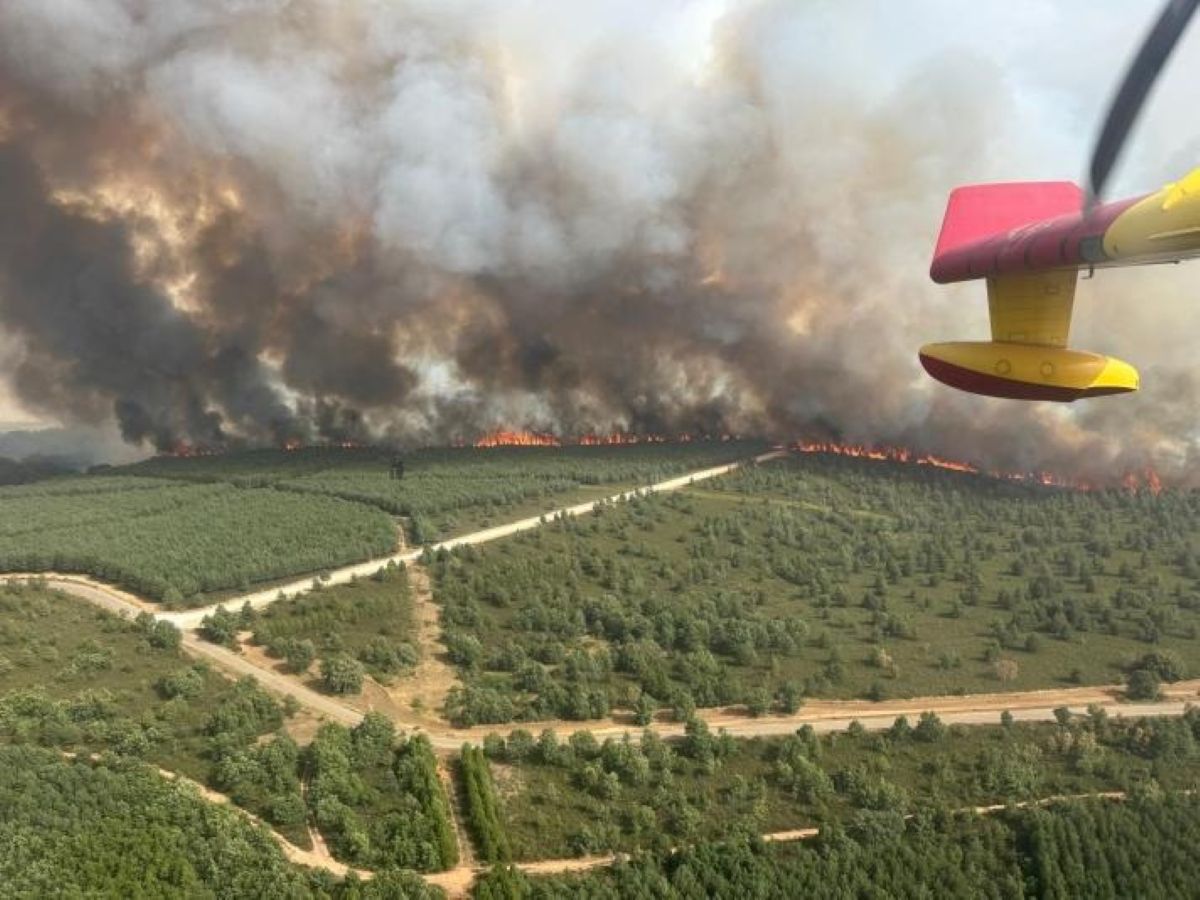
A major wildfire across Italy’s Amalfi Coast has disrupted parts of the celebrated Mediterranean destination, prompting precautionary evacuations and emergency firefighting operations. Flames spread across scrubland and woodland around Amalfi, Positano, Agerola and Vico Equense, with strong winds complicating the response. Italian firefighters deployed seven ground teams and three aircraft, while some businesses and facilities evacuated guests as a precaution. No deaths, injuries or residential destruction were reported in the latest updates. However, local authorities have raised concerns about possible deliberate ignition after fires appeared across several locations. The incident carries significance beyond immediate safety, because the coast combines dense tourism, steep terrain, narrow roads and highly vulnerable vegetation.
Fires Spread Across a Tourism Landmark
The fires began during the evening of September 14 and intensified across parts of the Amalfi Coast and Sorrento Peninsula. Strong winds pushed flames through vegetation, creating several active fronts across rugged slopes above heavily visited coastal settlements.
Firefighters faced an unusually difficult operational environment. The terrain rises sharply from the Mediterranean, while roads provide limited access to some affected hillsides. Wind conditions initially restricted helicopter operations, although firefighting aircraft later joined the response.
The Italian National Fire Corps reported operations involving seven ground teams and three aircraft. Reuters footage also showed Canadair water bombers operating over the affected terrain as crews attempted to contain the flames.
The affected zone extended across several locations. These included Positano, Amalfi, Agerola, Vico Equense, Conca dei Marini and areas around Tovere and Pogerola.
The fire also approached areas above Positano and affected sections of the SS163 Amalfitana. Traffic restrictions were introduced while firefighters worked to secure the road and nearby slopes.
Local reports said precautionary evacuations affected some properties and facilities. However, authorities reported no injuries and no damage to homes in the main response area.
For travellers, that distinction matters. A major vegetation fire does not automatically mean the entire destination has closed, but access can change rapidly. Visitors should therefore distinguish between affected pockets and the wider tourism region.
| Key Incident Detail | Latest Reported Situation |
|---|---|
| Main affected region | Amalfi Coast and Sorrento Peninsula |
| Principal locations | Amalfi, Positano, Agerola and Vico Equense |
| Fire outbreak | Evening of September 14, 2026 |
| Ground response | Seven firefighting teams |
| Aircraft response | Three aircraft reported in operation |
| Major challenge | Strong winds and steep terrain |
| Residential damage | None reported in the latest updates |
| Injuries | None reported |
| Tourist impact | Precautionary evacuations and local disruption |
| Road impact | Restrictions affecting sections of SS163 |
| Suspected cause | Local officials publicly raised possible arson |
Why The Amalfi Coast Faces Higher Exposure
The geography of the destination makes wildfire management particularly demanding. The coastline combines steep mountains, dense vegetation, narrow transport corridors and settlements built along slopes.
The official Italian tourism portal describes the Amalfi Coast as a landscape of cliffs, coves and terraces containing vineyards, olive trees and citrus cultivation. The destination stretches from Positano towards Vietri sul Mare and forms part of a UNESCO World Heritage cultural landscape.
That landscape creates exceptional tourism value. It also creates operational vulnerabilities during a wildfire.
A fire on a steep hillside can become difficult to access from the ground. Meanwhile, smoke, falling debris and firefighting aircraft can affect roads and visitor movement even when flames remain away from hotels.
The coastline’s celebrated road network adds another layer of complexity. The SS163 Amalfitana links settlements along a narrow and mountainous corridor, meaning even a temporary closure can create disproportionate travel consequences.
The incident therefore illustrates an important principle for Mediterranean tourism. Destination accessibility can become a safety issue before flames reach a tourist centre.
Arson Allegations Remain Under Scrutiny
The possible cause of the fires has become a central concern for local authorities. Positano Mayor Gabriella Guida publicly said she believed the fires were probably deliberately started.
Other local officials also pointed to the simultaneous appearance of fires across different areas. Italian reports described multiple fronts affecting locations around Vico Equense, Agerola, Amalfi and Positano.
However, suspected arson should not be treated as a confirmed finding at this stage. Public statements from local officials represent an allegation or working suspicion unless investigators establish the cause.
ANSA reported that authorities described the situation as dramatic and quoted Guida as saying the Positano fire was probably deliberately started.
The distinction matters for tourism reporting. A confirmed cause could influence future prevention policy, policing and land-management measures. An unconfirmed allegation should instead remain clearly attributed.
Local concerns extend beyond the immediate flames. Positano officials have warned that the loss of mature vegetation could increase the risk of soil instability and landslides when heavy autumn rainfall returns.
That concern has a direct travel dimension. The Amalfi Coast’s steep terrain means environmental damage can affect roads, walking routes and hillside communities after the visible fire has disappeared.
Italy Already Has A National Fire Strategy
The latest incident arrives during Italy’s 2026 national wildfire campaign. The country’s Civil Protection Department designated June 15 to October 15 as the principal campaign period for coordinated wildfire prevention and response.
The national framework combines prevention, monitoring and active firefighting. Regional authorities manage initial response operations, while the national aerial fleet can provide additional support when regional resources prove insufficient.
For the 2026 campaign, the state firefighting fleet includes 15 Canadair CL-415 aircraft and four Erickson S-64F helicopters during the peak period. Additional helicopters from defence and the Carabinieri strengthen the system during the broader campaign.
This structure becomes especially important in mountainous tourist destinations. Ground crews can reach many locations quickly, but aircraft become critical when fire spreads across inaccessible slopes.
Italy’s Civil Protection Department also highlights the growing importance of integrated wildfire prevention. Its 2026 guidance links rising wildfire risk with longer dry periods, heatwaves and wider climate-related pressures across Europe.
The Amalfi incident consequently sits within a wider Mediterranean tourism challenge. Fire response is no longer solely an emergency-service issue. It increasingly intersects with destination management, transport planning and visitor safety.
Tourism Exposure Is Particularly High
The economic significance of the affected coastline is considerable. Italy recorded a historic tourism peak in 2024, with 139.6 million arrivals and 466.2 million overnight stays in accommodation establishments.
International visitors represented 54.5% of all overnight stays. Campania also recorded a 3.3% increase in overnight stays compared with 2023.
The Amalfi Coast itself has an unusually international visitor profile. Istat data show that foreign visitors accounted for more than 90% of overnight stays in several prominent coastal municipalities, including Praiano, Sant’Agnello and Sorrento.
That concentration makes disruption particularly relevant to international travel businesses.
A visitor arriving from overseas may have accommodation, transfers, excursions and onward rail or air connections already arranged. A road closure can therefore create knock-on effects across an entire itinerary.
| Tourism Indicator | Latest Available Data |
|---|---|
| Italy arrivals in 2024 | 139.6 million |
| Italy overnight stays in 2024 | 466.2 million |
| Annual increase in arrivals | 4.5% |
| Annual increase in overnight stays | 4.2% |
| Foreign share of Italian overnight stays | 54.5% |
| Campania overnight-stay growth in 2024 | 3.3% |
| Foreign share in selected Amalfi Coast municipalities | Above 90% |
| Sorrento tourism density | 289,411.6 overnight stays per km² |
The final figure is especially revealing. Istat identified Sorrento as Italy’s most tourism-dense municipality in 2024, measured by overnight stays per square kilometre.
That density demonstrates why even geographically limited environmental incidents can create significant tourism consequences.
Travellers Should Watch Access Before Cancelling
For visitors planning a Campania holiday, the immediate lesson is not to assume that every coastal destination has become inaccessible. Instead, travellers should monitor specific road closures, municipal warnings and accommodation instructions.
Conditions can differ substantially between Positano, Amalfi, Ravello, Sorrento and inland areas. A fire affecting one hillside does not necessarily prevent travel across the wider region.
However, travellers should avoid entering restricted areas simply to view the fire. Emergency crews require unobstructed access, particularly along narrow coastal roads.
Visitors staying near affected areas should also follow instructions from hotels and local authorities. If evacuation advice is issued, travellers should comply immediately rather than waiting for conditions to deteriorate.
Those with rental cars should pay particular attention to road restrictions. Alternative routes can be limited because of the region’s mountainous geography.
Travellers should also reconsider hiking plans when authorities identify fire-affected slopes. Burned vegetation can create additional hazards after a fire, particularly where loose soil and rock become unstable.
Tourism Businesses Face A Longer Risk
The immediate tourism impact extends beyond cancelled excursions. Hotels, restaurants, transport operators and destination-management companies can all face operational disruption.
Hotels may need to relocate guests if access becomes restricted. Restaurants can lose evening trade when roads close. Boat operators may also experience demand changes if visitors avoid affected coastal areas.
Tour operators face another challenge. Their products often combine several destinations within a single day. A closure around Positano or Amalfi can force itinerary changes involving transport, timing and alternative attractions.
The industry’s response therefore requires flexibility rather than blanket destination messaging.
A practical approach would involve separating affected zones from unaffected tourism districts. That allows businesses to communicate risk without unnecessarily damaging confidence in the wider destination.
Italy’s latest tourism data reinforce why this distinction matters. International tourism has become increasingly important to the country’s accommodation sector, while the Amalfi and Sorrento areas attract particularly high proportions of overseas visitors.
What The Fire Means For Autumn Travel
The timing of the incident also deserves attention. September remains an important shoulder-season period for Mediterranean tourism, particularly for visitors seeking warmer weather without the peak intensity of July and August.
The fire could therefore influence late-season bookings if images of burning hillsides continue circulating internationally.
Yet the longer-term risk may emerge after the flames disappear. Loss of vegetation on steep terrain can increase erosion and slope instability during periods of heavy rainfall.
For a destination built around cliffside roads and hillside settlements, that risk deserves careful monitoring.
The Italian Civil Protection framework already places strong emphasis on prevention and urban-rural fire interfaces. The current incident could strengthen calls for more intensive vegetation management, surveillance and local preparedness.
For tourism planners, the message is equally clear. Wildfire resilience should become part of destination infrastructure planning rather than remain an emergency-only consideration.
A Destination Balancing Beauty And Vulnerability
The Amalfi Coast’s appeal comes directly from the landscape now under pressure. Its cliffs, terraces, wooded slopes and coastal villages form the foundation of its international tourism identity.
The Italian tourism authority describes the coast as a UNESCO World Heritage landscape of exceptional cultural and natural value. The designation reflects the long relationship between human settlement and the surrounding Mediterranean environment.
That relationship creates a delicate tourism equation. More visitors generate economic activity, employment and international visibility. At the same time, greater visitor concentration increases pressure on roads, emergency services and fragile landscapes.
The latest fire therefore represents more than a short-lived disruption.
It offers another warning about the resilience of high-value Mediterranean destinations. Tourism authorities increasingly need systems capable of protecting visitors while preserving the landscapes that attract them.
For travellers, the practical message is straightforward. Check local conditions before departure, verify road access and follow official instructions during any active emergency.
The coast remains a major tourism asset, but its mountainous geography demands respect. As Italy moves through the final weeks of its 2026 wildfire campaign, the episode also underlines why prevention, rapid response and accurate traveller communication must work together.
The immediate firefighting effort may end within days. The environmental and tourism implications can last much longer.
Useful Official Information For Travellers
| Official Resource | Traveller Use |
|---|---|
| Italian National Fire Corps | Fire response and emergency updates |
| Italian Civil Protection Department | National wildfire preparedness and emergency information |
| Italia.it | Official destination information for Italy and Campania |
| Local municipalities | Local road, evacuation and access instructions |
| Regional authorities | Campania-specific emergency and tourism information |
